
Pelco SRXP4-2V10-EBT-IR vs Pelco SRXV2-2V13-EBT-IRWL: Specification Comparison
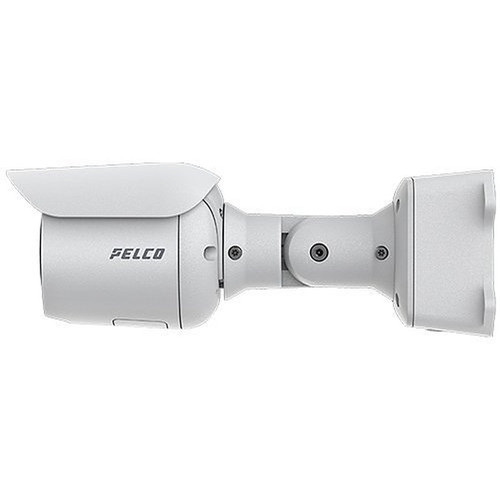
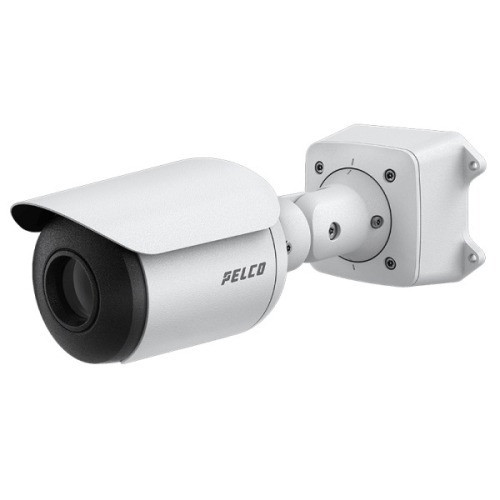
Both the Pelco SRXP4-2V10-EBT-IR (Sarix Pro 4) and the SRXV2-2V13-EBT-IRWL (Sarix Value 2) are 2MP outdoor bullet cameras sharing the same 1/2.8-inch progressive scan CMOS sensor and PoE Class 3 power input. Despite that common baseline, they occupy different tiers of Pelco's lineup and diverge meaningfully on frame rate, WDR performance, illumination technology, lens range, edge analytics, and ONVIF profile depth — factors that matter when matching hardware to a VMS, a lighting environment, or a project budget.
In This Guide
How do the imaging specs compare?
Both cameras deliver 1920×1080 resolution from a 1/2.8-inch progressive scan CMOS sensor at F1.4 aperture, so raw pixel count and sensor size are equal. The Sarix Pro 4 (SRXP4-2V10-EBT-IR) pulls ahead on two imaging fundamentals: it reaches 60 fps versus the Value 2's 30 fps cap, and its SureVision WDR is rated at 130 dB against the Value 2's 120 dB — a 10 dB advantage that translates to noticeably better highlight/shadow recovery in high-contrast scenes such as entrance lobbies or parking-lot perimeters.
On the lens side, the Pro 4 carries a 4.4–9.3 mm motorized varifocal (one spec field also cites 3.4–10.5 mm — the datasheet value should be confirmed before commissioning), while the Value 2 offers a wider 2.7–13.5 mm varifocal range with remote zoom, autofocus, and IR-cut filter control. The Value 2 therefore covers more scene depths from a single SKU. For low-light illumination, the Pro 4 achieves 0.01 lux color with IR, versus the Value 2's 0.02 lux color — a marginal difference, though the Value 2 adds a white-light illuminator alongside 850 nm IR, enabling full-color nighttime capture at the cost of covert operation. IR-only sensitivity is rated at 0 lux for both cameras.
What about installation and environment?
Both cameras carry IP66 ingress protection and IK09 vandal resistance (the Value 2 spec sheet also references IK10 in one field — verify against the physical datasheet before specifying). Both are PoE Class 3 (802.3af), simplifying cabling in single-cable runs. The Pro 4 lists an operating temperature of -10 °C to +70 °C; the Value 2 is rated -40 °C to +60 °C, giving it a dramatically wider cold-weather envelope suited to unheated exterior enclosures in northern climates. Neither camera's operating-temperature upper limit differs enough to matter in most installations, but the Value 2's -40 °C floor is a significant advantage in cold-storage or extreme-climate deployments.
Mounting options also differ: the Pro 4 supports wall, ceiling, and pendant mounts; the Value 2 adds pole and corner mounts, offering more flexibility on street-level or corner installations without additional adapters. Both ship in white housing as bullets. The Pro 4's weight is listed at approximately 0.81 kg; the Value 2 at approximately 0.54 kg in bullet configuration, which may matter for lighter-duty mounting surfaces.
Which fits your VMS and analytics better?
ONVIF compliance is broader on the Pro 4: it carries Profile S, Profile T, Profile G, and Profile M. The Value 2 is listed only for Profile S and Profile T. Profile G (on-camera recording) and Profile M (metadata/analytics) are absent from the Value 2's published specs, which limits direct interoperability with VMS platforms that leverage those profiles for event-driven recording or metadata ingestion.
Edge analytics are exclusive to the Pro 4, which specifies Smart Analytics covering Person/Vehicle Detection, Directional Violation, Loitering, Beam Crossing, Crowd Detection, and Tamper Alert. The Value 2 lists no named edge analytics in the provided specifications. Video compression on the Pro 4 is H.264, H.265, and Smart Compression; the Value 2 adds Motion JPEG, which can be useful for frame-accurate forensic review but increases bandwidth. Both cameras support microSD on-board storage and HTTPS encryption. Audio support is noted for the Pro 4 (microphone supported); audio capability is not stated in the Value 2's provided specs. Bandwidth management differs by branding: the Pro 4 uses Pelco Smart Compression; the Value 2 uses Smart Codec and Dynamic GOP.
Which should you choose: the SRXP4-2V10-EBT-IR or the SRXV2-2V13-EBT-IRWL?
Our take: The SRXP4-2V10-EBT-IR is the stronger choice when frame rate fidelity, deep analytics, and broad VMS integration are the priority. It delivers 60 fps versus the Value 2's 30 fps — critical for capturing fast-moving subjects without motion blur — and a 10 dB WDR advantage (130 dB vs 120 dB) that improves image quality in high-contrast lighting. Its four ONVIF profiles (S, T, G, M) versus the Value 2's two (S, T) unlock richer VMS feature sets, and its built-in Smart Analytics — Person/Vehicle Detection, Loitering, Beam Crossing, and more — eliminate the need for server-side analytic licenses on supported platforms. Conversely, the SRXV2-2V13-EBT-IRWL is the stronger choice for cold-climate deployment (-40 °C vs -10 °C), wider scene coverage via its 2.7–13.5 mm lens range, and installations where dual IR plus white-light color nighttime imaging is operationally required.
Side-by-Side Comparison
Spec-for-spec, from manufacturer data.
| Specification | Pelco SRXP4-2V10-EBT-IR | Pelco SRXV2-2V13-EBT-IRWL |
|---|---|---|
| Series | Sarix Professional 4 | Sarix Value 2 |
| Resolution | 2MP (1920×1080) | 2MP (1920×1080) |
| Image Sensor | 1/2.8" progressive scan CMOS | 1/2.8" progressive scan CMOS |
| Aperture | F1.4 | F1.4 |
| Lens / Focal Length | 4.4–9.3 mm motorized varifocal | 2.7–13.5 mm motorized varifocal |
| Max Frame Rate | 60 fps | 30 fps |
| WDR | 130 dB SureVision | 120 dB |
| Min Illumination (color) | 0.01 lux | 0.02 lux |
| Min Illumination (IR) | 0 lux | 0 lux |
| Illumination Type | IR 850 nm | IR 850 nm + White Light |
| Video Compression | H.265; H.264; Smart Compression | H.265; H.264; Motion JPEG |
| IP Rating | IP66 | IP66 |
| IK / Vandal Rating | IK09 | IK09 (IK10 also referenced — verify datasheet) |
| Operating Temperature | -10°C to +70°C | -40°C to +60°C |
| Power Input / PoE Class | PoE Class 3 (802.3af) | PoE Class 3 (802.3af) |
| ONVIF Profiles | Profile S, T, G, M | Profile S, T |
| Edge Analytics | Person/Vehicle Detection, Directional Violation, Loitering, Beam Crossing, Crowd Detection, Tamper Alert | — |
| Audio | Microphone supported | — |
| Edge Storage | microSD | microSD |
| Mount Types | Wall; Ceiling; Pendant | Wall; Ceiling; Pole; Pendant; Corner |
| NDAA Section 889 Compliant | — | Yes |
| Warranty | 5-year | 5-year |
Frequently Asked Questions
Which should you choose: the SRXP4-2V10-EBT-IR or the SRXV2-2V13-EBT-IRWL?
The SRXP4-2V10-EBT-IR is the stronger choice when frame rate fidelity, deep analytics, and broad VMS integration are the priority. It delivers 60 fps versus the Value 2's 30 fps — critical for capturing fast-moving subjects without motion blur — and a 10 dB WDR advantage (130 dB vs 120 dB) that improves image quality in high-contrast lighting. Its four ONVIF profiles (S, T, G, M) versus the Value 2's two (S, T) unlock richer VMS feature sets, and its built-in Smart Analytics — Person/Vehicle Detection, Loitering, Beam Crossing, and more — eliminate the need for server-side analytic licenses on supported platforms. Conversely, the SRXV2-2V13-EBT-IRWL is the stronger choice for cold-climate deployment (-40 °C vs -10 °C), wider scene coverage via its 2.7–13.5 mm lens range, and installations where dual IR plus white-light color nighttime imaging is operationally required.
Is the SRXP4-2V10-EBT-IR or the SRXV2-2V13-EBT-IRWL better for low-light performance?
Both cameras reach 0 lux in IR mode. In color (ambient-light) mode, the Pro 4 is rated at 0.01 lux versus the Value 2's 0.02 lux — a marginal edge for the Pro 4. However, the Value 2 adds a white-light illuminator that enables full-color night capture, which the Pro 4 does not specify. If color identification at night is required, the Value 2's dual IR + white-light configuration is the better fit; if pure IR sensitivity in a covert installation is the goal, the Pro 4's slightly lower lux rating gives it a narrow advantage.
Can either camera run edge analytics without a separate analytics server?
Only the SRXP4-2V10-EBT-IR specifies on-camera edge analytics: Person/Vehicle Detection, Directional Violation, Loitering, Beam Crossing, Crowd Detection, and Tamper Alert. The SRXV2-2V13-EBT-IRWL does not list any named edge analytics in its published specifications, meaning analytic functions would need to be handled server-side by the VMS or a separate analytics platform.
Which camera is better suited for extreme cold-weather outdoor installations?
The SRXV2-2V13-EBT-IRWL is rated to operate down to -40 °C, making it suitable for unheated enclosures in harsh northern climates. The SRXP4-2V10-EBT-IR is specified only to -10 °C. If the deployment site regularly experiences temperatures below -10 °C, the Value 2 is the appropriate choice without requiring an additional heater enclosure.
Get a Second Opinion on Your Camera Choice
Share your site layout, coverage goals, and budget. Our team will validate the camera selection, flag anything we would change, and recommend products that match the use case.