
Pelco SRXE4-2V12-EMD-1 vs Pelco SRXE4-8V29-IMD-IR1: Specification Comparison
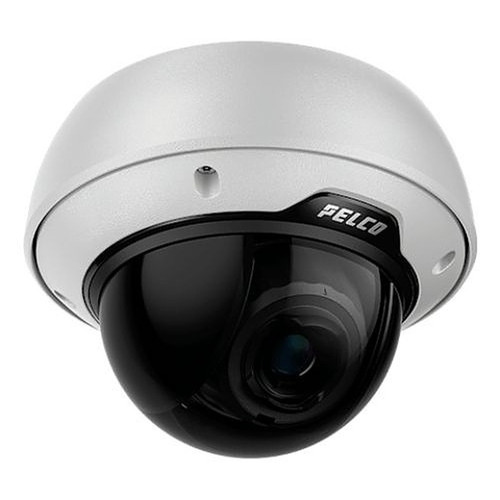
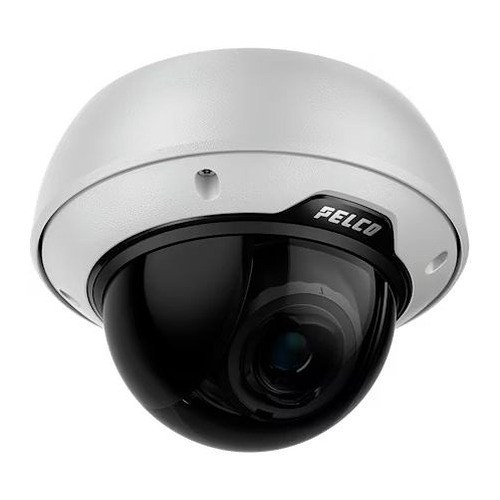
Both the Pelco SRXE4-2V12-EMD-1 and the SRXE4-8V29-IMD-IR1 belong to the Sarix Enhanced 4 Series and share the same 4MP resolution class and fixed dome form factor, making them direct cross-shop candidates. The comparison centers on environmental hardening and deployment context: the EMD-1 variant is rated for outdoor extremes while the IMD-IR1 adds integrated IR illumination and targets indoor corridor applications. Both share the same core imaging platform but diverge meaningfully on ingress protection, temperature tolerance, illumination approach, and low-light behavior.
In This Guide
How do the imaging specs compare?
Both cameras share an identical core imaging specification: 1/1.8-inch progressive scan CMOS sensor, 2560×1440 (4MP) maximum resolution, 130 dB SureVision WDR, F1.4 aperture, a 4.4–9.3 mm motorized varifocal lens spanning 32–109° HFOV, and H.265/H.264/Motion JPEG compression. The EMD-1 spec states a maximum frame rate of 60 fps; the IMD-IR1 datasheet field lists 30 fps at maximum resolution, representing a meaningful throughput difference for motion-intensive scenes.
On low-light performance the two diverge in illumination source. The EMD-1 cites minimum illumination of 0.003 Lux color / 0.001 Lux B/W with no integrated IR listed in its primary specs. The IMD-IR1 lists 0.003 Lux color / 0 Lux IR and its enrichment data specifies an integrated IR1 illuminator at 850 nm with approximately 70 m range, enabling true zero-lux operation in darkness. The EMD-1 has no IR range figure provided in the supplied specifications.
What about installation and environment?
The EMD-1 carries substantially broader environmental ratings: IP66, IP67, IP68 (2 m depth for 2 hours), IPX9K, and NEMA 4X, plus an IK11 impact rating. Its operating temperature spans –50°C to +65°C with PoE+ or external power, making it suited to extreme cold-climate outdoor deployments. The IMD-IR1 is rated IP66 only, with an operating temperature of –10°C to +65°C, and is designated for indoor use. The EMD-1's –50°C lower threshold is 40°C colder than the IMD-IR1's –10°C floor, a critical distinction in unheated outdoor enclosures.
Both units support PoE (Class 3) as primary power; the IMD-IR1 enrichment data also notes 12/24 Vdc as an alternative input, which the EMD-1 spec does not explicitly confirm. Both share the same dome form factor with identical listed dimensions of (D×H) 182 mm×132 mm in surface mount configuration and support wall, ceiling, pole, pendant, corner, and recessed mounting. Both include microSD on-board storage support.
Which fits your VMS and analytics better?
Both cameras are ONVIF Profile S, T, G, and M compliant and carry an identical Smart Analytics suite: Person/Vehicle Detection, Direction Violation, Loitering, Beam Crossing, Crowd Detection, Audio Analytics, and Tamper Alert. Both list microphone support for audio. On-board storage via microSD is confirmed for both. Memory is listed identically at 4 GB RAM / 4 GB Flash on both units.
Cybersecurity posture is identical across both: FIPS 140-3 Level 3, TPM, Secure Boot, HTTPS, and 802.1X. Both carry NDAA Section 889 and TAA compliance approvals. Certifications listed are the same set (UL, cUL, CE, RoHS, RCM, UKCA, NOM, KC, BIS). From a VMS integration and compliance standpoint, the two cameras are interchangeable; the differentiators are purely environmental and illumination-based.
Which should you choose: the SRXE4-2V12-EMD-1 or the SRXE4-8V29-IMD-IR1?
Our take: The SRXE4-2V12-EMD-1 is the stronger choice when the deployment site is outdoor, subject to harsh weather, extreme cold, or high-pressure wash-down environments. Its IP68/IPX9K/NEMA 4X rating versus the IMD-IR1's IP66-only rating provides substantially greater ingress protection, and its –50°C operating floor versus –10°C makes it the only viable option in cold climates. Additionally, the EMD-1's specified maximum frame rate of 60 fps versus the IMD-IR1's listed 30 fps benefits high-motion outdoor scenes. Conversely, the SRXE4-8V29-IMD-IR1 is the appropriate choice for indoor low-light corridors where integrated 850 nm IR illumination at approximately 70 m range is required and ambient temperatures remain above –10°C. Both cameras are otherwise identical in analytics, ONVIF compliance, cybersecurity posture, and VMS integration. Choose based on deployment environment and whether active IR illumination or extreme outdoor hardening is the primary requirement.
Side-by-Side Comparison
Spec-for-spec, from manufacturer data.
| Specification | Pelco SRXE4-2V12-EMD-1 | Pelco SRXE4-8V29-IMD-IR1 |
|---|---|---|
| Resolution | 4MP (2560×1440) | 4MP (2560×1440) |
| Image Sensor | 1/1.8" progressive scan CMOS | 1/1.8" progressive scan CMOS |
| Max Frame Rate | 60 fps | 30 fps |
| Lens / Focal Length | 4.4–9.3 mm motorized varifocal | 4.4–9.3 mm motorized varifocal |
| HFOV | 32–109° | 32–109° |
| Aperture | F1.4 | F1.4 |
| Min Illumination | 0.003 Lux color / 0.001 Lux B/W | 0.003 Lux color / 0 Lux IR |
| IR Illumination | Not specified in provided specs | Integrated IR1, 850 nm, ~70 m range |
| WDR | 130 dB SureVision | 130 dB SureVision |
| Video Compression | H.265; H.264; Motion JPEG | H.265; H.264; Motion JPEG |
| IP Rating | IP66 / IP67 / IP68 (2 m/2 hr) / IPX9K / NEMA 4X | IP66 |
| Impact Rating | IK11 | IK11 |
| Operating Temperature | –50°C to +65°C | –10°C to +65°C |
| Environment Rating | Outdoor | Indoor |
| Power Input / PoE Class | PoE Class 3 (PoE+ 802.3at) | PoE Class 3 (PoE+ 802.3at); also 12/24 Vdc |
| Edge Storage | microSD | microSD |
| Audio | Microphone supported | Microphone supported |
| ONVIF Compliance | Profile S, T, G, M | Profile S, T, G, M |
| Cybersecurity | FIPS 140-3 Level 3; TPM; Secure Boot; HTTPS; 802.1X | FIPS 140-3 Level 3; TPM; Secure Boot; HTTPS; 802.1X |
| Compliance Approvals | NDAA Section 889; TAA | NDAA Section 889; TAA |
| Warranty | 5-year | 5-year |
Frequently Asked Questions
Which should you choose: the SRXE4-2V12-EMD-1 or the SRXE4-8V29-IMD-IR1?
The SRXE4-2V12-EMD-1 is the stronger choice when the deployment site is outdoor, subject to harsh weather, extreme cold, or high-pressure wash-down environments. Its IP68/IPX9K/NEMA 4X rating versus the IMD-IR1's IP66-only rating provides substantially greater ingress protection, and its –50°C operating floor versus –10°C makes it the only viable option in cold climates. Additionally, the EMD-1's specified maximum frame rate of 60 fps versus the IMD-IR1's listed 30 fps benefits high-motion outdoor scenes. Conversely, the SRXE4-8V29-IMD-IR1 is the appropriate choice for indoor low-light corridors where integrated 850 nm IR illumination at approximately 70 m range is required and ambient temperatures remain above –10°C. Both cameras are otherwise identical in analytics, ONVIF compliance, cybersecurity posture, and VMS integration. Choose based on deployment environment and whether active IR illumination or extreme outdoor hardening is the primary requirement.
Is the SRXE4-2V12-EMD-1 or SRXE4-8V29-IMD-IR1 better for low light?
For true zero-lux darkness, the SRXE4-8V29-IMD-IR1 has the advantage: its specifications list 0 Lux IR minimum illumination and an integrated 850 nm IR illuminator with approximately 70 m range. The SRXE4-2V12-EMD-1 specifies 0.001 Lux B/W minimum illumination but does not list an integrated IR illuminator in the provided specifications, making the IMD-IR1 the choice for unlit indoor corridors.
Can the SRXE4-2V12-EMD-1 be installed outdoors in freezing climates where the SRXE4-8V29-IMD-IR1 cannot?
Yes. The SRXE4-2V12-EMD-1 is rated for operation from –50°C to +65°C, while the SRXE4-8V29-IMD-IR1 is rated only from –10°C to +65°C and is designated for indoor use. In any deployment where ambient temperatures fall below –10°C or where rain, submersion, or high-pressure wash-down is expected, only the EMD-1 meets the environmental specification.
Do both cameras support the same analytics and VMS integrations?
Yes. Both the SRXE4-2V12-EMD-1 and SRXE4-8V29-IMD-IR1 carry identical ONVIF Profile S, T, G, and M compliance and the same Smart Analytics suite including Person/Vehicle Detection, Direction Violation, Loitering, Beam Crossing, Crowd Detection, Audio Analytics, and Tamper Alert. Cybersecurity features (FIPS 140-3 Level 3, TPM, Secure Boot, 802.1X) and compliance approvals (NDAA Section 889, TAA) are also identical across both models.
Get a Second Opinion on Your Camera Choice
Share your site layout, coverage goals, and budget. Our team will validate the camera selection, flag anything we would change, and recommend products that match the use case.