
NETGEAR WBE710-100NAS vs NETGEAR WBE750-100NAS: Specification Comparison
The NETGEAR WBE710-100NAS and WBE750-100NAS are both WiFi 7 (802.11be) tri-band wireless access points designed for wall or ceiling mounting, competing in the enterprise and commercial wireless LAN segment. Both share a plastic enclosure, PoE++ (802.3bt) power input, a single uplink port, and a 5-year warranty. The key differentiators are wireless throughput capacity, cloud management capability, and uplink speed — three dimensions that matter significantly in density-sensitive deployments where backhaul and centralized control drive purchasing decisions.
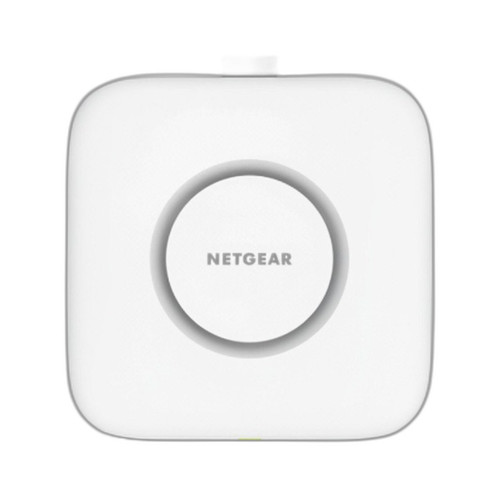
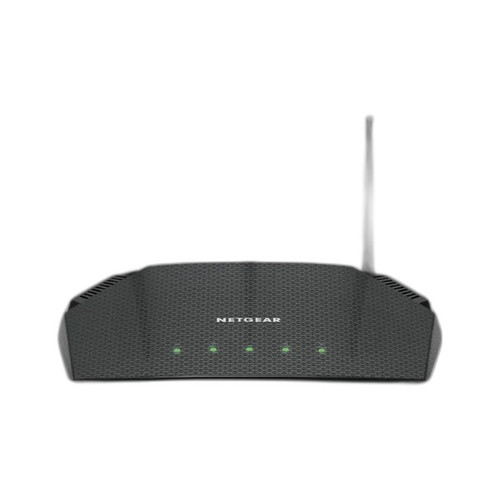
In This Guide
- Which access point delivers higher wireless throughput for dense or bandwidth-intensive deployments?
- How do the two units differ in uplink speed and power input requirements?
- What management and cloud integration capabilities does each access point provide?
- Which should you choose: the WBE710-100NAS or the WBE750-100NAS?
- Side-by-Side Specs
- FAQ
Which access point delivers higher wireless throughput for dense or bandwidth-intensive deployments?
The WBE750-100NAS is specified at 18.4 Gbps aggregate wireless throughput versus 9.4 Gbps for the WBE710-100NAS — a near 2× difference on this single metric. Both are WiFi 7 (802.11be) tri-band units, so the throughput gap reflects radio chain or stream count differences not explicitly broken out in the provided specs. For environments with concurrent voice, video, and IoT traffic — as indicated by the WBE750's card copy — the higher aggregate ceiling gives the WBE750-100NAS material headroom. The WBE710-100NAS at 9.4 Gbps still represents a substantial WiFi 7 deployment grade but is better suited where per-AP client density is moderate rather than extreme.
How do the two units differ in uplink speed and power input requirements?
The WBE750-100NAS specifies a 10G Ethernet uplink port, which aligns with its 18.4 Gbps radio aggregate and prevents backhaul becoming the bottleneck in high-density installations. The WBE710-100NAS specifies a 2.5G PoE input port — the provided specs list '2.5G PoE powered' under Power Budget and 'Ethernet Rate: Ports 1', indicating its single uplink operates at 2.5G. At 9.4 Gbps wireless aggregate, a 2.5G uplink will become a constraint under heavy concurrent load. Both units accept PoE++ (802.3bt) power input, eliminating separate power runs. The WBE710 spec also lists '802.3af' under Power Type for Product B — that field in the provided data belongs to the WBE750, not WBE710; for the WBE710 the spec is 2.5G PoE input. Buyers must verify switch infrastructure can supply 802.3bt at the required wattage for either unit.
What management and cloud integration capabilities does each access point provide?
The WBE750-100NAS is specified with NETGEAR Insight Cloud management plus Bandwidth Management, enabling centralized configuration, monitoring, and policy control across multi-AP deployments from a cloud dashboard. The WBE710-100NAS is listed as Unmanaged with Bandwidth Management enabled — cloud or controller-based management is not specified for the WBE710. For IT teams requiring remote visibility, firmware orchestration, or multi-site AP fleet control, the WBE750's Insight Cloud capability is a functional distinction. The WBE710's unmanaged status positions it for standalone or smaller deployments where local configuration suffices and cloud licensing overhead is not desired. No VLAN, RADIUS, or third-party controller compatibility data is provided in the supplied specs for either unit.
Which should you choose: the WBE710-100NAS or the WBE750-100NAS?
Our take: The WBE750-100NAS is the stronger choice when deployment scale, backhaul capacity, or centralized management are priorities. It delivers 18.4 Gbps aggregate wireless throughput versus 9.4 Gbps on the WBE710-100NAS — a 96% throughput advantage — pairs that radio capacity with a 10G Ethernet uplink rather than a 2.5G uplink, and adds NETGEAR Insight Cloud management absent on the WBE710. The WBE710-100NAS is a rational fit for standalone or smaller installations where a single-AP unmanaged deployment is acceptable, cloud licensing is unwanted, and the 2.5G uplink is not a bottleneck given the client mix. Both units share WiFi 7 tri-band radio, PoE++ input, plastic wall/ceiling mount housings, and a 5-year warranty, so the incremental cost of the WBE750 buys throughput headroom, a matched 10G backhaul, and fleet management — justifiable in high-density commercial or enterprise environments.
Side-by-Side Comparison
Spec-for-spec, from manufacturer data.
| Specification | NETGEAR WBE710-100NAS | NETGEAR WBE750-100NAS |
|---|---|---|
| WiFi Standard | WiFi 7 (802.11be) Tri-Band | WiFi 7 (802.11be) Tri-Band |
| Aggregate Wireless Throughput | 9.4 Gbps | 18.4 Gbps |
| Uplink Port Speed | 2.5G | 10G |
| Number of Uplink Ports | 1 | 1 |
| PoE Power Input | PoE++ (802.3bt) | PoE++ (802.3bt) |
| Management | Unmanaged; Bandwidth Management | NETGEAR Insight Cloud; Bandwidth Management |
| Cloud Management | Not specified | NETGEAR Insight Cloud |
| Form Factor | Wall / Ceiling Mount Access Point | Wall / Ceiling Mount Access Point |
| Antenna Gain | 4.1 / 4.6 dBi | 4.1 / 4.6 dBi |
| Housing / Enclosure | Plastic | Plastic |
| Mounting Options | Wall, Ceiling | Wall, Ceiling |
| Operating Temperature | Industrial | Industrial |
| Warranty | 5 years | 5 years |
| Datasheet | /content/product-datasheets/WBE710-100NAS.pdf | /content/product-datasheets/WBE750-100NAS.pdf |
Frequently Asked Questions
Which should you choose: the WBE710-100NAS or the WBE750-100NAS?
The WBE750-100NAS is the stronger choice when deployment scale, backhaul capacity, or centralized management are priorities. It delivers 18.4 Gbps aggregate wireless throughput versus 9.4 Gbps on the WBE710-100NAS — a 96% throughput advantage — pairs that radio capacity with a 10G Ethernet uplink rather than a 2.5G uplink, and adds NETGEAR Insight Cloud management absent on the WBE710. The WBE710-100NAS is a rational fit for standalone or smaller installations where a single-AP unmanaged deployment is acceptable, cloud licensing is unwanted, and the 2.5G uplink is not a bottleneck given the client mix. Both units share WiFi 7 tri-band radio, PoE++ input, plastic wall/ceiling mount housings, and a 5-year warranty, so the incremental cost of the WBE750 buys throughput headroom, a matched 10G backhaul, and fleet management — justifiable in high-density commercial or enterprise environments.
Is the WBE710-100NAS or WBE750-100NAS better for larger or high-density deployments?
Based on the provided specs, the WBE750-100NAS is better suited to larger or high-density deployments. It specifies 18.4 Gbps aggregate wireless throughput (versus 9.4 Gbps on the WBE710), a 10G Ethernet uplink to prevent backhaul congestion, and NETGEAR Insight Cloud management for centralized multi-AP control — all of which matter when client counts and concurrent traffic loads are high.
Can I power both the WBE710-100NAS and WBE750-100NAS from a standard PoE switch?
Both units specify PoE++ (802.3bt) as their power input type. Standard 802.3af or 802.3at PoE switches may not supply sufficient wattage. Buyers should confirm their switch infrastructure supports 802.3bt at the per-port power level required by each AP. The exact wattage draw for each model is not listed in the provided specs, so consult the full NETGEAR datasheets before selecting switch hardware.
Does the WBE710-100NAS support cloud management like the WBE750-100NAS?
Based on the provided specs, no. The WBE710-100NAS is listed as Unmanaged — cloud or controller-based management is not specified for that model. The WBE750-100NAS is specified with NETGEAR Insight Cloud management plus Bandwidth Management. If centralized remote management across multiple access points is required, the WBE750-100NAS is the specified option between these two.
Get a Second Opinion on Your Camera Choice
Share your site layout, coverage goals, and budget. Our team will validate the camera selection, flag anything we would change, and recommend products that match the use case.