
i-PRO X22500-V3L vs i-PRO X25500-V3LN: Specification Comparison
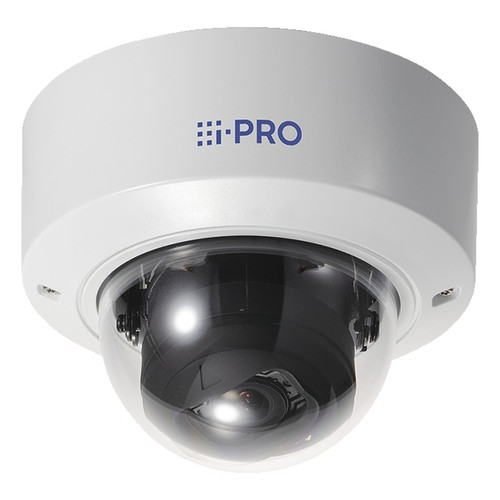
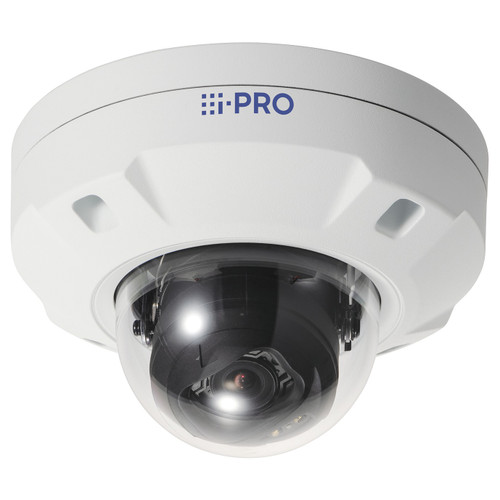
Both the i-PRO WV-X22500-V3L and WV-X25500-V3LN are 5MP fixed dome cameras built on the same 1/2.8-type CMOS sensor and Ambarella CV52 SoC platform, making them direct cross-shop candidates. The comparison turns on deployment environment: the X22500-V3L is rated for indoor use only, while the X25500-V3LN carries full outdoor weatherproofing. Buyers choosing between them are typically deciding whether a project demands indoor-optimized cost efficiency or hardened outdoor-grade construction across the same optical and AI analytics baseline.
In This Guide
How do the imaging specs compare?
Both cameras share an identical imaging core: 1/2.8-type CMOS, 3072×1728 maximum resolution at 30fps, minimum illumination of 0.02 lux (B&W with IR LED), 132dB maximum dynamic range (Super Dynamic On, Level 31), and a 3.1x motorized varifocal lens spanning 2.9–9mm. IR illumination is rated at 70m on both units. The X22500-V3L specifies a horizontal field of view of 33°–105° (16:9/4:3), while the X25500-V3LN specifies 33°–103° horizontal for both 16:9 and 4:3 aspect ratios—a marginal 2° difference at wide end with no practical operational impact.
DORI performance figures show a slight edge for the X25500-V3LN in the wide-angle position: Detect at 48.9m vs 47.1m, Observe at 19.5m vs 18.9m, Recognize at 9.8m vs 9.4m, and Identify at 4.9m vs 4.7m. Tele-end DORI figures are identical between the two models at all four classification distances. Maximum aperture ratio, shutter speed range (1/60–1/10000), AGC range (0–11), DNR range (0–255), and the Ambarella CV52 SoC are shared across both. The X25500-V3LN's datasheet also explicitly notes a 50m IR range at 50 IRE, while that specific qualifier is not stated in the X22500-V3L spec sheet.
What about installation and environment?
This is the decisive differentiator between the two models. The X22500-V3L is rated for indoor deployment only, with no IP ingress protection rating listed in its specifications and IK10 impact resistance (IEC 62262). Operating temperature is –10°C to +50°C (power-on minimum 0°C), and ambient humidity is specified at 10%–90% non-condensing. Its housing is aluminum/PC in white, weighing approximately 820g with a ø129.5mm × 102.5mm (H) footprint.
The X25500-V3LN is purpose-built for outdoor and harsh-environment installation. It carries IP66/IP67 (IEC 60529), Type 4X (UL50E), and NEMA 4X ratings for water and dust resistance, along with IK10 impact resistance and a 50J shock rating (IEC 60068-2-75). Wind resistance is specified up to 40 m/s (approximately 89 mph). Operating temperature extends from –40°C to +55°C (power-on minimum –30°C), and humidity tolerance reaches 10%–100% non-condensing—substantially broader than the indoor model. The outdoor unit is heavier at 1.1 kg and larger at ø154mm × 105mm (H), with an aluminum die-cast, stainless steel, and PC resin construction. Both models draw PoE+ (IEEE 802.3at) Class 4 power; the X22500-V3L is rated at 14W and the X25500-V3LN at 14.2W maximum. Both share the same pan ±180°, tilt –30° to +85°, yaw ±100° adjusting angles.
Which fits your VMS and analytics better?
Both cameras support ONVIF Profiles G, S, T, and M; H.265/H.264/MJPEG compression; up to 14 simultaneous users; microSDXC edge storage up to 512GB; and the same alarm I/O terminal count (2 IN, 1 OUT, 1 AUX on the X22500-V3L; 3 IN, 1 OUT, 1 AUX OUT on the X25500-V3LN—the outdoor model adds one additional alarm input terminal). Both support audio input via ø3.5mm stereo mini jack and audio output via 3.5mm stereo jack. Audio compression options (G.726, G.711, AAC-LC) and transmission modes (Off/Mic/Audio out/Half duplex/Full duplex) are identical. Both cameras list up to 8 privacy zones, 8 VIQS zones, 4 VMD areas, and 1 SCD area.
The AI analytics descriptions differ in specificity between the two spec sheets. The X22500-V3L explicitly lists AI motion, face, people, and vehicle detection alongside AI Sound Classification (Gunshot, Yell, Vehicle horn, Glass break). The X25500-V3LN lists 'AI Video Analytics (8 detection types)' without enumerating all eight, though its marketing summary references face, people, vehicle, and occupancy detection. The X22500-V3L spec sheet additionally notes FIPS 140-2 Level 3 security certification; this certification is not stated in the X25500-V3LN spec sheet. IPv6 protocol support is explicitly documented for the X25500-V3LN; the X22500-V3L spec sheet lists IPv4 protocols only. Both carry identical safety certifications (UL62368-1, c-UL, CE, IEC62368-1) and EMC markings (FCC Part 15 Class A, ICES-003 Class A, EN55032 Class A, EN55035).
Which should you choose: the X22500-V3L or the X25500-V3LN?
Our take: The X22500-V3L is the stronger choice when the deployment is strictly indoor and budget or ceiling-space constraints favor a lighter, more compact unit. The X25500-V3LN is the mandatory choice for any outdoor or environmentally exposed location. The three concrete spec deltas that drive the decision: (1) operating temperature—the outdoor model extends coverage from –40°C to +55°C versus –10°C to +50°C indoors, a range critical for rooftop, perimeter, or unheated enclosure installs; (2) environmental rating—IP66/IP67/NEMA 4X/50J shock on the X25500-V3LN versus no IP ingress rating and IK10-only on the X22500-V3L; (3) the outdoor unit adds a third alarm input terminal (3 IN vs 2 IN). If the installation is climate-controlled interior space and FIPS 140-2 Level 3 certification is a compliance requirement, the X22500-V3L is the documented choice, as that certification is not stated in the X25500-V3LN specification sheet.
Side-by-Side Comparison
Spec-for-spec, from manufacturer data.
| Specification | i-PRO X22500-V3L | i-PRO X25500-V3LN |
|---|---|---|
| Resolution | 3072×1728 (5MP) | 3072×1728 (5MP) |
| Image Sensor | 1/2.8-type CMOS | 1/2.8-type CMOS |
| System on Chip | Ambarella CV52 | Ambarella CV52 |
| Lens / Focal Length | 3.1x motorized varifocal, 2.9–9mm | 3.1x motorized varifocal, 2.9–9mm |
| Horizontal FoV | 33°–105° (16:9/4:3) | 33°–103° (16:9 and 4:3) |
| Minimum Illumination | 0.02 lux (B&W, IR LED) | 0.02 lux (B&W, IR LED) |
| IR Illumination Range | 70m (230 ft) | 70m @ 30 IRE; 50m @ 50 IRE |
| Dynamic Range (WDR) | Max. 132 dB (Super Dynamic On, Level 31) | Max. 132 dB (Super Dynamic On, Level 31) |
| Max Frame Rate | 30fps | 30fps |
| Video Compression | H.265, H.264, MJPEG | H.265, H.264, MJPEG |
| IP / Ingress Rating | Not specified | IP66 / IP67 / NEMA 4X |
| Impact / Vandal Rating | IK10 (IEC 62262) | IK10 (IEC 62262); 50J (IEC 60068-2-75) |
| Operating Temperature | –10°C to +50°C (power-on 0°C to +50°C) | –40°C to +55°C (power-on –30°C to +55°C) |
| Power Input / PoE Class | PoE+ (802.3at) Class 4 / DC 12V; 14W | PoE+ (802.3at) Class 4 / DC 12V; 14.2W max |
| Edge Storage | microSDXC up to 512 GB | microSDXC up to 512 GB |
| Alarm I/O Terminals | 2 IN, 1 OUT, 1 AUX | 3 IN, 1 OUT, 1 AUX OUT |
| ONVIF Profiles | G / S / T / M | G / S / T / M |
| Audio | Input: ø3.5mm stereo mini jack; Output: 3.5mm stereo jack | Input: ø3.5mm stereo mini jack; Output: 3.5mm stereo jack |
| FIPS 140-2 Level 3 | Yes (specified) | Not stated in spec sheet |
| IPv6 Support | Not stated in spec sheet | Yes (specified) |
| Environment Rating | Indoor | Outdoor |
| Dimensions | ø129.5mm × 102.5mm (H) | ø154mm × 105mm (H) |
| Weight | Approx. 820g (1.9 lbs) | Approx. 1.1 kg (2.43 lbs) |
| Warranty | 5-Year | 5-Year |
Frequently Asked Questions
Which should you choose: the X22500-V3L or the X25500-V3LN?
The X22500-V3L is the stronger choice when the deployment is strictly indoor and budget or ceiling-space constraints favor a lighter, more compact unit. The X25500-V3LN is the mandatory choice for any outdoor or environmentally exposed location. The three concrete spec deltas that drive the decision: (1) operating temperature—the outdoor model extends coverage from –40°C to +55°C versus –10°C to +50°C indoors, a range critical for rooftop, perimeter, or unheated enclosure installs; (2) environmental rating—IP66/IP67/NEMA 4X/50J shock on the X25500-V3LN versus no IP ingress rating and IK10-only on the X22500-V3L; (3) the outdoor unit adds a third alarm input terminal (3 IN vs 2 IN). If the installation is climate-controlled interior space and FIPS 140-2 Level 3 certification is a compliance requirement, the X22500-V3L is the documented choice, as that certification is not stated in the X25500-V3LN specification sheet.
Can the X22500-V3L be used outdoors if I mount it under a canopy?
Based on the provided specifications, the X22500-V3L carries no IP ingress protection rating and is rated for indoor use only, with an operating humidity ceiling of 90% non-condensing and a minimum operating temperature of –10°C (power-on 0°C). The X25500-V3LN is the model specified for outdoor exposure, rated IP66/IP67/NEMA 4X with humidity tolerance to 100% and a temperature floor of –40°C. Whether a canopy installation satisfies the X22500-V3L's environmental limits is a site-specific engineering judgment; the spec sheet does not support an outdoor rating.
Do both cameras support the same AI analytics features?
The two spec sheets describe AI analytics differently. The X22500-V3L explicitly enumerates face, people, vehicle, and motion detection plus AI Sound Classification (Gunshot, Yell, Vehicle horn, Glass break). The X25500-V3LN states 'AI Video Analytics (8 detection types)' without listing all eight in the core specification; its supplemental summary references face, people, vehicle, and occupancy detection. Buyers requiring a specific enumerated analytics list for the X25500-V3LN should confirm the full eight detection types directly with i-PRO before specifying the project.
Is there any difference in how these cameras handle PoE power?
Both cameras require PoE+ (IEEE 802.3at) and are PoE Class 4. Maximum power consumption is 14W for the X22500-V3L and 14.2W for the X25500-V3LN—a 0.2W difference that is not operationally significant. Both can also be powered by DC 12V. Any PoE+ switch port or mid-span injector rated at Class 4 will support either unit without modification.
Get a Second Opinion on Your Camera Choice
Share your site layout, coverage goals, and budget. Our team will validate the camera selection, flag anything we would change, and recommend products that match the use case.