
i-PRO U11300-V2 vs i-PRO U11301-F3: Specification Comparison
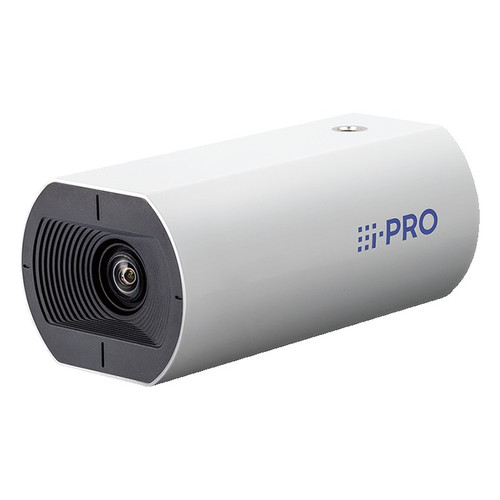
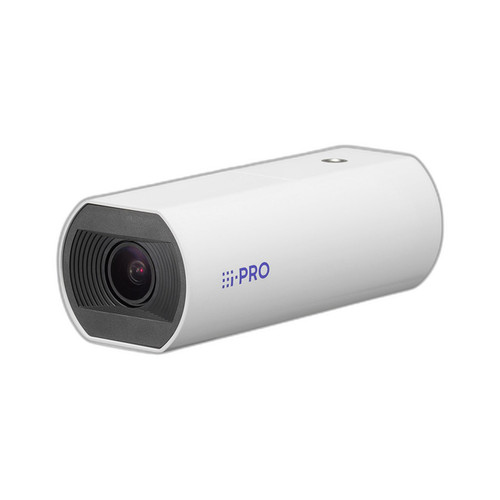
Both the i-PRO WV-U11300-V2 and WV-U11301-F3 are 2MP indoor box cameras sharing the same 1/2.8-inch CMOS sensor and PoE power delivery. They occupy the same product tier and form factor, making them direct cross-shop candidates for installers evaluating i-PRO's indoor box lineup. The key differentiators are lens flexibility (motorized varifocal vs. fixed), cybersecurity certification (standard vs. FIPS 140-3 Level 3), video codec support, and PoE class draw — each pointing to distinct deployment priorities.
In This Guide
How do the imaging specs compare?
Both cameras deliver 2MP (1920×1080) resolution at 30fps using the same 1/2.8-inch CMOS sensor and both achieve 120 dB dynamic range via Super Dynamic mode at Level 31. Low-light performance diverges: the U11300-V2 reaches 0.006 lx (color) / 0.0025 lx (B&W) under extended shutter conditions, while the U11301-F3 is specified at 0.07 lx (color) / 0.003 lx (B&W) at F2.0, AGC 11, 16/30s exposure — making the U11300-V2 measurably more sensitive in darkness by roughly 23× in color mode.
Lens architecture is the most significant imaging difference. The U11300-V2 carries a motorized varifocal lens spanning 2.9–7.3 mm (2.5× optical zoom), with a horizontal field of view ranging from 43° to 100° and DORI Identify distances of 3.2 m (wide) to 9.7 m (tele). The U11301-F3 uses a fixed 3.2 mm, F2.0 prime lens — no DORI distances or field-of-view angles are specified in the provided data. The fixed lens on the F3 cannot be adjusted post-installation, while the V2's motorized zoom allows scene framing without physically repositioning the camera.
What about installation and environment?
Both cameras are rated for indoor use only; no IP or IK rating is listed for either model in the provided specifications. Operating temperature is identical: -10°C to +50°C (14°F to 122°F) with 10–90% relative humidity (no condensation) per the U11300-V2 spec; the U11301-F3 lists the same temperature range. Both are powered via PoE IEEE 802.3af. The U11300-V2 is classified as PoE Class 2 at 4.3 W, while the U11301-F3 is listed as PoE Class 0 with a maximum draw estimated at 13 W — meaning the F3 may require a higher-budget PoE port allocation despite both being 802.3af-compliant.
Form factor dimensions differ slightly: the U11300-V2 measures 59 × 49 × 116 mm and weighs approximately 165 g, whereas the U11301-F3 measures 59 × 49 × 142 mm (26 mm deeper, attributable in part to the fixed lens module). Weight for the F3 is not specified in the provided data. The U11300-V2 datasheet notes mount compatibility via a base bracket; the F3 spec lists wall and ceiling mounting. Neither model includes an IK impact rating in the supplied specifications.
Which fits your VMS and analytics better?
Both cameras support ONVIF Profile G, S, and T per the provided specifications, and both carry built-in microphones with audio recording. The U11300-V2 supports G.726, G.711, and AAC-LC (16–128 kbps) audio compression with half-duplex and full-duplex modes, and accommodates up to 14 simultaneous users. Its analytics include VMD (4 areas), Scene Change Detection (1 area), and Audio Detection. The U11301-F3 lists i-VMD intelligent motion detection, Scene Change Detection, and Audio Detection; specific audio codec options and simultaneous user counts are not detailed in the provided F3 specifications.
Edge storage is supported on both via microSD/SDHC/SDXC slots; the U11300-V2 explicitly supports up to 512 GB microSDXC. Video codec support also diverges: the U11300-V2 encodes H.265 and H.264 (CBR/VBR, unicast/multicast) plus JPEG; the U11301-F3 spec lists H.265, H.264, and MJPEG. The standout integration differentiator for the F3 is its FIPS 140-3 Level 3 Certified SecureElement (EdgeLock SE052F by NXP Semiconductors) and Signed Firmware/Secure Boot attestation — features absent from the U11300-V2 spec sheet and critical for federally regulated or zero-trust environments. The U11300-V2 lists NDAA compliance status as not specified; the F3 is explicitly noted as NDAA-compliant.
Which should you choose: the U11300-V2 or the U11301-F3?
Our take: The U11300-V2 is the stronger choice when scene coverage flexibility and raw low-light sensitivity are the primary requirements. Its motorized 2.5× varifocal lens (2.9–7.3 mm, 43°–100° FOV) eliminates the need for physical repositioning during commissioning, and its 0.006 lx color / 0.0025 lx B&W minimum illumination outperforms the U11301-F3's 0.07 lx color / 0.003 lx B&W by a substantial margin. Conversely, the U11301-F3 is the clear choice for regulated or high-security facilities: its FIPS 140-3 Level 3 Certified SecureElement, Signed Firmware, Secure Boot, and explicit NDAA compliance are not present in the U11300-V2 spec. Power budget also differs — 4.3 W (Class 2) for the V2 versus an estimated 13 W (Class 0) for the F3, affecting switch port planning. Choose the U11300-V2 for variable-scene commercial deployments; choose the U11301-F3 where cybersecurity certification and supply-chain compliance are non-negotiable.
Side-by-Side Comparison
Spec-for-spec, from manufacturer data.
| Specification | i-PRO U11300-V2 | i-PRO U11301-F3 |
|---|---|---|
| Resolution | 2MP (1920×1080) | 2MP (1920×1080) |
| Image Sensor | 1/2.8-inch CMOS | 1/2.8-inch CMOS |
| Lens / Focal Length | Motorized varifocal, 2.9–7.3 mm (2.5× zoom) | Fixed, 3.2 mm, F2.0 |
| Horizontal Field of View | 43°–100° | Not specified in provided data |
| Min Illumination (Color) | 0.006 lx | 0.07 lx (F2.0, 16/30s, AGC 11) |
| Min Illumination (B&W) | 0.0025 lx | 0.003 lx (F2.0, 16/30s, AGC 11) |
| Wide Dynamic Range | 120 dB (Super Dynamic On, Level 31) | 120 dB (Super Dynamic On, Level 31) |
| Max Frame Rate | 30 fps | 30 fps (25 fps mode also available) |
| Video Compression | H.265, H.264, JPEG | H.265, H.264, MJPEG |
| ONVIF Profiles | G, S, T | G, S, T |
| Edge Storage | microSD / SDHC / microSDXC up to 512 GB | microSD supported; max capacity not specified |
| Audio | Built-in mic; G.726, G.711, AAC-LC; half/full duplex | Built-in mic; audio recording supported; codecs not specified |
| Power Input / PoE | PoE IEEE 802.3af, Class 2, 4.3 W | PoE IEEE 802.3af, Class 0, ~13 W estimated |
| Cybersecurity Certifications | Not specified in provided data | FIPS 140-3 Level 3 (EdgeLock SE052F); Signed Firmware; Secure Boot |
| NDAA Compliance | Not specified in provided data | Specified as NDAA-compliant |
| Operating Temperature | -10°C to +50°C | -10°C to +50°C |
| IP / IK Rating | Not specified in provided data | Not specified in provided data |
| Dimensions (W×H×D) | 59 × 49 × 116 mm | 59 × 49 × 142 mm |
| Weight | Approx. 165 g | Not specified in provided data |
| Warranty | 5-Year | Not specified in provided data |
Frequently Asked Questions
Which should you choose: the U11300-V2 or the U11301-F3?
The U11300-V2 is the stronger choice when scene coverage flexibility and raw low-light sensitivity are the primary requirements. Its motorized 2.5× varifocal lens (2.9–7.3 mm, 43°–100° FOV) eliminates the need for physical repositioning during commissioning, and its 0.006 lx color / 0.0025 lx B&W minimum illumination outperforms the U11301-F3's 0.07 lx color / 0.003 lx B&W by a substantial margin. Conversely, the U11301-F3 is the clear choice for regulated or high-security facilities: its FIPS 140-3 Level 3 Certified SecureElement, Signed Firmware, Secure Boot, and explicit NDAA compliance are not present in the U11300-V2 spec. Power budget also differs — 4.3 W (Class 2) for the V2 versus an estimated 13 W (Class 0) for the F3, affecting switch port planning. Choose the U11300-V2 for variable-scene commercial deployments; choose the U11301-F3 where cybersecurity certification and supply-chain compliance are non-negotiable.
Is the U11300-V2 or U11301-F3 better for low-light performance?
Based on the provided specifications, the U11300-V2 achieves lower minimum illumination — 0.006 lx (color) and 0.0025 lx (B&W) — compared to the U11301-F3's 0.07 lx (color) and 0.003 lx (B&W). The U11300-V2 is the spec-documented choice for darker environments.
Does either camera meet federal cybersecurity or NDAA requirements?
The U11301-F3 is explicitly specified with FIPS 140-3 Level 3 certification (via the EdgeLock SE052F SecureElement), Signed Firmware, Secure Boot, and NDAA compliance. None of these certifications appear in the U11300-V2 specifications as provided. For federally regulated or zero-trust deployments, the U11301-F3 is the documented option.
Can I adjust the field of view after mounting, or am I locked in?
The U11300-V2 uses a motorized varifocal lens (2.9–7.3 mm, 2.5× optical zoom) that can be adjusted remotely after installation, covering 43°–100° horizontal. The U11301-F3 uses a fixed 3.2 mm, F2.0 prime lens with no zoom capability — field of view is set at the point of lens selection and cannot be changed without replacing the lens or repositioning the camera.
Get a Second Opinion on Your Camera Choice
Share your site layout, coverage goals, and budget. Our team will validate the camera selection, flag anything we would change, and recommend products that match the use case.