
i-PRO S66600-Z3 vs i-PRO X66600-Z3S: Specification Comparison
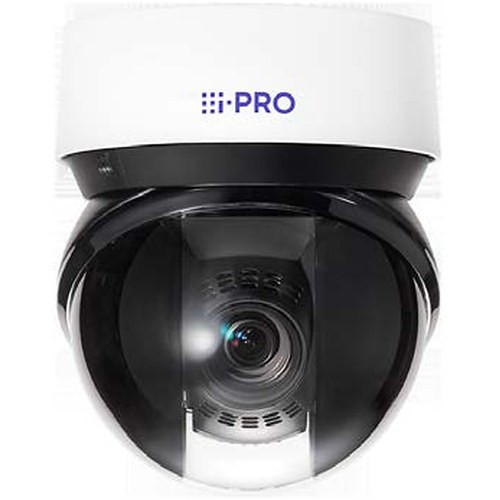
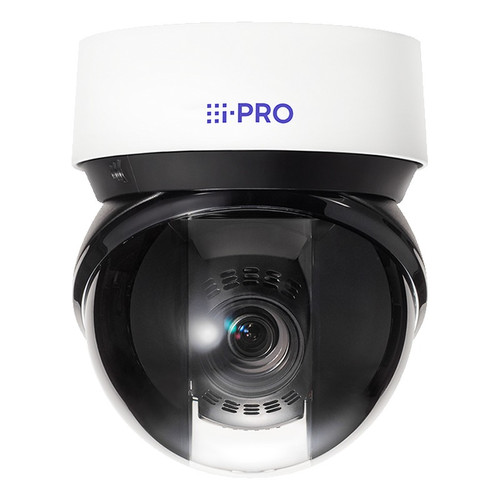
Both the i-PRO WV-S66600-Z3 and WV-X66600-Z3S are outdoor 6MP PTZ dome cameras sharing the same resolution class, PTZ form factor, and i-PRO platform. They are legitimate cross-shop candidates for integrators deploying perimeter surveillance with long-range identification requirements. This comparison examines how their imaging capabilities, environmental and power specifications, and integration features differ based solely on the provided specification data.
In This Guide
How do the imaging specs compare?
Both cameras share a nearly identical optical core: a 1/2.8-type CMOS sensor with a 5.57 × 3.13 mm scanning area, 4.5–135 mm motorized focal length, 30x optical zoom (extendable to 78x digital at 1280×720), F1.8–F4.7 aperture range, and identical DORI performance figures—Identify at tele: 305.0 m / 1000.8 ft; Detect at tele: 3050.4 m / 10007.9 ft. Minimum illumination is 0.1 Lux (BW) for both, and both deliver 132 dB dynamic range with Super Dynamic On at Level 31. The S66600-Z3 specifies its minimum illumination without the measurement conditions noted in the spec, while the X66600-Z3S explicitly states the 0.1 Lux figure at 50IRE, F1.8, 1/30s.
The X66600-Z3S specification explicitly states 30 fps as its frame rate; the S66600-Z3 lists frame rate as 'Variable' without a stated maximum. Both support H.265, H.264, and MJPEG compression with identical resolution steps from 3328×1872 down to 320×180. Both include Active ClearSight, built-in gyro-based image stabilization, and angular field of view of 2.5–62° horizontal. The X66600-Z3S additionally specifies 1.4–37° vertical FOV, which the S66600-Z3 spec does not include. IR range is listed as 3.0 m (minimum focus distance) for both; neither spec provides a stated maximum IR illumination distance.
What about installation and environment?
Both cameras share identical mechanical and environmental ratings: IP66 water and dust resistance, IK10 vandal resistance per IEC 62262, wind resistance up to 40 m/s (~89 mph), ambient operating temperature of -50°C to 60°C (power-on: -30°C to 60°C), and operating humidity of 10–100% (non-condensing). Physical dimensions are identical at φ167 mm × 205 mm (H) with SR 77.5 mm dome radius, and both weigh approximately 3 kg without attachment. Power input is PoE++ (IEEE 802.3bt) at 37.8 W for both, PoE Class 6. The S66600-Z3 also carries a NEMA-TS2 listing, which the X66600-Z3S spec also lists under Other Standards. The S66600-Z3 adds a Type 4X (NEMA) designation alongside IP66; the X66600-Z3S spec does not include the Type 4X designation.
The S66600-Z3 finish is specified as aluminum die cast and polycarbonate dome. The X66600-Z3S adds stainless steel to its finish materials (aluminum die-cast, stainless steel, polycarbonate). Both include a tamper-resistant enclosure. Network interface on both is 10Base-T / 100Base-TX via RJ45; neither spec lists Gigabit Ethernet. Safety certifications are identical: UL62368-1, c-UL CSA C22.2 No.62368-1, CE, IEC62368-1, FCC Part 15 Class A, ICES-003 Issue 7 Class A, EN55032 Class A, EN55035.
Which fits your VMS and analytics better?
Both cameras support ONVIF Profiles G, M, S, and T, ensuring broad VMS compatibility. AI analytics are equivalent across both: AI motion detection, privacy masking, face detection, people detection, vehicle detection, VMD (4 areas), Scene Change Detection (1 area), audio detection, and AI sound classification covering gunshot, yell, vehicle horn, and glass break. Both provide up to 32 privacy zones, 8 VIQS zones, and 256 preset positions with Auto Track, Auto Pan, Preset Sequence, and Patrol auto modes. Both carry FIPS 140-2 Level 3 security (NXP EdgeLock SE050F) and GlobalSign pre-installed device certificates, HTTPS, IEEE 802.1X, brute-force protection, and alteration detection. The S66600-Z3 spec references Ambarella CV22 SoC; the X66600-Z3S spec also states Ambarella CV22.
The audio and I/O configurations differ between models. The S66600-Z3 specifies 4× audio inputs (3.5 mm stereo jack, -51 to -38 dBV) and 4 alarm I/O terminals (IN/OUT). The X66600-Z3S specifies 1× audio input (3.5 mm stereo jack, 2 kΩ impedance) and 3 alarm I/O terminals (IN1/IN2/IN3 + OUT). On-board storage for the X66600-Z3S is explicitly rated for 64 GB–512 GB microSDXC and 4 GB–32 GB microSDHC with detailed recording mode documentation (Manual, Alarm pre/post, Schedule, Network failure backup). The S66600-Z3 spec references microSDXC support but does not state a capacity range. Both support up to 14 simultaneous users, and both list IPv4/IPv6 protocol stacks including SNMPv1/v2/v3. The X66600-Z3S spec additionally lists SRTP, MQTT, and NTCIP in its IPv4 protocol stack; those protocols are not listed in the S66600-Z3 spec.
Which should you choose: the S66600-Z3 or the X66600-Z3S?
Our take: The X66600-Z3S is the stronger choice when protocol breadth and documented storage capacity matter most, while the S66600-Z3 is preferable when expanded audio input and NEMA Type 4X enclosure designation are required. Three concrete spec deltas: (1) Audio inputs—S66600-Z3 provides 4× audio inputs vs. the X66600-Z3S's 1× input, a meaningful difference in multi-microphone or intercom deployments; (2) Protocol stack—X66600-Z3S adds SRTP, MQTT, and NTCIP to its IPv4 stack, which the S66600-Z3 does not list, benefiting traffic-controller integrations and encrypted RTP streams; (3) Storage clarity—X66600-Z3S explicitly supports up to 512 GB microSDXC vs. the S66600-Z3's unspecified capacity ceiling. Both cameras are otherwise nearly identical in optics, DORI range, AI analytics, power, and environmental ratings. Platform qualifier: for NTCIP-based traffic or smart-city deployments, the X66600-Z3S is the documented choice; for multi-drop audio capture, the S66600-Z3's 4-input configuration is the differentiator.
Side-by-Side Comparison
Spec-for-spec, from manufacturer data.
| Specification | i-PRO S66600-Z3 | i-PRO X66600-Z3S |
|---|---|---|
| Resolution | 6MP (3328×1872 max) | 6MP (3328×1872 max) |
| Image Sensor | Approx. 1/2.8 type CMOS, 5.57×3.13 mm | Approx. 1/2.8 type CMOS, 5.57×3.13 mm |
| Lens / Focal Length | 4.5–135 mm motorized, 30x optical | 4.5–135 mm motorized, 30x optical |
| Angular FOV (H) | 2.5°–62° | 2.5°–62° (V: 1.4°–37°) |
| Min. Illumination | 0.1 Lux (BW) | 0.1 Lux (BW, 50IRE, F1.8, 1/30s) |
| Max Frame Rate | Variable (not stated) | 30 fps |
| Dynamic Range (WDR) | Max. 132 dB (Super Dynamic On, Level 31) | Max. 132 dB (Super Dynamic On, Level 31) |
| IR / Night Vision | Built-in IR; focus range from 3.0 m | Built-in IR; focus range from 3.0 m |
| Video Compression | H.265, H.264, MJPEG | H.265, H.264, MJPEG |
| IP / Enclosure Rating | IP66, NEMA Type 4X | IP66 (Type 4X not listed in spec) |
| IK / Impact Rating | IK10 (IEC 62262) | IK10 (IEC 62262) |
| Operating Temperature | -50°C to 60°C (Power On: -30°C to 60°C) | -50°C to 60°C (Power On: -30°C to 60°C) |
| Power Input / PoE Class | PoE++ IEEE 802.3bt, 37.8 W, Class 6 | PoE++ IEEE 802.3bt, 37.8 W, Class 6 |
| Alarm I/O Terminals | 4 alarm terminals (IN/OUT) | 3 alarm I/O terminals (IN1/IN2/IN3 + OUT) |
| Audio Inputs | 4× 3.5 mm stereo jack (-51 to -38 dBV) | 1× 3.5 mm stereo jack (2 kΩ) |
| Edge Storage | microSDXC (capacity range not specified) | microSDXC 64 GB–512 GB; microSDHC 4 GB–32 GB |
| Additional Protocols | IPv4/IPv6 standard stack (no MQTT/SRTP/NTCIP listed) | IPv4 stack adds SRTP, MQTT, NTCIP |
| Finish / Housing | Aluminum die cast, polycarbonate dome | Aluminum die-cast, stainless steel, polycarbonate |
| Dimensions | φ167 mm × 205 mm (H), SR 77.5 mm dome | φ167 mm × 205 mm (H), SR 77.5 mm dome |
| Weight | Approx. 3 kg (without attachment) | Approx. 3 kg (without attachment) |
| ONVIF Profiles | G / M / S / T | G / M / S / T |
| Warranty | 5-year warranty | 5-year warranty |
Frequently Asked Questions
Which should you choose: the S66600-Z3 or the X66600-Z3S?
The X66600-Z3S is the stronger choice when protocol breadth and documented storage capacity matter most, while the S66600-Z3 is preferable when expanded audio input and NEMA Type 4X enclosure designation are required. Three concrete spec deltas: (1) Audio inputs—S66600-Z3 provides 4× audio inputs vs. the X66600-Z3S's 1× input, a meaningful difference in multi-microphone or intercom deployments; (2) Protocol stack—X66600-Z3S adds SRTP, MQTT, and NTCIP to its IPv4 stack, which the S66600-Z3 does not list, benefiting traffic-controller integrations and encrypted RTP streams; (3) Storage clarity—X66600-Z3S explicitly supports up to 512 GB microSDXC vs. the S66600-Z3's unspecified capacity ceiling. Both cameras are otherwise nearly identical in optics, DORI range, AI analytics, power, and environmental ratings. Platform qualifier: for NTCIP-based traffic or smart-city deployments, the X66600-Z3S is the documented choice; for multi-drop audio capture, the S66600-Z3's 4-input configuration is the differentiator.
Is the S66600-Z3 or X66600-Z3S better for low-light performance?
Based on the provided specifications, both cameras are equivalent in low-light performance. Both use a 1/2.8-type CMOS sensor with a minimum illumination of 0.1 Lux (BW) and a maximum aperture of F1.8 (wide). Neither spec provides a lux figure with IR illumination engaged. No low-light advantage can be attributed to either model from the available data.
Does either camera support MQTT for IoT or smart-city integration?
Yes, but only the X66600-Z3S lists MQTT (along with SRTP and NTCIP) in its IPv4 supported protocol stack. The S66600-Z3 specification does not list MQTT, SRTP, or NTCIP among its supported protocols. If MQTT-based IoT integration or NTCIP traffic-controller compatibility is required, the X66600-Z3S is the documented choice.
Which camera has more alarm I/O terminals for external sensor integration?
The S66600-Z3 specifies 4 alarm terminals (IN/OUT) and 4 audio inputs, providing more physical I/O connections. The X66600-Z3S specifies 3 alarm I/O terminals (IN1/IN2/IN3 + OUT) and 1 audio input. If the installation requires connecting multiple external sensors or microphones, the S66600-Z3 offers the larger I/O count per the provided specifications.
Get a Second Opinion on Your Camera Choice
Share your site layout, coverage goals, and budget. Our team will validate the camera selection, flag anything we would change, and recommend products that match the use case.