
i-PRO S66600-Z3 vs i-PRO S66600-Z3L: Specification Comparison
Both the i-PRO WV-S66600-Z3 and WV-S66600-Z3L are 6MP outdoor PTZ dome cameras sharing the same platform — 30x optical zoom, Ambarella CV22 SoC, AI analytics, and PoE++ power. The key differentiator is the Z3L's integrated 280m IR illuminator versus the Z3's non-IR design, along with differences in minimum illumination, power draw, enclosure materials, and warranty terms. Installers choosing between them are essentially choosing between a daytime/well-lit-site PTZ and a long-range IR-capable PTZ.
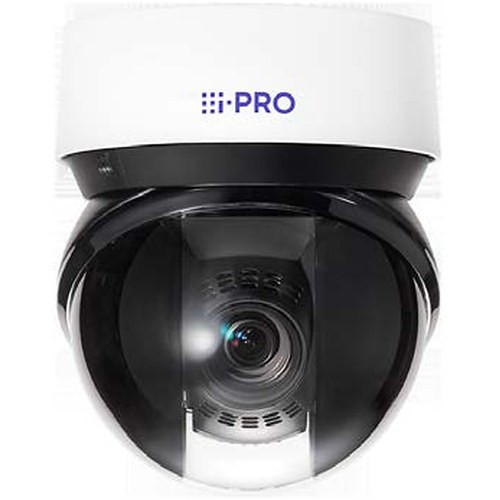
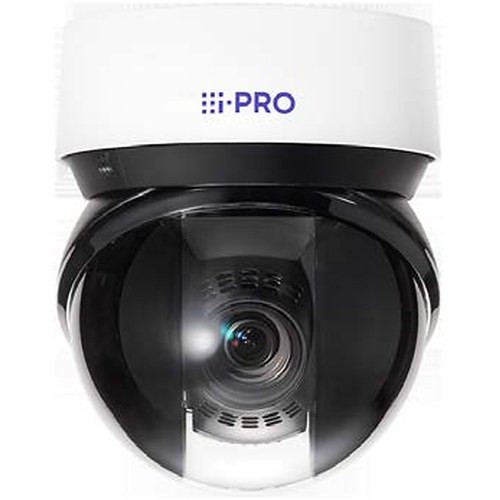
In This Guide
How do the imaging specs compare?
Both cameras share an identical optical core: 1/2.8-type CMOS sensor, 5.57 × 3.13mm scanning area, 4.5–135mm focal length, F1.8–F4.7 aperture range, 30x optical zoom, up to 78x extra zoom at 1280×720, and identical DORI performance figures (Detect: Wide 110.8m / Tele 3050.4m; Identify: Wide 11.1m / Tele 305.0m). WDR is identical at Max. 132dB with Super Dynamic On at Level 31, and both offer the same DNR range (0–255), AGC range (0–11), and BLC/HLC range (0–31).
The meaningful divergence is in low-light capability. The Z3 specifies minimum illumination at 0.1 Lux (B&W); no color-mode lux figure is provided for the Z3. The Z3L specifies 0.13 Lux (Color, 30 IRE) for its color mode; a B&W floor is not separately listed. Critically, the Z3L adds built-in IR LED illumination rated at 280m (High) / 200m (Medium) — the Z3 has no on-board IR. The Z3 lists IR Distance as 3.0m (its near-focus limit), confirming it is not an IR camera. For zero-lux or near-zero-lux operation, the Z3L has a decisive hardware advantage.
What about installation and environment?
Both cameras are mechanically near-identical: same φ167mm × 205mm (H) housing dimensions, same ~3kg mass, same IP66 / Type 4X / IK10 ratings, same wind resistance up to 40m/s, and the same ambient operating temperature range (Storage: –50°C to 60°C; Power On: –30°C to +60°C). Both carry UL/c-UL (UL62368-1), CE, IEC62368-1, FCC Part 15 Class A, ICES-003 Issue 7 Class A, EN55032/EN55035, and NEMA-TS2 certifications. The Z3L additionally lists NEMA 4X explicitly in the Water and Dust Resistance field, though functionally Type 4X and NEMA 4X are equivalent.
Power is where a practical difference exists. The Z3 draws 37.8W via PoE++ (IEEE 802.3bt, PoE Class 6). The Z3L draws 45.9W — also PoE++ / IEEE 802.3bt / Class 6 — attributable to the IR illuminator load. Installers must confirm their PoE++ switch or injector budget accommodates 45.9W per port for the Z3L. Enclosure finish also differs: the Z3 is aluminum die cast with a polycarbonate dome; the Z3L uses aluminum, stainless steel, and polycarbonate — the stainless steel elements may offer added corrosion resistance in harsh coastal or high-wash environments.
Which fits your VMS and analytics better?
Both cameras are functionally equivalent on the integration side. They share ONVIF Profiles G/M/S/T, identical supported protocol stacks (IPv4 and IPv6, including RTSP, RTP/RTCP, SNMPv1/v2/v3, IEEE 802.1X, DiffServ, UPnP, IGMP), up to 14 simultaneous users, and the same resolution ladder (3328×1872 down to 320×180). Both support H.265/H.264/MJPEG with Constant Bit Rate, VBR, Frame Rate, and Best Effort modes, plus Smart Coding. Edge storage is microSDXC on both. Audio I/O is 4× 3.5mm stereo input plus 3.5mm stereo output on both; the Z3 specifies input sensitivity of –51 to –38dB and output impedance of 600Ω, while the Z3L specifies output at –20dBV / 600Ω — input sensitivity not separately listed for Z3L. Alarm I/O is 4 terminals on both; the Z3L's datasheet explicitly calls out 2 IN / 1 OUT / 1 AUX OUT.
AI analytics labeling differs between datasheets. The Z3 lists 'AI motion/privacy/face/people/vehicle detection' by name. The Z3L states 'AI video analytics (8 detection types)' without enumerating all eight, though both list AI Sound Classification (Gunshot, Yell, Vehicle horn, Glass break), VMD (4 areas), SCD (1 area), and Audio Detection. The Z3's security spec cites FIPS 140-2 Level 3 with NXP EdgeLock SE050F hardware security element and pre-installed GlobalSign certificate with alteration detection explicitly named; the Z3L's security entry is abbreviated to FIPS 140-2 Level 3 / HTTPS / IEEE 802.1X — the same underlying platform is likely, but only the Z3 spec sheet documents the full security stack explicitly.
Which should you choose: the S66600-Z3 or the S66600-Z3L?
Our take: The S66600-Z3L is the stronger choice when the deployment site has periods of darkness or inadequate ambient lighting — its 280m (High) / 200m (Medium) built-in IR illuminator allows zero-lux operation that the Z3 simply cannot provide without an external IR source. The Z3L's power draw is 45.9W versus the Z3's 37.8W, an 8.1W delta per port that must be budgeted on the PoE++ switch. Conversely, the Z3 ships with a 5-year warranty versus the Z3L's 3-year warranty — a meaningful lifecycle cost difference on a high-value PTZ. In well-lit or externally illuminated sites where IR is unnecessary, the Z3's lower power draw and longer warranty make it the pragmatic choice. Both cameras deliver identical pan/tilt mechanics, DORI performance, ONVIF profile set, and resolution. Specify the Z3L for perimeter surveillance with true darkness periods; specify the Z3 for parking structures, stadiums, or sites with external lighting infrastructure.
Side-by-Side Comparison
Spec-for-spec, from manufacturer data.
| Specification | i-PRO S66600-Z3 | i-PRO S66600-Z3L |
|---|---|---|
| Resolution | 6MP (3328×1872) | 6MP (3328×1872) |
| Image Sensor | 1/2.8-type CMOS, 5.57×3.13mm | 1/2.8-type CMOS, 5.57×3.13mm |
| Lens / Focal Length | 4.5–135mm, 30x optical, up to 78x extra zoom | 4.5–135mm, 30x optical, up to 78x extra zoom |
| Angular FOV | 2.5°–62° (H) — vertical not specified | 2.5°–62° (H), 1.4°–37° (V) |
| Min. Illumination | 0.1 Lux (B&W) — color lux not specified | 0.13 Lux (Color, 30 IRE) — B&W floor not specified |
| IR Illuminator / Range | None (no on-board IR) | Built-in IR LED: 280m (High), 200m (Medium) |
| WDR | Max. 132 dB (Super Dynamic On, Level 31) | Max. 132 dB (Super Dynamic On, Level 31) |
| SoC | Ambarella CV22 | Ambarella CV22 |
| Video Compression | H.265, H.264, MJPEG | H.265, H.264, MJPEG |
| IP / NEMA Rating | IP66, Type 4X | IP66, Type 4X, NEMA 4X |
| IK / Impact Rating | IK10 (IEC 62262) | IK10 (IEC 62262) |
| Operating Temperature | –50°C to 60°C (Power On: –30°C to +60°C) | –50°C to 60°C (Power On: –30°C to +60°C) |
| Power Input / Consumption | PoE++ IEEE 802.3bt, Class 6, 37.8W | PoE++ IEEE 802.3bt, DC 54V, Class 6, 45.9W |
| Edge Storage | microSDXC | microSDXC |
| ONVIF Profiles | G / M / S / T | G / M / S / T |
| Enclosure Finish | Aluminum die cast, polycarbonate dome | Aluminum, stainless steel, polycarbonate |
| Dimensions | φ167mm × 205mm (H), dome SR 77.5mm | φ167mm × 205mm (H), dome SR 77.5mm |
| Weight | Approx. 3 kg (without attachment) | Approx. 3 kg (without attachment) |
| Warranty | 5 years | 3 years |
Frequently Asked Questions
Which should you choose: the S66600-Z3 or the S66600-Z3L?
The S66600-Z3L is the stronger choice when the deployment site has periods of darkness or inadequate ambient lighting — its 280m (High) / 200m (Medium) built-in IR illuminator allows zero-lux operation that the Z3 simply cannot provide without an external IR source. The Z3L's power draw is 45.9W versus the Z3's 37.8W, an 8.1W delta per port that must be budgeted on the PoE++ switch. Conversely, the Z3 ships with a 5-year warranty versus the Z3L's 3-year warranty — a meaningful lifecycle cost difference on a high-value PTZ. In well-lit or externally illuminated sites where IR is unnecessary, the Z3's lower power draw and longer warranty make it the pragmatic choice. Both cameras deliver identical pan/tilt mechanics, DORI performance, ONVIF profile set, and resolution. Specify the Z3L for perimeter surveillance with true darkness periods; specify the Z3 for parking structures, stadiums, or sites with external lighting infrastructure.
Is the S66600-Z3 or S66600-Z3L better for low-light or nighttime use?
The S66600-Z3L is the clear choice for low-light and nighttime operation. It has a built-in IR illuminator rated at 280m (High) / 200m (Medium), enabling zero-lux surveillance. The S66600-Z3 has no on-board IR; its 3.0m IR Distance figure refers to its minimum focus distance, not an illuminator range. The Z3's minimum illumination is specified at 0.1 Lux (B&W) — usable in low ambient light but not in total darkness without an external IR source.
Do both cameras require the same PoE switch port budget?
No. Both require PoE++ (IEEE 802.3bt, Class 6) switches or injectors, but power draw differs. The S66600-Z3 consumes 37.8W; the S66600-Z3L consumes 45.9W — 8.1W more per port, attributable to the IR illuminator. Verify your PoE++ switch's per-port and total-chassis power budget before specifying the Z3L at scale.
Which camera has a longer warranty, the S66600-Z3 or S66600-Z3L?
The S66600-Z3 carries a 5-year warranty per its specification. The S66600-Z3L carries a 3-year warranty. All other specs being equal on a shared platform, the Z3's two additional warranty years represent a meaningful total-cost-of-ownership advantage for long-horizon deployments.
Get a Second Opinion on Your Camera Choice
Share your site layout, coverage goals, and budget. Our team will validate the camera selection, flag anything we would change, and recommend products that match the use case.