
Hanwha C8253R vs i-PRO S66600-Z3: Specification Comparison
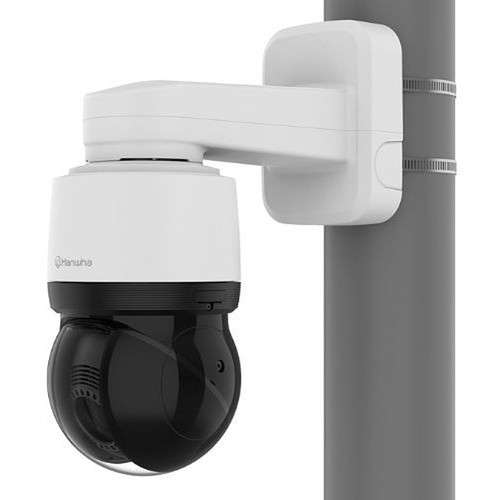
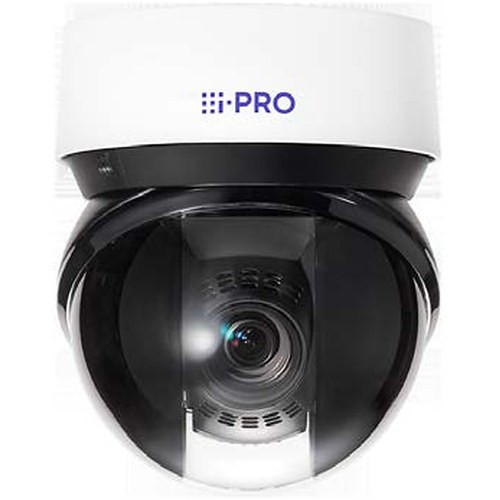
Both the Hanwha XNP-C8253R and the i-PRO WV-S66600-Z3 are outdoor, 6MP, PTZ dome cameras powered by PoE++ and rated IP66/IK10, targeting large-area surveillance where motorized zoom and AI analytics are required. This comparison covers imaging performance, environmental and installation characteristics, and VMS/analytics integration to help installers and IT buyers determine which unit better fits a given deployment scenario.
In This Guide
How do the imaging specs compare?
Both cameras use a 1/2.8" CMOS sensor at 3328×1872 (6MP). The Hanwha XNP-C8253R offers a 25x optical zoom (5–125mm, F1.6 wide) with a combined digital/optical total of 800x, while the i-PRO WV-S66600-Z3 offers a 30x optical zoom (4.5–135mm, F1.8 wide) with up to 78x digital zoom at 1280×720 resolution. The i-PRO's wider aperture at telephoto (F4.7 vs. Hanwha's F3.73) and the Hanwha's wider aperture at wide end (F1.6 vs. F1.8) represent marginal differences; both perform similarly in low-light at 0.1 Lux color minimum illumination. The Hanwha specifies 0 Lux IR capability; i-PRO specifies 0.1 Lux BW — no color low-light floor is stated for the i-PRO.
WDR performance differs materially: the Hanwha claims Extreme WDR at 120 dB, while the i-PRO specifies Super Dynamic at a maximum 132 dB (at level 31). IR range is 200m (656 ft) for the Hanwha; the i-PRO lists a focus range floor of 3.0m but does not publish an IR illumination distance in the provided specs. DORI figures favor the i-PRO at telephoto: Detect at 3,050m vs. Hanwha's 2,814m; Identify at 305m vs. 281m. At wide, the Hanwha leads slightly on Detect (121.5m vs. 110.8m). Both units include a built-in gyro-based digital image stabilizer and defog/fog compensation.
What about installation and environment?
Both cameras are rated IP66 and IK10, certified NEMA 4X/TS2, and powered by PoE++ (IEEE 802.3bt, Class 6). The Hanwha draws a maximum of 40W typical/40W max; the i-PRO draws 37.8W. Operating temperature ranges diverge: the Hanwha is rated –40°C to +55°C, whereas the i-PRO operates from –30°C (power-on) to +60°C ambient, with storage down to –50°C. For arctic or extreme-cold deployments, the Hanwha's –40°C operational floor is a meaningful advantage. The Hanwha also specifies a water-removal spin-dry function and lens heater — the i-PRO does not list these features in the provided specs.
Form factor dimensions are similar: Hanwha ø158×293.3mm at 3,200g; i-PRO ø167mm×205mm at approximately 3,000g. The i-PRO specifies wind resistance up to 40 m/s (~89 mph), a spec absent from the Hanwha datasheet. The Hanwha lists a broad accessory ecosystem (SBP/SHP mounting brackets for hanging, ceiling, wall, pole, parapet, corner, and in-ceiling configurations); the i-PRO's compatible mounts are not enumerated in the provided specs.
Which fits your VMS and analytics better?
Both cameras support ONVIF Profiles G, M, S, and T, and both output H.265, H.264, and MJPEG. The Hanwha supports up to 20 unicast users and 128 multicast users across up to 10 stream profiles; the i-PRO supports up to 14 simultaneous users — a meaningful gap for high-concurrency VMS environments. The Hanwha also supports a broader protocol stack including MQTT, NTCIP1205, SRTP, and LLDP/CDP; the i-PRO protocol list does not include MQTT or NTCIP1205 in the provided specs.
AI analytics differ in scope: the Hanwha provides object classification (person, face, vehicle, license plate), vehicle sub-type attributes (car/bus/truck/motorcycle/bicycle), virtual line/area crossing, and AI auto-tracking of persons and vehicles. The i-PRO provides AI motion, face, people, and vehicle detection plus AI sound classification (gunshot, yell, vehicle horn, glass break) — a distinct capability not present in the Hanwha spec. Both support built-in audio; the i-PRO specifies four 3.5mm audio inputs and one output with half/full-duplex modes, while the Hanwha's audio I/O requires an optional SPM-4210 I/O box. Edge storage is microSD on both; the Hanwha explicitly supports dual-slot up to 512GB×2 (1TB total), while the i-PRO lists a single microSDXC slot with no capacity ceiling stated. Security credentials differ: Hanwha holds FIPS 140-2 Level 2 (TPM); i-PRO holds FIPS 140-2 Level 3 (NXP EdgeLock SE050F) with a GlobalSign pre-installed device certificate. Warranty is 3 years for the Hanwha and 5 years for the i-PRO.
Which should you choose: the C8253R or the S66600-Z3?
Our take: The XNP-C8253R is the stronger choice when cold-environment operation, dual-slot edge storage, or broad protocol coverage (MQTT, NTCIP1205, SRTP) are priorities, and where a –40°C operational floor, 200m specified IR range, 25x zoom with spin-dry/lens heater, and onboard license-plate classification are required. The WV-S66600-Z3 holds concrete advantages in three areas: a higher specified WDR ceiling (132 dB vs. 120 dB), a longer optical zoom (30x vs. 25x) producing superior DORI performance at telephoto, and a FIPS 140-2 Level 3 security chip vs. Level 2 — relevant in government and critical-infrastructure deployments. The i-PRO also adds AI sound classification (gunshot, glass break) and carries a 5-year warranty vs. 3 years. Choose the i-PRO for installations demanding longer-range identification, higher-assurance security certification, or audio event detection; choose the Hanwha for sub-zero climates, MQTT-integrated traffic systems, or deployments requiring dual-card redundant storage.
Side-by-Side Comparison
Spec-for-spec, from manufacturer data.
| Specification | Hanwha C8253R | i-PRO S66600-Z3 |
|---|---|---|
| Resolution | 3328×1872 (6MP) | 3328×1872 (6MP) |
| Image Sensor | 1/2.8" CMOS | Approx. 1/2.8" CMOS |
| Optical Zoom / Focal Length | 25x / 5–125mm | 30x / 4.5–135mm |
| Max Aperture (Wide / Tele) | F1.6 / F3.73 | F1.8 / F4.7 |
| Min. Illumination | 0.1 Lux color / 0 Lux IR | 0.1 Lux (BW); color floor not specified |
| IR Range | 200m (656 ft) Wise IR | Not specified in provided specs |
| WDR | Extreme WDR 120 dB | Super Dynamic max 132 dB (level 31) |
| DORI — Detect (Tele) | 2,813.9m (9,232 ft) | 3,050.4m (10,008 ft) |
| DORI — Identify (Tele) | 281.4m (923 ft) | 305.0m (1,001 ft) |
| Pan Speed (Preset / Manual) | 700°/s / 0.024–250°/s | 700°/s / 0.065–150°/s |
| Operating Temperature | –40°C to +55°C | –30°C to +60°C (power-on) |
| Power Input / PoE Class | PoE++ IEEE 802.3bt, Class 6, max 40W | PoE++ IEEE 802.3bt, 37.8W; PoE class not explicitly stated |
| IP / Impact Rating | IP66 / IK10 / NEMA 4X | IP66 / IK10 / NEMA TS2 Type 4X |
| Edge Storage | Dual microSD slot, up to 1TB (512GB×2) | Single microSDXC (capacity ceiling not specified) |
| Audio I/O | Via optional SPM-4210 I/O box | 4× 3.5mm input / 1× 3.5mm output, half/full duplex built-in |
| AI Analytics | Object detection, auto-tracking (person/vehicle), LP classification, virtual line/area | Motion, face, people, vehicle detection; AI sound classification (gunshot, yell, horn, glass break) |
| Security Certification | FIPS 140-2 Level 2 (TPM) | FIPS 140-2 Level 3 (NXP EdgeLock SE050F) |
| Max Simultaneous Users | 20 unicast / 128 multicast | Up to 14 users |
| Dimensions | ø158×293.3mm | ø167mm×205mm (H) |
| Weight | 3,200g (7.05 lb) | Approx. 3,000g |
| Warranty | 3 years | 5 years |
Frequently Asked Questions
Which should you choose: the C8253R or the S66600-Z3?
The XNP-C8253R is the stronger choice when cold-environment operation, dual-slot edge storage, or broad protocol coverage (MQTT, NTCIP1205, SRTP) are priorities, and where a –40°C operational floor, 200m specified IR range, 25x zoom with spin-dry/lens heater, and onboard license-plate classification are required. The WV-S66600-Z3 holds concrete advantages in three areas: a higher specified WDR ceiling (132 dB vs. 120 dB), a longer optical zoom (30x vs. 25x) producing superior DORI performance at telephoto, and a FIPS 140-2 Level 3 security chip vs. Level 2 — relevant in government and critical-infrastructure deployments. The i-PRO also adds AI sound classification (gunshot, glass break) and carries a 5-year warranty vs. 3 years. Choose the i-PRO for installations demanding longer-range identification, higher-assurance security certification, or audio event detection; choose the Hanwha for sub-zero climates, MQTT-integrated traffic systems, or deployments requiring dual-card redundant storage.
Is the XNP-C8253R or WV-S66600-Z3 better for low-light and IR performance?
Both cameras specify a minimum illumination of 0.1 Lux. The Hanwha XNP-C8253R additionally specifies 0 Lux with IR active and publishes an IR illumination range of 200m (656 ft). The i-PRO WV-S66600-Z3 does not publish an IR illumination distance in the provided specifications, so a direct IR range comparison cannot be made from available data. If confirmed IR range is a selection criterion, the Hanwha's 200m published figure is the only documented value between the two.
Which camera has stronger cybersecurity certifications?
The i-PRO WV-S66600-Z3 achieves FIPS 140-2 Level 3 via its NXP EdgeLock SE050F secure element and includes a pre-installed GlobalSign device certificate. The Hanwha XNP-C8253R achieves FIPS 140-2 Level 2 via an onboard TPM with HTPM and SD card encryption, plus Hanwha Private Root CA device certificates. For deployments requiring the higher FIPS assurance level — common in federal and critical-infrastructure projects — the i-PRO holds the edge.
Can either camera detect audio events like gunshots or breaking glass?
Yes — the i-PRO WV-S66600-Z3 includes AI Sound Classification covering gunshot, yell, vehicle horn, and glass break, with four 3.5mm audio inputs and full-duplex audio output built in. The Hanwha XNP-C8253R does not list audio event classification in the provided specifications. The Hanwha's alarm I/O (including audio output capability referenced in alarm events) requires the optional SPM-4210 I/O box; standalone audio analytics are not specified.
Get a Second Opinion on Your Camera Choice
Share your site layout, coverage goals, and budget. Our team will validate the camera selection, flag anything we would change, and recommend products that match the use case.