
Hanwha XNP-8300RW vs i-PRO S66600-Z3: Specification Comparison
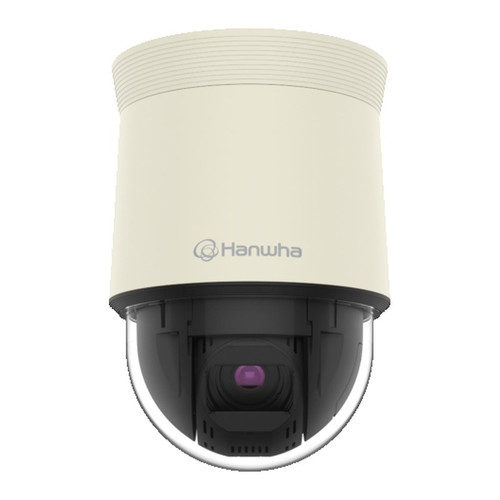
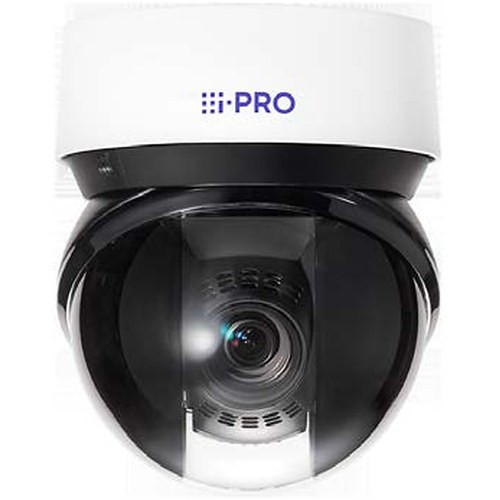
Both the Hanwha XNP-8300RW and the i-PRO WV-S66600-Z3 are 6MP outdoor PTZ IP cameras targeting perimeter and wide-area surveillance applications where long-range optical zoom and AI-driven tracking are primary requirements. Both carry 30x optical zoom, IP66/IK10 ratings, and PoE++ power, making them direct cross-shop candidates for enterprise and critical-infrastructure installers evaluating AI PTZ platforms from two competing manufacturers.
In This Guide
How do the imaging specs compare?
Both cameras use a 1/2.8-inch CMOS sensor at 6MP (3328×1872) with 30x optical zoom, but the focal-length ranges differ: the XNP-8300RW covers 5–150mm (F1.6 wide, F4.56 tele) while the S66600-Z3 covers 4.5–135mm (F1.8 wide, F4.7 tele). The XNP-8300RW's wider maximum aperture (F1.6 vs F1.8) gives it a marginal light-gathering advantage at wide angle. Minimum illumination is 0.1 Lux color / 0 Lux IR for the Hanwha and 0.1 Lux BW for the i-PRO; the i-PRO spec does not state a color-mode lux figure.
WDR figures diverge significantly: the XNP-8300RW is rated at 120 dB Extreme WDR (SSDR), while the S66600-Z3 claims up to 132 dB with Super Dynamic at level 31. The Hanwha includes built-in IR illumination to 200m with Wise IR, enabling 0-Lux IR operation; the i-PRO datasheet lists IR distance as 3.0m (focus range floor), which appears to be the minimum focus distance rather than an IR throw specification—the S66600-Z3 spec does not provide a rated IR illumination range comparable to the Hanwha's 200m figure. DORI detection range at tele is 3,482m (Hanwha) versus 3,050m (i-PRO), reflecting the slightly longer focal length on the XNP-8300RW.
What about installation and environment?
Both units are rated IP66 and IK10. The XNP-8300RW adds NEMA 4X and NEMA-TS 2 (2.2.8, 2.2.9) certifications; the S66600-Z3 carries NEMA-TS2, UL (UL62368-1), c-UL, CE, and IEC62368-1 safety certifications. The i-PRO also specifies wind resistance up to 40 m/s (~89 mph), a figure absent from the Hanwha spec sheet. The XNP-8300RW includes a wiper for optical-surface water removal; no wiper is specified for the S66600-Z3.
Operating temperature range favors the i-PRO: the S66600-Z3 operates from −50°C to +60°C (power-on from −30°C), versus −40°C to +55°C for the XNP-8300RW. Power consumption also differs: the Hanwha draws up to 42W typical (HPoE IEEE 802.3bt Class 6, Type 3, injector included), while the i-PRO draws 37.8W via PoE++ (IEEE 802.3bt). The XNP-8300RW is heavier at 5.4 kg versus approximately 3 kg for the S66600-Z3, and larger (Ø184.9×318.8mm vs Ø167×205mm), which may affect pole or bracket load ratings. The Hanwha includes a HPoE injector; the i-PRO accessory bundle status for an injector is not stated in the provided spec.
Which fits your VMS and analytics better?
Both cameras support ONVIF Profile S, G, T, and M and offer H.265/H.264/MJPEG compression with VBR and CBR modes. The XNP-8300RW adds WiseStream II smart codec and supports up to 20 unicast users / 128 multicast users across up to 10 streaming profiles, with 4GB RAM and 512MB flash on-board. The S66600-Z3 supports up to 14 simultaneous users and offers GOP-control smart coding. The Hanwha exposes SUNAPI (HTTP API) and the Wisenet open platform in addition to ONVIF; the i-PRO does not list a proprietary open SDK in the provided spec. Edge storage on the XNP-8300RW is dual-slot microSD/SDHC/SDXC up to 1TB; the S66600-Z3 provides a single microSDXC slot with no stated maximum capacity.
On analytics, the XNP-8300RW lists directional detection, fog detection, face detection, motion detection, appear/disappear, enter/exit, object auto-tracking (person/vehicle), and target lock tracking. The S66600-Z3 lists AI motion, privacy, face, people, and vehicle detection, plus AI sound classification (gunshot, yell, vehicle horn, glass break)—a capability not specified for the Hanwha. Audio I/O is more extensive on the i-PRO: four 3.5mm stereo audio inputs, one audio output, and four alarm I/O terminals with G.726/G.711/AAC-LC compression and half/full-duplex support. The XNP-8300RW lists audio input but alarm I/O requires an optional NW I/O Box per the spec. Security posture differs: the i-PRO carries FIPS 140-2 Level 3 (NXP EdgeLock SE050F) hardware security and GlobalSign pre-installed device certificate; the Hanwha carries UL CAP (UL 2900-1) cybersecurity certification. The i-PRO also specifies a 5-year warranty; no warranty term is stated in the Hanwha spec provided.
Which should you choose: the XNP-8300RW or the S66600-Z3?
Our take: The XNP-8300RW is the stronger choice when long-range IR illumination, built-in wiper operation, and a dual-SD redundant edge-storage architecture are priorities. Its 200m IR throw (vs no comparable IR range spec on the S66600-Z3), 5–150mm focal range yielding a 3,482m tele DORI detect distance (vs 3,050m), and dual microSD slots up to 1TB distinguish it in open-perimeter and traffic-monitoring scenarios. The WV-S66600-Z3 is the stronger choice when cybersecurity certification depth matters: FIPS 140-2 Level 3 hardware security and a GlobalSign pre-installed device certificate set a higher assurance baseline than UL CAP alone. The S66600-Z3 also operates to −50°C (vs −40°C), draws less power (37.8W vs 42W), weighs nearly half as much (3 kg vs 5.4 kg), includes AI sound classification absent from the Hanwha spec, and carries four native audio inputs plus four alarm I/O terminals without an accessory box. A 5-year warranty is stated for the i-PRO; no warranty term is provided in the Hanwha spec.
Side-by-Side Comparison
Spec-for-spec, from manufacturer data.
| Specification | Hanwha XNP-8300RW | i-PRO S66600-Z3 |
|---|---|---|
| Resolution | 6MP (3328×1872) | 6MP (3328×1872) |
| Image Sensor | 1/2.8" CMOS | Approx. 1/2.8" CMOS (5.57×3.13mm) |
| Focal Length / Optical Zoom | 5–150mm, 30x optical (960x total) | 4.5–135mm, 30x optical (78x extra digital) |
| Max Aperture (Wide / Tele) | F1.6 (Wide) / F4.56 (Tele) | F1.8 (Wide) / F4.7 (Tele) |
| Min Illumination | 0.1 Lux color / 0 Lux IR | 0.1 Lux BW (color figure not stated) |
| IR Illumination Range | 200m (Wise IR) | Not specified (3.0m = min focus distance only) |
| WDR | 120dB Extreme WDR (SSDR) | Max 132dB (Super Dynamic Level 31) |
| Max Frame Rate | 30 fps | Variable (max frame rate not specified in provided spec) |
| Video Compression | H.265, H.264 (Main/Baseline/High), MJPEG, WiseStream II | H.265, H.264, MJPEG, Smart Coding (GOP control) |
| Pan / Tilt Speed (Preset) | Pan 500°/s max; Tilt 350°/s max | Pan 700°/s preset; Tilt 500°/s preset |
| IP Rating | IP66, NEMA 4X, NEMA-TS 2 | IP66, Type 4X, NEMA-TS2 |
| Impact / Vandal Rating | IK10 | IK10 (IEC 62262) |
| Operating Temperature | −40°C to +55°C | −50°C to +60°C (power-on from −30°C) |
| Power Input / PoE | HPoE IEEE 802.3bt Class 6 Type 3; max 42W (injector included) | PoE++ IEEE 802.3bt; 37.8W |
| Edge Storage | Dual microSD/SDHC/SDXC slots, up to 1TB | Single microSDXC (max capacity not stated) |
| Audio I/O | Audio input (alarm I/O requires NW I/O Box accessory) | 4× audio in (3.5mm stereo), 1× audio out, G.726/G.711/AAC-LC, half/full duplex |
| AI Sound Classification | Not specified | Gunshot, Yell, Vehicle horn, Glass break |
| Cybersecurity Certification | UL CAP (UL 2900-1) | FIPS 140-2 Level 3 (NXP EdgeLock SE050F), GlobalSign device certificate |
| ONVIF Profile | S, G, T | G, M, S, T |
| Wiper | Yes (built-in) | Not specified |
| Dimensions | Ø184.9×318.8mm | Ø167×205mm |
| Weight | 5.4 kg | Approx. 3 kg |
| Warranty | Not stated in provided spec | 5 years |
Frequently Asked Questions
Which should you choose: the XNP-8300RW or the S66600-Z3?
The XNP-8300RW is the stronger choice when long-range IR illumination, built-in wiper operation, and a dual-SD redundant edge-storage architecture are priorities. Its 200m IR throw (vs no comparable IR range spec on the S66600-Z3), 5–150mm focal range yielding a 3,482m tele DORI detect distance (vs 3,050m), and dual microSD slots up to 1TB distinguish it in open-perimeter and traffic-monitoring scenarios. The WV-S66600-Z3 is the stronger choice when cybersecurity certification depth matters: FIPS 140-2 Level 3 hardware security and a GlobalSign pre-installed device certificate set a higher assurance baseline than UL CAP alone. The S66600-Z3 also operates to −50°C (vs −40°C), draws less power (37.8W vs 42W), weighs nearly half as much (3 kg vs 5.4 kg), includes AI sound classification absent from the Hanwha spec, and carries four native audio inputs plus four alarm I/O terminals without an accessory box. A 5-year warranty is stated for the i-PRO; no warranty term is provided in the Hanwha spec.
Is the XNP-8300RW or WV-S66600-Z3 better for low-light and IR performance?
The XNP-8300RW specifies 200m IR illumination range with Wise IR and 0 Lux operation in IR mode, plus a slightly wider maximum aperture (F1.6 vs F1.8) for better light collection at wide angle. The WV-S66600-Z3 spec does not state a rated IR throw distance—the 3.0m figure in the spec is the minimum focus distance, not an illumination range. For identified IR range performance, the Hanwha spec is more directly actionable.
Which camera is better suited for a cybersecurity-sensitive or government deployment?
The WV-S66600-Z3 carries FIPS 140-2 Level 3 hardware security via the NXP EdgeLock SE050F secure element and a GlobalSign pre-installed device certificate, along with brute-force protection, alteration detection, and signed firmware—credentials commonly required in federal or high-assurance environments. The XNP-8300RW holds UL CAP (UL 2900-1) cybersecurity certification. Buyers with FIPS-specific requirements should specify the i-PRO.
Which PTZ handles extreme cold better, and does mounting weight matter for the install?
The WV-S66600-Z3 operates from −50°C (power-on from −30°C), versus −40°C for the XNP-8300RW, giving it a 10°C cold-weather advantage. On mounting load, the S66600-Z3 weighs approximately 3 kg versus 5.4 kg for the XNP-8300RW—nearly half the mass—which can be decisive on lightweight poles or parapet brackets rated for limited payloads. The i-PRO also specifies wind resistance to 40 m/s; no wind-resistance figure is provided in the Hanwha spec.
Get a Second Opinion on Your Camera Choice
Share your site layout, coverage goals, and budget. Our team will validate the camera selection, flag anything we would change, and recommend products that match the use case.