
Hanwha C8303RW vs i-PRO S66600-Z3L: Specification Comparison
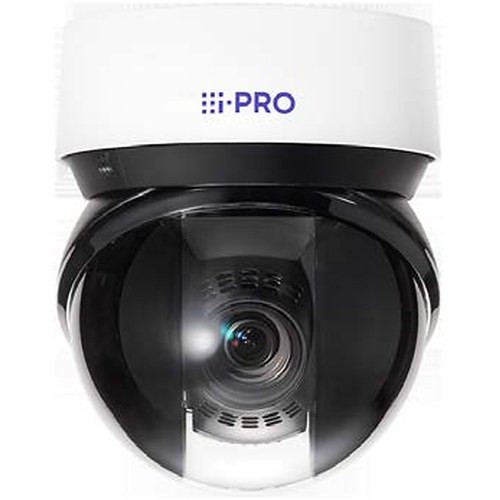
Both the Hanwha XNP-C8303RW and the i-PRO WV-S66600-Z3L are outdoor-rated, 6MP AI PTZ dome cameras with 30x optical zoom, PoE++ power, IP66/IK10 enclosures, and on-board IR illumination—making them direct cross-shop candidates for perimeter surveillance, traffic monitoring, and wide-area coverage applications. This comparison evaluates their imaging performance, installation and environmental suitability, and VMS/analytics integration based strictly on published specifications.

In This Guide
How do the imaging specs compare?
Both cameras share a 1/2.8" CMOS sensor at 3328×1872 (6MP) resolution with 30x optical zoom, but their lens ranges differ: the XNP-C8303RW covers 5–150mm (F1.6 wide, F4.56 tele), while the WV-S66600-Z3L covers 4.5–135mm (F1.8 wide, F4.7 tele). The Hanwha's wider aperture at F1.6 versus the i-PRO's F1.8 gives it a slight optical light-gathering advantage. Minimum illumination is 0.1 lux (color) for the Hanwha versus 0.13 lux (color, 30IRE) for the i-PRO—a narrow but measurable edge to the Hanwha in low-light color performance. The Hanwha specifies Extreme WDR at 120 dB; the i-PRO specifies Super Dynamic at up to 132 dB (level 31), giving i-PRO the higher rated dynamic range.
For IR illumination, the i-PRO WV-S66600-Z3L specifies 280m at high output and 200m at medium, while the Hanwha XNP-C8303RW specifies Wise IR at 200m. The i-PRO holds a clear IR range advantage at maximum output. DORI performance at tele: Hanwha detects to 3,482m vs. i-PRO's 3,050m; Hanwha identifies to 348m vs. i-PRO's 305m, reflecting the Hanwha's longer focal length (150mm vs. 135mm). The Hanwha also adds digital zoom to 32x (total 960x), compared to i-PRO's extra zoom to 78x at reduced resolution (1280×720). The Hanwha includes an integrated wiper and lens heater; no wiper is specified for the i-PRO.
What about installation and environment?
Both cameras are rated IP66, IK10, and NEMA 4X, and both carry UL 62368-1 / CSA C22.2 No. 62368-1 safety certifications. Both are powered by PoE++ (IEEE 802.3bt, Class 6). The Hanwha draws a typical 26W / max 46W; the i-PRO specifies 45.9W. Operating temperature differs notably: the Hanwha is rated –40°C to +55°C, while the i-PRO specifies a power-on range of –30°C to +60°C (storage/ambient listed as –50°C to +60°C). The i-PRO additionally specifies wind resistance up to 40 m/s (~89 mph), which is not stated in the Hanwha spec sheet.
Physically, the Hanwha XNP-C8303RW is larger and heavier at ø184.9×318.8mm / 5,600g (12.34 lb), versus the i-PRO WV-S66600-Z3L at ø167×205mm / approximately 3,000g. The i-PRO's smaller footprint and lower mass may simplify pole or parapet mounting in wind-exposed locations. The Hanwha documents a full accessory ecosystem (hanging, ceiling, wall, pole, parapet, corner mounts, cabinet). The i-PRO lists a tamper-resistant enclosure as a noted feature; the Hanwha does not use that specific terminology in its spec sheet.
Which fits your VMS and analytics better?
Both cameras support ONVIF Profiles S, G, T, and M, and both encode H.265, H.264, and MJPEG. The Hanwha supports up to 20 unicast users / 128 multicast users with up to 10 streaming profiles, and uses the Wisenet/SUNAPI ecosystem. The i-PRO supports up to 14 simultaneous users. The Hanwha offers dual microSD card slots for up to 1TB edge storage (512GB×2); the i-PRO supports a single microSDXC card with capacity not specified in the provided spec. The i-PRO specifies 4× audio inputs (3.5mm stereo mini jack) and 1× audio output, plus audio detection and AI sound classification (gunshot, yell, vehicle horn, glass break). The Hanwha's alarm output and audio I/O are described as available via an optional I/O box (SPM-4210); built-in audio I/O count is not explicitly stated in the provided spec.
On analytics, the Hanwha XNP-C8303RW specifies AI-based detection of person, face, vehicle (with type: car/bus/truck/motorcycle/bicycle), and license plate, plus virtual line/area rules and AI auto-tracking of person and vehicle. The i-PRO WV-S66600-Z3L specifies 8 AI detection types including motion, people, vehicle, face, and non-mask detection, plus AI sound classification. The i-PRO's SoC is identified as the Ambarella CV22; no SoC is specified in the Hanwha data. Security posture differs: the Hanwha lists TPM 2.0 with FIPS 140-2 Level 2; the i-PRO lists FIPS 140-2 Level 3—a higher certification tier. Both support 802.1X, HTTPS, signed firmware, and SRTP.
Which should you choose: the C8303RW or the S66600-Z3L?
Our take: The XNP-C8303RW is the stronger choice when maximum tele reach, license-plate analytics, all-weather wiper operation, and dual-card edge redundancy are priorities: its 150mm tele focal length yields a 3,482m detection range vs. the i-PRO's 3,050m at 135mm, it integrates a wiper and lens heater the WV-S66600-Z3L does not specify, and its dual microSD slots provide up to 1TB on-board storage versus a single card on the i-PRO. Conversely, the WV-S66600-Z3L is preferable when IR range is critical (280m vs. 200m), dynamic range matters (132 dB vs. 120 dB), built-in audio I/O is required without an add-on module, AI sound classification (gunshot, glass break) is needed, or a higher FIPS 140-2 Level 3 security posture is mandated. The i-PRO is also meaningfully lighter (3 kg vs. 5.6 kg) and specifies 40 m/s wind resistance—relevant for exposed elevated mounts. Choose based on whether reach and wiper or IR range and audio drive the deployment requirement.
Side-by-Side Comparison
Spec-for-spec, from manufacturer data.
| Specification | Hanwha C8303RW | i-PRO S66600-Z3L |
|---|---|---|
| Resolution | 3328×1872 (6MP) | 3328×1872 (6MP) |
| Image Sensor | 1/2.8" CMOS | Approx. 1/2.8" CMOS |
| Focal Length / Optical Zoom | 5–150mm, 30x optical | 4.5–135mm, 30x optical |
| Max Aperture (Wide / Tele) | F1.6 (Wide) / F4.56 (Tele) | F1.8 (Wide) / F4.7 (Tele) |
| Min Illumination (Color) | 0.1 lux | 0.13 lux (30IRE) |
| IR Range | 200m (Wise IR) | 280m (High) / 200m (Medium) |
| WDR | 120 dB (Extreme WDR) | Up to 132 dB (Super Dynamic, Level 31) |
| Max Frame Rate | 60 fps; 30 fps @ 6MP | Not explicitly stated at 6MP |
| Pan Speed (Preset) | Max 500°/s | 700°/s |
| Tilt Speed (Preset) | Max 350°/s | 500°/s |
| Video Compression | H.265, H.264, MJPEG | H.265, H.264, MJPEG |
| IP / Impact Rating | IP66 / IK10 / NEMA 4X | IP66 / IK10 / NEMA 4X |
| Operating Temperature | –40°C to +55°C | –30°C to +60°C (Power On) |
| Power Input / PoE Class | PoE++ IEEE 802.3bt, Class 6; max 46W | PoE++ IEEE 802.3bt; 45.9W |
| Edge Storage | Dual microSD, up to 1TB (512GB×2) | Single microSDXC; capacity not specified |
| Audio I/O | Via optional I/O box (SPM-4210) | 4× audio in / 1× audio out (built-in) |
| Integrated Wiper | Yes (with lens heater) | Not specified |
| FIPS Certification | FIPS 140-2 Level 2 (TPM 2.0) | FIPS 140-2 Level 3 |
| Dimensions | ø184.9×318.8mm | ø167×205mm |
| Weight | 5,600g (12.34 lb) | Approx. 3,000g (3 kg) |
| Warranty | 3-year | 3-year |
Frequently Asked Questions
Which should you choose: the C8303RW or the S66600-Z3L?
The XNP-C8303RW is the stronger choice when maximum tele reach, license-plate analytics, all-weather wiper operation, and dual-card edge redundancy are priorities: its 150mm tele focal length yields a 3,482m detection range vs. the i-PRO's 3,050m at 135mm, it integrates a wiper and lens heater the WV-S66600-Z3L does not specify, and its dual microSD slots provide up to 1TB on-board storage versus a single card on the i-PRO. Conversely, the WV-S66600-Z3L is preferable when IR range is critical (280m vs. 200m), dynamic range matters (132 dB vs. 120 dB), built-in audio I/O is required without an add-on module, AI sound classification (gunshot, glass break) is needed, or a higher FIPS 140-2 Level 3 security posture is mandated. The i-PRO is also meaningfully lighter (3 kg vs. 5.6 kg) and specifies 40 m/s wind resistance—relevant for exposed elevated mounts. Choose based on whether reach and wiper or IR range and audio drive the deployment requirement.
Is the XNP-C8303RW or the WV-S66600-Z3L better for low-light performance?
The Hanwha XNP-C8303RW specifies a minimum illumination of 0.1 lux (color) and 0 lux with IR active, versus the i-PRO WV-S66600-Z3L at 0.13 lux (color, 30IRE). However, the i-PRO's IR illuminator reaches 280m at high output compared to the Hanwha's 200m—so the Hanwha has a slight color-sensitivity edge, while the i-PRO covers a greater IR distance in complete darkness.
Which camera has better on-board storage for edge recording?
The Hanwha XNP-C8303RW has two microSD card slots supporting up to 512GB each, for a total of 1TB of on-board storage. The i-PRO WV-S66600-Z3L supports a single microSDXC card; the maximum supported capacity is not stated in the provided specifications.
Do both cameras support license plate recognition and AI auto-tracking?
The Hanwha XNP-C8303RW explicitly specifies license plate as a classified object type in its AI analytics and includes AI auto-tracking of person and vehicle. The i-PRO WV-S66600-Z3L specifies 8 AI detection types including people and vehicle analytics, but license plate recognition is not listed in the provided specifications. Auto-track mode is listed as a supported auto mode for the i-PRO, though object-class specifics for tracking are not detailed in the provided spec.
Get a Second Opinion on Your Camera Choice
Share your site layout, coverage goals, and budget. Our team will validate the camera selection, flag anything we would change, and recommend products that match the use case.