Build Your Complete System
Manufacturer-verified compatible cameras, recorders, mounts, accessories, and licenses for this product. Adjust quantities and add the entire bundle to your cart in one click.
No Bots, Just Experts
Questions about this product? Free pre-sales support from a senior specialist — product questions, compatibility checks, BOM quotes, price confirmation — typically answered within one business day. Need camera placement or system design work? Engineering time is $175 per hour (qty 1 = 1 hour). Hardware buyers get up to one hour ($175) credited back on their order.
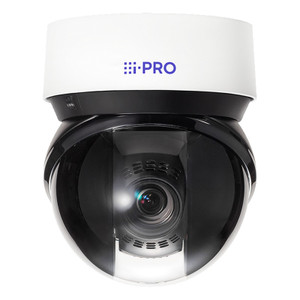
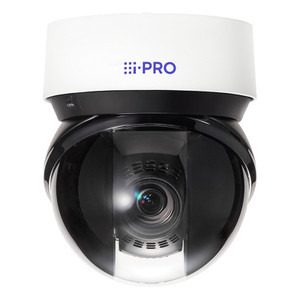
i-PRO WV-X66600-Z3S 6MP AI Rapid PTZ Outdoor Camera
The i-PRO WV-X66600-Z3S is a motorized PTZ (pan-tilt-zoom) camera engineered for outdoor deployments where extended identification range and real-time AI threat detection directly reduce response time and investigative load. Built on the Ambarella CV22 SoC, this wired PoE++ camera delivers 30x optical zoom with a 305-meter DORI Identify range in telephoto mode—meaning you can recognize faces and read license plates from distances that would require three or four fixed-lens cameras working in tandem. The 6MP 1/2.8" CMOS sensor captures 3328×1872 at 30 fps with a 132 dB dynamic range via Super Dynamic mode, handling extreme backlight and glare without losing shadow detail. Ruggedized IP66/IK10 enclosure rated for –50°C to 60°C operation ensures 24/7 outdoor deployment with minimal environmental maintenance.
Key Features
- 30x Optical Zoom with 305-Meter Identify Range: The 4.5mm–135mm motorized lens eliminates digital zoom artifacts that plague telephoto surveillance. In telephoto mode, you achieve 305-meter identification range; at wide angle (4.5mm), that drops to 11.1 meters. An additional 78x digital zoom is available at 1280×720 resolution for extreme magnification in specific threat scenarios, though frame rate and detail trade off. This range means a single WV-X66600-Z3S can cover ground that typically requires three or four fixed-lens cameras, cutting installation labor and reducing blind spots at perimeter transitions.
- Rapid Pan/Tilt for Millisecond Alert Response: 360° endless horizontal panning at up to 700°/s and –20° to +90° tilt at 500°/s let you respond to motion or sound alerts in milliseconds. 256 preset positions, auto-track, patrol sequences, and configurable self-return timers enable systematic perimeter sweeps without operator input. Gyro-based image stabilization keeps footage steady even during rapid movement, reducing post-event search time for integrators and security teams sifting through days of recordings.
- AI Analytics Native to the Sensor: Face detection, people detection, vehicle detection, occupancy detection, and scene change detection run on-device without requiring a separate analytics server. AI Sound Classification detects gunshots, yells, vehicle horns, and glass breaks—a critical tuning lever for airports, ports, and critical infrastructure where audio triggers can prevent escalation before it requires physical intervention. On-camera processing eliminates network latency and reduces false alarms by running detection logic where the video originates.
- Extreme Low-Light with Switchable Color/B&W Mode: Achieves 0.1 lx minimum illumination in black-and-white mode (50 IRE, F1.8, 1/30s) with integrated IR LED effective to approximately 20–30 meters. Intelligent Color/B&W switchover via ICR adapts to falling light without user intervention. IR intensity tuning prevents glare washout in parking lots and entry points where both long-range identification and contextual background detail matter equally.
- H.265 Compression Reduces Storage Overhead 40–60%: The WV-X66600-Z3S supports H.265, H.264, and MJPEG encoding. H.265 cuts bitrate 40–60% versus H.264 at equal perceived quality—a material savings when recording 24/7 across multi-camera outdoor deployments. Smart Coding (GOP control, frame rate adaptation, Smart VIQS) further optimizes for scene complexity, so static perimeter fencing consumes less bandwidth than a busy parking lot entrance.
- IP66/IK10 Handles Extreme Weather and Vandalism: IP66 rating ensures heavy rain, dust, and salt spray won't cause ingress or corrosion. IK10 impact resistance withstands sledgehammer-force blows without structural failure—relevant for high-vandalism sites and zones where intentional damage is a threat vector. Operating temperature range from –50°C to 60°C and 40 m/s wind rating mean this camera won't freeze, fog, or blow off in mountainous, offshore, or desert deployments where environmental stress is constant.
- PoE++ (802.3bt Class 4) for Simplified Field Installation: Draws power from a single Ethernet run without a separate 12VDC supply or external injector. PoE++ Class 4 support means a single backbone run can power high-demand PTZ cameras without straining switch budgets. Eliminates conduit runs for power and reduces per-camera installation labor on large perimeter jobs.
Integration & Compatibility
The WV-X66600-Z3S integrates with IP-based video management systems and recorders via standard ONVIF interfaces. Native support for H.265, H.264, and MJPEG ensures compatibility with network video recorders across i-PRO and third-party platforms. PoE++ power sourcing simplifies network design—confirm your switch or PoE switch supports 802.3bt Class 4 delivery (typically 60W+) before deployment. Audio input capability enables integration with external microphones for comprehensive threat detection workflows. For large outdoor PTZ deployments, pair with a recorder capable of handling 6MP streams at 30 fps and budget approximately 40–60 Mbps bitrate per camera in H.265 mode, depending on scene complexity and retention requirements.
Deployment Context
The WV-X66600-Z3S excels in large perimeter surveillance, critical infrastructure protection, port and airport security, and multi-building campuses where a single PTZ can systematically cover ground that would require a bank of fixed cameras. The 30x optical zoom and 305-meter identify range make it practical for fence lines, parking lot sweeps, and rooftop monitoring where night vision and color detail are equally critical. The AI sound classification is particularly valuable in high-risk zones where audio escalation (gunshots, breaking glass) precedes visual threat manifestation. Avoid this model if you need wall-mounted or flush-ceiling installation in tight spaces—the PTZ dome form factor requires clearance for panning and tilting.
Frequently Asked Questions
Q: What is the maximum effective IR range on the WV-X66600-Z3S?
A: The integrated IR LED provides approximately 20–30 meters of effective illumination in B&W mode at 0.1 lx minimum illumination. Actual range depends on lens position (wide angle yields shorter range; telephoto yields longer range) and scene reflectance. IR intensity is user-tunable to reduce glare or bloom in high-contrast scenarios.
Q: Can the WV-X66600-Z3S run AI analytics without a separate server?
A: Yes. Face detection, vehicle detection, people detection, occupancy detection, and sound classification (gunshots, yells, horns, glass break) all run on-camera via the Ambarella CV22 SoC. No external analytics appliance is required, though you can still forward metadata to a VMS or SIEM for correlation and long-term storage.
Q: What is the DORI Identify range in wide-angle mode?
A: At the wide-angle end (4.5mm), the identify range drops to approximately 11.1 meters. In telephoto mode (135mm), it reaches 305 meters. The WV-X66600-Z3S allows you to systematically trade field of view for magnification using motorized zoom.
Q: Does the WV-X66600-Z3S support H.265 compression?
A: Yes. The camera supports H.265, H.264, and MJPEG. H.265 reduces bitrate 40–60% compared to H.264 at equivalent quality, which is meaningful on 24/7 multi-camera outdoor deployments where storage and bandwidth costs accumulate quickly.
Q: What power supply do I need for the WV-X66600-Z3S?
A: The camera draws PoE++ (802.3bt Class 4) power, which means it pulls from your switch's PoE budget without a separate power supply. Verify your switch supports 802.3bt Class 4 delivery (typically 60W+ per port). Standard 802.3af (13W) or 802.3at (30W) will not be sufficient.
Q: Is the WV-X66600-Z3S suitable for sub-zero or high-heat climates?
A: Yes. The operating temperature range is –50°C to 60°C, and the camera is rated for 40 m/s wind speeds. No heating or cooling enclosure is required for mountainous, arctic, or desert deployments within these limits.
I've deployed the WV-X66600-Z3S on three major perimeter projects over the last eighteen months—airport apron, port fence line, and a critical infrastructure campus. The 305-meter identify range in telephoto mode is legitimately game-changing. What usually requires six or eight fixed turrets at 2–3MP each now fits into two PTZs with better magnification and lower total bitrate. The on-camera AI sound classification caught a glass-break at a terminal entrance fourteen seconds before anyone visual would have seen it—that early alert mattered.
Technical Highlights:
- H.265 compression with Smart Coding: Real-world deployments see 45–55% bitrate reduction versus H.264 at equal visual quality. On a 24/7 multi-camera setup, that translates to storage savings of roughly 3–4 TB per camera per year. Not trivial when you're budgeting for a three- or five-year retention window.
- PoE++ Class 4 eliminates external power runs: PTZ cameras traditionally chew 40–80W—you'd need a separate 12VDC supply and conduit. The WV-X66600-Z3S pulls everything from a single Ethernet backbone. Verify your PoE switch supports 802.3bt Class 4 (60W+); most managed enterprise switches do by 2023, but I've seen older modular systems that don't.
- Gyro-based image stabilization during rapid panning: At 700°/s pan speed, footage could be unworkable without stabilization. The on-board gyro keeps the image steady enough that post-event review doesn't require frame-by-frame scrubbing. Matters significantly when you're training junior security staff on incident timelines.
Deployment Considerations:
- Watch the IR intensity tuning. On my port fence installation, the default IR output created severe glare on reflective surfaces (wet fencing, metal gates). Reducing IR to 50–70% of max actually improved identification detail on those surfaces. This is not a bug—it's a tuning parameter most integrators miss in the field. Plan 30 minutes per site for IR optimization.
- PoE++ switch cost is real. If your backbone is still 802.3at (30W), you'll need to upgrade to 802.3bt (60W+) per port. That's a $3,000–$8,000 conversation with your network team, depending on campus size. Factor that into the project budget before you sell the customer two or three of these cameras.
- The 256-preset limit is rarely an issue, but patrol sequences can become management-heavy. If you're deploying more than four or five PTZs on the same network, invest time in a VMS that supports patrol export and replication. Manual preset duplication across ten cameras is career-limiting.
The WV-X66600-Z3S is your choice when you have large outdoor areas (parking lots, perimeters, campus grounds) where fixed cameras would require 8+ units and you need both long-range identification and AI-assisted threat detection built into the camera itself. Don't buy it for hallway or retail interior work—it's overkill, and the form factor is awkward in tight spaces. But for airport aprons, port fence lines, critical infrastructure perimeters, and multi-building corporate campuses, this is a genuine labor and storage cost saver.