
i-PRO S22500-V3LG vs i-PRO X22500-V3L: Specification Comparison
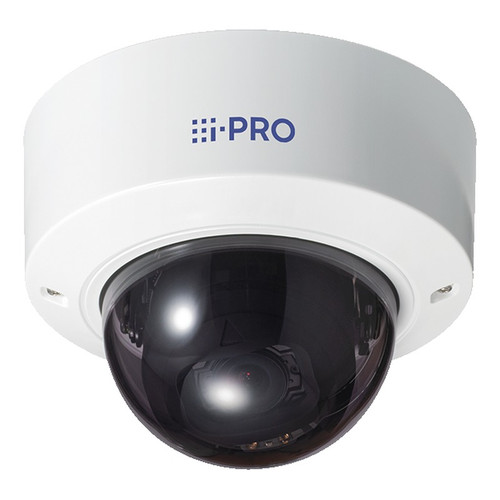
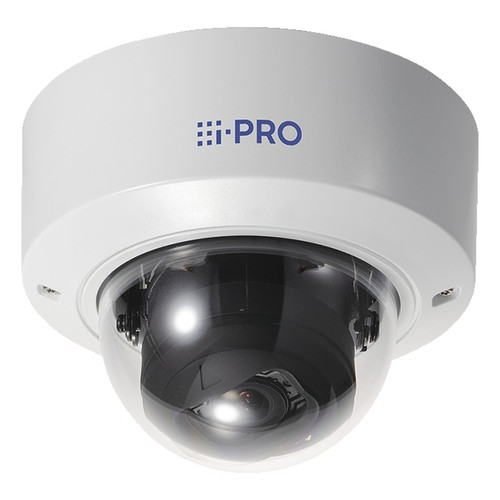
Both the i-PRO WV-S22500-V3LG and WV-X22500-V3L are 5MP indoor vandal-resistant dome cameras sharing an identical 1/2.8-type CMOS sensor, the same 3.1x motorized varifocal lens, the same IK10 impact rating, and the same physical footprint. They serve the same fixed-dome installation category—retail, transit, corporate interiors—and are genuinely cross-shoppable. The key differentiators are IR range, PoE class, SoC generation, and certain AI feature refinements, each of which is examined below.
In This Guide
How do the imaging specs compare?
Both cameras output 5MP at 30 fps and share a 1/2.8-type CMOS sensor, a 3.1x motorized varifocal lens (2.9–9 mm, f/1.3–f/2.5), and the same DORI distances (Detect 47.1 m wide / 207.4 m tele, Identify 4.7 m wide / 20.7 m tele). Both deliver 132 dB maximum dynamic range with Super Dynamic level 31 enabled. The S22500-V3LG publishes separate color and B&W low-light figures—0.15 lux (color, 30IRE) and 0.12 lux (B&W, F1.3)—while the X22500-V3L spec sheet supplies only a single B&W-with-IR figure of 0.02 lux; a direct color-vs-color comparison is therefore not possible from the provided data.
IR illumination is the sharpest imaging delta: the S22500-V3LG provides 25 m IR range, whereas the X22500-V3L reaches 70 m (230 ft)—nearly three times the coverage. The X22500-V3L also runs a newer Ambarella CV52 SoC versus the S22500-V3LG's CV22, and adds electronic image stabilization (on/off, 30 fps mode only) absent from the S22500-V3LG. Extra-zoom ceiling differs as well: the S22500-V3LG tops out at 9.3x at 640×360; the X22500-V3L reaches 12.4x at the same resolution. The S22500-V3LG's maximum resolution mode includes a 4:3 output at 3072×2304 30 fps; the X22500-V3L's published maximum resolution is 3072×1728 (16:9 only per spec sheet).
What about installation and environment?
Physical footprint is identical: ø129.5 mm × 102.5 mm (H) with a 41.5 mm dome radius. Both cameras are rated IK10 (IEC 62262) and carry identical operating temperature ranges of −10 °C to +50 °C (power-on minimum 0 °C) at 10–90% RH non-condensing. Both are indoor-rated only; neither spec sheet lists an IP ingress rating, so outdoor or washdown installations are not supported by either unit per the provided data.
Power is where the two diverge at the electrical level. The S22500-V3LG operates on DC 12V/1A or PoE IEEE 802.3af (Class 0, 12 W). The X22500-V3L requires PoE+ (802.3at, Class 4, 14 W)—a meaningful infrastructure consideration where existing switches are 802.3af-only. The S22500-V3LG can work with any 802.3af-capable switch or injector; the X22500-V3L requires PoE+ ports or a PoE+ injector at each drop.
Which fits your VMS and analytics better?
Both cameras support ONVIF Profiles G, M, S, and T, ensuring broad VMS compatibility. AI analytics on both include AI motion, face, people, and vehicle detection, plus AI sound classification (gunshot, yell, vehicle horn, glass break) and audio detection. The X22500-V3L spec sheet adds image stabilization as a distinct product attribute not listed for the S22500-V3LG. Both cameras support up to 14 simultaneous users, microSDXC storage to 512 GB, and FIPS 140-2 Level 3 security; the S22500-V3LG additionally calls out the NXP EdgeLock SE050F secure element by name, while the X22500-V3L spec lists secure boot as a confirmed attribute—neither of these is absent from the other, but only one spec sheet surfaces each detail explicitly.
Audio handling is equivalent: both carry a 3.5 mm stereo mini-jack input and 3.5 mm stereo output at 600 Ω, support G.726, G.711, and half/full-duplex modes. The X22500-V3L adds AAC-LC (16–128 kbps) as an audio compression option not listed for the S22500-V3LG. Alarm I/O differs slightly: the S22500-V3LG provides 3 alarm terminals and 1 AUX OUT; the X22500-V3L provides 4 alarm I/O terminals (2 IN, 1 OUT, 1 AUX). The X22500-V3L also lists TCP notification as an alarm action alongside the email and HTTP options shared by both. EMC classification differs: the S22500-V3LG is certified EN55032 Class B; the X22500-V3L is certified EN55032 Class A.
Which should you choose: the S22500-V3LG or the X22500-V3L?
Our take: The X22500-V3L is the stronger choice when IR illumination range, PoE+ infrastructure, or a newer SoC are priorities; the S22500-V3LG is preferable when the existing switch plant is 802.3af-only or when 4:3 full-resolution output (3072×2304) is required. The three most concrete spec deltas: IR range is 70 m on the X22500-V3L versus 25 m on the S22500-V3LG—a 2.8× advantage at the lens level; power draw is 14 W (PoE+, Class 4) versus 12 W (PoE, Class 0/802.3af), which can require switch or injector upgrades; and extra-zoom ceiling reaches 12.4x on the X22500-V3L against 9.3x on the S22500-V3LG at 640×360. Both carry identical IK10 vandalism ratings, the same operating temperature range, identical ONVIF profile support, and a 5-year warranty, so the decision turns almost entirely on IR coverage needs and available PoE infrastructure.
Side-by-Side Comparison
Spec-for-spec, from manufacturer data.
| Specification | i-PRO S22500-V3LG | i-PRO X22500-V3L |
|---|---|---|
| Resolution (max) | 3072×2304 (5MP, 4:3) / 3072×1728 (16:9) | 3072×1728 (5MP, 16:9) |
| Image Sensor | Approx. 1/2.8-type CMOS | Approx. 1/2.8-type CMOS |
| Lens / Focal Length | 3.1x motorized, 2.9–9 mm | 3.1x motorized, 2.9–9 mm |
| Max Aperture | f/1.3 (wide) – f/2.5 (tele) | f/1.3 (wide) – f/2.5 (tele) |
| Min Illumination | 0.15 lux color (30IRE); 0.12 lux B&W (F1.3) | 0.02 lux B&W with IR LED |
| IR Range | 25 m | 70 m (230 ft) |
| Dynamic Range (WDR) | Max 132 dB (Super Dynamic On, Level 31) | Max 132 dB (Super Dynamic On, Level 31) |
| Max Frame Rate | 30 fps | 30 fps |
| System on Chip (SoC) | Ambarella CV22 | Ambarella CV52 |
| Video Compression | H.265, H.264, MJPEG | H.265, H.264, MJPEG |
| Power Input / PoE Class | DC 12V or PoE 802.3af, Class 0, 12 W | DC 12V or PoE+ 802.3at, Class 4, 14 W |
| IK / Impact Rating | IK10 (IEC 62262) | IK10 (IEC 62262) |
| Operating Temperature | -10°C to +50°C (power-on: 0°C to +50°C) | -10°C to +50°C (power-on: 0°C to +50°C) |
| ONVIF Profiles | G, M, S, T | G, M, S, T |
| Edge Storage | microSDXC up to 512 GB | microSDXC up to 512 GB |
| Audio Compression | G.726, G.711 | G.726, G.711, AAC-LC (16–128 kbps) |
| Alarm I/O Terminals | 3 alarm terminals + 1 AUX OUT | 4 terminals: 2 IN, 1 OUT, 1 AUX |
| Image Stabilization | — | Electronic (on/off, 30 fps mode) |
| Dimensions | ø129.5 mm × 102.5 mm (H) | ø129.5 mm × 102.5 mm (H) |
| Weight | Approx. 800 g (1.77 lbs) | Approx. 820 g (1.81 lbs) |
| Warranty | 5-Year | 5-Year |
Frequently Asked Questions
Which should you choose: the S22500-V3LG or the X22500-V3L?
The X22500-V3L is the stronger choice when IR illumination range, PoE+ infrastructure, or a newer SoC are priorities; the S22500-V3LG is preferable when the existing switch plant is 802.3af-only or when 4:3 full-resolution output (3072×2304) is required. The three most concrete spec deltas: IR range is 70 m on the X22500-V3L versus 25 m on the S22500-V3LG—a 2.8× advantage at the lens level; power draw is 14 W (PoE+, Class 4) versus 12 W (PoE, Class 0/802.3af), which can require switch or injector upgrades; and extra-zoom ceiling reaches 12.4x on the X22500-V3L against 9.3x on the S22500-V3LG at 640×360. Both carry identical IK10 vandalism ratings, the same operating temperature range, identical ONVIF profile support, and a 5-year warranty, so the decision turns almost entirely on IR coverage needs and available PoE infrastructure.
Is the S22500-V3LG or X22500-V3L better for low-light performance?
Based on the provided specs, the X22500-V3L publishes a 0.02 lux (B&W with IR LED) figure. The S22500-V3LG lists 0.15 lux color (30IRE) and 0.12 lux B&W (F1.3). The X22500-V3L's IR illumination also extends to 70 m versus 25 m on the S22500-V3LG, giving it substantially more reach in darkness. A direct color-mode comparison is not possible because the X22500-V3L spec sheet does not publish a separate color-mode minimum illumination value.
Can I power the X22500-V3L from my existing 802.3af PoE switch?
No. The X22500-V3L specifies PoE+ (802.3at, Class 4, 14 W) as its power source. Standard 802.3af switches deliver a maximum of 15.4 W at the port but only guarantee 12.95 W at the device; more importantly, Class 4 devices formally require 802.3at negotiation. The S22500-V3LG, rated for IEEE 802.3af at 12 W (PoE Class 0), will work on standard af switches or injectors.
Do both cameras support on-board edge storage and ONVIF?
Yes. Both cameras support microSDXC cards up to 512 GB for local edge recording and carry ONVIF Profiles G, M, S, and T, ensuring compatibility with ONVIF-conformant VMS platforms. Alarm-triggered SD recording is a documented alarm action on both models.
Get a Second Opinion on Your Camera Choice
Share your site layout, coverage goals, and budget. Our team will validate the camera selection, flag anything we would change, and recommend products that match the use case.