
i-PRO S1136A vs i-PRO U11301-F3: Specification Comparison
Both the i-PRO WV-S1136A and WV-U11301-F3 are 2MP indoor fixed box IP cameras from i-PRO, making them direct cross-shop candidates for installers evaluating indoor surveillance in commercial or institutional settings. The comparison centers on meaningful differences in frame rate, dynamic range, AI analytics depth, cybersecurity certification generation, lens flexibility, and PoE power budget — factors that meaningfully affect deployment suitability despite their shared resolution class and form factor.
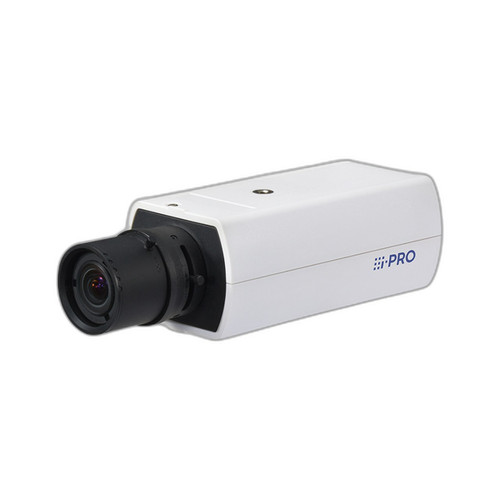
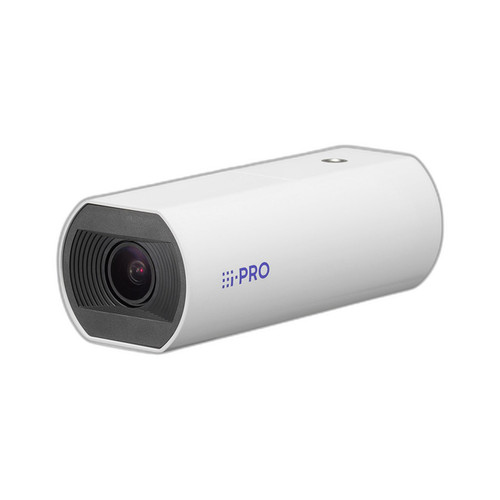
In This Guide
How do the imaging specs compare?
Both cameras use a 1/2.8-inch CMOS sensor at 2MP (1920×1080). The S1136A delivers a significantly higher maximum frame rate at 60 fps versus the U11301-F3's 30 fps (with a 25 fps mode), an advantage for capturing fast motion. The S1136A also posts a wider dynamic range: 144 dB Super Dynamic (configurable 0–31 levels) compared to 120 dB Super Dynamic on the U11301-F3 — a 24 dB difference that matters in lobbies and atriums with mixed lighting.
In low-light performance, the U11301-F3 edges ahead on color sensitivity: 0.07 lx (color, F2.0, 1/30s, AGC 11) versus the S1136A's 0.006 lx (color, F1.2, 1/30s, 30IRE) — though direct numerical comparison is complicated by differing apertures (F2.0 vs F1.2) and IRE reference points. The S1136A's faster lens (F1.2) gathers more light, partially offsetting the raw lux figure difference. In B&W mode the U11301-F3 reaches 0.003 lx while the S1136A achieves 0.004 lx under comparable conditions. The S1136A supports variable lens with auto/manual focus and image rotation (0°/90°/180°/270°), while the U11301-F3 uses a fixed 3.2mm F2.0 lens with no rotation spec stated.
What about installation and environment?
Both cameras are rated for indoor use only and share the same operating temperature range of -10°C to +50°C (14°F to 122°F). Neither model carries an IP or IK rating in the provided specifications. Power is PoE (IEEE 802.3af) on both units, but the S1136A is specified at PoE Class 2 (max ~7W) while the U11301-F3 is listed as PoE Class 0 with an estimated 13W max draw — installers should verify switch port budgets accordingly. The S1136A also accepts 12V DC as an alternate power source; no equivalent alternate power is stated for the U11301-F3.
Dimensionally the U11301-F3 is slightly more compact at 59mm (W) × 49mm (H) × 142mm (D) versus the S1136A at 75mm (W) × 57mm (H) × 146mm (D), and weighs less (weight not stated for U11301-F3; S1136A is approximately 370g). The S1136A specifies mounting compatibility with wall, ceiling, pole, corner, and rack; the U11301-F3 lists wall and ceiling. Both include a monitor output for local adjustment on the S1136A (composite video 1.0V 75Ω); this spec is not stated for the U11301-F3.
Which fits your VMS and analytics better?
Both cameras are ONVIF-compatible. The S1136A explicitly lists ONVIF Profiles G, M, S, and T. The U11301-F3 confirms Profiles G, S, and T; Profile M is not stated in the provided specifications. On edge analytics, the S1136A carries a substantially deeper AI stack: AI Video Motion Detection, Face Detection, People Detection, Vehicle Detection, Non-mask Detection, Occupancy Detection, and Scene Change Detection, plus AI Sound Classification (gunshot, yell, vehicle horn, glass break) and VMD with up to 4 zones. The U11301-F3 offers i-VMD (intelligent motion detection), Scene Change Detection, and Audio Detection — no face, people, vehicle, or sound-classification AI is listed.
Audio support differs: the S1136A has a 3.5mm stereo mic input, a 3.5mm audio output, and supports G.726, G.711, and AAC-LC compression; the U11301-F3 has a built-in microphone with audio recording but no audio output or compression codec is specified. Both support microSD on-board storage. On cybersecurity, the S1136A carries FIPS 140-2 Level 3 (EdgeLock SE050F, NXP) with secure boot, signed firmware, and HTTPS; the U11301-F3 steps up to the newer FIPS 140-3 Level 3 (EdgeLock SE052F, NXP) with secure boot and signed firmware — a meaningful distinction for regulated-facility procurement. Protocol support on the S1136A includes full IPv4 and IPv6 stacks with MQTT, SFTP, SRTP, SNMPv1/v2/v3, and UPnP; equivalent detail is not provided for the U11301-F3.
Which should you choose: the S1136A or the U11301-F3?
Our take: The S1136A is the stronger choice when frame rate, dynamic range, or AI analytics depth drives the decision. It delivers 60 fps versus 30 fps, a 144 dB Super Dynamic range versus 120 dB, and a materially richer edge analytics suite — face, people, vehicle, occupancy, and AI sound classification — that the U11301-F3 does not list. Its 7W PoE Class 2 draw is also lighter on switch infrastructure than the U11301-F3's estimated 13W. Conversely, the U11301-F3 is the stronger fit for regulated-facility procurement requiring FIPS 140-3 Level 3 certification (the S1136A achieves the older FIPS 140-2 Level 3), and its fixed 3.2mm F2.0 lens simplifies commissioning in environments where focal length is predetermined. Buyers running ONVIF Profile M workflows should note it is confirmed only on the S1136A. For general commercial indoor deployments where analytics and motion fidelity matter, the S1136A's specification set is more complete; for compliance-driven institutional installs with a fixed field of view, the U11301-F3's FIPS 140-3 credential is the differentiator.
Side-by-Side Comparison
Spec-for-spec, from manufacturer data.
| Specification | i-PRO S1136A | i-PRO U11301-F3 |
|---|---|---|
| Resolution | 2MP (1920×1080) | 2MP (1920×1080) |
| Image Sensor | 1/2.8-inch CMOS | 1/2.8-inch CMOS |
| Lens / Focal Length | Variable (auto/manual focus with presets) | 3.2mm fixed, F2.0 |
| Max Frame Rate | 60 fps @ 1080p | 30 fps (25 fps mode available) |
| Min Illumination (Color) | 0.006 lx (30IRE, F1.2, 1/30s) | 0.07 lx (F2.0, 1/30s, AGC 11) |
| Min Illumination (B&W) | 0.004 lx (50IRE, F1.2, 1/30s) | 0.003 lx (F2.0, 16/30s, AGC 11) |
| Wide Dynamic Range | 144 dB Super Dynamic (configurable 0–31) | 120 dB Super Dynamic (On, Level 31) |
| IR / Night Vision | IR, ICR switchable (Auto1/Auto2/Auto3) | IR LED, ICR Day/Night |
| Video Compression | H.265, H.264, MJPEG | H.265, H.264, MJPEG |
| Operating Temperature | -10°C to +50°C (14°F to 122°F) | -10°C to +50°C (14°F to 122°F) |
| Power Input / PoE Class | PoE 802.3af Class 2 (7W max); 12V DC | PoE 802.3af Class 0 (13W max est.); 12V DC not stated |
| ONVIF Profiles | G, M, S, T | G, S, T (M not stated) |
| Edge Analytics | Face, People, Vehicle, Occupancy, Non-mask, VMD, SCD, AI Sound Classification | i-VMD, Scene Change Detection, Audio Detection |
| Audio | 3.5mm mic input + 3.5mm audio output; G.726, G.711, AAC-LC | Built-in microphone; audio recording (codec not specified); no output stated |
| Cybersecurity Certification | FIPS 140-2 Level 3 (EdgeLock SE050F, NXP) | FIPS 140-3 Level 3 (EdgeLock SE052F, NXP) |
| On-Board Storage | microSD 2–512GB | microSD (capacity range not specified) |
| Dimensions (W × H × D) | 75mm × 57mm × 146mm | 59mm × 49mm × 142mm |
| Weight | Approx. 370g (0.82 lbs) | — |
| Warranty | 5-Year | — |
Frequently Asked Questions
Which should you choose: the S1136A or the U11301-F3?
The S1136A is the stronger choice when frame rate, dynamic range, or AI analytics depth drives the decision. It delivers 60 fps versus 30 fps, a 144 dB Super Dynamic range versus 120 dB, and a materially richer edge analytics suite — face, people, vehicle, occupancy, and AI sound classification — that the U11301-F3 does not list. Its 7W PoE Class 2 draw is also lighter on switch infrastructure than the U11301-F3's estimated 13W. Conversely, the U11301-F3 is the stronger fit for regulated-facility procurement requiring FIPS 140-3 Level 3 certification (the S1136A achieves the older FIPS 140-2 Level 3), and its fixed 3.2mm F2.0 lens simplifies commissioning in environments where focal length is predetermined. Buyers running ONVIF Profile M workflows should note it is confirmed only on the S1136A. For general commercial indoor deployments where analytics and motion fidelity matter, the S1136A's specification set is more complete; for compliance-driven institutional installs with a fixed field of view, the U11301-F3's FIPS 140-3 credential is the differentiator.
Is the S1136A or U11301-F3 better for low-light performance?
Based on provided specs, the U11301-F3 lists a lower minimum illumination in B&W mode (0.003 lx vs 0.004 lx for the S1136A), but the S1136A uses a faster F1.2 lens compared to the U11301-F3's F2.0 — a wider aperture that gathers more light and partially offsets the raw lux difference. Color minimum illumination figures are measured at different apertures and IRE references, making a direct numerical comparison unreliable. Both cameras include IR and ICR day/night switching.
Which camera has better cybersecurity for a government or healthcare deployment?
The U11301-F3 is certified to FIPS 140-3 Level 3 (EdgeLock SE052F by NXP), which is the current-generation standard and the one increasingly required in federal and healthcare procurement. The S1136A holds FIPS 140-2 Level 3 (EdgeLock SE050F by NXP), the prior-generation standard. Both include secure boot, signed firmware, HTTPS encryption, and IEEE 802.1X support (802.1X is confirmed in the S1136A specs; it is not explicitly listed for the U11301-F3).
Does either camera support advanced AI analytics like face or people detection on the edge?
Yes, but only the S1136A. Its listed analytics include AI Video Motion Detection, Face Detection, People Detection, Vehicle Detection, Non-mask Detection, Occupancy Detection, Scene Change Detection, and AI Sound Classification (gunshot, yell, vehicle horn, glass break). The U11301-F3 lists i-VMD (intelligent motion detection), Scene Change Detection, and Audio Detection; no face, people, vehicle, or sound-classification AI is stated in the provided specifications.
Get a Second Opinion on Your Camera Choice
Share your site layout, coverage goals, and budget. Our team will validate the camera selection, flag anything we would change, and recommend products that match the use case.