
i-PRO MR-8C-I3-4TB-W-V1 vs i-PRO MR-8C-I3-1TB-W-V1: Specification Comparison
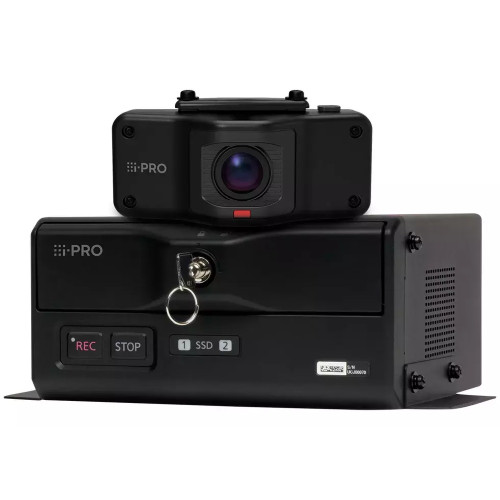
Both the MR-8C-I3-4TB-W-V1 and MR-8C-I3-1TB-W-V1 are i-PRO 8-channel mobile network video recorders designed for in-vehicle surveillance deployments such as patrol cars, transit vehicles, and fleet operations. They share the same form factor, processor, power input range, codec support, PoE standard, housing color, and warranty. The sole specified differentiator between the two models is onboard microSD storage capacity — 4TB versus 1TB — which directly affects video retention duration and suitability for high-channel-count or extended-shift recording scenarios.

In This Guide
- How does storage capacity and video retention differ between the two models?
- Are channel count, processing power, and vehicle power compatibility identical across both models?
- Do both models offer the same connectivity and evidence offloading capabilities?
- Which should you choose: the MR-8C-I3-4TB-W-V1 or the MR-8C-I3-1TB-W-V1?
- Side-by-Side Specs
- FAQ
How does storage capacity and video retention differ between the two models?
The MR-8C-I3-4TB-W-V1 ships with 4TB of ruggedized microSD storage and is specified for 24–72 hours of retention across its 8 channels. The MR-8C-I3-1TB-W-V1 ships with 1TB of ruggedized microSD storage and is specified for 48–96 hours of retention. Note that retention ranges are not directly comparable as stated: the 4TB unit's 24–72 hr range and the 1TB unit's 48–96 hr range likely reflect different assumed bitrate scenarios documented per model; installers should verify retention calculations against their own per-camera bitrate settings and shift lengths before selecting a model.
From a raw capacity standpoint, the 4TB model provides four times the storage of the 1TB model, which is the primary architectural difference between the two SKUs. For deployments requiring longer unattended recording windows, higher-bitrate cameras, or fewer offload opportunities, the 4TB variant offers a larger buffer before overwrite or manual evidence retrieval is required.
Are channel count, processing power, and vehicle power compatibility identical across both models?
Both models are specified with 8 simultaneous recording channels and an Intel Core i3 processor. Both accept a 9–36V DC wide-voltage power input, making them compatible with 12V and 24V vehicle electrical systems without an intermediate converter. Both support PoE (802.3af) for camera power delivery.
Codec support is identical: H.265 and H.264 are available on both units. The MR-8C-I3-4TB-W-V1 spec notes per-channel configurable codec selection; the MR-8C-I3-1TB-W-V1 spec does not explicitly state per-channel configurability, though the supported codecs are the same. Neither spec lists a maximum throughput figure in Mbps; installers requiring that figure should consult the respective datasheets.
Do both models offer the same connectivity and evidence offloading capabilities?
The MR-8C-I3-1TB-W-V1 spec explicitly lists integrated Wi-Fi plus Ethernet connectivity. The MR-8C-I3-4TB-W-V1 spec references Wi-Fi automatic evidence offloading as a key feature but does not separately enumerate Ethernet as a connectivity item in the provided spec fields — though the offloading feature implies network connectivity. Buyers requiring confirmed dual-interface (Wi-Fi + Ethernet) specification on the 4TB model should verify against the published datasheet at /content/product-datasheets/MR-8C-I3-4TB-W-V1.pdf.
Both models share the same bundle IDs (19428, 44317, 44134, 18074), indicating identical accessory and licensing compatibility within the i-PRO ecosystem. Both carry a 3-year warranty. The Operating System field in both specs displays a physical dimension string rather than a software OS name — this appears to be a data entry anomaly; the actual OS is not determinable from the provided specs.
Which should you choose: the MR-8C-I3-4TB-W-V1 or the MR-8C-I3-1TB-W-V1?
Our take: The MR-8C-I3-4TB-W-V1 is the stronger choice when deployments involve extended shifts, high-bitrate cameras, or infrequent evidence offload windows — its 4TB microSD versus the 1TB in the MR-8C-I3-1TB-W-V1 is the single material spec difference between the two units. All other specified parameters — 8 channels, Intel Core i3, 9–36V DC input, H.265/H.264 codecs, 802.3af PoE, white housing, and 3-year warranty — are identical. The 1TB model's spec sheet cites 48–96 hr retention versus 24–72 hr on the 4TB unit; those ranges appear to reflect different bitrate assumptions per datasheet rather than a genuine retention advantage for the smaller-storage unit. For patrol fleets with daily dock-and-offload routines, the 1TB model reduces unit cost without sacrificing channel count or processing capability; for transit or long-haul vehicles where offload is less frequent, the 4TB model is the appropriate specification.
Side-by-Side Comparison
Spec-for-spec, from manufacturer data.
| Specification | i-PRO MR-8C-I3-4TB-W-V1 | i-PRO MR-8C-I3-1TB-W-V1 |
|---|---|---|
| Product Type | Mobile NVR | Mobile NVR |
| Recording Channels | 8 simultaneous | 8 simultaneous |
| Storage Capacity | 4TB | 1TB |
| Local Storage Medium | microSD (ruggedized) | microSD (ruggedized) |
| Stated Retention Range | 24–72 hours | 48–96 hours |
| Processor | Intel Core i3 | Intel Core i3 |
| Supported Codecs | H.265; H.264 | H.265; H.264 |
| Per-Channel Codec Config | Yes (specified) | Not stated in spec |
| Power Input | 9–36V DC | 9–36V DC |
| PoE Standard | 802.3af | 802.3af |
| Wi-Fi Offloading | Yes (automatic evidence offload) | Yes (integrated Wi-Fi) |
| Ethernet | Not explicitly listed in spec | Yes (integrated) |
| Housing Color | White | White |
| Form Factor | Mobile NVR | Mobile NVR |
| Dimensions (OS field) | 10.24"W x 10.08"D x 3.55"H | 10.24"W x 10.08"D x 3.55"H |
| Warranty | 3 Year(s) | 3 Year(s) |
Frequently Asked Questions
Which should you choose: the MR-8C-I3-4TB-W-V1 or the MR-8C-I3-1TB-W-V1?
The MR-8C-I3-4TB-W-V1 is the stronger choice when deployments involve extended shifts, high-bitrate cameras, or infrequent evidence offload windows — its 4TB microSD versus the 1TB in the MR-8C-I3-1TB-W-V1 is the single material spec difference between the two units. All other specified parameters — 8 channels, Intel Core i3, 9–36V DC input, H.265/H.264 codecs, 802.3af PoE, white housing, and 3-year warranty — are identical. The 1TB model's spec sheet cites 48–96 hr retention versus 24–72 hr on the 4TB unit; those ranges appear to reflect different bitrate assumptions per datasheet rather than a genuine retention advantage for the smaller-storage unit. For patrol fleets with daily dock-and-offload routines, the 1TB model reduces unit cost without sacrificing channel count or processing capability; for transit or long-haul vehicles where offload is less frequent, the 4TB model is the appropriate specification.
Is the MR-8C-I3-4TB-W-V1 or MR-8C-I3-1TB-W-V1 better for a transit bus fleet that offloads footage once per day at the depot?
The MR-8C-I3-4TB-W-V1 (4TB) is the safer specification for once-daily offload scenarios. With 8 cameras running simultaneously over a full service day, the larger storage buffer reduces the risk of footage overwrite before evidence is retrieved. The 1TB model is rated for 48–96 hr retention in its spec sheet, but that range is bitrate-dependent; at higher bitrates or with more cameras active, actual retention on 1TB will be shorter.
Do the two models differ in camera compatibility, PoE output, or licensing?
Based on the provided specifications, no. Both models support 8 channels, PoE (802.3af), H.265 and H.264 codecs, and share identical bundle IDs (19428, 44317, 44134, 18074), indicating the same accessory and third-party camera license ecosystem. The only specified difference is storage capacity: 4TB on the MR-8C-I3-4TB-W-V1 versus 1TB on the MR-8C-I3-1TB-W-V1.
Can either model be installed in a standard 12V patrol vehicle without a power converter?
Yes. Both models specify a 9–36V DC wide-voltage input, which covers both 12V and 24V vehicle electrical systems natively. No external DC-DC converter is required for standard patrol car or heavy-vehicle installations based on the provided specs.
Get a Second Opinion on Your Camera Choice
Share your site layout, coverage goals, and budget. Our team will validate the camera selection, flag anything we would change, and recommend products that match the use case.