
Honeywell CW45-5CBS-UVN-0 vs Unitech HT330-QA62TM3G-Z3: Specification Comparison
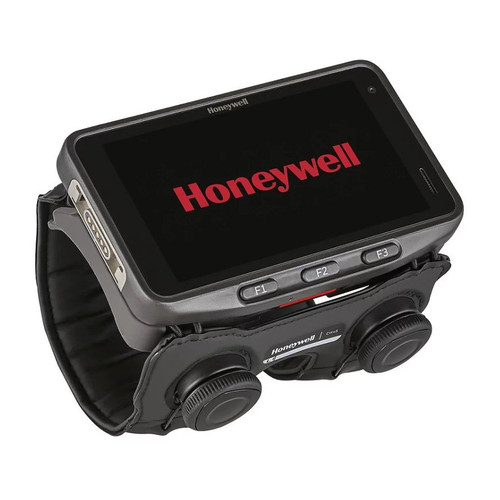
Both the Honeywell CW45-5CBS-UVN-0 and the Unitech HT330-QA62TM3G-Z3 are Android-based wearable devices targeting warehouse, logistics, and field operations, placing them in the same general cross-shop category. The CW45 is a full wearable mobile computer with an onboard processor, display, and integrated connectivity stack. The HT330 is a wearable Bluetooth scanner that pairs to a host device. Buyers evaluating hands-free data capture for shift workers will consider both, though their architectures differ meaningfully in processing independence, wireless capability, and form factor depth.
In This Guide
- Which device offers more onboard processing power and a richer operating environment?
- How do the two devices compare on wireless connectivity and range of communication protocols?
- Which device is better suited to full-shift wearable use in terms of battery endurance, ruggedness, and weight?
- Which should you choose: the CW45-5CBS-UVN-0 or the HT330-QA62TM3G-Z3?
- Side-by-Side Specs
- FAQ
Which device offers more onboard processing power and a richer operating environment?
The Honeywell CW45-5CBS-UVN-0 is a standalone mobile computer built around a Qualcomm QCS4290 octa-core processor running at 2.0 GHz. It runs Android natively on-device, enabling direct execution of WMS applications, barcode scanning logic, and communication tasks without reliance on a paired host. The spec sheet does not disclose the specific Android version for the CW45.
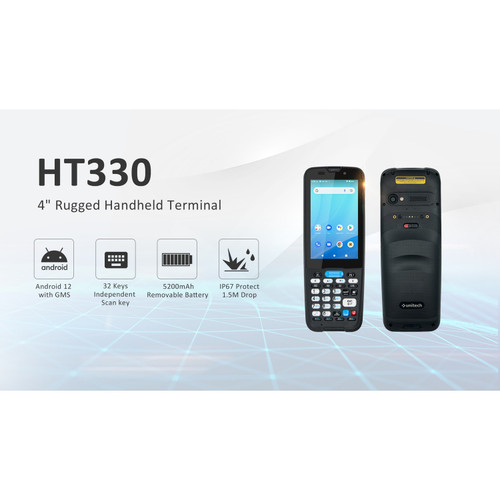
The Unitech HT330-QA62TM3G-Z3 runs Android 12 and carries 3 GB RAM and 32 GB internal flash storage — specs absent from the CW45 listing. However, the HT330 is architecturally positioned as a wearable Bluetooth scanner that pairs to a host phone or terminal; its primary data-capture output is relayed over Bluetooth 5.0 to that host. Buyers needing a fully self-contained compute node should note this distinction: the CW45 is the standalone device, while the HT330 depends on a paired host for application execution in its primary use case.
How do the two devices compare on wireless connectivity and range of communication protocols?
The Honeywell CW45-5CBS-UVN-0 supports WiFi 6 (802.11 a/b/g/n/ac/ax), Bluetooth 5.2, and USB. WiFi 6 delivers higher throughput, lower latency, and better performance in dense RF environments such as large distribution centers with many simultaneous devices — a measurable operational advantage over prior Wi-Fi generations. Bluetooth 5.2 is also a generation ahead of the HT330's Bluetooth 5.0.
The Unitech HT330-QA62TM3G-Z3 connects via Bluetooth 5.0 and also lists 2.4 GHz + 5 GHz wireless and GPS in its wireless spec field. It does not specify Wi-Fi 6 or any 802.11ax capability. The HT330's GPS support is a spec not present in the CW45 listing, which may be relevant for yard management or outdoor asset tracking. For facilities relying on a dense enterprise Wi-Fi infrastructure with direct device association, the CW45's WiFi 6 support is a concrete differentiator.
Which device is better suited to full-shift wearable use in terms of battery endurance, ruggedness, and weight?
The Honeywell CW45-5CBS-UVN-0 offers a choice of 3,400 mAh or 6,800 mAh Li-Ion batteries, specified as hot-swappable — meaning the device can be swapped to a fresh battery mid-shift without powering down. The CW45 carries dual IP65/IP67 ratings for dust and water ingress. It weighs 263 g (9.3 oz / 0.58 lb). Drop survival and operating temperature range are not stated in the provided specs.
The Unitech HT330-QA62TM3G-Z3 ships with a 5,200 mAh Li-ion removable battery and is rated for 20 hours of operating runtime per charge. Its IP rating is IP67. The HT330 is specified to survive a 1.5 m drop to concrete — a ruggedness data point not provided for the CW45. The HT330 includes a 32-key physical keypad, while the CW45 references a separate keypad accessory (CW45-KPD). Weight and exact dimensions are not disclosed in the HT330 specs provided. The HT330's 5,200 mAh fixed battery exceeds the CW45's standard 3,400 mAh option, though the CW45's hot-swap capability addresses endurance differently.
Which should you choose: the CW45-5CBS-UVN-0 or the HT330-QA62TM3G-Z3?
Our take: The CW45-5CBS-UVN-0 is the stronger choice when the deployment requires a fully self-contained wearable computer with enterprise Wi-Fi integration, while the HT330-QA62TM3G-Z3 is better suited to hands-free scanning roles where a host phone or terminal handles application logic. Three concrete spec deltas support this: the CW45 runs WiFi 6 (802.11ax) versus the HT330's Bluetooth-primary architecture with no specified Wi-Fi 6 support; the CW45's Qualcomm QCS4290 octa-core at 2.0 GHz operates as a standalone compute node, whereas the HT330 pairs to a host; and the CW45 offers hot-swappable batteries (3,400 or 6,800 mAh) versus the HT330's higher-capacity but non-hot-swap 5,200 mAh cell rated for 20 hours. The HT330's 1.5 m concrete drop rating and GPS spec are advantages where those are required. Platform qualifier: organizations already running a host-device fleet may find the HT330 sufficient; greenfield wearable-compute deployments should favor the CW45.
Side-by-Side Comparison
Spec-for-spec, from manufacturer data.
| Specification | Honeywell CW45-5CBS-UVN-0 | Unitech HT330-QA62TM3G-Z3 |
|---|---|---|
| Device Category | Wearable Mobile Computer | Wearable Bluetooth Scanner |
| Processor | Qualcomm QCS4290 Octa-Core 2.0 GHz | — |
| Operating System | Android (version not specified) | Android 12 |
| RAM | — | 3 GB |
| Storage | — | 32 GB internal flash |
| Display Size | 4.7 in HD (1280 x 720) | 4-inch touchscreen |
| Wi-Fi | WiFi 6 (802.11 a/b/g/n/ac/ax) | 2.4 GHz + 5 GHz (Wi-Fi standard not specified) |
| Bluetooth | Bluetooth 5.2 | Bluetooth 5.0 |
| GPS | — | Yes |
| Battery Capacity | 3,400 mAh or 6,800 mAh Li-Ion | 5,200 mAh Li-ion |
| Battery Hot-Swap | Yes | Removable (hot-swap not stated) |
| Battery Runtime | Not specified | 20 hours |
| IP Rating | IP65 / IP67 | IP67 |
| Drop Specification | Not specified | 1.5 m to concrete |
| Weight | 263 g (9.3 oz) | Not specified |
| Warranty | 1-year | Manufacturer Warranty (duration not specified) |
Frequently Asked Questions
Which should you choose: the CW45-5CBS-UVN-0 or the HT330-QA62TM3G-Z3?
The CW45-5CBS-UVN-0 is the stronger choice when the deployment requires a fully self-contained wearable computer with enterprise Wi-Fi integration, while the HT330-QA62TM3G-Z3 is better suited to hands-free scanning roles where a host phone or terminal handles application logic. Three concrete spec deltas support this: the CW45 runs WiFi 6 (802.11ax) versus the HT330's Bluetooth-primary architecture with no specified Wi-Fi 6 support; the CW45's Qualcomm QCS4290 octa-core at 2.0 GHz operates as a standalone compute node, whereas the HT330 pairs to a host; and the CW45 offers hot-swappable batteries (3,400 or 6,800 mAh) versus the HT330's higher-capacity but non-hot-swap 5,200 mAh cell rated for 20 hours. The HT330's 1.5 m concrete drop rating and GPS spec are advantages where those are required. Platform qualifier: organizations already running a host-device fleet may find the HT330 sufficient; greenfield wearable-compute deployments should favor the CW45.
Can the Unitech HT330-QA62TM3G-Z3 work without being paired to a phone or separate terminal?
Based on the provided specs, the HT330 is described as a wearable Bluetooth scanner that pairs to a host phone or device for application execution. The Honeywell CW45-5CBS-UVN-0, by contrast, is a standalone mobile computer with its own processor and Android OS, capable of running WMS and scanning applications independently without a paired host.
Which device has the longer battery life for a full warehouse shift?
The Unitech HT330-QA62TM3G-Z3 specifies 20 hours of operating runtime from its 5,200 mAh Li-ion battery. The Honeywell CW45-5CBS-UVN-0 does not state a runtime figure in the provided specs, but offers a hot-swappable battery in either 3,400 mAh or 6,800 mAh capacity, allowing battery replacement mid-shift without powering down. Buyers needing guaranteed runtime without a swap opportunity should note the HT330's stated 20-hour spec; those managing multi-shift operations may prefer the CW45's hot-swap flexibility.
Is the Honeywell CW45-5CBS-UVN-0 or Unitech HT330-QA62TM3G-Z3 better for outdoor or yard operations?
Both devices carry an IP67 rating for water and dust ingress. The Unitech HT330-QA62TM3G-Z3 additionally lists GPS in its wireless spec, which supports positioning in yard management or outdoor asset tracking scenarios — a capability not listed in the CW45 specs. The Honeywell CW45-5CBS-UVN-0 is noted as outdoor-ready with a day/night display mode. For GPS-dependent outdoor workflows, the HT330 holds a documented spec advantage; for Wi-Fi-dependent outdoor deployments, the CW45's WiFi 6 support is the differentiator.
More Mobile Computer Comparisons
- Honeywell CW45-X0N-AND10XG vs Unitech HT730-LJ6122BG
- Honeywell CW45-X0N-AND10XG vs Unitech HT730-LJ6142BG
- Honeywell CW45-X0N-AND10XG vs Unitech HT330-QA62TM3G-Z3
- Honeywell CW45-X0N-AND10XG vs Zebra TC2205-0G1250SS-US
- Honeywell CW45-X0N-AND10XG vs Honeywell CW45-X0N-AND10SG
- Honeywell CW45-X0N-AND10XG vs Honeywell CW45-X0N-BND10XG
Mobile Computer Buying Guides
Get a Second Opinion on Your Camera Choice
Share your site layout, coverage goals, and budget. Our team will validate the camera selection, flag anything we would change, and recommend products that match the use case.