
Honeywell CK67-X0N-5EC1C2G vs Honeywell CK67-X1N-58A1A1G: Specification Comparison
Both the Honeywell CK67-X0N-5EC1C2G and CK67-X1N-58A1A1G are handheld mobile computers from the same CK67 series, running on the Honeywell ScanPal platform with Android with GMS. They share the same chassis, processor, display, battery, and durability ratings, making them directly cross-shoppable. The sole differentiator is wireless WAN connectivity: one model adds 5G Sub-6 GHz/mmWave cellular with Nano SIM and eSIM support, while the other is Wi-Fi-only. This comparison focuses on connectivity architecture, durability and environmental ratings, and scanning and compute capabilities.
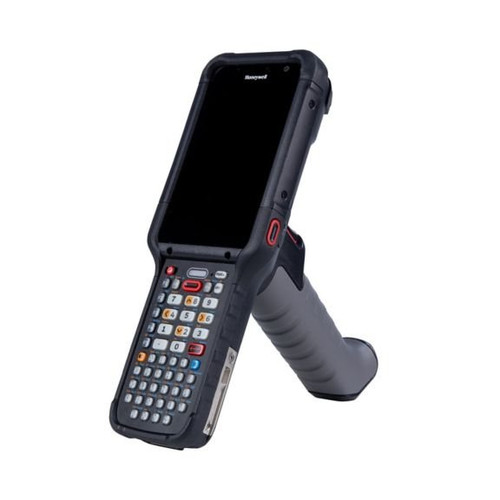
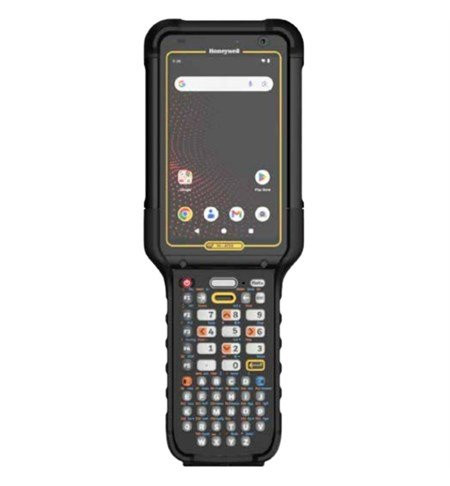
In This Guide
- Which model supports the wireless connectivity your deployment requires?
- How do the two models compare on ruggedization and environmental tolerance?
- Are there any differences in processing power, scanning capability, or platform between the two units?
- Which should you choose: the CK67-X0N-5EC1C2G or the CK67-X1N-58A1A1G?
- Side-by-Side Specs
- FAQ
Which model supports the wireless connectivity your deployment requires?
The CK67-X0N-5EC1C2G is a Wi-Fi-only device, supporting WiFi 6E (802.11 a/b/g/n/ac/ax) and Bluetooth 5.2. It has no WWAN radio and no SIM slot, meaning it depends entirely on infrastructure Wi-Fi coverage for network access. The Product A spec set identifies the scan engine explicitly as the S0703 FlexRange Imager (1D/2D).
The CK67-X1N-58A1A1G adds 5G Sub-6 GHz and mmWave WWAN radios on top of the same WiFi 6E (802.11 a/b/g/n/ac/ax) and Bluetooth 5.2 stack. It also includes a Nano SIM slot and eSIM support, enabling carrier connectivity independent of Wi-Fi infrastructure. Both models list USB as an additional connectivity option. The Product B spec set identifies the scan engine as FlexRange Imager without the S0703 model designation, though both are described as 1D/2D capable.
How do the two models compare on ruggedization and environmental tolerance?
Both the CK67-X0N-5EC1C2G and CK67-X1N-58A1A1G carry identical published durability ratings across every available spec dimension. Both are rated IP65 and IP68 for dust and water ingress protection, and both are drop-rated to 2.4 m (approximately 8 ft). Operating temperature range is -20°C to 50°C (-4°F to 122°F) for both, and storage temperature range is -30°C to 70°C (-22°F to 158°F) for both.
Physical form factor is also identical: 220 x 83 x 37 mm (8.7 x 3.3 x 1.5 in) and 516 g (18.2 oz / 1.14 lb) for each. The display on both units is 4.3 inches at 800 x 480 resolution with Corning Gorilla Glass 7. Neither model has a published MIL-STD rating in the provided specs. No differentiation exists between the two on any durability or environmental axis based on the available data.
Are there any differences in processing power, scanning capability, or platform between the two units?
Both models are built on the same compute foundation: a Qualcomm QCS4490 Octa-Core processor running at 2.0 GHz, paired with 6 GB RAM and 128 GB Flash internal storage, expandable via microSD. Both run Android with GMS on the Honeywell ScanPal platform. Battery capacity is 7000 mAh Li-Ion on both units; Product A's marketing copy cites a 12–14 hour typical runtime, though no equivalent runtime figure appears in Product B's spec set.
Both units include a 13-megapixel rear camera, integrated NFC reader, and microphone. Both carry FCC approval. The scan engine for Product A is explicitly named as the S0703 FlexRange Imager (1D/2D barcode); Product B lists only 'FlexRange Imager' without the S0703 model designation — the provided specs do not confirm whether the hardware is identical. No difference in NFC standard, camera spec, or audio spec is indicated between the two models in the provided data.
Which should you choose: the CK67-X0N-5EC1C2G or the CK67-X1N-58A1A1G?
Our take: The CK67-X1N-58A1A1G is the stronger choice when workers operate outside reliable Wi-Fi infrastructure coverage or in environments requiring carrier-grade network resilience. The defining spec delta is WWAN: the X1N variant adds 5G Sub-6 GHz and mmWave radios plus Nano SIM and eSIM support, which the X0N variant entirely lacks. Every other published specification — processor (Qualcomm QCS4490 Octa-Core 2.0 GHz), memory (6 GB RAM / 128 GB Flash), display (4.3-in 800x480 Gorilla Glass 7), battery (7000 mAh Li-Ion), drop rating (2.4 m), and IP rating (IP65/IP68) — is identical between the two. The CK67-X0N-5EC1C2G is the appropriate selection for fixed-site deployments with dense, managed Wi-Fi 6E infrastructure, where the added cost and complexity of a cellular radio is unnecessary. Buyers should also note that Product A's specs explicitly identify the S0703 FlexRange Imager, while Product B's specs omit that model designation.
Side-by-Side Comparison
Spec-for-spec, from manufacturer data.
| Specification | Honeywell CK67-X0N-5EC1C2G | Honeywell CK67-X1N-58A1A1G |
|---|---|---|
| Series / Family | CK67 | CK67 |
| Platform | Honeywell ScanPal | Honeywell ScanPal |
| Operating System | Android with GMS | Android with GMS |
| Processor | Qualcomm QCS4490 Octa-Core 2.0 GHz | Qualcomm QCS4490 Octa-Core 2.0 GHz |
| RAM | 6 GB | 6 GB |
| Internal Storage | 128 GB Flash | 128 GB Flash |
| Storage Expansion | microSD | microSD |
| Display | 4.3 in (800x480) Gorilla Glass 7 | 4.3 in (800x480) Gorilla Glass 7 |
| Wi-Fi | WiFi 6E (802.11 a/b/g/n/ac/ax) | WiFi 6E (802.11 a/b/g/n/ac/ax) |
| Bluetooth | 5.2 | 5.2 |
| WWAN / Cellular | — | 5G Sub-6 GHz / mmWave |
| SIM | — | Nano SIM + eSIM |
| Scan Engine | S0703 FlexRange Imager (1D/2D) | FlexRange Imager (1D/2D) |
| IP Rating | IP65 / IP68 | IP65 / IP68 |
| Drop Rating | 2.4 m | 2.4 m |
| Battery | 7000 mAh Li-Ion | 7000 mAh Li-Ion |
| Operating Temperature | -20°C to 50°C | -20°C to 50°C |
| Storage Temperature | -30°C to 70°C | -30°C to 70°C |
| Dimensions | 220 x 83 x 37 mm | 220 x 83 x 37 mm |
| Weight | 516 g (18.2 oz) | 516 g (18.2 oz) |
| Camera | 13 MP rear | 13 MP rear |
| NFC | Integrated | Integrated |
| Approvals | FCC | FCC |
Frequently Asked Questions
Which should you choose: the CK67-X0N-5EC1C2G or the CK67-X1N-58A1A1G?
The CK67-X1N-58A1A1G is the stronger choice when workers operate outside reliable Wi-Fi infrastructure coverage or in environments requiring carrier-grade network resilience. The defining spec delta is WWAN: the X1N variant adds 5G Sub-6 GHz and mmWave radios plus Nano SIM and eSIM support, which the X0N variant entirely lacks. Every other published specification — processor (Qualcomm QCS4490 Octa-Core 2.0 GHz), memory (6 GB RAM / 128 GB Flash), display (4.3-in 800x480 Gorilla Glass 7), battery (7000 mAh Li-Ion), drop rating (2.4 m), and IP rating (IP65/IP68) — is identical between the two. The CK67-X0N-5EC1C2G is the appropriate selection for fixed-site deployments with dense, managed Wi-Fi 6E infrastructure, where the added cost and complexity of a cellular radio is unnecessary. Buyers should also note that Product A's specs explicitly identify the S0703 FlexRange Imager, while Product B's specs omit that model designation.
Is the CK67-X0N-5EC1C2G or CK67-X1N-58A1A1G better for yard and delivery operations where workers move between buildings and vehicles?
Based on the provided specs, the CK67-X1N-58A1A1G is better suited for that use case. It includes 5G Sub-6 GHz and mmWave WWAN radios with Nano SIM and eSIM support, enabling cellular connectivity in areas where Wi-Fi access points are absent or unreliable, such as loading docks, parking yards, and delivery routes. The CK67-X0N-5EC1C2G has no WWAN radio and requires Wi-Fi coverage at all times.
Do both the CK67-X0N-5EC1C2G and CK67-X1N-58A1A1G have the same drop and water resistance ratings?
Yes. Both models carry identical published ratings: IP65 and IP68 for dust and water ingress protection, and a 2.4 m (approximately 8 ft) drop rating. Operating temperature is -20°C to 50°C and storage temperature is -30°C to 70°C on both units. The provided specs show no differentiation in ruggedization between the two variants.
Will the CK67-X0N-5EC1C2G or CK67-X1N-58A1A1G deliver faster scanning and app performance in a warehouse?
The provided specs show no difference in compute or scanning performance between the two models. Both use the same Qualcomm QCS4490 Octa-Core 2.0 GHz processor, 6 GB RAM, 128 GB Flash storage, and a FlexRange 1D/2D imager. Product A's specs identify the engine as the S0703 FlexRange Imager specifically; Product B lists 'FlexRange Imager' without that model designation. The specs do not provide benchmark data, so no performance difference can be confirmed from the available information.
More Mobile Computer Comparisons
- Datalogic 944850001 vs Honeywell CK67-X0N-5EC1C2G
- Datalogic 944850001 vs Honeywell CK67-X1N-58A1B1G
- Datalogic 944850001 vs Honeywell CK67-X1N-58A1A1G
- Datalogic 944850001 vs Honeywell CK67-X1N-58A1C1G
- Datalogic 944850001 vs Datalogic 944950001
- Datalogic 944850001 vs Datalogic 944900004
Mobile Computer Buying Guides
Get a Second Opinion on Your Camera Choice
Share your site layout, coverage goals, and budget. Our team will validate the camera selection, flag anything we would change, and recommend products that match the use case.