
Honeywell CK67-X0N-58S1B0G vs Honeywell CK67-X1N-58A1B1G: Specification Comparison
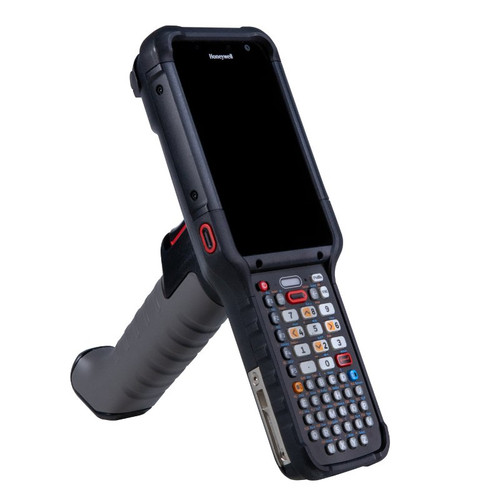
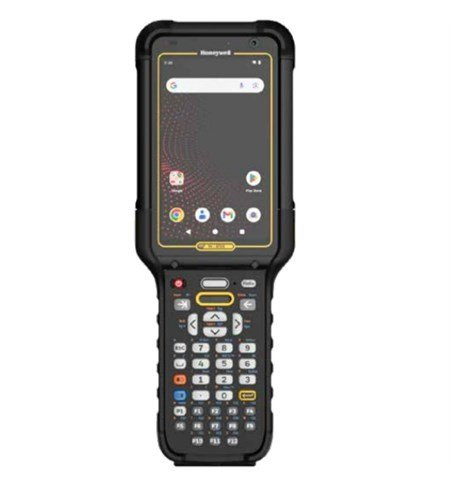
Both units are Honeywell CK67-series handheld mobile computers sharing the same physical chassis, processor, display, ruggedness ratings, scan engine, and battery. The key differentiator is cellular connectivity: the CK67-X0N-58S1B0G is a Wi-Fi-only model running Android without Google Mobile Services, while the CK67-X1N-58A1B1G adds 5G Sub-6 GHz and mmWave WWAN with Nano SIM and eSIM support and runs Android with Google Mobile Services. Buyers choosing between them are weighing network architecture requirements and GMS dependency against deployment cost and IT policy.
In This Guide
- Which model provides the right network connectivity for your deployment environment?
- Does the Android variant—GMS versus non-GMS—affect your application and MDM strategy?
- Are the physical ruggedness, ergonomics, and scanning specs identical across both models?
- Which should you choose: the CK67-X0N-58S1B0G or the CK67-X1N-58A1B1G?
- Side-by-Side Specs
- FAQ
Which model provides the right network connectivity for your deployment environment?
The CK67-X0N-58S1B0G relies exclusively on Wi-Fi 6E (802.11 a/b/g/n/ac/ax) and Bluetooth 5.2 for wireless connectivity, with USB as a wired option. This suits fixed or campus-style warehouse environments where Wi-Fi infrastructure is dense and reliable. No cellular modem is present, so the device has no fallback if a worker moves outside AP coverage.
The CK67-X1N-58A1B1G adds 5G Sub-6 GHz and mmWave WWAN alongside the same WiFi 6E and Bluetooth 5.2 stack. It also supports both a physical Nano SIM and an embedded eSIM, enabling carrier flexibility and remote SIM provisioning. This makes it suited for field service, yard logistics, or multi-site deployments where workers operate beyond Wi-Fi coverage. Both models share the same USB connectivity option.
Does the Android variant—GMS versus non-GMS—affect your application and MDM strategy?
The CK67-X0N-58S1B0G runs Android without Google Mobile Services. This non-GMS configuration is typically chosen for environments with strict data-governance or export-control requirements, air-gapped networks, or custom enterprise application stacks that do not depend on Google Play Services APIs. MDM enrollment relies on non-GMS-compatible agents; applications must be side-loaded or distributed through an enterprise app store.
The CK67-X1N-58A1B1G runs Android with GMS, enabling access to the Google Play Store, Google Play Protect, and GMS-dependent APIs commonly used by third-party WMS, TMS, and field-service applications. Honeywell lists the platform as ScanPal for this SKU, indicating alignment with Honeywell's GMS-certified device portfolio. Organizations standardized on Google Zero-Touch Enrollment or EMM solutions that require GMS will find the X1N variant easier to onboard at scale.
Are the physical ruggedness, ergonomics, and scanning specs identical across both models?
All physical and environmental specifications are identical between the two SKUs per the provided data. Both carry IP65 and IP68 dual ratings, a 2.4 m drop rating, and a storage temperature range of -30 to 70 °C (-22 to 158 °F) with an operating temperature of -20 to 50 °C (-4 to 122 °F). Dimensions are 220 × 83 × 37 mm and weight is 516 g (18.2 oz) for both.
The scan engine is the FlexRange XLR Imager on both units, capable of reading 1D and 2D barcodes from near-contact to over 20 meters. Display is a 4.3-inch panel at 800 × 480 resolution protected by Corning Gorilla Glass 7 on both. Battery capacity is 7000 mAh Li-Ion on both, with an 8–12 hour runtime noted in the X0N spec data; the X1N datasheet does not specify a discrete runtime figure, though the same battery capacity is listed. A 13-megapixel rear camera and integrated NFC reader are present on both models.
Which should you choose: the CK67-X0N-58S1B0G or the CK67-X1N-58A1B1G?
Our take: The CK67-X1N-58A1B1G is the stronger choice when workers operate outside fixed Wi-Fi coverage or when GMS-dependent enterprise applications are required. The single largest spec delta is cellular: the X1N adds 5G Sub-6 GHz and mmWave WWAN plus Nano SIM and eSIM support that the X0N entirely lacks, making the X1N viable for yard, field-service, or multi-site deployments with no Wi-Fi fallback risk. Second, the X1N runs Android with GMS, enabling Google Zero-Touch Enrollment and GMS API-dependent WMS or field-service apps, whereas the X0N's non-GMS Android requires side-loading and GMS-free MDM tooling. Third, the X1N's ScanPal platform designation signals Honeywell's GMS-certified management ecosystem alignment. Conversely, the X0N is appropriate for air-gapped warehouses, data-governance-restricted environments, or organizations whose application stack is GMS-independent and whose facilities provide full Wi-Fi 6E coverage—where the absence of a cellular modem simplifies IT policy and may reduce per-unit cost.
Side-by-Side Comparison
Spec-for-spec, from manufacturer data.
| Specification | Honeywell CK67-X0N-58S1B0G | Honeywell CK67-X1N-58A1B1G |
|---|---|---|
| SKU / Part Number | CK67-X0N-58S1B0G | CK67-X1N-58A1B1G |
| Series | CK67 | CK67 |
| Processor | Qualcomm QCS4490 Octa-Core 2.0 GHz | Qualcomm QCS4490 Octa-Core 2.0 GHz |
| RAM | 6 GB | 6 GB |
| Internal Storage | 128 GB Flash | 128 GB Flash |
| Expandable Storage | microSD | microSD |
| Operating System | Android (non-GMS) | Android with GMS |
| Platform | — | Honeywell ScanPal |
| WWAN / Cellular | None | 5G Sub-6 GHz / mmWave |
| SIM Support | — | Nano SIM + eSIM |
| Wi-Fi | WiFi 6E (802.11 a/b/g/n/ac/ax) | WiFi 6E (802.11 a/b/g/n/ac/ax) |
| Bluetooth | 5.2 | 5.2 |
| Scan Engine | FlexRange XLR Imager (20+ m) | FlexRange XLR Imager (20+ m) |
| Display | 4.3 in, 800x480, Gorilla Glass 7 | 4.3 in, 800x480, Gorilla Glass 7 |
| IP Rating | IP65 / IP68 | IP65 / IP68 |
| Drop Rating | 2.4 m | 2.4 m |
| Battery | 7000 mAh Li-Ion | 7000 mAh Li-Ion |
| Operating Temperature | -20 to 50 °C (-4 to 122 °F) | -20 to 50 °C (-4 to 122 °F) |
| Storage Temperature | -30 to 70 °C (-22 to 158 °F) | -30 to 70 °C (-22 to 158 °F) |
| Dimensions | 220 x 83 x 37 mm | 220 x 83 x 37 mm |
| Weight | 516 g (18.2 oz) | 516 g (18.2 oz) |
| Camera | 13 MP rear | 13 MP rear |
| NFC | Integrated | Integrated |
| Regulatory | FCC | FCC |
Frequently Asked Questions
Which should you choose: the CK67-X0N-58S1B0G or the CK67-X1N-58A1B1G?
The CK67-X1N-58A1B1G is the stronger choice when workers operate outside fixed Wi-Fi coverage or when GMS-dependent enterprise applications are required. The single largest spec delta is cellular: the X1N adds 5G Sub-6 GHz and mmWave WWAN plus Nano SIM and eSIM support that the X0N entirely lacks, making the X1N viable for yard, field-service, or multi-site deployments with no Wi-Fi fallback risk. Second, the X1N runs Android with GMS, enabling Google Zero-Touch Enrollment and GMS API-dependent WMS or field-service apps, whereas the X0N's non-GMS Android requires side-loading and GMS-free MDM tooling. Third, the X1N's ScanPal platform designation signals Honeywell's GMS-certified management ecosystem alignment. Conversely, the X0N is appropriate for air-gapped warehouses, data-governance-restricted environments, or organizations whose application stack is GMS-independent and whose facilities provide full Wi-Fi 6E coverage—where the absence of a cellular modem simplifies IT policy and may reduce per-unit cost.
Can the CK67-X0N-58S1B0G connect to a cellular network if Wi-Fi drops?
No. Based on the provided specifications, the CK67-X0N-58S1B0G has no WWAN modem, no SIM slot, and no eSIM. It is Wi-Fi-only (WiFi 6E) with Bluetooth 5.2 and USB as the only connectivity options. If Wi-Fi coverage is interrupted, the device loses network access. The CK67-X1N-58A1B1G is the appropriate model if cellular fallback or primary cellular connectivity is required.
Is the CK67-X0N-58S1B0G or CK67-X1N-58A1B1G better for a Google Zero-Touch or Play Store deployment?
The CK67-X1N-58A1B1G is the correct choice. It runs Android with Google Mobile Services, which is required for Google Zero-Touch Enrollment and for any application that relies on GMS APIs or Google Play distribution. The CK67-X0N-58S1B0G runs Android without GMS; it cannot use the Play Store or GMS-dependent enrollment workflows and requires alternative MDM onboarding and app distribution methods.
Are the drop rating, IP rating, scan range, and battery capacity the same on both models?
Yes, per the provided specifications. Both models share a 2.4 m drop rating, dual IP65/IP68 certification, the FlexRange XLR Imager (1D/2D, 20+ meter range), a 7000 mAh Li-Ion battery, a 4.3-inch 800×480 Gorilla Glass 7 display, and identical dimensions (220 × 83 × 37 mm) and weight (516 g). The physical, environmental, and scanning hardware is common across the CK67 platform for these two SKUs.
More Mobile Computer Comparisons
- Datalogic 944850001 vs Honeywell CK67-X0N-5EC1C2G
- Datalogic 944850001 vs Honeywell CK67-X1N-58A1B1G
- Datalogic 944850001 vs Honeywell CK67-X1N-58A1A1G
- Datalogic 944850001 vs Honeywell CK67-X1N-58A1C1G
- Datalogic 944850001 vs Datalogic 944950001
- Datalogic 944850001 vs Datalogic 944900004
Mobile Computer Buying Guides
Get a Second Opinion on Your Camera Choice
Share your site layout, coverage goals, and budget. Our team will validate the camera selection, flag anything we would change, and recommend products that match the use case.