
Honeywell CK67-X0N-58S1B0G vs Datalogic 944900004: Specification Comparison
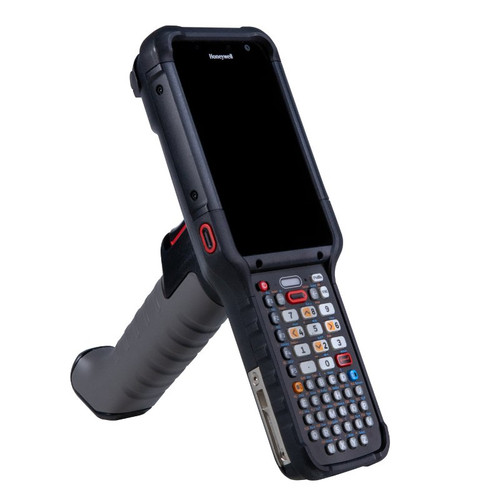
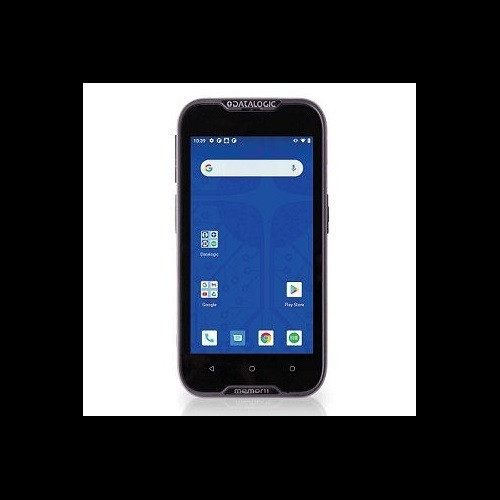
Both the Honeywell CK67-X0N-58S1B0G and the Datalogic Memor 35 5G (944900004) are IP65/IP68-rated Android handheld mobile computers targeting warehouse, field service, and logistics workflows. The Honeywell unit is a purpose-built scan-centric brick-form device with a long-range imager, while the Datalogic is a slim 5G-capable slab with a larger consumer-style display. Buyers evaluating rugged handhelds for barcode-intensive or connected-field operations will likely cross-shop these two, making them a legitimate comparison pair across scanning capability, durability, and connectivity profile.
In This Guide
- Which device delivers superior scanning capability and display for barcode-intensive workflows?
- How do the two units compare on physical durability, environmental ratings, and battery endurance?
- Which unit offers broader wireless connectivity and the more future-ready software platform?
- Which should you choose: the CK67-X0N-58S1B0G or the 944900004?
- Side-by-Side Specs
- FAQ
Which device delivers superior scanning capability and display for barcode-intensive workflows?
The Honeywell CK67-X0N-58S1B0G is equipped with a FlexRange XLR Imager rated for read distances exceeding 20 meters, a specification designed explicitly for high-bay warehouse racking and conveyor-line scanning. Its 4.3-inch display (800×480) with Corning Gorilla Glass 7 is smaller and lower-resolution but optimized for gloved-hand ergonomics in a brick form factor.
The Datalogic Memor 35 5G carries a 1D/2D area imager supporting Code 128, Code 39, UPC, EAN, QR Code, Data Matrix, and PDF417. No rated scan distance is provided in the supplied specifications. Its 6.0-inch Full HD+ (2160×1080) display with Corning Gorilla Glass 5 offers significantly higher pixel density and screen real estate, benefiting field technicians who review documents, maps, or forms on-device.
For pure long-range scanning depth, the Honeywell's specified 20+ meter XLR imager is a concrete, documented advantage. The Datalogic's scan-distance spec is absent from the provided data; buyers requiring a verified range figure for the 944900004 should request the full datasheet from Datalogic before specifying it in high-bay environments.
How do the two units compare on physical durability, environmental ratings, and battery endurance?
Both devices carry IP65/IP68 dual ingress-protection ratings, confirming resistance to dust and sustained water immersion. The Honeywell CK67 specifies a 2.4-meter drop rating and an operating temperature range of -20°C to 50°C, with storage rated to -30°C/70°C. The Datalogic Memor 35 5G references MIL-STD-810H compliance for drop and shock, but no specific drop-height in meters is stated in the provided specifications.
Battery capacity diverges significantly: the Honeywell ships with a 7,000 mAh Li-Ion cell with a stated 8–12 hour runtime. The Datalogic carries a 4,680 mAh battery but adds two features absent on the Honeywell: safe-swap capability (allowing a depleted pack to be exchanged without powering down) and wireless charging support. For operations requiring zero-downtime battery management, the Datalogic's safe-swap design offsets its lower raw capacity.
Weight and form factor also differ materially. The Honeywell weighs 516 g (18.2 oz) in its brick configuration, versus 327 g (0.72 lbs / approximately 327 g) for the slimmer Datalogic slab. Operators carrying devices for full shifts should factor ergonomic fatigue into the selection.
Which unit offers broader wireless connectivity and the more future-ready software platform?
The Datalogic Memor 35 5G's headline connectivity advantage is its integrated 5G WWAN radio, enabling cellular data connectivity independent of Wi-Fi infrastructure — a decisive differentiator for field service, transportation, or any deployment outside a fixed warehouse Wi-Fi footprint. Both devices support Wi-Fi 6/6E (802.11 a/b/g/n/ac/ax) and Bluetooth 5.2. The Datalogic also specifies NFC and USB 3.2 Type-C; the Honeywell lists NFC and USB but does not specify the USB generation in the provided data.
On the OS layer, the Datalogic runs Android 13 with GMS (Google Mobile Services) and is noted as upgradable to Android 18, providing access to the full Google Play ecosystem and standard enterprise MDM tooling. The Honeywell CK67 runs Android without GMS (non-GMS), which is common for purpose-built scanning deployments managed via Honeywell's Mobility Edge platform or third-party EMM solutions, but restricts native Google Play app access.
Processor clocks differ modestly: the Honeywell uses a Qualcomm QCS4490 octa-core at 2.0 GHz with 6 GB RAM; the Datalogic uses the QCM4490 octa-core at 2.4 GHz and offers a 6 GB or 8 GB RAM configuration. Both specify 128 GB base storage with microSD expansion; the Datalogic explicitly rates microSD expansion to 2 TB.
Which should you choose: the CK67-X0N-58S1B0G or the 944900004?
Our take: The CK67-X0N-58S1B0G is the stronger choice when long-range barcode scanning in a fixed Wi-Fi warehouse environment is the primary workload. Its FlexRange XLR Imager is documented to 20+ meters — a spec the Datalogic 944900004 does not match in the provided data — and its 7,000 mAh battery outpaces the Memor 35's 4,680 mAh cell by roughly 50% in raw capacity, supporting longer shifts without a swap event. It also absorbs a 2.4-meter drop by specification. Conversely, the Datalogic Memor 35 5G is the superior platform when 5G cellular connectivity, a larger 6.0-inch Full HD+ display, GMS Android 13 (upgradable to 18), safe-swap battery, and a 189 g weight reduction are decision drivers — particularly for field service or route delivery roles operating outside dense Wi-Fi coverage. Buyers should confirm the Datalogic's scan range from its full datasheet before deploying in high-bay racking scenarios.
Side-by-Side Comparison
Spec-for-spec, from manufacturer data.
| Specification | Honeywell CK67-X0N-58S1B0G | Datalogic 944900004 |
|---|---|---|
| Product Family | CK67 | Memor 35 5G |
| Processor | Qualcomm QCS4490 Octa-Core 2.0 GHz | Qualcomm QCM4490 Octa-Core 2.4 GHz |
| RAM | 6 GB | 6 GB or 8 GB |
| Storage | 128 GB Flash; microSD expandable | 128 GB UFS; microSD expandable to 2 TB |
| Display Size & Resolution | 4.3 in, 800×480 | 6.0 in Full HD+ 2160×1080 |
| Display Glass | Corning Gorilla Glass 7 | Corning Gorilla Glass 5 |
| Operating System | Android (non-GMS) | Android 13 with GMS; upgradable to Android 18 |
| Scan Engine | FlexRange XLR Imager (20+ m range) | 1D/2D Area Imager (range not specified) |
| IP Rating | IP65/IP68 | IP65/IP68 |
| Drop Rating | 2.4 m | MIL-STD-810H (drop height not specified) |
| Battery Capacity | 7,000 mAh Li-Ion | 4,680 mAh; safe-swap; wireless charging |
| Battery Runtime | 8–12 hours (stated) | — |
| Wi-Fi | Wi-Fi 6E (802.11 a/b/g/n/ac/ax) | Wi-Fi 6/6E (802.11 a/b/g/n/ac/ax) |
| Cellular (WWAN) | — | 5G |
| Bluetooth | 5.2 | 5.2 |
| NFC | Yes | Yes |
| Operating Temperature | -20°C to 50°C | — |
| Storage Temperature | -30°C to 70°C | — |
| Weight | 516 g (18.2 oz) | 327 g (0.72 lbs) |
| Dimensions (mm) | 220 × 83 × 37 | 78.5 × 168 × 17.8 |
| Camera (Rear) | 13 MP | 13 MP |
| Camera (Front) | — | 8 MP |
Frequently Asked Questions
Which should you choose: the CK67-X0N-58S1B0G or the 944900004?
The CK67-X0N-58S1B0G is the stronger choice when long-range barcode scanning in a fixed Wi-Fi warehouse environment is the primary workload. Its FlexRange XLR Imager is documented to 20+ meters — a spec the Datalogic 944900004 does not match in the provided data — and its 7,000 mAh battery outpaces the Memor 35's 4,680 mAh cell by roughly 50% in raw capacity, supporting longer shifts without a swap event. It also absorbs a 2.4-meter drop by specification. Conversely, the Datalogic Memor 35 5G is the superior platform when 5G cellular connectivity, a larger 6.0-inch Full HD+ display, GMS Android 13 (upgradable to 18), safe-swap battery, and a 189 g weight reduction are decision drivers — particularly for field service or route delivery roles operating outside dense Wi-Fi coverage. Buyers should confirm the Datalogic's scan range from its full datasheet before deploying in high-bay racking scenarios.
Is the Honeywell CK67-X0N-58S1B0G or the Datalogic 944900004 better for high-bay warehouse scanning?
Based on the provided specifications, the Honeywell CK67-X0N-58S1B0G has a documented advantage here. Its FlexRange XLR Imager is specified at 20+ meters read range, which is well-suited to high-bay racking. The Datalogic Memor 35 5G's scan distance is not stated in the provided specs, so buyers should obtain that figure directly from Datalogic before making a final call for high-bay deployments.
Which device is better suited for field service technicians working outside a Wi-Fi network?
The Datalogic Memor 35 5G (944900004) is the clear choice here because it includes an integrated 5G WWAN radio. The Honeywell CK67-X0N-58S1B0G's provided specifications list Wi-Fi, Bluetooth, and USB connectivity but do not indicate a cellular radio, making it dependent on available Wi-Fi infrastructure.
How do the two devices compare for all-day shift use without returning to a charging station?
The Honeywell CK67-X0N-58S1B0G has a higher-capacity 7,000 mAh battery with a stated 8–12 hour runtime, which is a raw endurance advantage. The Datalogic Memor 35 5G has a smaller 4,680 mAh cell but supports safe-swap (hot-swappable battery replacement without shutdown) and wireless charging — features the Honeywell's provided specs do not mention. For operations with charging infrastructure available throughout a shift, the Datalogic's safe-swap design can deliver continuous uptime despite lower battery capacity.
More Mobile Computer Comparisons
- Datalogic 944850001 vs Honeywell CK67-X0N-5EC1C2G
- Datalogic 944850001 vs Honeywell CK67-X1N-58A1B1G
- Datalogic 944850001 vs Honeywell CK67-X1N-58A1A1G
- Datalogic 944850001 vs Honeywell CK67-X1N-58A1C1G
- Datalogic 944850001 vs Datalogic 944950001
- Datalogic 944850001 vs Datalogic 944900004
Mobile Computer Buying Guides
Get a Second Opinion on Your Camera Choice
Share your site layout, coverage goals, and budget. Our team will validate the camera selection, flag anything we would change, and recommend products that match the use case.