
Honeywell CK67-X0N-58S1B0G vs Datalogic 944850001: Specification Comparison
Both the Honeywell CK67-X0N-58S1B0G and the Datalogic Memor 30 (944850001) are Android-based handheld mobile computers targeting warehouse, logistics, and field-mobility applications. They share the same Qualcomm QCS4490 platform, IP65/IP68 ingress protection, Wi-Fi 6E, and Bluetooth 5.2, making them direct cross-shop candidates for enterprise buyers evaluating a rugged handheld refresh. The comparison below examines scan performance and ergonomics, display and OS ecosystem, and battery and ruggedness to surface the meaningful specification differences between the two.
In This Guide
- Which device delivers better scan performance and ergonomics for warehouse workers?
- How do the display size and Android OS ecosystem compare for application compatibility?
- Which unit is better suited for harsh environments and long uninterrupted shifts?
- Which should you choose: the CK67-X0N-58S1B0G or the 944850001?
- Side-by-Side Specs
- FAQ
Which device delivers better scan performance and ergonomics for warehouse workers?
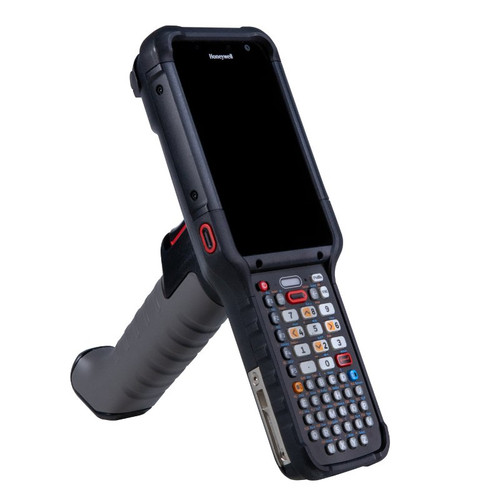
The CK67-X0N-58S1B0G is equipped with a FlexRange XLR Imager rated to 20+ meters, making it suited for long-range barcode capture in high-bay racking or dock-door scenarios where workers cannot physically approach every label. The Memor 30 specifies a scanning range of 10 cm to 10 m — adequate for counter, conveyor, and typical shelf-level tasks but roughly half the maximum working distance of the Honeywell.
On form factor, the CK67 is heavier at 516 g (18.2 oz) versus the Memor 30 at 313 g (0.69 lb / ~310 g). The Honeywell also has a larger physical footprint (220 × 83 × 37 mm) compared with the Memor 30's specified length of 10 cm — though the Datalogic datasheet does not provide full height and width dimensions, so a complete volume comparison cannot be made. Buyers prioritizing all-day single-handed scanning endurance will note the ~200 g weight delta in the Memor 30's favor.
Both units incorporate a 13 MP rear camera. The Memor 30 additionally specifies an 8 MP front camera; the CK67 does not list a front camera in its specifications. Both support NFC. The CK67 specifies GNSS (dual-band L1/G1) for outdoor location services; the Memor 30 does not list GNSS in the provided specifications.
How do the display size and Android OS ecosystem compare for application compatibility?
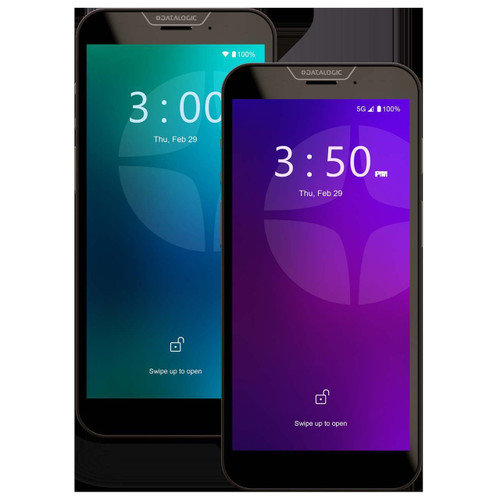
The Memor 30 carries a 6.0-inch Full HD+ display at 2160 × 1080 resolution with Corning Gorilla Glass 5. The CK67 uses a 4.3-inch display at 800 × 480 with Corning Gorilla Glass 7. The Memor 30's screen is significantly larger and higher-resolution, which benefits tasks involving forms, maps, or rich UI applications. The CK67's Gorilla Glass 7 is a newer glass generation than the Memor 30's Gorilla Glass 5, offering greater scratch and drop resistance at the glass level.
The Memor 30 ships with Android 13 with Google Mobile Services (GMS), enabling access to the Google Play Store and standard Google APIs without additional MDM workarounds. The CK67 runs Android (non-GMS), meaning Google Play and GMS-dependent applications are not natively available; enterprise app deployment typically requires sideloading or an EMM solution. For organizations standardizing on GMS-dependent software or consumer-grade productivity apps, this is a meaningful distinction.
The CK67 processor is clocked at 2.0 GHz; the Memor 30's QCS4490 is clocked at 2.4 GHz — a 20% clock-speed advantage on the same silicon family. The Memor 30 also offers a 6 GB or 8 GB RAM configuration, whereas the CK67 is specified at 6 GB RAM only. Both carry 128 GB of internal flash storage with microSD expansion; the Memor 30 explicitly supports microSD up to 2 TB.
Which unit is better suited for harsh environments and long uninterrupted shifts?
The CK67-X0N-58S1B0G carries a 7000 mAh Li-Ion battery with an estimated 8–12 hour runtime per charge. The Memor 30 uses a 4680 mAh battery — approximately 33% less capacity — but it is a safe-swap design supporting hot-swap without powering down the device, and it also supports wireless charging. For operations with spare battery pools and swap infrastructure, the Memor 30's lower capacity is mitigated; for operations relying on a single charge through a full shift, the CK67's 7000 mAh provides a larger buffer.
Both devices are rated IP65/IP68 for dust and water ingress. The Memor 30 additionally carries MIL-STD-810H certification, which covers a defined battery of environmental tests (temperature, humidity, vibration, altitude, shock). The CK67 specifies a 2.4 m drop rating and a drop spec to concrete (6 ft) is listed in Datalogic specs for the Memor 30 as well. The CK67 specifies an operating temperature range of -20 to 50°C and storage of -30 to 70°C; corresponding operating and storage temperature ranges are not provided in the Memor 30's supplied specifications.
The CK67 holds FCC approval as listed. The Memor 30's regulatory approvals are not enumerated in the provided specifications. Buyers with international deployment requirements should verify country-specific certifications directly with each manufacturer.
Which should you choose: the CK67-X0N-58S1B0G or the 944850001?
Our take: The CK67-X0N-58S1B0G is the stronger choice when long-range scanning, extended single-charge shift coverage, and non-GMS Android deployments are the priority. Its FlexRange XLR Imager reaches 20+ meters versus the Memor 30's 10-meter maximum — a decisive advantage in high-bay warehousing. Its 7000 mAh battery provides roughly 49% more capacity than the Memor 30's 4680 mAh pack, critical where battery-swap infrastructure is unavailable. Conversely, the Memor 30 (944850001) is the stronger choice when display real estate, GMS app compatibility, and lighter carry weight matter most: its 6.0-inch Full HD+ screen dwarfs the CK67's 4.3-inch 800×480 panel, it ships with Android 13 GMS enabling native Play Store access, and at 313 g it is approximately 200 g lighter — meaningful for all-day single-handed use. The Memor 30's safe-swap battery and MIL-STD-810H certification add operational flexibility. Platform teams already standardized on Honeywell MDM or Mobility Edge should favor the CK67; GMS-centric Android enterprise environments align better with the Memor 30.
Side-by-Side Comparison
Spec-for-spec, from manufacturer data.
| Specification | Honeywell CK67-X0N-58S1B0G | Datalogic 944850001 |
|---|---|---|
| Product Series | CK67 | Memor 30 |
| SKU / Part Number | CK67-X0N-58S1B0G | 944850001 |
| Processor | Qualcomm QCS4490 Octa-Core 2.0 GHz | Qualcomm QCS4490 Octa-Core 2.4 GHz |
| RAM | 6 GB | 6 GB or 8 GB |
| Internal Storage | 128 GB Flash | 128 GB UFS Flash |
| Storage Expansion | microSD | microSD up to 2 TB |
| Display | 4.3 in, 800×480, Gorilla Glass 7 | 6.0 in Full HD+ 2160×1080, Gorilla Glass 5 |
| Operating System | Android (non-GMS) | Android 13 with GMS |
| Scan Engine / Range | FlexRange XLR Imager, 20+ m | 1D/2D Imager, 10 cm to 10 m |
| Battery | 7000 mAh Li-Ion (8–12 hr) | 4680 mAh safe-swap, wireless charging |
| Wi-Fi | Wi-Fi 6E (802.11 a/b/g/n/ac/ax) | Wi-Fi 6/6E (802.11 a/b/g/n/ac/ax) |
| Bluetooth | 5.2 | 5.2 |
| IP Rating | IP65/IP68 | IP65/IP68 |
| Drop Rating | 2.4 m (6 ft) | MIL-STD-810H; 6 ft to concrete |
| Weight | 516 g (18.2 oz) | 313 g (0.69 lb) |
| Operating Temperature | -20 to 50°C | Not specified in provided specs |
Frequently Asked Questions
Which should you choose: the CK67-X0N-58S1B0G or the 944850001?
The CK67-X0N-58S1B0G is the stronger choice when long-range scanning, extended single-charge shift coverage, and non-GMS Android deployments are the priority. Its FlexRange XLR Imager reaches 20+ meters versus the Memor 30's 10-meter maximum — a decisive advantage in high-bay warehousing. Its 7000 mAh battery provides roughly 49% more capacity than the Memor 30's 4680 mAh pack, critical where battery-swap infrastructure is unavailable. Conversely, the Memor 30 (944850001) is the stronger choice when display real estate, GMS app compatibility, and lighter carry weight matter most: its 6.0-inch Full HD+ screen dwarfs the CK67's 4.3-inch 800×480 panel, it ships with Android 13 GMS enabling native Play Store access, and at 313 g it is approximately 200 g lighter — meaningful for all-day single-handed use. The Memor 30's safe-swap battery and MIL-STD-810H certification add operational flexibility. Platform teams already standardized on Honeywell MDM or Mobility Edge should favor the CK67; GMS-centric Android enterprise environments align better with the Memor 30.
Is the CK67-X0N-58S1B0G or the Memor 30 (944850001) better for high-bay warehouse scanning beyond 10 meters?
The CK67-X0N-58S1B0G is the specified choice for that use case. Its FlexRange XLR Imager is rated to 20+ meters. The Memor 30 specifies a maximum scanning range of 10 meters, which is sufficient for most shelf and conveyor environments but does not match the CK67's long-range capability for elevated racking.
Can the Memor 30 (944850001) run Google Play Store apps out of the box, unlike the Honeywell CK67?
Yes, based on the provided specifications. The Memor 30 ships with Android 13 with Google Mobile Services (GMS), which includes the Play Store and standard Google APIs. The CK67 runs Android non-GMS, meaning GMS-dependent applications and the Play Store are not natively available and typically require sideloading or EMM-based distribution.
Which device has a longer battery life for a full warehouse shift without a swap — the CK67-X0N-58S1B0G or the Memor 30?
The CK67-X0N-58S1B0G has the larger battery at 7000 mAh with a specified 8–12 hour runtime. The Memor 30 carries a 4680 mAh battery — approximately 33% less capacity. However, the Memor 30 supports a safe-swap design, so operations with charged spare batteries on hand can extend uptime without powering down. If no swap infrastructure exists, the CK67's higher capacity is the safer choice for long shifts.
More Mobile Computer Comparisons
- Datalogic 944850001 vs Honeywell CK67-X0N-5EC1C2G
- Datalogic 944850001 vs Honeywell CK67-X1N-58A1B1G
- Datalogic 944850001 vs Honeywell CK67-X1N-58A1A1G
- Datalogic 944850001 vs Honeywell CK67-X1N-58A1C1G
- Datalogic 944850001 vs Datalogic 944950001
- Datalogic 944850001 vs Datalogic 944900004
Mobile Computer Buying Guides
Get a Second Opinion on Your Camera Choice
Share your site layout, coverage goals, and budget. Our team will validate the camera selection, flag anything we would change, and recommend products that match the use case.