
Honeywell 8680I400-2 vs Zebra RS21C0-TS00ZWR: Specification Comparison
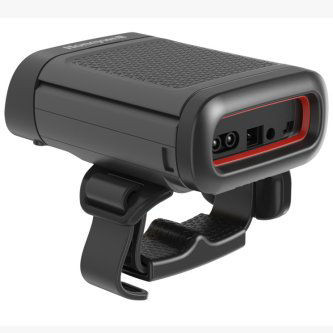
Both the Honeywell 8680I400-2 and the Zebra RS21C0-TS00ZWR are wearable, hands-free barcode scanners targeting warehouse and logistics operations — a class a buyer would directly cross-shop when equipping pick-pack, receiving, or cycle-counting workflows. The Honeywell ships as a ring-mount scanner using Bluetooth, while the Zebra is a wrist-mount body-worn mobile computer using 802.11 enterprise Wi-Fi. Both capture 1D and 2D symbologies. Key decision axes are scan and connectivity architecture, environmental durability and ergonomics, and battery and operational runtime.
In This Guide
- Which scanner delivers broader symbology coverage and the right wireless architecture for your facility?
- Which unit is better sealed against dust and moisture, and how do weight and form factor compare for extended shift wear?
- Which scanner offers more runtime data, and how do their power architectures compare for multi-shift operations?
- Which should you choose: the 8680I400-2 or the RS21C0-TS00ZWR?
- Side-by-Side Specs
- FAQ
Which scanner delivers broader symbology coverage and the right wireless architecture for your facility?
The Honeywell 8680I400-2 connects via Bluetooth (2.4–2.5 GHz ISM band) and is specified as an omni-directional 1D/2D ring scanner. Its Bluetooth link pairs to a host mobile computer or terminal, meaning the scanner itself is not a standalone networked device — it depends on a paired host for WMS or backend connectivity.
The Zebra RS21C0-TS00ZWR connects via 802.11 enterprise Wi-Fi, enabling direct real-time data sync to WMS and backend systems without an intermediate host device. Its scan engine captures UPC, Code 39, Code 128, QR, and Data Matrix symbologies, and the spec sheet lists a scan rate of 92 scans/sec minimum, 104 typical, and 116 maximum (bi-directional). The Zebra's enterprise Wi-Fi architecture is a meaningful operational distinction in large facilities where Bluetooth range or host-dependency would create coverage gaps.
Which unit is better sealed against dust and moisture, and how do weight and form factor compare for extended shift wear?
The Honeywell 8680I400-2 carries an IP55 rating, meaning it is fully protected against dust ingress and resistant to low-pressure water jets from any direction. It weighs 26 grams in a ring form factor worn on the finger, which is the lightest and least intrusive mounting point for wearable scanning.
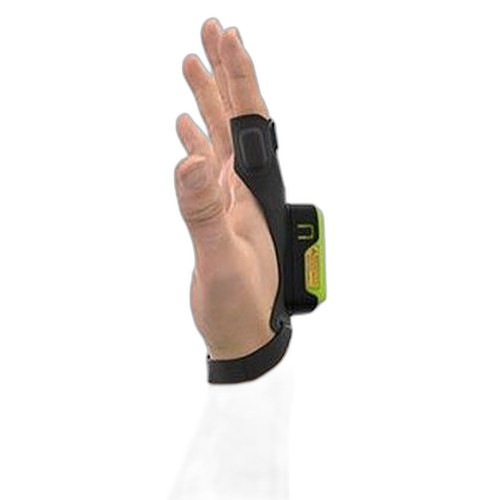
The Zebra RS21C0-TS00ZWR carries an IP54 rating — full dust protection but limited to splash resistance rather than water jets. It weighs 56.7 grams (2.0 oz) in a wrist-mount form factor with dimensions of 1.9 in H × 1.4 in W × 1.9 in D and a roll tolerance of ±35° from vertical. The Honeywell is meaningfully lighter (26 g vs 56.7 g) and carries the higher IP rating (IP55 vs IP54), making it the stronger choice in wet or hose-down environments. The Zebra's wrist mount may be preferred where finger-mount rings are impractical with heavy gloves.
Which scanner offers more runtime data, and how do their power architectures compare for multi-shift operations?
The Honeywell 8680I400-2 specifies a 420 mAh battery and is described as providing all-day runtime. No charge time or shift-hour runtime figure appears in the provided specifications.
The Zebra RS21C0-TS00ZWR lists a backup rechargeable UPS battery for operation during charging, but no mAh capacity, runtime hours, or charge time are specified in the provided data. The presence of a UPS backup battery in the Zebra's architecture suggests the unit is designed for hot-swap or continuous operation without shutdown, though specific runtime figures are not available to compare directly. Buyers requiring hard runtime numbers for shift planning should consult each manufacturer's full datasheet before committing.
Which should you choose: the 8680I400-2 or the RS21C0-TS00ZWR?
Our take: The 8680I400-2 is the stronger choice when weight, IP sealing, and Bluetooth-tethered ring-finger ergonomics are the priority. It is 53% lighter than the RS21C0-TS00ZWR (26 g vs 56.7 g), carries a higher IP55 dust-and-water rating versus the Zebra's IP54, and operates over a wider temperature range (-20°C to 50°C specified versus -40°C to 70°C storage only on the Zebra, with no Zebra operating temp listed). The RS21C0-TS00ZWR is the stronger choice when the deployment requires standalone enterprise Wi-Fi connectivity, direct WMS sync without a paired host, and a documented scan rate (up to 116 scans/sec). Platform matters: if your facility already runs Zebra MC-series mobile computers, the Honeywell ring scanner may require Bluetooth profile validation; if your WMS expects always-on 802.11 endpoints, the Zebra's architecture eliminates a host dependency. Confirm battery runtime specs with each manufacturer before finalizing.
Side-by-Side Comparison
Spec-for-spec, from manufacturer data.
| Specification | Honeywell 8680I400-2 | Zebra RS21C0-TS00ZWR |
|---|---|---|
| Product Type | Wearable Ring Scanner | Wearable Mobile Computer |
| Part Number | 8680I400-2 | RS21C0-TS00ZWR |
| Form Factor | Ring (finger-mount) | Wrist-mount body-worn |
| Scan Engine | 1D/2D Imager (omni-directional) | 1D/2D Imager |
| Symbologies | 1D/2D (UPC noted) | UPC, Code 39, Code 128, QR, Data Matrix |
| Scan Rate | — | 92 min / 104 typical / 116 max scans/sec |
| Connectivity | Bluetooth 2.4–2.5 GHz | 802.11 Enterprise Wi-Fi |
| IP Rating | IP55 | IP54 |
| Weight | 26 g | 56.7 g (2.0 oz) |
| Dimensions | — | 1.9 in H × 1.4 in W × 1.9 in D |
| Battery Capacity | 420 mAh | — |
| Backup Battery | — | Rechargeable UPS backup |
| Operating Temp | -20°C to 50°C | — |
| Storage Temp | — | -40°C to 70°C |
| Day/Night Vision | Yes | — |
| Warranty | 3-year | 1-year |
Frequently Asked Questions
Which should you choose: the 8680I400-2 or the RS21C0-TS00ZWR?
The 8680I400-2 is the stronger choice when weight, IP sealing, and Bluetooth-tethered ring-finger ergonomics are the priority. It is 53% lighter than the RS21C0-TS00ZWR (26 g vs 56.7 g), carries a higher IP55 dust-and-water rating versus the Zebra's IP54, and operates over a wider temperature range (-20°C to 50°C specified versus -40°C to 70°C storage only on the Zebra, with no Zebra operating temp listed). The RS21C0-TS00ZWR is the stronger choice when the deployment requires standalone enterprise Wi-Fi connectivity, direct WMS sync without a paired host, and a documented scan rate (up to 116 scans/sec). Platform matters: if your facility already runs Zebra MC-series mobile computers, the Honeywell ring scanner may require Bluetooth profile validation; if your WMS expects always-on 802.11 endpoints, the Zebra's architecture eliminates a host dependency. Confirm battery runtime specs with each manufacturer before finalizing.
Is the 8680I400-2 or RS21C0-TS00ZWR better for wet or washdown warehouse environments?
The Honeywell 8680I400-2 is better rated for wet environments, carrying an IP55 rating that protects against low-pressure water jets from any direction. The Zebra RS21C0-TS00ZWR is rated IP54, which covers dust and water splash but not directed water spray. For cold-storage or hose-down areas, the 8680I400-2's IP55 rating provides a documented margin of protection the RS21C0-TS00ZWR does not match.
Which scanner connects directly to our WMS without needing a separate mobile computer?
The Zebra RS21C0-TS00ZWR connects via 802.11 enterprise Wi-Fi and is specified for real-time data sync to WMS and backend systems as a standalone wearable mobile computer. The Honeywell 8680I400-2 uses Bluetooth and pairs to a host device; it does not connect independently to a Wi-Fi network or WMS. If direct, host-free WMS connectivity is required, the RS21C0-TS00ZWR is the appropriate choice.
How do the two scanners compare for all-day wear comfort during long picking shifts?
The Honeywell 8680I400-2 weighs 26 grams and mounts as a ring on the finger, keeping the hand largely unencumbered. The Zebra RS21C0-TS00ZWR weighs 56.7 grams and mounts at the wrist with a body of 1.9 × 1.4 × 1.9 inches. For sustained wear, the Honeywell's ring form factor and lighter weight reduce fatigue, though workers using heavy gloves may find wrist-mount more practical. Neither manufacturer provides an explicit ergonomic fatigue rating in the supplied specifications.
More Barcode Scanner Comparisons
- Unitech HT730-LJ6122BG vs Datalogic HS7500SR
- Unitech HT730-LJ6122BG vs Honeywell 8690IB601-2
- Unitech HT730-LJ6122BG vs Honeywell 8690IB201-2-N
- Unitech HT730-LJ6122BG vs Honeywell 8680I400-2
- Unitech HT730-LJ6122BG vs Unitech HT730-LJ6142BG
- Unitech HT730-LJ6142BG vs Datalogic HS7500SR
Barcode Scanner Buying Guides
Get a Second Opinion on Your Camera Choice
Share your site layout, coverage goals, and budget. Our team will validate the camera selection, flag anything we would change, and recommend products that match the use case.