
Honeywell 8675I505-LHGM-PS vs Zebra RS21C0-TS00ZWR: Specification Comparison
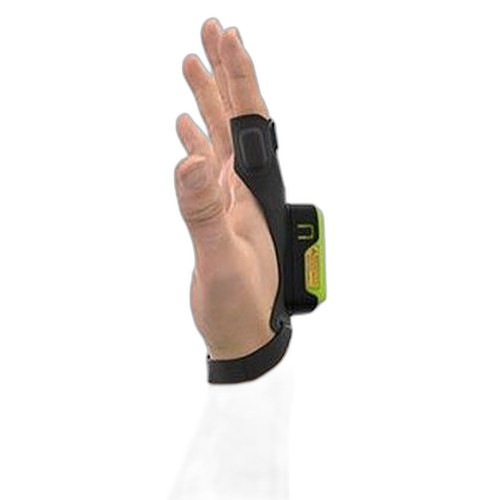
Both the Honeywell 8675I505-LHGM-PS and the Zebra RS21C0-TS00ZWR are wearable barcode scanners designed for hands-free operation in warehouse and logistics environments, making them genuine cross-shop candidates. The Honeywell is a ring-form-factor Bluetooth scanner, while the Zebra is a wrist-mount mobile computer with Wi-Fi connectivity. This comparison evaluates them across scan capability and symbology support, durability and physical characteristics, and connectivity and battery endurance to help buyers match the right unit to their workflow.

In This Guide
- Which scanner delivers broader symbology coverage and faster scan throughput?
- Which unit is better built for harsh or outdoor environments, and how do weight and size compare?
- How do the wireless protocol and battery endurance compare for extended shifts?
- Which should you choose: the 8675I505-LHGM-PS or the RS21C0-TS00ZWR?
- Side-by-Side Specs
- FAQ
Which scanner delivers broader symbology coverage and faster scan throughput?
The Honeywell 8675I505-LHGM-PS is specified as a 1D/2D wearable ring scanner capable of capturing both linear and 2D barcodes. Its spec sheet does not list a rated scan rate in scans-per-second.
The Zebra RS21C0-TS00ZWR lists explicit scan rate figures: 92 scans/sec minimum, 104 typical, and 116 maximum (bi-directional). Its symbology support is documented as UPC, Code 39, Code 128, QR Code, and Data Matrix, covering both 1D and 2D codes. The structured spec data also separately calls out UPC under 1D symbologies, though the tilde-prefixed marketing fields describe a 2D imager. Buyers should note that the underscore-spec field for Scan Engine lists '1D' while the tilde field describes a 2D imager — this inconsistency exists in the provided spec data and should be confirmed with the Zebra datasheet.
For environments where throughput is a measurable KPI, the Zebra's published scan-rate figures give procurement teams a concrete benchmark. The Honeywell provides no equivalent numeric throughput claim in the supplied specifications.
Which unit is better built for harsh or outdoor environments, and how do weight and size compare?
The Honeywell 8675I505-LHGM-PS carries an IP55 rating, indicating protection against dust ingress and low-pressure water jets from any direction. It weighs 28 g (1.0 oz), making it notably lighter. The spec confirms it is designated outdoor-ready.
The Zebra RS21C0-TS00ZWR carries an IP54 rating, protecting against dust and water splash but not the directed water jet covered by IP55. It weighs 56.7 g (2.0 oz) — exactly double the Honeywell — and measures 1.9 in. H × 1.4 in. W × 1.9 in. D with a ±35° roll tolerance. Storage temperature is specified at -40° to 70° C (-25° to 160° F); an operating temperature range is not provided in the supplied specs.
The Honeywell's IP55 advantage is meaningful in wet or outdoor wash-down-adjacent areas. The Zebra's larger, heavier wrist-mount form factor may better suit workers who need an integrated display or processing capability but adds 28.7 g of wrist load versus the ring design.
How do the wireless protocol and battery endurance compare for extended shifts?
The Honeywell 8675I505-LHGM-PS connects via Bluetooth wireless. Battery capacity is specified at 380 mAh. No Wi-Fi capability is listed in the provided specifications. Optional accessories noted include BAT-SCN10 (spare battery) and MB1-SCN10 (likely a mounting base), suggesting the ring scanner is designed to be paired with a separate mobile host device.
The Zebra RS21C0-TS00ZWR connects via 802.11 enterprise Wi-Fi — a direct radio to the network infrastructure rather than a Bluetooth hop to a host device. Its battery is described only as a 'backup rechargeable UPS battery for operation during' — the spec is truncated and no mAh capacity is provided. This limits a direct battery-endurance comparison.
The connectivity architectures serve different deployment models: Honeywell's Bluetooth ring pairs with a worker's mobile computer or wrist-mount host, keeping the scanner itself minimal; the Zebra's 802.11 radio enables standalone real-time WMS data sync without a paired host, which can simplify infrastructure for some warehouse topologies but requires robust Wi-Fi coverage throughout the facility.
Which should you choose: the 8675I505-LHGM-PS or the RS21C0-TS00ZWR?
Our take: The 8675I505-LHGM-PS is the stronger choice when worker comfort, outdoor/wet-area durability, and ultra-lightweight ring-form scanning are the primary requirements. It weighs 28 g versus the Zebra's 56.7 g — a 50% weight reduction that matters across full shifts — and its IP55 rating exceeds the Zebra's IP54, adding resistance to directed water jets. However, the Zebra RS21C0-TS00ZWR holds a decisive edge where standalone Wi-Fi connectivity and documented throughput matter: its 802.11 enterprise radio eliminates the need for a Bluetooth host device, and it publishes a concrete scan rate of up to 116 scans/sec that the Honeywell's specs do not match. Choose the Honeywell for Bluetooth-paired ring-scanning deployments in harsher or outdoor environments; choose the Zebra for standalone Wi-Fi warehouse operations where throughput benchmarks and real-time WMS sync are non-negotiable and the heavier wrist load is acceptable.
Side-by-Side Comparison
Spec-for-spec, from manufacturer data.
| Specification | Honeywell 8675I505-LHGM-PS | Zebra RS21C0-TS00ZWR |
|---|---|---|
| Product Type | Wearable Ring Scanner | Wearable Mobile Computer |
| Form Factor | Ring | Wrist-Mount |
| Scan Capability | 1D/2D Barcode | 1D/2D Barcode |
| Symbologies | Not individually listed in specs | UPC, Code 39, Code 128, QR, Data Matrix |
| Scan Rate | — | 92 min / 104 typical / 116 max scans/sec |
| Connectivity | Bluetooth Wireless | 802.11 Enterprise Wi-Fi |
| IP Rating | IP55 | IP54 |
| Outdoor Ready | Yes (spec-confirmed) | — |
| Weight | 28 g (1.0 oz) | 56.7 g (2.0 oz) |
| Dimensions | — | 1.9 in. H x 1.4 in. W x 1.9 in. D |
| Battery Capacity | 380 mAh | Not specified (mAh not provided) |
| Storage Temperature | — | -40° to 70° C (-25° to 160° F) |
| Warranty | 3-year | 1-year |
| Part Number | 8675I505-LHGM-PS | RS21C0-TS00ZWR |
Frequently Asked Questions
Which should you choose: the 8675I505-LHGM-PS or the RS21C0-TS00ZWR?
The 8675I505-LHGM-PS is the stronger choice when worker comfort, outdoor/wet-area durability, and ultra-lightweight ring-form scanning are the primary requirements. It weighs 28 g versus the Zebra's 56.7 g — a 50% weight reduction that matters across full shifts — and its IP55 rating exceeds the Zebra's IP54, adding resistance to directed water jets. However, the Zebra RS21C0-TS00ZWR holds a decisive edge where standalone Wi-Fi connectivity and documented throughput matter: its 802.11 enterprise radio eliminates the need for a Bluetooth host device, and it publishes a concrete scan rate of up to 116 scans/sec that the Honeywell's specs do not match. Choose the Honeywell for Bluetooth-paired ring-scanning deployments in harsher or outdoor environments; choose the Zebra for standalone Wi-Fi warehouse operations where throughput benchmarks and real-time WMS sync are non-negotiable and the heavier wrist load is acceptable.
Is the 8675I505-LHGM-PS or the RS21C0-TS00ZWR better for outdoor or wash-down areas?
The Honeywell 8675I505-LHGM-PS is the better fit. It carries an IP55 rating — protection against dust and directed low-pressure water jets — versus the Zebra RS21C0-TS00ZWR's IP54 rating, which covers dust and water splash only. The Honeywell spec also explicitly designates the unit as outdoor-ready; no equivalent designation appears in the Zebra's provided specifications.
Can either scanner work without being tethered to a separate mobile computer or host device?
The Zebra RS21C0-TS00ZWR is specified with 802.11 enterprise Wi-Fi, enabling it to communicate directly with network infrastructure and WMS systems without a paired host device. The Honeywell 8675I505-LHGM-PS uses Bluetooth and is designed as a ring scanner that pairs with a separate host (such as a wrist-mount mobile computer); its optional accessories list includes trigger and lanyard accessories consistent with that paired architecture. Neither unit's spec sheet explicitly states whether it has onboard processing sufficient for fully standalone operation.
Which scanner is lighter and easier to wear for a full eight-hour shift?
The Honeywell 8675I505-LHGM-PS is significantly lighter at 28 g (1.0 oz), compared to the Zebra RS21C0-TS00ZWR at 56.7 g (2.0 oz). The Honeywell's ring form factor also distributes weight differently than the Zebra's wrist-mount body, which may further reduce fatigue. Buyers outfitting workers for all-day wear should weigh this 28.7 g difference alongside any ergonomic evaluations.
More Barcode Scanner Comparisons
- Unitech HT730-LJ6122BG vs Datalogic HS7500SR
- Unitech HT730-LJ6122BG vs Honeywell 8690IB601-2
- Unitech HT730-LJ6122BG vs Honeywell 8690IB201-2-N
- Unitech HT730-LJ6122BG vs Honeywell 8680I400-2
- Unitech HT730-LJ6122BG vs Unitech HT730-LJ6142BG
- Unitech HT730-LJ6142BG vs Datalogic HS7500SR
Barcode Scanner Buying Guides
Get a Second Opinion on Your Camera Choice
Share your site layout, coverage goals, and budget. Our team will validate the camera selection, flag anything we would change, and recommend products that match the use case.