
Honeywell 8675I300SR-2-N vs Unitech HT730-LJ6122BG: Specification Comparison
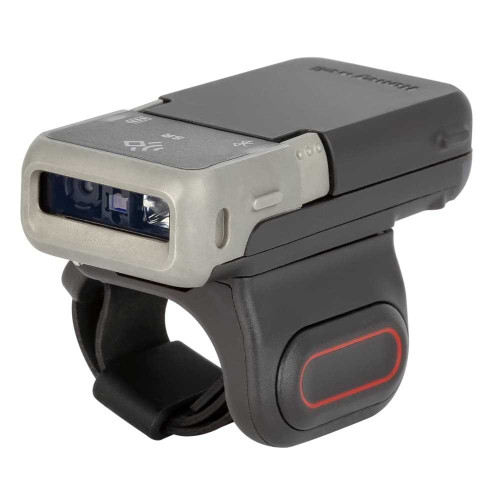
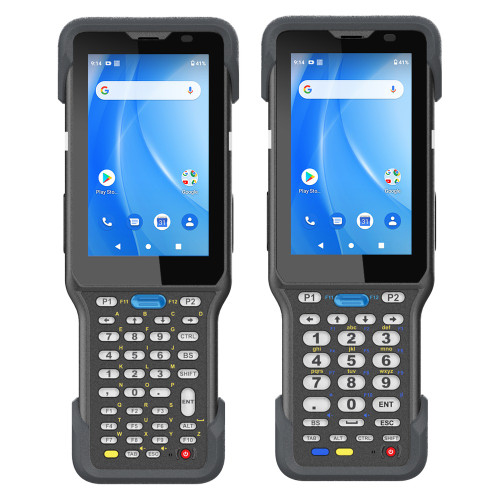
Both the Honeywell 8675I300SR-2-N and the Unitech HT730-LJ6122BG are wearable barcode scanners designed for hands-free warehouse and logistics environments, making them direct cross-shop candidates for operations managers evaluating body-worn scanning solutions. The Honeywell is a dedicated ring-form-factor scanner optimized for ultra-low weight and Bluetooth pairing to a separate host device, while the Unitech is a full body-worn computer with an integrated 2D scan engine, display, keypad, and independent wireless connectivity. Buyers must weigh minimal-footprint ring scanning against an all-in-one wearable computer approach.
In This Guide
Which scanner covers more barcode types and scans faster?
The Honeywell 8675I300SR-2-N uses an area imager (844 × 640 pixel array) capable of reading 1D and 2D barcodes, and its specs explicitly call out the ability to decode damaged, low-contrast, and high-density codes — a meaningful differentiator in real-world warehouse conditions where label quality varies. However, no scan rate in frames per second is specified for the 8675I300SR-2-N.
The Unitech HT730-LJ6122BG employs a 2D area imager rated at 60 fps and covers a broader documented symbology list: 1D standards (Code 128, Code 39, UPC, EAN), 2D formats (QR Code, Data Matrix, PDF417, Dot Code), and OCR text. The 30-degree tilt-down scan pattern is also specified. For buyers who need confirmed OCR support or a documented frame rate, the HT730-LJ6122BG's specs provide that detail; the 8675I300SR-2-N's datasheet entry does not include those figures.
Which device lasts longer per shift and survives harsher handling?
Battery capacity is sharply different. The Honeywell 8675I300SR-2-N carries a 380 mAh rechargeable cell — a figure consistent with a lightweight ring scanner that draws power from a paired host device or charging cradle rather than powering an independent compute platform. No runtime hours figure is provided in the supplied specs.
The Unitech HT730-LJ6122BG houses a 6700 mAh removable battery, and its specs state 20–26 hours of continuous operation. For multi-shift or extended-shift deployments where charging breaks are operationally costly, the HT730-LJ6122BG's battery capacity is more than 17× larger by mAh.
On drop resilience, the HT730-LJ6122BG is rated to 1.8 m to concrete, or 2.4 m with an optional bumper. The Honeywell 8675I300SR-2-N carries an IP55 rating (dust and water resistance) but no drop-height spec is present in the supplied data. Buyers prioritizing drop survivability should note that only the Unitech provides a verified concrete drop figure.
Which device fits better into an existing wireless infrastructure and worker workflow?
The Honeywell 8675I300SR-2-N connects exclusively via Bluetooth and depends on a paired host device (mobile computer, wrist-mounted terminal, or similar) to process data and connect to the network. It weighs 28 g — making it the lower-burden option for workers who scan continuously and need to minimize hand fatigue. No OS, display, or keypad is specified because the ring scanner is not a standalone computer.
The Unitech HT730-LJ6122BG is a self-contained wearable computer: it runs Android 10, includes a 4-inch screen, a 29-key keypad, a 13 MP camera, and supports 2×2 MU-MIMO Wi-Fi, Bluetooth, and Dual SIM 4G LTE — allowing it to operate independently of a paired device. This makes it suitable for workflows requiring on-device application execution, cellular fallback, or direct ERP/WMS interaction without an intermediary host.
Platform choice is therefore a primary decision axis: if a worker already carries a mobile computer and needs only a lightweight scan trigger, the 8675I300SR-2-N's 28 g ring form factor is purpose-built for that role. If the operation requires a standalone wearable workstation with network independence, the HT730-LJ6122BG is the appropriate platform.
Which should you choose: the 8675I300SR-2-N or the HT730-LJ6122BG?
Our take: The HT730-LJ6122BG is the stronger choice when the deployment requires a self-contained wearable computer with multi-shift battery endurance and independent wireless connectivity. Its 6700 mAh battery provides a spec-stated 20–26 hours of continuous operation versus the 8675I300SR-2-N's 380 mAh cell with no runtime figure provided; it adds a verified 1.8 m concrete drop rating that has no equivalent in the Honeywell spec set; and it covers a broader documented symbology set including OCR and a confirmed 60 fps scan rate. Conversely, the 8675I300SR-2-N at 28 g with IP55 protection is the correct choice for operations that already deploy a paired host device and need to minimize per-finger weight for high-frequency ring scanning — it is not a standalone computer and should not be evaluated as one. Choose the Honeywell for pairing-dependent ring-scan workflows; choose the Unitech for independent wearable computing.
Side-by-Side Comparison
Spec-for-spec, from manufacturer data.
| Specification | Honeywell 8675I300SR-2-N | Unitech HT730-LJ6122BG |
|---|---|---|
| Product Type | Wearable Ring Scanner | Wearable Computer / Scanner |
| Scan Engine | Area Imager (844 × 640 px) | 2D Area Imager |
| Barcode Coverage | 1D / 2D | 1D / 2D / OCR |
| Symbologies (2D) | Not specified | QR Code, Data Matrix, PDF417, Dot Code |
| Scan Rate | Not specified | 60 fps |
| Damaged / Low-Contrast Code Decoding | Specified | Not specified |
| Battery Capacity | 380 mAh | 6700 mAh (removable) |
| Battery Runtime | Not specified | 20–26 hours continuous |
| Drop Rating | Not specified | 1.8 m to concrete; 2.4 m with bumper |
| IP Rating | IP55 | Not specified |
| Weight | 28 g | Not specified |
| Connectivity | Bluetooth | Wi-Fi (2×2 MU-MIMO), Bluetooth, Dual SIM 4G LTE |
| Operating System | — | Android 10 |
| Display | — | 4-inch screen |
| Keypad | — | 29-key |
| Warranty | 3-year | Manufacturer Warranty (duration not specified) |
Frequently Asked Questions
Which should you choose: the 8675I300SR-2-N or the HT730-LJ6122BG?
The HT730-LJ6122BG is the stronger choice when the deployment requires a self-contained wearable computer with multi-shift battery endurance and independent wireless connectivity. Its 6700 mAh battery provides a spec-stated 20–26 hours of continuous operation versus the 8675I300SR-2-N's 380 mAh cell with no runtime figure provided; it adds a verified 1.8 m concrete drop rating that has no equivalent in the Honeywell spec set; and it covers a broader documented symbology set including OCR and a confirmed 60 fps scan rate. Conversely, the 8675I300SR-2-N at 28 g with IP55 protection is the correct choice for operations that already deploy a paired host device and need to minimize per-finger weight for high-frequency ring scanning — it is not a standalone computer and should not be evaluated as one. Choose the Honeywell for pairing-dependent ring-scan workflows; choose the Unitech for independent wearable computing.
Can the Honeywell 8675I300SR-2-N work without a paired mobile computer?
Based on the supplied specs, no. The 8675I300SR-2-N connects via Bluetooth and has no documented OS, display, keypad, or independent wireless networking. It functions as a Bluetooth ring scanner that pairs to a separate host device. The Unitech HT730-LJ6122BG, by contrast, runs Android 10 with onboard Wi-Fi, Bluetooth, and 4G LTE and operates as a standalone wearable computer.
Is the Honeywell 8675I300SR-2-N or the Unitech HT730-LJ6122BG better for full-shift use without recharging?
The Unitech HT730-LJ6122BG is specified for 20–26 hours of continuous operation from its 6700 mAh removable battery. The Honeywell 8675I300SR-2-N carries a 380 mAh cell; no runtime hours figure appears in the supplied specs. For verified multi-shift or extended-shift coverage without a recharge stop, the HT730-LJ6122BG's specs directly address this requirement while the 8675I300SR-2-N's do not.
Which device is better suited for environments where labels are damaged or print quality is poor?
The Honeywell 8675I300SR-2-N's specs explicitly state the ability to decode damaged, low-contrast, and high-density barcodes — a directly stated capability. The Unitech HT730-LJ6122BG's specs document a broad symbology list and 60 fps scan rate but do not specifically call out degraded-label decoding performance. Buyers whose primary pain point is poor-quality labels should note that this capability is explicitly documented for the Honeywell but not for the Unitech in the provided spec data.
More Barcode Scanner Comparisons
- Unitech HT730-LJ6122BG vs Datalogic HS7500SR
- Unitech HT730-LJ6122BG vs Honeywell 8690IB601-2
- Unitech HT730-LJ6122BG vs Honeywell 8690IB201-2-N
- Unitech HT730-LJ6122BG vs Honeywell 8680I400-2
- Unitech HT730-LJ6122BG vs Unitech HT730-LJ6142BG
- Unitech HT730-LJ6142BG vs Datalogic HS7500SR
Barcode Scanner Buying Guides
Get a Second Opinion on Your Camera Choice
Share your site layout, coverage goals, and budget. Our team will validate the camera selection, flag anything we would change, and recommend products that match the use case.