
Hanwha XRN-420S-4TB vs QNAP VS-2204-PRO: Specification Comparison
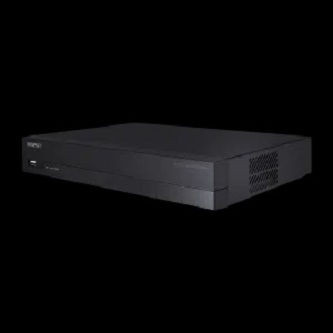
Both the Hanwha XRN-420S-4TB and the QNAP VS-2204-PRO+-US are 4-channel network video recorders targeting small-site deployments. The Hanwha is a purpose-built, embedded-Linux NVR with integrated PoE+ switching and Wisenet AI analytics; the QNAP is a PC-architecture NVR appliance built around a dual-core Intel Atom processor with hot-swap drive bays and no onboard PoE. A buyer choosing between them is weighing a camera-power-integrated surveillance appliance against a more general-purpose, storage-flexible NVR platform.
In This Guide
Which unit delivers higher recording resolution and storage capacity?
The Hanwha XRN-420S-4TB records all four channels simultaneously at 8MP (3840×2160) at 30fps per channel, for a total throughput of 120fps at full 8MP resolution. Internal storage is rated up to 6TB via a single SATA HDD, with microSD available as a secondary local expansion slot. Compression options include H.265, H.264, and MJPEG; H.265 is supported natively and reduces storage and bandwidth consumption relative to H.264.
The QNAP VS-2204-PRO+-US supports up to 8-megapixel recording but caps recording performance at 30fps at D1 or VGA resolution per the spec sheet — full-megapixel frame-rate performance at 8MP is not specified. Its video compression codec list covers H.264, MPEG-4, M-JPEG, and MxPEG; H.265 is absent from the stated specification. Storage is provided by two hot-swappable, lockable 3.5-inch or 2.5-inch SATA bays (SATA II or SSD), giving the buyer flexibility to choose drive capacity, but no specific maximum capacity figure is provided in the supplied specs.
On resolution throughput and compression efficiency, the Hanwha's H.265 support and confirmed simultaneous 8MP/30fps-per-channel recording are concrete advantages. The QNAP's dual hot-swap bays offer storage scalability and redundancy options the Hanwha's single-drive architecture does not, though individual bay capacity ceilings are not spec-stated.
Which recorder integrates camera power delivery and reduces cabling complexity?
The Hanwha XRN-420S-4TB includes four PoE+ (802.3at) ports with a combined 50W power budget, eliminating the need for a separate PoE switch in a four-camera deployment. The WAN port is a dedicated 1Gbps RJ-45; the four camera ports are 10/100 RJ-45. This integrated PoE design is a meaningful cost and rack-space consideration for small installations.
The QNAP VS-2204-PRO+-US provides two Gigabit RJ-45 Ethernet ports for network connectivity and five USB 2.0 ports for peripheral or storage expansion. There is no PoE capability specified; cameras must be powered independently via injectors or a separate PoE switch. The unit also includes a VGA output and supports video output at up to 1920×1080 for local display.
For a four-camera site where all cameras are IP/PoE, the Hanwha removes an entire layer of infrastructure. The QNAP's dual GbE provides network redundancy or VLAN segmentation options the Hanwha's single-WAN port does not, but adds an external power sourcing requirement. The QNAP's VGA output is an additional local-monitoring option not present on the Hanwha per available specs.
Which unit offers stronger analytics and third-party integration?
The Hanwha XRN-420S-4TB is built around Wisenet AI analytics, including object attribute search for person, vehicle, bag, color, and size. Protocol compatibility covers ONVIF Profile S and SUNAPI (Hanwha's native API). The system is designed for tight integration with Wisenet AI cameras, which is an advantage in a Hanwha-centric installation but represents a proprietary tie-in.
The QNAP VS-2204-PRO+-US supports up to 4-channel local playback and up to 128-channel multi-server monitoring, with display modes ranging from 1 to 42 channels on the remote monitoring interface. Remote display mode supports layouts from 1 to 36 or 42 channels. No AI analytics capability is specified. VMS compatibility details beyond the supported codec list and channel counts are not provided in the supplied specification data.
Buyers requiring AI-driven object search should note that this capability is documented only on the Hanwha unit. The QNAP's multi-server aggregation (up to 128 channels) is relevant for monitoring environments where multiple NVR units feed a central view; the Hanwha's multi-server aggregation capability at the same scale is not stated in the provided specs. ONVIF Profile S on the Hanwha provides a defined interoperability baseline; the QNAP's ONVIF support level is not specified in the supplied data.
Which should you choose: the XRN-420S-4TB or the VS-2204-PRO?
Our take: The XRN-420S-4TB is the stronger choice when the priority is confirmed simultaneous 8MP/30fps-per-channel recording with integrated camera power and AI analytics in a four-camera Wisenet ecosystem. Three concrete spec deltas support this: the Hanwha records at a confirmed 120fps total at 8MP versus the QNAP's stated 30fps ceiling at D1/VGA with no confirmed full-megapixel frame rate; the Hanwha includes four PoE+ (802.3at) ports at 50W combined, removing the need for a separate switch, while the QNAP has no PoE; and the Hanwha supports H.265, reducing storage and bandwidth load, while the QNAP's codec list does not include H.265. The VS-2204-PRO+-US is relevant where hot-swap dual-drive flexibility, dual GbE network redundancy, or integration with a heterogeneous multi-server VMS environment matters more than embedded PoE or Wisenet-native AI. Platform fit is decisive: the Hanwha favors all-Hanwha camera deployments; the QNAP favors mixed-brand or storage-expandable installations.
Side-by-Side Comparison
Spec-for-spec, from manufacturer data.
| Specification | Hanwha XRN-420S-4TB | QNAP VS-2204-PRO |
|---|---|---|
| Product Type | NVR (embedded Linux) | NVR (Intel Atom, tower) |
| Max Channels | 4 channels | 4 channels |
| Max Recording Resolution | 8MP (3840×2160) | 8MP (spec-stated maximum) |
| Recording Frame Rate at Max Res | 30fps per channel (120fps total) | Not specified at 8MP; 30fps at D1/VGA |
| Video Compression | H.265, H.264, MJPEG | H.264, MPEG-4, M-JPEG, MxPEG |
| H.265 Support | Yes | Not specified |
| PoE Ports | 4 x PoE+ (802.3at) | None |
| PoE Power Budget | 50W total | — |
| Internal Storage | Up to 6TB (1 x SATA HDD) | 2 x 3.5"/2.5" SATA hot-swap bays (capacity not spec-stated) |
| Local Storage Expansion | microSD | — |
| LAN Ports | 1 x 1Gbps WAN + 4 x 10/100 PoE | 2 x Gigabit RJ-45 |
| Video Output | Not specified in supplied specs | VGA; up to 1920×1080 |
| AI Analytics | Wisenet AI object search (person, vehicle, bag, color, size) | Not specified |
| VMS / Protocol Compatibility | ONVIF Profile S, SUNAPI | Not specified in supplied specs |
| Operating Temperature | 0°C to +40°C | 0°C to +40°C |
| Warranty | 5-year | Not specified in supplied specs |
Frequently Asked Questions
Which should you choose: the XRN-420S-4TB or the VS-2204-PRO?
The XRN-420S-4TB is the stronger choice when the priority is confirmed simultaneous 8MP/30fps-per-channel recording with integrated camera power and AI analytics in a four-camera Wisenet ecosystem. Three concrete spec deltas support this: the Hanwha records at a confirmed 120fps total at 8MP versus the QNAP's stated 30fps ceiling at D1/VGA with no confirmed full-megapixel frame rate; the Hanwha includes four PoE+ (802.3at) ports at 50W combined, removing the need for a separate switch, while the QNAP has no PoE; and the Hanwha supports H.265, reducing storage and bandwidth load, while the QNAP's codec list does not include H.265. The VS-2204-PRO+-US is relevant where hot-swap dual-drive flexibility, dual GbE network redundancy, or integration with a heterogeneous multi-server VMS environment matters more than embedded PoE or Wisenet-native AI. Platform fit is decisive: the Hanwha favors all-Hanwha camera deployments; the QNAP favors mixed-brand or storage-expandable installations.
Do I still need a PoE switch if I buy the XRN-420S-4TB or the VS-2204-PRO+-US?
With the XRN-420S-4TB, no separate PoE switch is required for up to four cameras: the unit provides four built-in PoE+ (802.3at) ports with a combined 50W budget. The VS-2204-PRO+-US does not include PoE per its specification, so cameras must be powered by external PoE injectors or a dedicated PoE switch.
Can both units record 8MP footage, and at what frame rate?
Both units reference 8-megapixel recording capability. The XRN-420S-4TB specifies simultaneous recording across all four channels at 8MP (3840×2160) at 30fps per channel. The VS-2204-PRO+-US lists 8-megapixel as its maximum megapixel recording figure but specifies recording performance of up to 30fps only at D1 or VGA resolution; a confirmed frame rate at full 8MP is not provided in the supplied specification.
Which recorder is better suited to a mixed-brand camera environment?
The XRN-420S-4TB supports ONVIF Profile S, which provides a defined interoperability baseline with cameras from other manufacturers, though its AI analytics features are optimized for Wisenet AI cameras specifically. The VS-2204-PRO+-US supports multiple codecs (H.264, MPEG-4, M-JPEG, MxPEG) and up to 128-channel multi-server aggregation, but its ONVIF support level is not stated in the supplied specification data. Buyers should verify camera compatibility with QNAP's supported camera list before purchasing.
Get a Second Opinion on Your Camera Choice
Share your site layout, coverage goals, and budget. Our team will validate the camera selection, flag anything we would change, and recommend products that match the use case.