
Hanwha XRN-3220B2 vs Speco Technologies N32NRN100TB: Specification Comparison
Both the Hanwha XRN-3220B2-48TB and the Speco Technologies N32NRN100TB are rack-mount, 32-channel IP NVRs running H.265 compression and claiming NDAA compliance—putting them squarely in the same competitive tier for mid-to-large enterprise video surveillance deployments. This comparison evaluates the three dimensions that most directly drive a purchasing decision for this product class: recording capacity and bandwidth, hardware build and operating environment, and integration ecosystem and management software.
In This Guide
- Which NVR delivers more recording capacity and bandwidth for 32-channel deployments?
- How do the two NVRs compare in physical build, weight, and operating environment?
- Which NVR offers broader integration, protocol support, and VMS compatibility?
- Which should you choose: the XRN-3220B2 or the N32NRN100TB?
- Side-by-Side Specs
- FAQ
Which NVR delivers more recording capacity and bandwidth for 32-channel deployments?
The Hanwha XRN-3220B2-48TB ships with 48TB across 8 SATA 3.5-inch HDD bays and is field-expandable to a maximum of 80TB. Its recording bandwidth is specified at 520 Mbps (distributed) with a 300 Mbps normal mode, and playback bandwidth is rated at 200 Mbps supporting simultaneous multi-user access. Maximum per-channel recording resolution reaches 32MP, with simultaneous recording across all 32 channels confirmed in the spec.
The Speco N32NRN100TB ships with 100TB of integrated storage and supports 4K (approximately 8MP) recording and playback. No recording bandwidth figure (Mbps) is provided in the available specifications. Frame rate is listed at 20 fps maximum. The drive bay count, expandability ceiling, and playback bandwidth are not specified in the provided data.
On capacity, the Speco ships with 100TB versus 48TB for the Hanwha, a meaningful raw-storage advantage out of the box. However, the Hanwha supports higher per-channel resolution (32MP vs. 4K/8MP) and is the only unit with a published bandwidth figure (520 Mbps), which is a critical spec for high-channel-count deployments. Hanwha's expandability to 80TB is documented; Speco's expandability ceiling is not specified.
How do the two NVRs compare in physical build, weight, and operating environment?
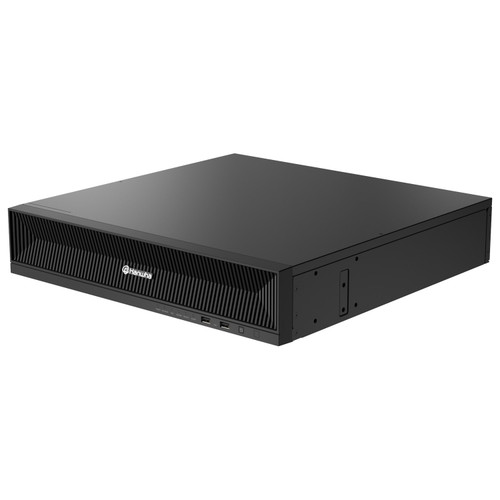
The Hanwha XRN-3220B2 occupies a 17.24" W × 3.39" H × 17.12" D chassis (2U-class rack depth) and weighs 7.3 kg (16.1 lb) excluding HDDs. Its operating temperature range is 0°C to +40°C (32°F to 104°F). The unit is described as a rack-mount appliance with a metal chassis in a black/metal finish, despite the housing color field listing white. It carries TPM 2.0 integration and is certified NDAA-compliant.
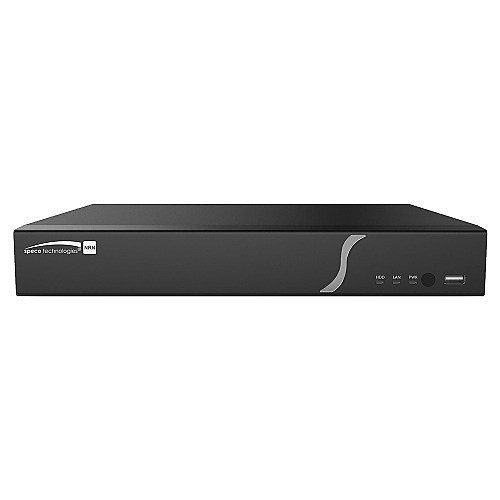
The Speco N32NRN100TB measures 15" W × 2.83" H × 13.4" D and weighs 12 lbs (gross weight, meaning packaging is included). It is also rack-mount. Operating temperature range, chassis material, and TPM or hardware security features are not specified in the provided data. NDAA compliance is claimed in the spec sheet.
The Hanwha unit is physically larger and heavier (excluding HDDs), consistent with its 8-bay drive architecture. The Speco is shallower (13.4" vs. 17.12" depth), which may matter in constrained rack environments. Only the Hanwha provides an explicit operating temperature rating; installers planning edge or non-climate-controlled deployments cannot confirm environmental suitability for the Speco from the provided specs alone.
Which NVR offers broader integration, protocol support, and VMS compatibility?
The Hanwha XRN-3220B2 supports ONVIF, SUNAPI (Hanwha's native API), and P2P connectivity, with a Web UI 2.0 interface. It is explicitly compatible with Wisenet Viewer and Wisenet Mobile client applications. The operating system is Embedded Linux. Audio codec support is documented: G.711, G.726, and AAC at 16 kHz and 48 kHz. Analytics capabilities include Defocus Detection, Audio Detection, Dynamic Event, and User Event. Network connectivity is provided by three RJ-45 ports (LAN/WAN) at 1 Gbps each.
The Speco N32NRN100TB lists ONVIF support and is noted in the spec as optimized for quick discovery and installation of Speco IP cameras specifically. Two-way audio is supported. PoE (802.3af) is listed, suggesting integrated PoE switching capability, though the port count and total PoE budget are not specified. No VMS compatibility list, analytics features, network port count, or operating system are provided in the available specifications.
The Hanwha unit has a substantially more detailed integration profile: three documented network ports, a named API (SUNAPI), named mobile and desktop clients, and four analytics functions listed. The Speco's PoE listing is a potential differentiator—if it includes integrated PoE switching, it reduces infrastructure cost—but the port count and power budget are absent, making it impossible to validate from the provided spec. Third-party VMS compatibility is undocumented for the Speco.
Which should you choose: the XRN-3220B2 or the N32NRN100TB?
Our take: The XRN-3220B2 is the stronger choice when maximum per-channel resolution, documented bandwidth, and a mature integration ecosystem are the primary requirements. It supports 32MP simultaneous recording versus the Speco's 4K (approximately 8MP) ceiling—a 4× resolution advantage—and is the only unit with a published recording bandwidth of 520 Mbps, which is essential for validating network infrastructure sizing. It also ships with three 1 Gbps network ports, ONVIF plus SUNAPI, named mobile and desktop clients, and four documented analytics functions; none of these are specified for the Speco. The Speco N32NRN100TB ships with 100TB versus 48TB (though the Hanwha is expandable to 80TB), and its PoE listing may reduce switch infrastructure cost—but port count and power budget are unconfirmed. The Speco suits cost-sensitive Speco-camera ecosystems where raw storage density is the priority; the Hanwha suits enterprise deployments requiring high-resolution multi-sensor cameras and documented interoperability.
Side-by-Side Comparison
Spec-for-spec, from manufacturer data.
| Specification | Hanwha XRN-3220B2 | Speco Technologies N32NRN100TB |
|---|---|---|
| Product Type | NVR (Rack-mount Appliance) | NVR (Rack-mount) |
| Recording Channels | 32-channel | 32-channel |
| Max Recording Resolution | 32MP | 4K (approx. 8MP) |
| Video Compression | H.265, H.264, MJPEG | H.265, H.264 |
| Recording Bandwidth | 520 Mbps (distributed) | — |
| Playback Bandwidth | 200 Mbps (multi-user) | — |
| Max Frame Rate | 30 fps | 20 fps |
| Included Storage | 48TB | 100TB |
| Max Expandable Storage | 80TB (8 × SATA bays) | — |
| Network Ports | 3 × RJ-45 1Gbps (LAN/WAN) | — |
| PoE Support | — | 802.3af (port count unspecified) |
| ONVIF | Yes | Yes |
| Native Protocol / API | SUNAPI, Wisenet Viewer, Wisenet Mobile | — |
| Analytics | Defocus, Audio, Dynamic Event, User Event | — |
| NDAA Compliant | Yes | Yes |
| Operating Temp | 0°C to +40°C (32°F to 104°F) | — |
| Dimensions (W × H × D) | 17.24" × 3.39" × 17.12" | 15" × 2.83" × 13.4" |
| Weight (unit only) | 7.3 kg (16.1 lb, excl. HDD) | 12 lb (gross weight incl. packaging) |
| Operating System | Embedded Linux | — |
| Security Hardware | TPM 2.0 | — |
| Warranty | 5-year | 3-year |
Frequently Asked Questions
Which should you choose: the XRN-3220B2 or the N32NRN100TB?
The XRN-3220B2 is the stronger choice when maximum per-channel resolution, documented bandwidth, and a mature integration ecosystem are the primary requirements. It supports 32MP simultaneous recording versus the Speco's 4K (approximately 8MP) ceiling—a 4× resolution advantage—and is the only unit with a published recording bandwidth of 520 Mbps, which is essential for validating network infrastructure sizing. It also ships with three 1 Gbps network ports, ONVIF plus SUNAPI, named mobile and desktop clients, and four documented analytics functions; none of these are specified for the Speco. The Speco N32NRN100TB ships with 100TB versus 48TB (though the Hanwha is expandable to 80TB), and its PoE listing may reduce switch infrastructure cost—but port count and power budget are unconfirmed. The Speco suits cost-sensitive Speco-camera ecosystems where raw storage density is the priority; the Hanwha suits enterprise deployments requiring high-resolution multi-sensor cameras and documented interoperability.
Is the XRN-3220B2 or N32NRN100TB better for larger deployments with high-resolution cameras?
The Hanwha XRN-3220B2 is better suited for high-resolution deployments. It supports simultaneous recording at up to 32MP across all 32 channels with a documented 520 Mbps recording bandwidth, versus the Speco's 4K (approximately 8MP) maximum and no published bandwidth figure. For multi-megapixel or multi-sensor camera installations, the Hanwha's resolution ceiling and bandwidth spec provide a verifiable basis for capacity planning; the Speco's specs do not.
Which NVR gives me more storage out of the box—and can either be expanded?
The Speco N32NRN100TB ships with more raw storage at 100TB versus the Hanwha's 48TB. However, the Hanwha XRN-3220B2 is documented as expandable up to 80TB across its 8 SATA bays (up to 10TB per drive). The Speco's expandability ceiling is not specified in the available data, so buyers who anticipate needing to add drives should confirm that directly with Speco before purchasing.
Does either NVR include built-in PoE switching, and what warranty comes with each?
The Speco N32NRN100TB lists PoE (802.3af) in its specifications, suggesting possible integrated PoE camera ports, but the number of PoE ports and total power budget are not provided—verify with Speco before assuming this eliminates the need for a separate PoE switch. The Hanwha XRN-3220B2 does not list PoE in its specifications. On warranty, the Hanwha carries a 5-year warranty versus the Speco's 3-year warranty.
Get a Second Opinion on Your Camera Choice
Share your site layout, coverage goals, and budget. Our team will validate the camera selection, flag anything we would change, and recommend products that match the use case.