
Hanwha XRN-3220B2 vs Hanwha PRN-3200B2: Specification Comparison
Both the Hanwha XRN-3220B2 and PRN-3200B2 are 32-channel, 8K-capable network video recorders from Hanwha's Wisenet lineup, sharing the same SATA-8 bay chassis footprint and targeting enterprise physical-security deployments. This comparison evaluates the three dimensions that most influence purchasing decisions at this tier: recording bandwidth and decoding capability, storage architecture and redundancy, and AI analytics with integration breadth. Buyers typically cross-shop these two models when sizing a mid-to-large camera deployment and weighing throughput headroom against advanced search features.
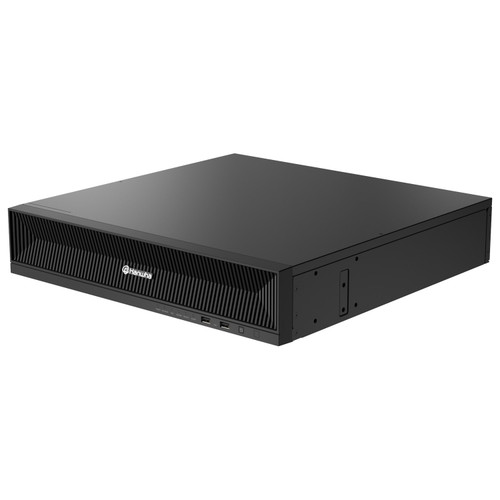
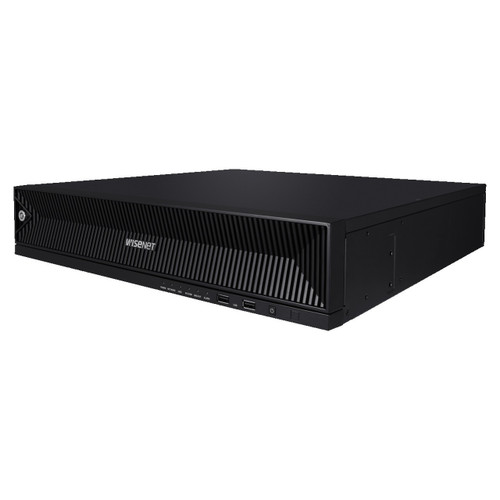
In This Guide
- Which NVR delivers more recording bandwidth and display flexibility?
- How do the two NVRs differ in storage capacity, RAID protection, and physical build?
- Which unit offers stronger AI analytics and broader integration support?
- Which should you choose: the XRN-3220B2 or the PRN-3200B2?
- Side-by-Side Specs
- FAQ
Which NVR delivers more recording bandwidth and display flexibility?
The XRN-3220B2 specifies a recording bandwidth of 520 Mbps (distributed mode) and 300 Mbps (normal mode), versus the PRN-3200B2's 400 Mbps (distributed) and 150 Mbps (normal mode). At maximum load across 32 channels, the XRN-3220B2 provides 30 percent more headroom—meaningful when deploying high-bitrate multi-megapixel cameras such as 20 MP or 32 MP units simultaneously.
On the decoding and display side, the PRN-3200B2 explicitly documents dual-display output (4K@30 Hz + 1080p@60 Hz via two HDMI ports) and a maximum 36-division multi-screen layout, with granular decode rates: 32 MP@15 fps, 12 MP@30 fps, 8.3 MP@120 fps, and 1080p@480 fps. The XRN-3220B2 specifies 30 fps max and dual HDMI, but does not provide the same per-resolution decode rate breakdown in the supplied specs. Buyers requiring a second simultaneous display at 1080p for a guard station should confirm HDMI port assignments for both units.
Playback bandwidth also differs: the XRN-3220B2 specifies 200 Mbps with multi-user simultaneous access. The PRN-3200B2 specifies RAID mode max 64 Mbps / Non-RAID max 32 Mbps per the supplied specs—a substantially lower figure, though the PRN-3200B2 supports up to 80 simultaneous playback channels (local 32, remote 16 per user, 3 remote users). The XRN-3220B2 does not specify a maximum simultaneous playback channel count in the provided data.
How do the two NVRs differ in storage capacity, RAID protection, and physical build?
Both units offer 8 SATA bays accepting up to 10 TB drives each, yielding an identical 80 TB maximum raw capacity ceiling. The XRN-3220B2 is supplied in a 48 TB pre-configured configuration (SKU XRN-3220B2-48TB), while the PRN-3200B2 (SKU PRN-3200B2) is listed without pre-installed drives. Both support iSCSI external expansion, though only the PRN-3200B2 explicitly lists this in the provided specs.
The most material storage-architecture difference is RAID: the PRN-3200B2 explicitly supports RAID 5 and RAID 6 (single array), plus Automatic Recovery Backup (ARB) and N+1 failover redundancy. The XRN-3220B2's supplied specs do not document RAID support, ARB, or N+1 failover. For any deployment where drive-failure tolerance is a compliance or SLA requirement, this is a decisive differentiator in the PRN-3200B2's favor.
Physically, the PRN-3200B2 is heavier (9.1 kg without HDDs versus 7.3 kg without HDDs for the XRN-3220B2) and slightly taller (86 mm / ~2U versus 86.1 mm / ~2U; widths are comparable at 438 mm vs. 438 mm nominal). Both are rated 0°C to +40°C operating temperature. The PRN-3200B2 specifies operating humidity (20–85% RH) and input voltage range (100–240 VAC, 2.1 A, max 205 W with 8 × 10 TB HDDs); the XRN-3220B2 does not provide power consumption or humidity figures in the supplied specs. Both carry the NDAA-compliant designation per the XRN-3220B2 specs; NDAA status is not stated in the PRN-3200B2 supplied specs.
Which unit offers stronger AI analytics and broader integration support?
The PRN-3200B2 explicitly documents AI Search capabilities covering four object attributes—human, face, vehicle, and license plate (LPR in English and numeric formats via Wisenet AI P/X cameras)—along with Smart Search modes and text search. Event triggers include alarm input, video loss, camera event, and user event, with a documented action matrix (e-mail, PTZ preset, FTP, SUNAPI command, alarm out, buzzer, monitor out). The XRN-3220B2's supplied specs list analytics as Defocus, Audio, Dynamic Event, and User Event, with no AI object-attribute search documented.
Both units support SUNAPI and ONVIF (Profile S), Wisenet mobile (iOS/Android), and P2P/QR-code easy setup. The PRN-3200B2 additionally documents PTZ control via the SPC-2000 controller (300 presets), 802.1x port security, device certificate (Hanwha Techwin Root CA), signed firmware, and an IP address filtering/user-access log security stack. The XRN-3220B2 specifies TPM 2.0 integration and Embedded Linux as cybersecurity features not called out in the PRN-3200B2 specs.
Remote access concurrency differs: the PRN-3200B2 supports 10 live unicast users and 20 multicast users simultaneously; the XRN-3220B2 does not specify concurrent remote user limits in the provided data. The PRN-3200B2 web viewer supports Windows 10, macOS 10.13, Chrome, Edge, and Safari. The XRN-3220B2 does not document OS/browser web-viewer support in the supplied specs. Language support on the PRN-3200B2 includes English, French, German, Italian, Spanish, and additional languages; the XRN-3220B2's language support is not listed.
Which should you choose: the XRN-3220B2 or the PRN-3200B2?
Our take: The XRN-3220B2 is the stronger choice when recording bandwidth and hardware-rooted cybersecurity are the primary purchase criteria; the PRN-3200B2 is the stronger choice when RAID redundancy, AI object search, and documented remote-user concurrency matter most. The XRN-3220B2's 520 Mbps distributed bandwidth exceeds the PRN-3200B2's 400 Mbps by 30 percent, and its TPM 2.0 integration plus confirmed NDAA compliance are explicit advantages for government and critical-infrastructure projects. Conversely, the PRN-3200B2 adds RAID 5/6 with ARB, N+1 failover, and AI search (human, face, vehicle, license plate) that the XRN-3220B2's supplied specs do not document. The PRN-3200B2 also supports up to 10 live unicast remote users versus an unspecified limit on the XRN-3220B2. Choose the XRN-3220B2 for high-throughput, NDAA-governed deployments with a security-hardened posture; choose the PRN-3200B2 for forensic-search-heavy or availability-sensitive environments requiring drive-fault tolerance.
Side-by-Side Comparison
Spec-for-spec, from manufacturer data.
| Specification | Hanwha XRN-3220B2 | Hanwha PRN-3200B2 |
|---|---|---|
| Product Type | NVR | NVR |
| Channel Capacity | 32 channels | 32 channels |
| Max Resolution | 32 MP | 32 MP |
| Recording Bandwidth (Distributed) | 520 Mbps | 400 Mbps |
| Recording Bandwidth (Normal) | 300 Mbps | 150 Mbps |
| Video Compression | H.265, H.264, MJPEG | H.265, H.264, MJPEG |
| HDD Bays / Max Storage | 8 × SATA, up to 80 TB | 8 × SATA, up to 80 TB |
| Included Storage (SKU) | 48 TB (8 × HDD) | None specified |
| RAID Support | — | RAID 5/6 + ARB |
| N+1 Failover | — | Yes |
| AI Object Search | — | Human, Face, Vehicle, LPN |
| Analytics (Specified) | Defocus, Audio, Dynamic Event, User Event | Human, Face, Vehicle, License Plate |
| ONVIF | Yes | Yes |
| Network Ports | RJ-45 × 3 (1 Gbps) | RJ-45 × 3 (1 Gbps) |
| NDAA Compliant | Yes | — |
| TPM | TPM 2.0 | — |
| Operating System | Embedded Linux | Embedded Linux |
| Operating Temperature | 0°C to +40°C | 0°C to +40°C |
| Max Remote Live Users | — | 10 unicast / 20 multicast |
| Weight (without HDDs) | 7.3 kg (16.1 lb) | 9.1 kg (20.1 lb) |
| Max Power Consumption | — | 205 W (with 8 × 10 TB HDDs) |
| Warranty | 5 years | — |
Frequently Asked Questions
Which should you choose: the XRN-3220B2 or the PRN-3200B2?
The XRN-3220B2 is the stronger choice when recording bandwidth and hardware-rooted cybersecurity are the primary purchase criteria; the PRN-3200B2 is the stronger choice when RAID redundancy, AI object search, and documented remote-user concurrency matter most. The XRN-3220B2's 520 Mbps distributed bandwidth exceeds the PRN-3200B2's 400 Mbps by 30 percent, and its TPM 2.0 integration plus confirmed NDAA compliance are explicit advantages for government and critical-infrastructure projects. Conversely, the PRN-3200B2 adds RAID 5/6 with ARB, N+1 failover, and AI search (human, face, vehicle, license plate) that the XRN-3220B2's supplied specs do not document. The PRN-3200B2 also supports up to 10 live unicast remote users versus an unspecified limit on the XRN-3220B2. Choose the XRN-3220B2 for high-throughput, NDAA-governed deployments with a security-hardened posture; choose the PRN-3200B2 for forensic-search-heavy or availability-sensitive environments requiring drive-fault tolerance.
Is the XRN-3220B2 or PRN-3200B2 better for larger or high-bitrate camera deployments?
Based on the supplied specifications, the XRN-3220B2 supports up to 520 Mbps distributed recording bandwidth versus the PRN-3200B2's 400 Mbps. If your camera mix includes many high-bitrate 12 MP–32 MP streams running simultaneously, the XRN-3220B2 provides greater throughput headroom. However, neither model's supplied specs document a per-channel bitrate cap, so confirm individual stream settings with the manufacturer for extreme-density deployments.
Which NVR is better protected against hard drive failure?
The PRN-3200B2 explicitly supports RAID 5 and RAID 6 across its 8-bay array, plus Automatic Recovery Backup (ARB) and N+1 failover redundancy. The XRN-3220B2's supplied specifications do not document any RAID mode or ARB capability. For any site where continuous recording through a single-drive failure is required, the PRN-3200B2 is the documented choice based on the specs provided.
Does either NVR support AI-based search for people, vehicles, or license plates?
Yes—the PRN-3200B2 includes AI Search with object-attribute detection for human, face, vehicle, and license plate, including LPR in English and numeric formats when used with compatible Wisenet AI P/X cameras. The XRN-3220B2's supplied specifications list Defocus, Audio, Dynamic Event, and User Event analytics only; AI object-attribute search is not documented for that model in the provided data.
Get a Second Opinion on Your Camera Choice
Share your site layout, coverage goals, and budget. Our team will validate the camera selection, flag anything we would change, and recommend products that match the use case.