
Hanwha XNP-9250R vs i-PRO X66700-Z3S: Specification Comparison
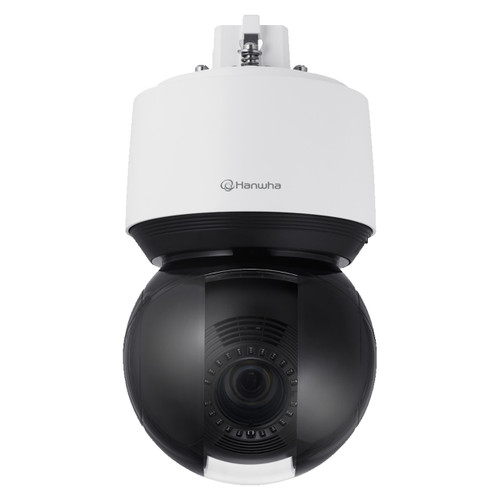
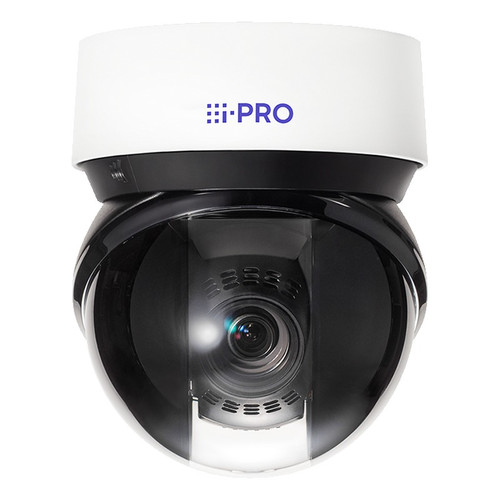
Both the Hanwha XNP-9250R and i-PRO WV-X66700-Z3S are outdoor 8MP (4K) PTZ IP cameras designed for large-area perimeter surveillance, powered by PoE++, and rated IP66/IK10. They compete directly in the high-end PTZ segment for installers who need long-range optical zoom, AI-driven analytics, and rugged all-weather housings. This comparison evaluates imaging capability, installation requirements, and VMS/analytics integration strictly from the provided specifications for each model.
In This Guide
How do the imaging specs compare?
Both cameras use a 1/2.8" CMOS sensor delivering 8MP (3840×2160) at 30fps. The i-PRO WV-X66700-Z3S holds a meaningful optical zoom advantage at 30x (4.5–135mm, F1.8 wide) versus the Hanwha XNP-9250R's 25x (5–125mm, F1.6 wide). The i-PRO also offers 90x digital zoom at 720p resolution, compared to the Hanwha's 32x digital (800x combined). On DORI at telephoto, the i-PRO's Identify range reaches 352.0m versus the Hanwha's 324.7m — a roughly 8% reach advantage at the identify tier, driven by the longer focal length.
In low-light performance, both cameras specify 0.1 Lux minimum illumination (the Hanwha at color, the i-PRO at B&W; color Lux for the i-PRO is not stated in the provided specs). The Hanwha specifies IR illumination to 200m with Wise IR, while the i-PRO lists IR distance only as 3.0m (minimum focus distance) — long-range IR range for the i-PRO is not provided in the supplied specifications. The i-PRO's Super Dynamic WDR is rated at a higher 132dB versus the Hanwha's Extreme WDR at 120dB. Both include a built-in gyro-based image stabilizer. The Hanwha adds a water-removal spinning-dry mechanism and fog detection; the i-PRO specifies Active ClearSight for dome clarity maintenance.
What about installation and environment?
Both cameras are rated IP66 and IK10, and both are powered by PoE++ (IEEE 802.3bt). The Hanwha XNP-9250R draws a maximum of 40W (typical 20W) and includes a PoE injector; it is specified as Class 6, Type 3. The i-PRO WV-X66700-Z3S specifies 37.8W maximum consumption. Operating temperature favors the i-PRO at –50°C to +60°C versus the Hanwha's –40°C to +55°C, a meaningful advantage for extreme cold-climate deployments. Both carry NEMA-TS2 certification. The i-PRO additionally lists wind resistance up to 40 m/s (≈89 mph), a specification not provided for the Hanwha.
Form factor differs: the Hanwha is an exposed-turret/dome PTZ (white aluminum body with black polycarbonate dome, Ø158×293.3mm, 3.2kg), while the i-PRO is a dome-style PTZ (φ167mm×205mm H, approx. 3kg). Both carry aluminum die-cast construction. The i-PRO lists a tamper-resistant enclosure as a named feature. The Hanwha notes a RAL color code (RAL9003 white / RAL9005 black). The i-PRO carries UL/c-UL (UL62368-1) and CE/IEC62368-1 safety certifications; the Hanwha's equivalent safety certifications are not listed in the provided specifications.
Which fits your VMS and analytics better?
Both cameras support ONVIF Profile S/G/T. The i-PRO additionally specifies ONVIF Profile M, which covers metadata and AI analytics interoperability — the Hanwha's Profile M support is not stated in the provided specs. The Hanwha runs on the Wisenet open platform and supports SUNAPI (HTTP API). The i-PRO's SoC is identified as the Ambarella CV22. For simultaneous streaming, the Hanwha supports up to 20 unicast and 128 multicast users across up to 10 profiles; the i-PRO supports up to 14 simultaneous users. The Hanwha supports SRTP and LLDP; the i-PRO adds MQTT and NTCIP (traffic-standard protocol) to its IPv4 protocol stack.
On AI analytics, the Hanwha provides object auto-tracking (person/vehicle), target-lock tracking, face detection, directional detection, fog detection, and appear/disappear detection. The i-PRO specifies AI Video Motion Detection, AI Face Detection, and AI Sound Classification (gunshot, yell, vehicle horn, glass break) — audio analytics the Hanwha does not list. The i-PRO includes built-in audio I/O (3.5mm stereo input and output jacks, G.726/G.711/AAC-LC) and 3 alarm inputs / 1 alarm output / 1 AUX output natively. The Hanwha's alarm I/O requires an external NW I/O Box accessory. Edge storage: the Hanwha provides dual Micro SD/SDHC/SDXC slots supporting up to 1TB; the i-PRO provides a single microSDXC slot up to 512GB. The i-PRO carries a stated 5-year warranty; a warranty term for the Hanwha is not provided in the supplied specifications.
Which should you choose: the XNP-9250R or the X66700-Z3S?
Our take: The WV-X66700-Z3S is the stronger choice when maximum optical reach, colder operating environments, and native audio I/O with AI sound classification are the primary requirements. It delivers 30x optical zoom (vs. 25x) with a 352m telephoto identify range (vs. 324.7m), operates down to –50°C (vs. –40°C), and includes built-in alarm I/O terminals and audio ports that eliminate the need for an external accessory box. Its 132dB WDR rating also exceeds the Hanwha's 120dB. The XNP-9250R is the stronger choice when dual-slot edge storage (up to 1TB vs. 512GB single slot), a specified 200m IR range, integrated spinning-dry water removal, and the Wisenet/SUNAPI ecosystem are priorities — or when the Hanwha platform is already deployed site-wide. Both cameras require PoE++ infrastructure.
Side-by-Side Comparison
Spec-for-spec, from manufacturer data.
| Specification | Hanwha XNP-9250R | i-PRO X66700-Z3S |
|---|---|---|
| Resolution | 8MP (4K / 3840×2160) | 8MP (4K / 3840×2160) |
| Image Sensor | 1/2.8" CMOS | Approx. 1/2.8" type CMOS |
| Optical Zoom / Focal Length | 25x / 5–125mm | 30x / 4.5–135mm |
| Digital Zoom | 32x (800x total combined) | Max. 90x (at 1280×720) |
| Max. Aperture (Wide) | F1.6 | F1.8 |
| Min. Illumination | 0.1 Lux color / 0 Lux IR | 0.1 Lux B&W (color not specified) |
| IR Range | 200m (Wise IR) | Not specified in provided specs |
| Wide Dynamic Range | Extreme WDR 120dB | Super Dynamic 132dB |
| Max Frame Rate | 30fps | 30fps |
| Pan Range / Max Speed | 360° endless / 700°/s | 360° endless / 700°/s |
| Tilt Range / Max Speed | 110° (–20° to +90°) / 500°/s | 110° (–20° to +90°) / 500°/s |
| DORI Identify (Tele) | 324.7m (1,065.2ft) | 352.0m (1,154.8ft) |
| Video Compression | H.265 / H.264 / MJPEG | H.265 / H.264 / MJPEG |
| IP / Vandal Rating | IP66 / IK10 / NEMA4X | IP66 / IK10 |
| Operating Temperature | –40°C to +55°C | –50°C to +60°C |
| Power Input / PoE Class | HPoE IEEE 802.3bt Class 6 Type 3 / Max 40W | PoE++ IEEE 802.3bt / 37.8W |
| Edge Storage | Dual Micro SD/SDHC/SDXC up to 1TB | Single microSDXC up to 512GB |
| Native Audio I/O | Not built-in (requires NW I/O Box) | 3.5mm stereo in + out, built-in |
| Native Alarm I/O | Requires NW I/O Box | 3x Alarm IN, 1x Alarm OUT, 1x AUX OUT |
| ONVIF Profiles | S / G / T | G / M / S / T |
| AI Analytics | Person/vehicle tracking, face detection, directional, fog, appear/disappear | AI VMD, AI face detection, AI sound classification (gunshot, yell, horn, glass break) |
| Dimensions | Ø158 × 293.3mm / 3.2kg | φ167mm × 205mm H / approx. 3kg |
| Warranty | Not specified in provided specs | 5 years |
Frequently Asked Questions
Which should you choose: the XNP-9250R or the X66700-Z3S?
The WV-X66700-Z3S is the stronger choice when maximum optical reach, colder operating environments, and native audio I/O with AI sound classification are the primary requirements. It delivers 30x optical zoom (vs. 25x) with a 352m telephoto identify range (vs. 324.7m), operates down to –50°C (vs. –40°C), and includes built-in alarm I/O terminals and audio ports that eliminate the need for an external accessory box. Its 132dB WDR rating also exceeds the Hanwha's 120dB. The XNP-9250R is the stronger choice when dual-slot edge storage (up to 1TB vs. 512GB single slot), a specified 200m IR range, integrated spinning-dry water removal, and the Wisenet/SUNAPI ecosystem are priorities — or when the Hanwha platform is already deployed site-wide. Both cameras require PoE++ infrastructure.
Is the XNP-9250R or WV-X66700-Z3S better for long-range identification?
Based on the provided DORI specifications, the i-PRO WV-X66700-Z3S has a slightly longer telephoto Identify range at 352.0m (1,154.8ft) compared to the Hanwha XNP-9250R's 324.7m (1,065.2ft), due to its longer 135mm maximum focal length (30x) versus the Hanwha's 125mm (25x). At wide-angle, the Hanwha detects farther (140.2m vs. 127.8m) because of its wider field of view at the detect tier.
Which camera works better in extreme cold?
The i-PRO WV-X66700-Z3S is specified for operation down to –50°C (–58°F), while the Hanwha XNP-9250R is rated to –40°C (–40°F). For deployments in arctic or extreme-cold environments, the i-PRO provides a 10°C lower operating temperature floor per the supplied specifications.
Do both cameras support on-board recording, and how much storage can each handle?
Yes, both support on-board SD card recording. The Hanwha XNP-9250R provides dual Micro SD/SDHC/SDXC slots supporting up to 1TB total. The i-PRO WV-X66700-Z3S provides a single microSDXC slot supporting up to 512GB. The Hanwha's dual-slot design offers both higher capacity and redundancy options not available on the i-PRO's single-slot configuration.
Get a Second Opinion on Your Camera Choice
Share your site layout, coverage goals, and budget. Our team will validate the camera selection, flag anything we would change, and recommend products that match the use case.