
Hanwha C9253 vs i-PRO S66700-Z3L: Specification Comparison
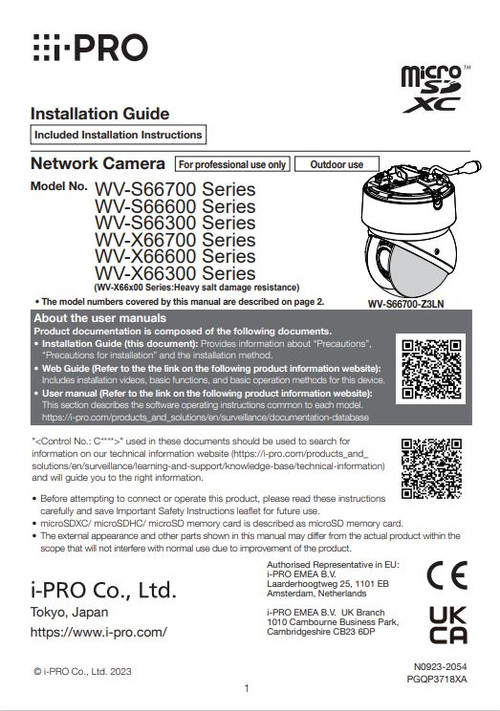
Both the Hanwha XNP-C9253 and the i-PRO WV-S66700-Z3L are 8MP outdoor PTZ dome cameras aimed at perimeter and wide-area surveillance, making them direct cross-shop candidates for integrators evaluating AI-capable PTZ platforms. The Hanwha delivers 25x optical zoom with AI auto-tracking at up to 60 fps, while the i-PRO offers 30x optical zoom with 280m built-in IR illumination. This comparison covers imaging performance, installation and environmental suitability, and VMS/analytics integration based strictly on published specifications.
In This Guide
How do the imaging specs compare?
Both cameras use a 1/2.8-inch CMOS sensor at 3840×2160 (8MP/4K). The Hanwha XNP-C9253 achieves a minimum illumination of 0.1 lux (color) / 0.01 lux (B/W) and delivers up to 60 fps at full 8MP resolution, with a 5–125mm (25x optical) lens, F1.6 aperture at wide end, and a horizontal field of view of 57.42°. It relies on an optional external IR illuminator (no built-in IR). WDR is rated at 120 dB (Extreme WDR). The i-PRO WV-S66700-Z3L specifies 0.13 lux (color, 30IRE) minimum illumination, a 4.5–135mm (30x optical) lens, F1.8 aperture at wide end, and a horizontal field of view of 2.5°–62°. Crucially, it integrates a 280m IR LED illuminator (200m at 50IRE), making it self-sufficient in complete darkness. WDR is rated at a maximum 132 dB (Super Dynamic level 31).
At the tele end, DORI range figures favor the i-PRO: Detect at tele reaches 3,519.7m versus 3,246.9m for the Hanwha, and Identify at tele is 352.0m versus 324.7m. At wide, the Hanwha edges out slightly on Detect (140.2m vs 127.8m). The i-PRO also offers 30x optical zoom expandable to 90x digital zoom at 720p, versus the Hanwha's 25x optical with 32x digital (total 800x stated). Frame rate: the Hanwha specifies 30 fps at 8MP and up to 60 fps (resolution for 60 fps not explicitly stated in specs), while the i-PRO lists frame rate as 'Variable' without a discrete fps ceiling in the provided specifications.
What about installation and environment?
Both cameras are rated IP66 and IK10, and both are wired (RJ-45). Environmental operating range differs notably: the Hanwha XNP-C9253 is rated −40°C to +55°C, while the i-PRO WV-S66700-Z3L operates from −30°C to +60°C (power-on range; storage extends to −50°C). The Hanwha holds a slight cold-weather advantage (−40°C vs −30°C power-on), while the i-PRO tolerates a marginally higher upper operating temperature (60°C vs 55°C). The Hanwha also carries NEMA 4X and NEMA-TS 2 certifications not listed for the i-PRO; the i-PRO specifies wind resistance up to 40 m/s (~89 mph), a figure absent from the Hanwha spec sheet.
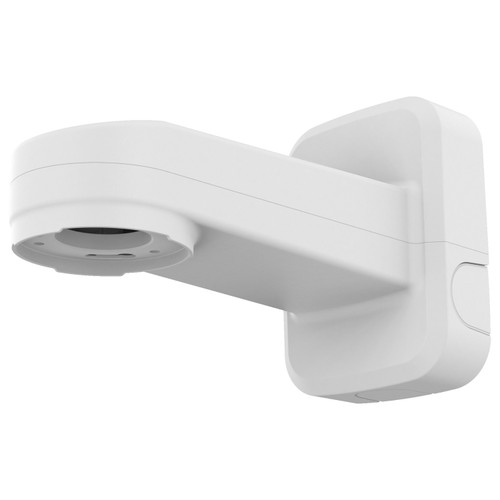
Power requirements diverge significantly: the Hanwha draws a maximum of 25.5W and is powered by PoE+ (IEEE 802.3at, Class 4). The i-PRO requires PoE++ (IEEE 802.3bt) at 45.9W, reflecting its integrated IR illuminator load. Installers must confirm switch or injector PoE++ capability before deploying the i-PRO. The Hanwha is lighter at approximately 3,200g versus the i-PRO's ~3,000g, and its footprint is slightly smaller (ø158×293.3mm vs ø167×205mm H). Both offer extensive mounting accessory ecosystems; the Hanwha lists named SKUs for ceiling, wall, pole, parapet, corner, in-ceiling, and cabinet mounts.
Which fits your VMS and analytics better?
Both cameras support ONVIF Profiles S, G, T, and M, and both offer H.265, H.264, and MJPEG compression with CBR and VBR modes. The Hanwha supports up to 20 unicast users and 128 multicast users with up to 10 stream profiles, and includes WiseStream II/III smart codec. The i-PRO supports up to 14 simultaneous users. The Hanwha lists an extensive protocol stack including SNMPv1/v2c/v3, NTCIP 1205, MQTT, SRTP, and Bonjour. The i-PRO's listed protocols are more concise (TCP/IP, UDP/IP, HTTP/HTTPS, SMTP, DNS, NTP, SNMP, DHCP, RTP). Both cameras implement IEEE 802.1X network authentication and HTTPS encryption; the Hanwha's TPM is certified FIPS 140-2 Level 2, while i-PRO specifies FIPS 140-2 Level 3.
On-board AI analytics differ in scope: the Hanwha classifies persons, faces, vehicles (car/bus/truck/motorcycle/bicycle), and license plates, supports virtual line crossing with direction, virtual area loitering detection, and provides AI auto-tracking for persons and vehicles. The i-PRO offers AI video motion detection, face and vehicle detection, scene change detection, and AI sound classification (gunshot, yell, vehicle horn, glass break), plus audio detection — a feature not listed for the Hanwha without optional I/O accessory context. Both support up to 32 privacy masking zones and microSD edge storage. The Hanwha provides dual microSD slots (up to 1TB combined, 512GB×2); the i-PRO lists a single microSDXC slot without a capacity ceiling in the provided specs. The Hanwha includes audio alarm notification via e-mail; the i-PRO provides physical audio I/O (4× 3.5mm stereo input, 1× mono output) with full-duplex support. The Hanwha's I/O requires the optional SPM-4210 box.
Which should you choose: the C9253 or the S66700-Z3L?
Our take: The XNP-C9253 is the stronger choice when cold-climate deployment (below −30°C), traffic analytics requiring license plate or vehicle-type classification, dual-slot edge storage, or a PoE+ (802.3at) power infrastructure are the deciding factors. Concretely: the Hanwha operates to −40°C versus the i-PRO's −30°C power-on limit; it provides two microSD slots versus one; and its AI classifies five vehicle sub-types plus license plates, while the i-PRO does not list those classifications. Conversely, the WV-S66700-Z3L is preferable when on-camera IR illumination is required (280m built-in vs. none on the Hanwha), when the site already supports PoE++ (802.3bt) switches, when audio I/O without accessory modules is needed, when higher WDR headroom (132 dB vs. 120 dB) or AI sound classification matters, or when 30x optical reach is preferred over 25x. Both are ONVIF Profile G/M/S/T compliant and IK10/IP66-rated.
Side-by-Side Comparison
Spec-for-spec, from manufacturer data.
| Specification | Hanwha C9253 | i-PRO S66700-Z3L |
|---|---|---|
| Resolution | 3840×2160 (8MP) | 3840×2160 (8MP) |
| Image Sensor | 1/2.8" CMOS | 1/2.8" CMOS (5.57×3.13mm scanning area) |
| Optical Zoom / Focal Length | 25x / 5–125mm | 30x / 4.5–135mm |
| Max Aperture (Wide) | F1.6 | F1.8 |
| Horizontal Field of View | 57.42° (wide) | 62° (wide) – 2.5° (tele) |
| Min. Illumination | 0.1 lux color / 0.01 lux B/W | 0.13 lux color (30IRE) |
| IR Illumination | None built-in (external required) | 280m @ 30IRE / 200m @ 50IRE built-in |
| WDR | 120 dB (Extreme WDR) | 132 dB max (Super Dynamic level 31) |
| Max Frame Rate | Up to 60fps (30fps @ 8MP specified) | Variable (discrete ceiling not specified in provided specs) |
| Video Compression | H.265, H.264 (Main/Baseline/High), MJPEG | H.265, H.264, MJPEG |
| IP / Vandal Rating | IP66 / IK10 / NEMA 4X | IP66 / IK10 |
| Operating Temperature | −40°C to +55°C | −30°C to +60°C (power-on) |
| Power Input / PoE Class | PoE+ (IEEE 802.3at, Class 4) / 25.5W max | PoE++ (IEEE 802.3bt, Class 6) / 45.9W |
| Edge Storage | Dual microSD/SDHC/SDXC, up to 1TB (512GB×2) | Single microSDXC (max capacity not specified in provided specs) |
| Audio I/O | — (alarm audio output requires optional SPM-4210 I/O box) | 4× 3.5mm stereo input / 1× 3.5mm mono output; full duplex |
| ONVIF Profiles | S / G / T / M | S / G / T / M |
| Edge AI Analytics | Person, face, vehicle (type+sub-type), license plate, crossing, loitering, AI auto-tracking | Motion (VMD), face, vehicle detection, scene change, AI sound classification (gunshot, yell, horn, glass break) |
| Dimensions | ø158×293.3mm / 3,200g | ø167×205mm (H) / approx. 3,000g |
| Warranty | 3-year | 5-year |
Frequently Asked Questions
Which should you choose: the C9253 or the S66700-Z3L?
The XNP-C9253 is the stronger choice when cold-climate deployment (below −30°C), traffic analytics requiring license plate or vehicle-type classification, dual-slot edge storage, or a PoE+ (802.3at) power infrastructure are the deciding factors. Concretely: the Hanwha operates to −40°C versus the i-PRO's −30°C power-on limit; it provides two microSD slots versus one; and its AI classifies five vehicle sub-types plus license plates, while the i-PRO does not list those classifications. Conversely, the WV-S66700-Z3L is preferable when on-camera IR illumination is required (280m built-in vs. none on the Hanwha), when the site already supports PoE++ (802.3bt) switches, when audio I/O without accessory modules is needed, when higher WDR headroom (132 dB vs. 120 dB) or AI sound classification matters, or when 30x optical reach is preferred over 25x. Both are ONVIF Profile G/M/S/T compliant and IK10/IP66-rated.
Is the XNP-C9253 or WV-S66700-Z3L better for low-light and nighttime coverage?
The i-PRO WV-S66700-Z3L has a clear advantage for nighttime operation: it integrates a 280m (30IRE) IR LED illuminator, allowing operation in complete darkness without additional hardware. The Hanwha XNP-C9253 has no built-in IR and requires an external illuminator. The Hanwha does specify a lower minimum illumination floor (0.1 lux color / 0.01 lux B/W vs. 0.13 lux color for the i-PRO) and a higher WDR rating (120 dB vs. 132 dB maximum for the i-PRO), but for unlit environments the i-PRO's self-contained IR is a decisive practical advantage.
Which camera needs a more powerful PoE switch or injector?
The i-PRO WV-S66700-Z3L requires PoE++ (IEEE 802.3bt, PoE Class 6) at up to 45.9W, driven largely by its built-in IR illuminator. The Hanwha XNP-C9253 runs on PoE+ (IEEE 802.3at, Class 4) at a maximum of 25.5W. If your existing infrastructure is PoE+ only, the Hanwha is a drop-in fit; deploying the i-PRO will require confirming PoE++ port availability or adding a mid-span injector rated for 802.3bt.
Does either camera support license plate or detailed vehicle classification?
Yes — the Hanwha XNP-C9253 specifies AI classification of vehicle sub-types (car, bus, truck, motorcycle, bicycle) and license plate detection. The i-PRO WV-S66700-Z3L's provided specifications list face and vehicle detection but do not include vehicle sub-type classification or license plate recognition. If license plate or vehicle-type analytics are required at the edge, the Hanwha XNP-C9253 is the camera to specify based on available spec data.
Get a Second Opinion on Your Camera Choice
Share your site layout, coverage goals, and budget. Our team will validate the camera selection, flag anything we would change, and recommend products that match the use case.