
Hanwha C9253R vs i-PRO S66700-Z3L: Specification Comparison
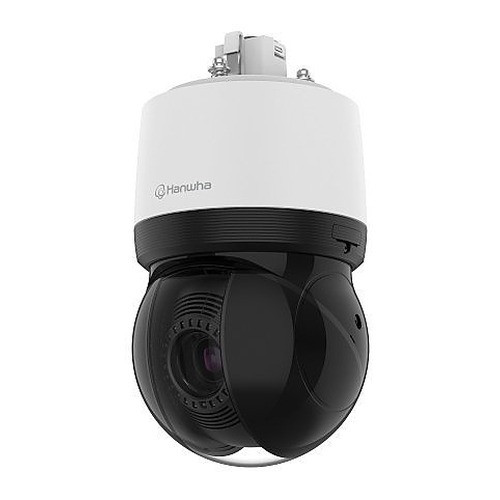
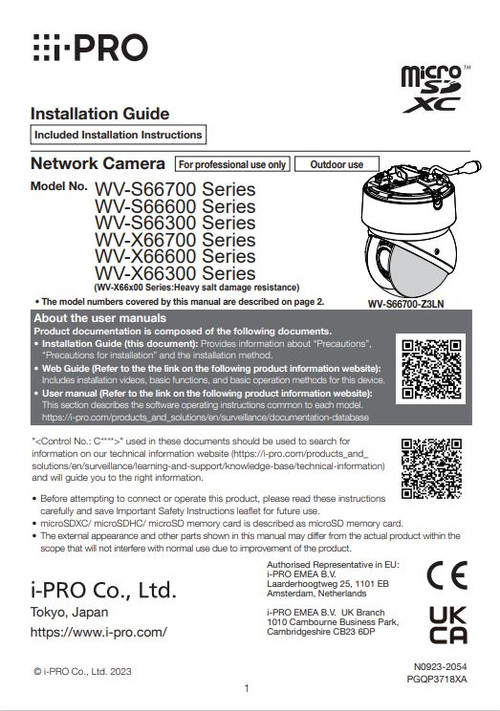
Both the Hanwha XNP-C9253R and the i-PRO WV-S66700-Z3L are outdoor-rated 8MP (4K) PTZ dome cameras powered by PoE++ and aimed at perimeter and wide-area surveillance installations. They share the same resolution class, the same PTZ form factor, and overlapping AI analytics capabilities, making them directly cross-shoppable for integrators evaluating a high-resolution PTZ for demanding outdoor deployments. This comparison is based solely on published specifications for each model.
In This Guide
How do the imaging specs compare?
Both cameras use a 1/2.8-inch CMOS sensor at 3840×2160 resolution. The Hanwha C9253R offers a 25x optical zoom (5–125mm focal length) with a maximum aperture of F1.6 at wide, while the i-PRO S66700-Z3L delivers a 30x optical zoom (4.5–135mm) with a wider maximum aperture of F1.8 at wide. For digital extension, the C9253R reaches a total 800x (25x optical × 32x digital), whereas the S66700-Z3L reaches 90x digital (specified at 1280×720 resolution), giving it a lower total digital multiplier but a longer native optical reach. At tele end, the S66700-Z3L's DORI Detect distance of 3,519.7m exceeds the C9253R's 3,246.9m, consistent with its longer focal range.
For low-light performance, the C9253R specifies a minimum illumination of 0.1 Lux (color) and 0 Lux with IR active, while the S66700-Z3L specifies 0.13 Lux at color/30IRE with no explicit 0-Lux IR figure provided. IR illumination is a meaningful differentiator: the S66700-Z3L specifies 280m at 30IRE (200m at 50IRE), versus the C9253R's Wise IR rated at 200m. On dynamic range, the C9253R claims Extreme WDR at 120dB, while the S66700-Z3L's Super Dynamic peaks at 132dB (at level 31). Both include built-in gyro-based image stabilization and defog/fog compensation.
What about installation and environment?
Both cameras carry IP66 and IK10 ratings and are PoE++ (IEEE 802.3bt, Class 6) powered. The C9253R specifies a typical draw of 24W and a maximum of 40W, while the S66700-Z3L specifies 45.9W — an important budget consideration for PoE switch port planning. The C9253R's operating temperature range is -40°C to +55°C, whereas the S66700-Z3L operates from -30°C (power-on minimum) to +60°C, with a storage/transit lower bound of -50°C. The C9253R's wider cold-start range (-40°C vs -30°C) favors extreme-cold climates. The S66700-Z3L additionally specifies wind resistance up to 40 m/s (~89 mph), a figure not present in the C9253R spec sheet.
The C9253R ships with a PoE++ injector included per its spec, adds a water-removal spin-dry mechanism and lens heater, and carries NEMA 4X, NEMA-TS2 certifications alongside IP66/IK10. The S66700-Z3L carries NEMA-TS2 but does not list NEMA 4X. The C9253R body is aluminum (white) or polycarbonate (black) with RAL color codes provided; the S66700-Z3L is aluminum die-cast with a polycarbonate dome. The C9253R's dimensions are ø158×293.3mm at 3,200g (7.05 lb); the S66700-Z3L measures ø167×205mm at approximately 3,000g (6.61 lb), making it slightly wider but shorter and lighter.
Which fits your VMS and analytics better?
Both cameras support ONVIF Profiles G, M, S, and T, ensuring broad VMS compatibility. The C9253R's AI analytics cover object classification (person, face, vehicle, license plate), vehicle type attributes (car, bus, truck, motorcycle, bicycle), virtual line crossing with direction, virtual area loitering, and AI-based object auto-tracking — all natively on-chip. The S66700-Z3L provides AI video motion detection, face and vehicle detection, and a notable AI sound classification feature (gunshot, yell, vehicle horn, glass break) not present in the C9253R spec. The S66700-Z3L also supports audio detection as an alarm trigger and includes 4× audio input jacks plus one audio output, versus the C9253R, which specifies audio output and alarm I/O only via an optional external I/O box (SPM-4210).
For edge storage, both support microSD/SDXC. The C9253R specifies dual microSD slots supporting up to 1TB total (512GB×2); the S66700-Z3L specifies a single microSDXC slot with no stated capacity ceiling in the provided specs. The C9253R offers up to 10 simultaneous stream profiles and 20 unicast / 128 multicast users; the S66700-Z3L supports up to 14 simultaneous users. On cybersecurity, the C9253R lists TPM with FIPS 140-2 Level 2 certification, signed firmware, and secure boot; the S66700-Z3L specifies FIPS 140-2 Level 3 and signed firmware — the S66700-Z3L's security certification is one level higher. The S66700-Z3L is specified with an Ambarella CV22 SoC; no equivalent SoC disclosure appears in the C9253R spec sheet.
Which should you choose: the C9253R or the S66700-Z3L?
Our take: The S66700-Z3L is the stronger choice when IR range, optical zoom reach, dynamic range ceiling, and audio analytics are the primary decision criteria. Its 30x optical zoom (vs 25x) and 280m IR range (vs 200m) deliver measurably greater standoff capability, and its 132dB Super Dynamic rating exceeds the C9253R's 120dB WDR. Its FIPS 140-2 Level 3 certification also outranks the C9253R's Level 2. However, the C9253R holds advantages in cold-start operating temperature (-40°C vs -30°C power-on minimum), dual-slot edge storage (1TB vs unspecified single slot), broader AI attribute classification including license plate and vehicle type, and a 5W-lower maximum power draw (40W vs 45.9W). Its NEMA 4X rating and included PoE++ injector also reduce accessory cost. Choose the C9253R for frigid climates, license-plate analytics, or PoE budget-constrained switches; choose the S66700-Z3L for maximum IR and zoom reach with integrated sound event detection.
Side-by-Side Comparison
Spec-for-spec, from manufacturer data.
| Specification | Hanwha C9253R | i-PRO S66700-Z3L |
|---|---|---|
| Resolution | 3840×2160 (8MP) | 3840×2160 (8MP) |
| Image Sensor | 1/2.8" CMOS | Approx. 1/2.8" type CMOS |
| Optical Zoom / Focal Length | 25x / 5–125mm | 30x / 4.5–135mm |
| Total Digital Zoom | 800x (25x optical × 32x digital) | 90x digital (at 1280×720) |
| Min. Illumination (Color) | 0.1 Lux | 0.13 Lux (30IRE) |
| IR Range | 200m (Wise IR) | 280m (30IRE) / 200m (50IRE) |
| Wide Dynamic Range | Extreme WDR 120dB | Super Dynamic max 132dB |
| Max Frame Rate | 30fps @ 8MP | Not explicitly stated per resolution |
| Video Compression | H.265, H.264, MJPEG | H.265, H.264, MJPEG |
| IP Rating | IP66 | IP66 |
| Vandal / Impact Rating | IK10 | IK10 |
| Operating Temperature | -40°C to +55°C | -30°C to +60°C (power-on); storage -50°C |
| Power Input / PoE Class | PoE++ IEEE 802.3bt, Class 6; max 40W | PoE++ IEEE 802.3bt; 45.9W |
| Edge Storage | Dual microSD/SDXC slots, up to 1TB (512GB×2) | Single microSDXC (capacity ceiling not specified) |
| Audio I/O | Via optional I/O box (SPM-4210) | 4× audio input, 1× audio output (built-in) |
| AI Sound Classification | — | Gunshot, Yell, Vehicle horn, Glass break |
| FIPS Certification | FIPS 140-2 Level 2 (TPM) | FIPS 140-2 Level 3 |
| ONVIF Profiles | G, M, S, T | G, M, S, T |
| Dimensions (W×H) | ø158×293.3mm | ø167×205mm |
| Weight | 3,200g (7.05 lb) | Approx. 3,000g (6.61 lb) |
| Warranty | 3 years | 5 years |
Frequently Asked Questions
Which should you choose: the C9253R or the S66700-Z3L?
The S66700-Z3L is the stronger choice when IR range, optical zoom reach, dynamic range ceiling, and audio analytics are the primary decision criteria. Its 30x optical zoom (vs 25x) and 280m IR range (vs 200m) deliver measurably greater standoff capability, and its 132dB Super Dynamic rating exceeds the C9253R's 120dB WDR. Its FIPS 140-2 Level 3 certification also outranks the C9253R's Level 2. However, the C9253R holds advantages in cold-start operating temperature (-40°C vs -30°C power-on minimum), dual-slot edge storage (1TB vs unspecified single slot), broader AI attribute classification including license plate and vehicle type, and a 5W-lower maximum power draw (40W vs 45.9W). Its NEMA 4X rating and included PoE++ injector also reduce accessory cost. Choose the C9253R for frigid climates, license-plate analytics, or PoE budget-constrained switches; choose the S66700-Z3L for maximum IR and zoom reach with integrated sound event detection.
Is the C9253R or S66700-Z3L better for low-light and long-range IR coverage?
Based on published specs, the S66700-Z3L has the longer IR range at 280m (30IRE) versus the C9253R's Wise IR rated at 200m. The C9253R specifies a minimum illumination of 0.1 Lux color and 0 Lux with IR, while the S66700-Z3L specifies 0.13 Lux color at 30IRE without an explicit 0-Lux IR figure. On IR distance alone, the S66700-Z3L has the advantage.
Which camera supports more advanced cybersecurity features?
Both cameras support HTTPS, IEEE 802.1X, and signed firmware. The S66700-Z3L specifies FIPS 140-2 Level 3 certification. The C9253R specifies TPM with FIPS 140-2 Level 2, plus secure boot, firmware encryption, and a device certificate via Hanwha Private Root CA. The S66700-Z3L holds the higher FIPS certification level; the C9253R offers a broader documented set of on-device security mechanisms including TPM and secure boot.
Can either camera detect audio events like gunshots or breaking glass on-board?
Yes — the S66700-Z3L includes AI sound classification covering gunshot, yell, vehicle horn, and glass break as specified in its published feature list. The C9253R spec sheet does not list equivalent AI audio event classification. If on-board sound event detection is a requirement, the S66700-Z3L is the only one of the two that specifies this capability.
Get a Second Opinion on Your Camera Choice
Share your site layout, coverage goals, and budget. Our team will validate the camera selection, flag anything we would change, and recommend products that match the use case.