
Hanwha XNP-9250R vs i-PRO S66700-Z3L: Specification Comparison
Both the Hanwha XNP-9250R and i-PRO WV-S66700-Z3L are 8MP (4K) outdoor IR PTZ network cameras aimed at wide-area perimeter surveillance. They share the same resolution class, PTZ form factor, IP66/IK10 environmental ratings, and PoE++ power delivery, making them direct cross-shop candidates for installers evaluating high-end PTZ platforms. The comparison covers imaging capability, installation requirements, and VMS/analytics integration to help B2B buyers match each camera to the right deployment scenario.
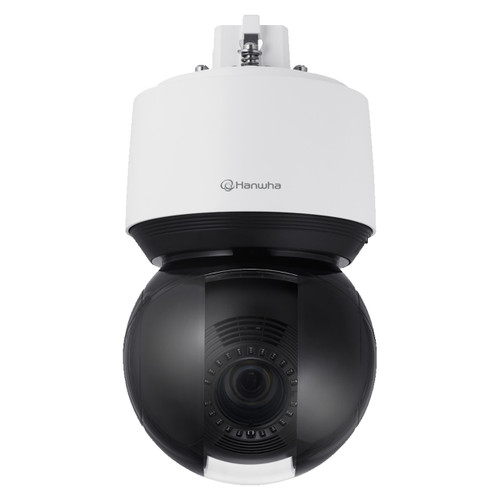
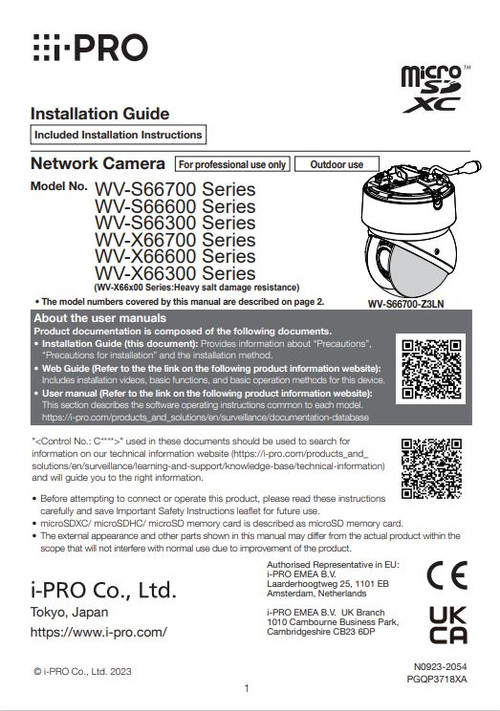
In This Guide
How do the imaging specs compare?
Both cameras use a 1/2.8" CMOS sensor at 8MP/4K (3840×2160) and deliver 30fps. The Hanwha XNP-9250R offers a 5–125mm lens at 25x optical zoom (F1.6 wide), while the i-PRO WV-S66700-Z3L provides a 4.5–135mm lens at 30x optical zoom (F1.8 wide) with up to 90x digital extra zoom. Tele-end detection distances reflect this: Hanwha reaches 3,246.9m (25x) vs i-PRO's 3,519.7m (30x) at the DORI detect threshold. The i-PRO's wider-end field of view is specified at 62° horizontal vs Hanwha's 57.42°, giving a slightly broader wide-angle sweep.
On low-light performance, the Hanwha XNP-9250R specifies 0.1 Lux color / 0 Lux IR minimum illumination and 200m IR range (Wise IR), with 120dB Extreme WDR (SSDR/SSNR V). The i-PRO WV-S66700-Z3L specifies 0.13 Lux color (30IRE) minimum illumination and a longer 280m IR range (30IRE), with up to 132dB Super Dynamic WDR (level 31). The i-PRO's IR throw distance and stated WDR headroom are higher on-spec; the Hanwha achieves 0 Lux IR operation and includes a built-in gyro-based digital image stabilizer, as does the i-PRO. The Hanwha also includes spinning-dry water removal and a stated defog function; the i-PRO lists fog compensation (0–8 levels) and Active ClearSight.
What about installation and environment?
Both cameras carry IP66 and IK10 ratings and are designed for outdoor deployment. The Hanwha XNP-9250R is rated for -40°C to +55°C operation (storage to +60°C) and holds NEMA 4X and NEMA-TS 2 (2.2.8, 2.2.9) certifications in addition to IP66/IK10. The i-PRO WV-S66700-Z3L is rated for -30°C to +60°C power-on operation (ambient storage -50°C to +60°C) and adds NEMA-TS2, UL/c-UL (UL62368-1/CSA C22.2 No.62368-1), CE, IEC62368-1, FCC Part 15 Class A, and ICES-003 safety/EMC marks. The i-PRO also specifies wind resistance up to 40 m/s (~89 mph), a spec absent from the Hanwha's published data.
Power delivery for both is PoE++ (IEEE 802.3bt); the Hanwha draws a typical 20W / max 40W and includes an HPoE injector. The i-PRO specifies 45.9W consumption. Hanwha's body is aluminum with a polycarbonate dome (Ø158×293.3mm, 3.2kg); i-PRO's is aluminum die-cast with a polycarbonate dome (Ø167×205mm H, ~3kg). The i-PRO adds a tamper-resistant enclosure designation. The Hanwha requires an optional NW I/O Box for hardware alarm I/O; the i-PRO has 4× alarm I/O terminals and audio I/O built into the camera body.
Which fits your VMS and analytics better?
Both cameras support ONVIF Profiles S, G, T, and M, and both compress via H.265, H.264, and MJPEG with CBR/VBR bitrate control. The Hanwha XNP-9250R supports up to 20 unicast and 128 multicast users across up to 10 stream profiles and also exposes SUNAPI (HTTP API) and the Wisenet open platform in addition to ONVIF. The i-PRO WV-S66700-Z3L supports up to 14 simultaneous users, includes Variable GOP smart coding (1s–60s), and supports G.726, G.711, and AAC-LC audio compression. The i-PRO provides built-in audio I/O (4× 3.5mm input, 1× 3.5mm output) with audio detection and AI sound classification (gunshot, yell, vehicle horn, glass break); the Hanwha's alarm I/O and audio functions require an optional NW I/O Box.
On AI analytics, the Hanwha specifies object auto-tracking (person/vehicle), target-lock tracking, directional detection, fog detection, face detection, appear/disappear, and motion detection across 8 polygonal zones. The i-PRO lists AI video motion detection, face/vehicle detection, scene change detection, audio detection, and AI sound classification. The Hanwha offers 2-slot Micro SD/SDHC/SDXC edge storage up to 1TB; the i-PRO supports a single microSDXC card (capacity not specified in provided specs). Security certifications differ: the i-PRO holds FIPS 140-2 Level 3, which the Hanwha does not list; Hanwha lists device certificate (Hanwha Techwin Root CA) and 802.1X (EAP-TLS, EAP-LEAP). The i-PRO carries a stated 5-year warranty; the Hanwha warranty term is not specified in the provided data.
Which should you choose: the XNP-9250R or the S66700-Z3L?
Our take: The WV-S66700-Z3L is the stronger choice when IR reach, WDR headroom, built-in audio I/O, and FIPS 140-2 Level 3 security compliance are primary requirements. Its 30x optical zoom (vs 25x) pushes DORI detect range to 3,519.7m vs 3,246.9m; its 280m IR throw (30IRE) exceeds the Hanwha's 200m; and its 132dB Super Dynamic WDR edges the Hanwha's 120dB Extreme WDR. Built-in 4-channel audio I/O with AI sound classification adds value without extra hardware. The XNP-9250R becomes the stronger choice when a Wisenet/SUNAPI VMS ecosystem is already deployed, dual-slot SD redundancy (up to 1TB) is needed, colder ambient operating minimums (-40°C vs -30°C power-on) matter, or the HPoE injector-included bundle lowers installation cost. Both are IP66/IK10 8MP PTZ platforms with gyro stabilization and matched ONVIF profiles.
Side-by-Side Comparison
Spec-for-spec, from manufacturer data.
| Specification | Hanwha XNP-9250R | i-PRO S66700-Z3L |
|---|---|---|
| Resolution | 8MP (4K / 3840×2160) | 8MP (4K / 3840×2160) |
| Image Sensor | 1/2.8" CMOS | Approx. 1/2.8" type CMOS |
| Lens / Focal Length | 5–125mm DC auto iris, 25x optical | 4.5–135mm motorized, 30x optical |
| Digital / Extra Zoom | 32x digital (800x total) | Up to 90x extra zoom (at 1280×720) |
| Max Aperture (Wide / Tele) | F1.6 (Wide) / F3.73 (Tele) | F1.8 (Wide) / F4.7 (Tele) |
| Min. Illumination | 0.1 Lux color / 0 Lux IR | 0.13 Lux color (30IRE) |
| IR Range | 200m (Wise IR) | 280m (30IRE) / 200m (50IRE) |
| WDR | 120dB Extreme WDR | Max. 132dB Super Dynamic (level 31) |
| Max Frame Rate | 30fps | Variable (spec states variable; 30fps at 4K implied by codec support) |
| Video Compression | H.265, H.264 (Main/Baseline/High), MJPEG | H.265, H.264, JPEG (MJPEG) |
| ONVIF Profiles | S / G / T | G / M / S / T |
| IP / Impact Rating | IP66 / IK10 / NEMA 4X / NEMA-TS 2 | IP66 / IK10 / NEMA-TS2 |
| Operating Temperature | -40°C to +55°C | -30°C to +60°C (power on); ambient -50°C to +60°C |
| Power Input / PoE Class | HPoE IEEE 802.3bt Class 6 Type 3 (injector included); max 40W | PoE++ IEEE 802.3bt; 45.9W |
| Built-in Audio I/O | Requires optional NW I/O Box | 4× 3.5mm audio in / 1× 3.5mm audio out (built-in) |
| Edge Storage | Micro SD/SDHC/SDXC, 2 slots, up to 1TB | microSDXC (1 slot; capacity not specified in provided specs) |
| Security Certification | 802.1X (EAP-TLS, EAP-LEAP); Hanwha Root CA device cert | FIPS 140-2 Level 3; IEEE 802.1X; HTTPS |
| Dimensions | Ø158 × 293.3mm / 3.2kg | Ø167 × 205mm (H) / approx. 3kg |
| Warranty | — | 5-year warranty |
Frequently Asked Questions
Which should you choose: the XNP-9250R or the S66700-Z3L?
The WV-S66700-Z3L is the stronger choice when IR reach, WDR headroom, built-in audio I/O, and FIPS 140-2 Level 3 security compliance are primary requirements. Its 30x optical zoom (vs 25x) pushes DORI detect range to 3,519.7m vs 3,246.9m; its 280m IR throw (30IRE) exceeds the Hanwha's 200m; and its 132dB Super Dynamic WDR edges the Hanwha's 120dB Extreme WDR. Built-in 4-channel audio I/O with AI sound classification adds value without extra hardware. The XNP-9250R becomes the stronger choice when a Wisenet/SUNAPI VMS ecosystem is already deployed, dual-slot SD redundancy (up to 1TB) is needed, colder ambient operating minimums (-40°C vs -30°C power-on) matter, or the HPoE injector-included bundle lowers installation cost. Both are IP66/IK10 8MP PTZ platforms with gyro stabilization and matched ONVIF profiles.
Is the XNP-9250R or WV-S66700-Z3L better for low-light performance?
On specified numbers, both perform well but differ by metric. The Hanwha XNP-9250R reaches 0 Lux in IR mode (vs 0.13 Lux color for the i-PRO) and specifies spinning-dry water removal to keep the dome clear. The i-PRO WV-S66700-Z3L has a longer IR illumination range — 280m at 30IRE vs 200m for the Hanwha — and a higher stated WDR ceiling of 132dB vs 120dB. For raw IR distance in open perimeter scenarios, the i-PRO has the edge on spec; for absolute darkness (0 Lux) operation, the Hanwha's spec is stated lower.
Which camera is easier to integrate into an existing VMS?
Both cameras support ONVIF Profiles S, G, T, and M, so either will work with any ONVIF-compliant VMS. If your VMS is Wisenet-based (Hanwha's own platform), the XNP-9250R adds SUNAPI and Wisenet open platform APIs for deeper integration. The i-PRO WV-S66700-Z3L supports i-PRO's own SDK path alongside ONVIF. The Hanwha supports up to 20 unicast users and 10 stream profiles; the i-PRO supports up to 14 simultaneous users. Neither has a clear universal VMS advantage — the deciding factor is which manufacturer's VMS or API ecosystem you already operate.
Does either camera have built-in audio, and does it require extra hardware?
Yes, but differently. The i-PRO WV-S66700-Z3L has 4× 3.5mm stereo audio inputs and 1× 3.5mm mono audio output built directly into the camera body, plus AI sound classification for gunshot, yell, vehicle horn, and glass break — no additional hardware required. The Hanwha XNP-9250R requires an optional NW I/O Box accessory to enable hardware alarm inputs and outputs including audio functions; this is an add-on cost and installation step that the i-PRO avoids.
Get a Second Opinion on Your Camera Choice
Share your site layout, coverage goals, and budget. Our team will validate the camera selection, flag anything we would change, and recommend products that match the use case.