
Hanwha XNO-8030R vs i-PRO X15500-V3L: Specification Comparison
Both the Hanwha XNO-8030R and the i-PRO WV-X15500-V3L are 5MP outdoor PoE bullet cameras targeting perimeter and facility surveillance in commercial and industrial installations. They share the same resolution class, bullet form factor, IP67/IK10 environmental ratings, and ONVIF compatibility, making them genuine cross-shop candidates. The comparison centers on meaningful differences: fixed vs. motorized varifocal lens, sensor low-light sensitivity, IR throw distance, WDR headroom, AI analytics depth, PoE class, and warranty term.
In This Guide
How do the imaging specs compare?
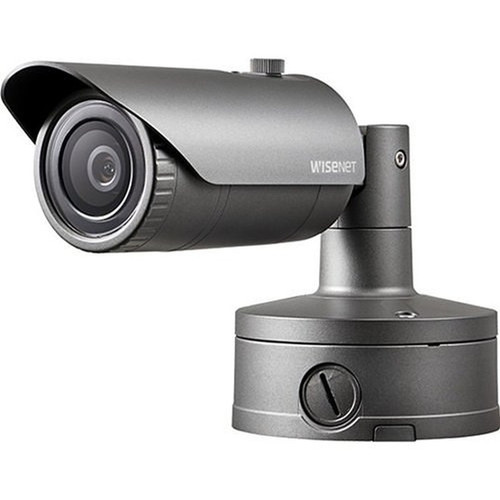
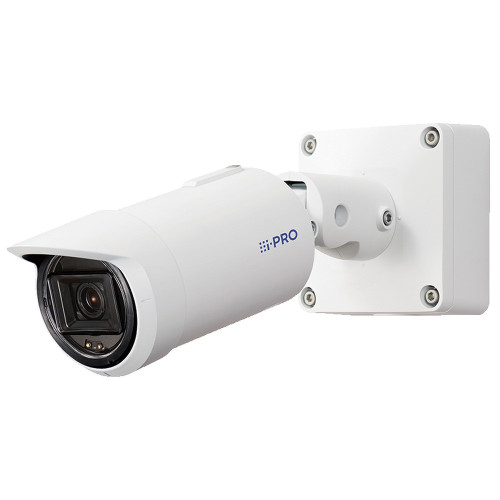
The XNO-8030R uses a 1/1.8" 6MP CMOS sensor (outputting 5MP) with a fixed 4.6mm F1.6 lens, yielding a 77.9° horizontal field of view that is set at installation. Its minimum illumination is 0.16 lux in color and 0 lux with IR active, and its IR illuminator reaches 30m (98ft). Wide dynamic range is rated at 120dB. The WV-X15500-V3L uses a smaller 1/2.8" CMOS with a 3.1x motorized varifocal lens spanning 2.9–9mm (F1.3–F2.5), giving an adjustable horizontal FOV of 34°–106°. Its minimum illumination is 0.02 lux in B&W mode (F1.3, 1/30s), and its IR illuminator reaches 70m (230ft)—more than twice the XNO-8030R's throw. Dynamic range is rated at 132dB (Super Dynamic on, level 31).
On a per-spec basis, the i-PRO unit holds advantages in low-light sensitivity (0.02 lux vs. 0.16 lux), IR range (70m vs. 30m), WDR ceiling (132dB vs. 120dB), and lens flexibility (motorized varifocal vs. fixed). The Hanwha's larger 1/1.8" sensor can capture more light per pixel at equivalent aperture, but the i-PRO's F1.3 maximum aperture partially offsets that sensor-size disadvantage. The i-PRO also provides DORI detection distances per standard (e.g., Detect at 46.3m wide / 201m tele), which the Hanwha spec sheet does not include. Note that the i-PRO's 3072×1728 native resolution is slightly higher than the XNO-8030R's stated 5MP output, though both are marketed as 5MP class.
What about installation and environment?
Both cameras are IP66/IP67 rated and carry IK10 vandal resistance and NEMA 4X compliance, making them equivalent on ingress and impact protection. The XNO-8030R is rated for −30°C to +55°C operating temperature; the WV-X15500-V3L extends the cold end to −40°C to +55°C, a meaningful advantage in northern climates or unheated enclosures. The i-PRO also specifies wind resistance up to 40 m/s (≈89 mph), a spec not present in the Hanwha datasheet.
Power differs at the PoE class level: the XNO-8030R is IEEE 802.3af Class 3 (max 10.3W PoE), while the WV-X15500-V3L requires PoE+ (802.3at, 14W) or 12VDC. Installers must confirm switch port capability before deploying the i-PRO; existing 802.3af-only infrastructure will require midspan injectors or switch upgrades. The XNO-8030R additionally accepts 12VDC directly. The Hanwha body is aluminum at 1,220g (2.69 lb) and Ø70×296mm; the i-PRO is aluminum die cast, resin, and stainless steel at 2.5 kg (5.6 lb) and 133×133×383mm—notably heavier and wider, which affects bracket and conduit selection.
Which fits your VMS and analytics better?
Both cameras support ONVIF Profile S/T/G. The i-PRO additionally supports ONVIF Profile M, which extends metadata interoperability for AI-derived events. The XNO-8030R exposes Hanwha's SUNAPI/HTTP API and Wisenet Open Platform for third-party app integration; the i-PRO is built on an Ambarella CV52 SoC. Edge analytics differ substantially: the XNO-8030R includes people counting, queue management, and heatmap under Business Intelligence, plus directional detection, loitering, appear/disappear, enter/exit, virtual line, and face detection. The i-PRO lists AI Motion, Face, Vehicle, and Occupancy detection, plus AI Sound Classification (gunshot, yell, vehicle horn, glass break)—a forensically useful audio layer not present in the Hanwha spec.
Audio I/O: the XNO-8030R provides a selectable mic/line input and line out; the i-PRO provides a 3.5mm stereo mini-jack input and 3.5mm stereo output, and supports half- and full-duplex modes. Alarm I/O: the XNO-8030R has 1 input / 1 output; the i-PRO provides 4 alarm I/O terminals (IN1, IN2, IN3, OUT, AUX). Both support microSD up to 512GB. Security posture: the i-PRO is specified with FIPS 140-2 Level 3 and lists Secure Boot and signed firmware; the Hanwha datasheet does not cite FIPS certification, though it does support 802.1X (EAP-TLS, EAP-LEAP), HTTPS, and digest authentication. Simultaneous streams: Hanwha supports up to 20 unicast users and 10 profiles; i-PRO supports up to 14 simultaneous users.
Which should you choose: the XNO-8030R or the X15500-V3L?
Our take: The WV-X15500-V3L is the stronger choice when IR range, low-light performance, lens flexibility, and cybersecurity certification are primary requirements. Its IR illuminator reaches 70m versus the XNO-8030R's 30m—a 133% increase in IR throw—and its minimum illumination of 0.02 lux versus 0.16 lux gives it a meaningful edge in near-dark conditions. Its 132dB Super Dynamic WDR exceeds the Hanwha's 120dB, and its 3.1x motorized varifocal lens (2.9–9mm) allows post-mount field-of-view adjustment that the Hanwha's fixed 4.6mm lens does not. The i-PRO also adds FIPS 140-2 Level 3 certification and a 5-year warranty versus the Hanwha's 3-year term. The XNO-8030R is the appropriate choice where PoE budget is constrained to 802.3af Class 3 switches, where Hanwha/Wisenet VMS ecosystem integration is already in place, or where built-in people counting and heatmap analytics are needed without an additional license. Both are IK10/IP67 rated and ONVIF-compatible.
Side-by-Side Comparison
Spec-for-spec, from manufacturer data.
| Specification | Hanwha XNO-8030R | i-PRO X15500-V3L |
|---|---|---|
| Resolution | 5MP | 5MP (3072×1728) |
| Image Sensor | 1/1.8" 6MP CMOS | Approx. 1/2.8" CMOS |
| Lens / Focal Length | 4.6mm fixed, F1.6 | 2.9–9mm motorized varifocal, F1.3–F2.5 |
| Horizontal Field of View | 77.9° (fixed) | 34°–106° (adjustable) |
| Min. Illumination | 0.16 lux color / 0 lux IR | 0.02 lux B&W (F1.3, 1/30s) |
| IR Range | 30m (98ft) | 70m (230ft) |
| Wide Dynamic Range | 120dB | 132dB (Super Dynamic) |
| Max Frame Rate | 30fps | 30fps |
| Video Compression | H.265, H.264, MJPEG | H.265, H.264, MJPEG |
| IP Rating | IP66 / IP67 / NEMA 4X | IP66 / IP67 / NEMA 4X |
| Vandal / Impact Rating | IK10 | IK10 |
| Operating Temperature | -30°C to +55°C | -40°C to +55°C |
| Power Input / PoE Class | PoE 802.3af Class 3 / 12VDC (max 10.3W) | PoE+ 802.3at / DC12V 1.2A (14W) |
| Alarm I/O | 1 input / 1 output | 4 terminals (IN1, IN2, IN3, OUT, AUX) |
| Edge Storage | Micro SD/SDHC/SDXC, 2 slots, up to 512GB | microSDXC up to 512GB, 1 slot |
| ONVIF Profiles | S / G / T | S / G / T / M |
| AI / Edge Analytics | People counting, queue mgmt, heatmap, loitering, enter/exit, face detection | AI Motion, Face, Vehicle, Occupancy; AI Sound Classification |
| Audio I/O | Mic/line in (selectable); line out 1Vrms | 3.5mm stereo jack in; 3.5mm stereo jack out, 600Ω |
| Cybersecurity Certification | 802.1X EAP-TLS/LEAP, HTTPS, digest auth (FIPS not listed) | FIPS 140-2 Level 3, secure boot, signed firmware |
| Dimensions | Ø70 × 296mm (Ø2.76" × 11.65") | 133 × 133 × 383mm (5.25" × 5.25" × 15.1") |
| Weight | 1,220g (2.69 lb) | Approx. 2,500g (5.6 lb) |
| Warranty | 3 years | 5 years |
Frequently Asked Questions
Which should you choose: the XNO-8030R or the X15500-V3L?
The WV-X15500-V3L is the stronger choice when IR range, low-light performance, lens flexibility, and cybersecurity certification are primary requirements. Its IR illuminator reaches 70m versus the XNO-8030R's 30m—a 133% increase in IR throw—and its minimum illumination of 0.02 lux versus 0.16 lux gives it a meaningful edge in near-dark conditions. Its 132dB Super Dynamic WDR exceeds the Hanwha's 120dB, and its 3.1x motorized varifocal lens (2.9–9mm) allows post-mount field-of-view adjustment that the Hanwha's fixed 4.6mm lens does not. The i-PRO also adds FIPS 140-2 Level 3 certification and a 5-year warranty versus the Hanwha's 3-year term. The XNO-8030R is the appropriate choice where PoE budget is constrained to 802.3af Class 3 switches, where Hanwha/Wisenet VMS ecosystem integration is already in place, or where built-in people counting and heatmap analytics are needed without an additional license. Both are IK10/IP67 rated and ONVIF-compatible.
Is the XNO-8030R or WV-X15500-V3L better for low-light and nighttime coverage?
The WV-X15500-V3L has a clear advantage in both metrics. Its IR illuminator is rated to 70m versus the XNO-8030R's 30m, and its minimum illumination is 0.02 lux (B&W, F1.3) versus 0.16 lux (color) for the Hanwha. For sites with large dark perimeters or minimal ambient light, the i-PRO will maintain usable imagery at significantly greater distances.
Can I power either camera from a standard 802.3af PoE switch?
The XNO-8030R is IEEE 802.3af Class 3 (max 10.3W) and will work on any standard PoE switch. The WV-X15500-V3L requires PoE+ (802.3at, 14W) or a 12VDC supply. If your existing switch infrastructure is 802.3af-only, you would need a PoE+ capable switch port or a midspan injector to power the i-PRO unit.
Which camera offers stronger cybersecurity features?
The WV-X15500-V3L specifies FIPS 140-2 Level 3 certification, secure boot, signed firmware, and device certificate support—features required by some government and critical-infrastructure procurement standards. The XNO-8030R supports HTTPS, 802.1X (EAP-TLS, EAP-LEAP), digest authentication, and IP filtering, but does not list FIPS certification in its specification sheet. For deployments with explicit FIPS or zero-trust hardening requirements, the i-PRO has the documented credential.
Get a Second Opinion on Your Camera Choice
Share your site layout, coverage goals, and budget. Our team will validate the camera selection, flag anything we would change, and recommend products that match the use case.