
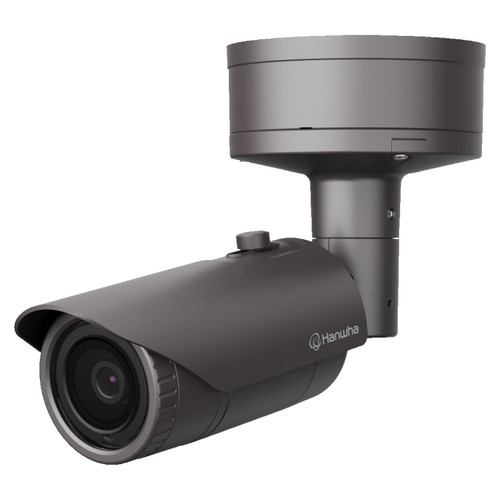
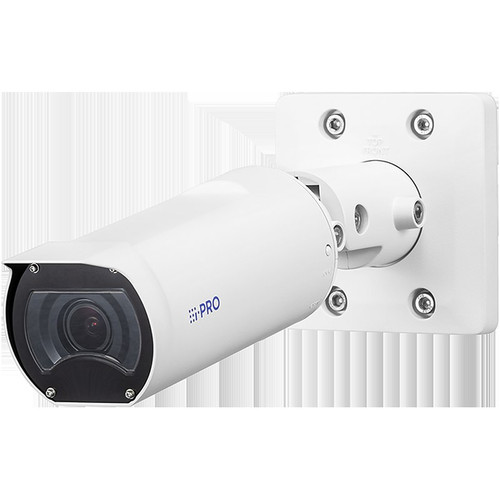
Hanwha XNO-6020R vs i-PRO U15350-V3L: Specification Comparison
Both the Hanwha XNO-6020R and the i-PRO WV-U15350-V3L are 2MP outdoor bullet IP cameras designed for fixed perimeter surveillance. They share a common resolution class, bullet form factor, IR night vision, and PoE power delivery, making them genuine cross-shop candidates for integrators evaluating 2MP bullet deployments. The comparison covers imaging performance, installation and environmental ratings, and VMS/analytics integration to help installers and IT buyers identify which model aligns with their project requirements.
In This Guide
How do the imaging specs compare?
Both cameras share a 1/2.8" 2MP CMOS sensor, but their imaging envelopes diverge on several key axes. The Hanwha XNO-6020R specifies a 150dB Wide Dynamic Range, a fixed 4mm F1.4 lens, and a minimum color illumination of 0.015 lux (0 lux with IR active), with an IR viewable length of 30m. The i-PRO WV-U15350-V3L specifies Super Dynamic WDR rated up to 120dB, a 3.2x optical zoom lens (focal length not provided in the supplied specs), a minimum color illumination of 0.05 lux at F1.6 and 1/30s (0 lux with IR), and an IR range of 42m at 30IRE / 30m at 50IRE.
The XNO-6020R's F1.4 aperture and 0.015 lux color sensitivity give it a meaningful low-light edge in color mode. Its 150dB WDR rating exceeds the i-PRO's 120dB claim by 30dB, which can be significant in high-contrast scenes such as entryways with direct sunlight and deep shadow. Conversely, the i-PRO's 3.2x optical zoom provides scene flexibility unavailable on the fixed-focal Hanwha, and its 42m IR range (at 30IRE) outreaches the Hanwha's 30m. The i-PRO's max frame rate is specified at 30fps; the Hanwha specifies 30fps typical with a 60fps max frame rate. The i-PRO's lens focal length is not numerically specified in the provided data beyond "3.2x optical zoom."
What about installation and environment?
The Hanwha XNO-6020R carries IP67, IP66, and NEMA 4X ingress ratings alongside IK10 vandal resistance, making it suitable for direct water jet exposure and impact-prone outdoor environments. The i-PRO WV-U15350-V3L is rated IP66 and IK10; IP67 is not claimed in the provided specifications. Both cameras operate from -30°C, but the XNO-6020R's upper operating limit is +55°C versus the i-PRO's +50°C, a 5°C advantage relevant for sun-exposed housings in warm climates.
Both cameras are powered by PoE 802.3af. The Hanwha draws a maximum of 9.7W over PoE; the i-PRO draws 13W—approaching the 802.3af 15.4W ceiling but remaining within the standard. Installers using marginal-length cable runs or budget PoE switches should verify their switch's per-port power budget against the i-PRO's 13W draw. The Hanwha also accepts 12VDC as an alternative supply; the i-PRO's alternative power input is not specified in the provided data. The XNO-6020R's dimensions are Ø70×296mm at 1,220g (2.69 lb); the i-PRO measures 112.5mm (W) × 112.5mm (H) × 298.5mm (D) with weight not specified in the provided data.
Which fits your VMS and analytics better?
The Hanwha XNO-6020R supports ONVIF Profile S, G, and T, along with Hanwha's SUNAPI (HTTP API) and Wisenet Open Platform. The i-PRO WV-U15350-V3L supports ONVIF Profile G, M, S, and T—adding Profile M, which covers metadata streaming for analytics. The i-PRO also discloses NDAA compliance and a FIPS 140-3 Level 3 Secure Element (NXP EdgeLock SE052F), a cybersecurity specification absent from the Hanwha's provided data and increasingly required in federal and critical-infrastructure deployments.
On-board analytics are substantially richer on the Hanwha: the XNO-6020R lists defocus detection, directional detection, fog detection, face detection, motion detection, digital auto tracking, appear/disappear, enter/exit, loitering, tampering, virtual line, audio detection, sound classification, plus business intelligence functions (people counting, queue management, heatmap). The i-PRO specifies AI Video Motion Detection (4 zones) and scene change detection in the provided specs. For audio, the Hanwha provides both line/mic input (selectable, 2.5VDC bias) and line output; the i-PRO lists audio input only—audio output is not specified. Edge storage is also an XNO-6020R differentiator: dual microSD/SDHC/SDXC slots supporting up to 512GB total; the i-PRO's onboard storage capability is not specified in the provided data. The Hanwha also supports 802.1X (EAP-TLS, EAP-LEAP) network authentication; the i-PRO's equivalent is not listed in the provided specs.
Which should you choose: the XNO-6020R or the U15350-V3L?
Our take: The XNO-6020R is the stronger choice when on-board analytics depth, higher WDR performance, and dual-slot edge storage are project priorities. Its 150dB WDR rating exceeds the i-PRO's 120dB by 30dB, its F1.4 aperture yields a lower color minimum illumination (0.015 lux vs. 0.05 lux), and its dual microSD slots support up to 512GB of local recording—a capability unspecified on the i-PRO. The WV-U15350-V3L is the stronger choice where a 3.2x optical zoom is needed for scene flexibility, where its 42m IR range (vs. 30m) matters on deeper perimeter runs, and critically where NDAA compliance and a FIPS 140-3 Level 3 hardware Secure Element are mandatory—as in federal, DoD, or regulated-sector deployments. The i-PRO's 13W PoE draw also requires verification against switch port budgets. Neither product's warranty term is specified in the i-PRO's provided data.
Side-by-Side Comparison
Spec-for-spec, from manufacturer data.
| Specification | Hanwha XNO-6020R | i-PRO U15350-V3L |
|---|---|---|
| Resolution | 2MP | 2MP |
| Image Sensor | 1/2.8" CMOS | 1/2.8" CMOS |
| Lens / Focal Length | 4mm fixed, F1.4 | 3.2x optical zoom (focal length not specified) |
| Min. Illumination (Color) | 0.015 lux | 0.05 lux (F1.6, 1/30s, 30IRE) |
| Min. Illumination (B/W with IR) | 0 lux | 0 lux |
| IR Range | 30m (98.4ft) | 42m (30IRE) / 30m (50IRE) |
| WDR | 150dB | Super Dynamic up to 120dB |
| Max Frame Rate | 60fps | 30fps |
| Video Compression | H.265 / H.264 / MJPEG | H.265 / H.264 / MJPEG |
| IP Rating | IP67 / IP66 / NEMA 4X | IP66 |
| IK / Impact Rating | IK10 | IK10 |
| Operating Temperature | -30°C to +55°C | -30°C to +50°C |
| Power Input / PoE Class | PoE 802.3af Class 3 (max 9.7W); 12VDC | PoE 802.3af (13W); alt. supply not specified |
| Edge Storage | Dual microSD/SDHC/SDXC, up to 512GB | Not specified |
| Audio | Line/Mic in + Line out | Audio input only (output not specified) |
| ONVIF Profiles | S / G / T | G / M / S / T |
| NDAA / FIPS Compliance | Not specified | NDAA compliant; FIPS 140-3 Level 3 Secure Element |
| Dimensions | Ø70 × 296mm (Ø2.76" × 11.65") | 112.5mm (W) × 112.5mm (H) × 298.5mm (D) |
| Weight | 1,220g (2.69 lb) | Not specified |
| Warranty | 3 years | Not specified |
Frequently Asked Questions
Which should you choose: the XNO-6020R or the U15350-V3L?
The XNO-6020R is the stronger choice when on-board analytics depth, higher WDR performance, and dual-slot edge storage are project priorities. Its 150dB WDR rating exceeds the i-PRO's 120dB by 30dB, its F1.4 aperture yields a lower color minimum illumination (0.015 lux vs. 0.05 lux), and its dual microSD slots support up to 512GB of local recording—a capability unspecified on the i-PRO. The WV-U15350-V3L is the stronger choice where a 3.2x optical zoom is needed for scene flexibility, where its 42m IR range (vs. 30m) matters on deeper perimeter runs, and critically where NDAA compliance and a FIPS 140-3 Level 3 hardware Secure Element are mandatory—as in federal, DoD, or regulated-sector deployments. The i-PRO's 13W PoE draw also requires verification against switch port budgets. Neither product's warranty term is specified in the i-PRO's provided data.
Is the XNO-6020R or WV-U15350-V3L better for low-light color performance?
Based on the provided specifications, the XNO-6020R has a lower minimum color illumination (0.015 lux at F1.4) compared to the WV-U15350-V3L (0.05 lux at F1.6, 1/30s). Both cameras reach 0 lux in black-and-white mode with IR active. The Hanwha's wider aperture and lower lux floor give it a specified advantage in color low-light conditions.
Which camera is required for NDAA-compliant or federal installations?
The i-PRO WV-U15350-V3L specifies NDAA compliance and a FIPS 140-3 Level 3 Secure Element in the provided specifications. Neither NDAA compliance nor FIPS certification is listed in the Hanwha XNO-6020R's provided specifications. If those certifications are contractually required, the WV-U15350-V3L is the only option supported by the available spec data.
Does either camera support on-board recording without a separate NVR?
Yes—the Hanwha XNO-6020R supports dual microSD/SDHC/SDXC card slots with a combined capacity of up to 512GB, and it supports ONVIF Profile G for edge recording. The i-PRO WV-U15350-V3L also supports ONVIF Profile G, but on-board storage slot specifications are not provided in the available data for that model. Verify i-PRO's local storage capability with the manufacturer or distributor before designing a recorder-less deployment.
Get a Second Opinion on Your Camera Choice
Share your site layout, coverage goals, and budget. Our team will validate the camera selection, flag anything we would change, and recommend products that match the use case.