
Hanwha XNF-8010RV vs Hanwha XNF-8010RVM: Specification Comparison
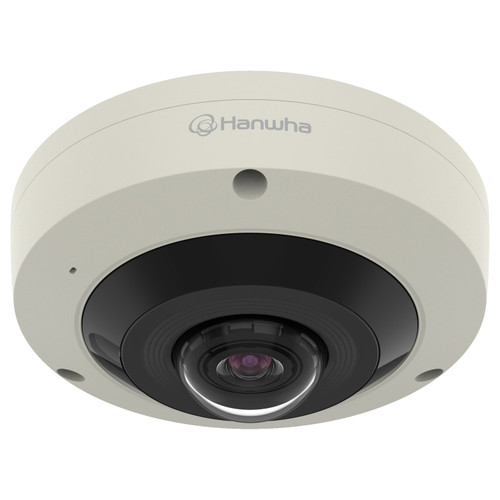
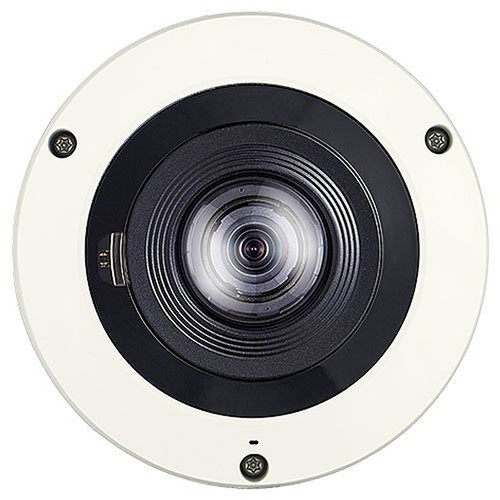
The Hanwha XNF-8010RV and XNF-8010RVM are both 6MP 360° fisheye IP cameras from the same Wisenet product family, sharing the same 1/1.8" CMOS sensor, 1.6mm fixed lens, 192° omnidirectional field of view, and 15m IR range. Both are designed for outdoor, single-mount perimeter coverage with PoE power and IK10 vandal resistance. The key differentiator between the two models is the network connector type: the RV uses a standard RJ-45 port, while the RVM uses an M12 connector—a distinction that significantly affects installation context.
In This Guide
How do the imaging specs compare?
Both cameras are optically identical: 1/1.8" 6-megapixel CMOS sensor, 2048×2048 resolution, 1.6mm fixed focal length, F1.6 maximum aperture, and a 192° horizontal, vertical, and diagonal field of view. Minimum illumination is 0.1 Lux color and 0 Lux IR on both models, with an IR viewable length of 15m (49.21ft) on each. Wide dynamic range is rated at 120dB on both units via SSDR/WDR/BLC/HLC, and digital noise reduction is SSNRV on both. Maximum frame rate is 30fps at full 2048×2048 resolution for both models.
Image processing features are also identical across the two models: Auto(ICR) day/night switching, defog support, electronic shutter from 2 to 1/12,000 sec with anti-flicker, gain control at Low/Middle/High, white balance modes including ATW/AWC/Manual/Indoor/Outdoor, and video rotation supporting flip and mirror. There is no spec-based imaging differentiation between the XNF-8010RV and XNF-8010RVM.
What about installation and environment?
Both models share IP66 and IK10 ratings, an operating temperature range of -40°C to +55°C (-40°F to +131°F), storage temperature of -50°C to +60°C, and humidity tolerance of less than 90% RH. Both are powered via PoE IEEE 802.3af Class 3 (max 12.95W) or 12VDC (max 12W). Physical dimensions are identical at Ø146×65.8mm, and both use aluminum housing in ivory/white.
The single installation differentiator is the network interface. The XNF-8010RV uses a standard RJ-45 (10/100BASE-T) connector, compatible with standard CAT cable infrastructure and conventional PoE switches. The XNF-8010RVM uses an M12 connector, which provides a watertight, vibration-resistant locking interface suited for transportation, rail, and harsh industrial environments. The XNF-8010RVM also carries an additional certification—EN55011:2009+A1:2010—not listed for the XNF-8010RV, which may be relevant for EMC compliance in specific deployment environments. Weight differs marginally: 785g (1.73 lb) for the RV versus 790g (1.74 lb) for the RVM.
Which fits your VMS and analytics better?
VMS and analytics capabilities are identical between the two models. Both support ONVIF Profile S/G/T, SUNAPI (HTTP API), and Wisenet open platform. Video compression covers H.265/H.264 (Main/Baseline/High) and MJPEG, with CBR/VBR bitrate control and up to 10 simultaneous streaming profiles. WiseStream II smart codec is available on both. Network protocol support is the same across both models: IPv4/IPv6, RTSP, HTTPS/SSL/TLS, SNMPv1/v2c/v3, 802.1X (EAP-TLS, EAP-LEAP), SRTP, UPnP, Bonjour, and more.
On-board analytics are identical: directional detection, motion detection (8 zones, 8-point polygonal), appear/disappear, enter/exit, loitering, tampering, virtual line, audio detection, and sound classification. Business intelligence functions—people counting, queue management, and heatmap—are present on both. Audio input is selectable (mic in/line in/built-in mic) and audio output supports line out at max 1Vrms on both. Edge storage is dual-slot Micro SD/SDHC/SDXC up to 512GB on both. RAM and flash are 1024MB and 256MB respectively on both units. Alarm I/O is 1 input and 1 output on each.
Which should you choose: the XNF-8010RV or the XNF-8010RVM?
Our take: The XNF-8010RV is the stronger choice when deploying on standard Ethernet infrastructure, while the XNF-8010RVM is the appropriate selection for environments requiring a watertight M12 network connection. Across every imaging, analytics, compression, and storage spec, the two cameras are identical: both deliver 6MP 2048×2048 at 30fps, 15m IR, 120dB WDR, 0.1 Lux color sensitivity, and dual-slot 512GB edge storage. The three concrete differences are: (1) network connector—RJ-45 on the XNF-8010RV versus M12 on the XNF-8010RVM; (2) weight—785g versus 790g; and (3) certifications—the XNF-8010RVM adds EN55011:2009+A1:2010, which the XNF-8010RV spec sheet does not list. Choose the XNF-8010RV for conventional IP installations. Specify the XNF-8010RVM for rail, transit, vehicle-mounted, or high-vibration industrial sites where M12 locking connectors and the additional EMC certification are required.
Side-by-Side Comparison
Spec-for-spec, from manufacturer data.
| Specification | Hanwha XNF-8010RV | Hanwha XNF-8010RVM |
|---|---|---|
| Resolution | 2048×2048 | 2048×2048 |
| Image Sensor | 1/1.8" 6M CMOS | 1/1.8" 6M CMOS |
| Lens / Focal Length | 1.6mm fixed, F1.6, Board-in | 1.6mm fixed, F1.6, Board-in |
| Field of View (H/V/D) | 192° / 192° / 192° | 192° / 192° / 192° |
| Max Frame Rate | 30fps | 30fps |
| Min Illumination | 0.1 Lux color / 0 Lux IR | 0.1 Lux color / 0 Lux IR |
| IR Range | 15m (49.21ft) | 15m (49.21ft) |
| Wide Dynamic Range | 120dB | 120dB |
| Video Compression | H.265 / H.264 / MJPEG | H.265 / H.264 / MJPEG |
| Network Connector | RJ-45 (10/100BASE-T) | M12 |
| Power Input / PoE Class | PoE 802.3af Class 3 / 12VDC; max 12.95W PoE | PoE 802.3af Class 3 / 12VDC; max 12.95W PoE |
| IP Rating | IP66 | IP66 |
| Vandal / Impact Rating | IK10 | IK10 |
| Operating Temperature | -40°C to +55°C (-40°F to +131°F) | -40°C to +55°C (-40°F to +131°F) |
| Edge Storage | Dual Micro SD/SDHC/SDXC slot, up to 512GB | Dual Micro SD/SDHC/SDXC slot, up to 512GB |
| Audio | In: mic/line/built-in mic selectable; Out: line out 1Vrms max | In: mic/line/built-in mic selectable; Out: line out 1Vrms max |
| Certifications | IP66, IK10, EN50581, EN50121-3-2, EN61000-4-x, EN50155 | IP66, IK10, EN55011, EN50581, EN50121-3-2, EN61000-4-x, EN50155 |
| Dimensions | Ø146×65.8mm (Ø5.75×2.59") | Ø146×65.8mm (Ø5.75×2.59") |
| Weight | 785g (1.73 lb) | 790g (1.74 lb) |
| Warranty | 3-year | 3-year |
Frequently Asked Questions
Which should you choose: the XNF-8010RV or the XNF-8010RVM?
The XNF-8010RV is the stronger choice when deploying on standard Ethernet infrastructure, while the XNF-8010RVM is the appropriate selection for environments requiring a watertight M12 network connection. Across every imaging, analytics, compression, and storage spec, the two cameras are identical: both deliver 6MP 2048×2048 at 30fps, 15m IR, 120dB WDR, 0.1 Lux color sensitivity, and dual-slot 512GB edge storage. The three concrete differences are: (1) network connector—RJ-45 on the XNF-8010RV versus M12 on the XNF-8010RVM; (2) weight—785g versus 790g; and (3) certifications—the XNF-8010RVM adds EN55011:2009+A1:2010, which the XNF-8010RV spec sheet does not list. Choose the XNF-8010RV for conventional IP installations. Specify the XNF-8010RVM for rail, transit, vehicle-mounted, or high-vibration industrial sites where M12 locking connectors and the additional EMC certification are required.
Is the XNF-8010RV or XNF-8010RVM better for low light?
Neither has an advantage in low light. Both cameras share the same 1/1.8" 6MP CMOS sensor, the same F1.6 aperture, the same 0.1 Lux color / 0 Lux IR minimum illumination rating, and the same 15m IR viewable range. Low-light performance is spec-equivalent.
Can I use the XNF-8010RVM with a standard PoE switch and patch cable?
Not directly. The XNF-8010RVM uses an M12 network connector rather than a standard RJ-45 port. You will need an M12-to-RJ-45 adapter or M12-terminated cabling to connect it to a conventional PoE switch. The XNF-8010RV accepts a standard RJ-45 patch cable with no adapter required.
Do both cameras support the same VMS integrations and analytics?
Yes. Both models are spec-identical on integration: ONVIF Profile S/G/T, SUNAPI, Wisenet open platform, and the full suite of built-in analytics including motion detection, loitering, virtual line, people counting, queue management, and heatmap. There is no VMS or analytics differentiator between the two models.
Get a Second Opinion on Your Camera Choice
Share your site layout, coverage goals, and budget. Our team will validate the camera selection, flag anything we would change, and recommend products that match the use case.