
Hanwha XNB-6005 vs i-PRO U11301-F3: Specification Comparison
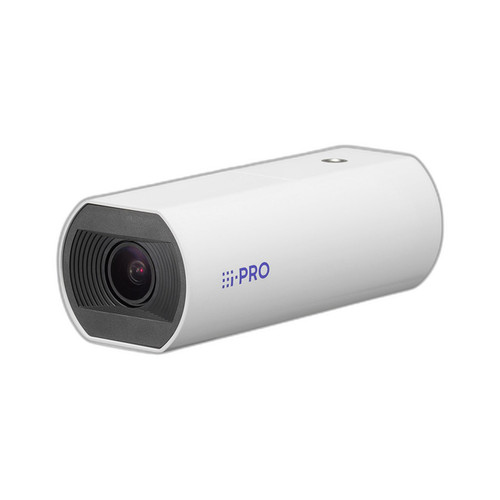
Both the Hanwha XNB-6005 and the i-PRO WV-U11301-F3 are 2MP indoor box cameras targeting integrators who need a fixed, lens-interchangeable (or fixed-lens) platform for demanding surveillance environments. The Hanwha brings a C/CS-mount interchangeable lens design with 60fps streaming and deep analytics, while the i-PRO ships with a fixed 3.2mm lens and leads on cybersecurity certification (FIPS 140-3 Level 3). This comparison covers imaging performance, installation fit, and VMS/analytics integration based solely on published specifications.
In This Guide
How do the imaging specs compare?
The Hanwha XNB-6005 uses a 1/2" CMOS sensor delivering 1920×1080 at up to 60fps, with minimum illumination of 0.006 lux (color) and 0.0006 lux (B&W). Its wide dynamic range is rated at 150dB, and it includes built-in digital image stabilization via a gyro sensor. The i-PRO WV-U11301-F3 uses a 1/2.8" CMOS sensor, outputs 2MP at 30fps (25fps mode also available), and achieves 0.07 lux (color) and 0.003 lux (B&W) minimum illumination. Its WDR is rated at 120dB Super Dynamic.
On low-light performance, the XNB-6005 has a meaningful advantage: 0.006 lux color versus 0.07 lux color for the U11301-F3 — nearly 12× more sensitive in color mode. The XNB-6005 also delivers a 30dB WDR advantage (150dB vs. 120dB) and doubles the maximum frame rate (60fps vs. 30fps). However, the XNB-6005 spec does not include a fixed lens; lens choice is left to the installer (C/CS-mount). The U11301-F3 ships with a 3.2mm fixed focal length F2.0 lens, which means field of view is predetermined and no lens cost or selection is required.
What about installation and environment?
Both cameras are rated for indoor use only; neither specification lists an IP or IK rating. The XNB-6005 operates from -10°C to +55°C and stores from -30°C to +60°C. The U11301-F3 operates from -10°C to +50°C; no storage temperature range is provided in the supplied specifications. The XNB-6005 accepts PoE (IEEE 802.3af, Class 3), 24VAC, or 12VDC and draws up to 8.5W. The U11301-F3 is PoE (IEEE 802.3af) only; its PoE class is listed as 0 in the spec data, though a 13W maximum consumption figure is noted as estimated. No AC or DC auxiliary power is listed for the U11301-F3.
The XNB-6005 measures 73.1×66.6×147.8mm and weighs 420g (0.93 lb). The U11301-F3 measures 59×49×142mm with no weight specified. The XNB-6005 supports C-mount and CS-mount lenses, giving integrators flexibility for varied focal lengths and apertures. The U11301-F3's fixed 3.2mm lens simplifies installation but removes that flexibility. Both cameras include an RS-485 serial interface (XNB-6005 confirmed; U11301-F3 not specified). The XNB-6005 includes 1 alarm input and 1 alarm output; the U11301-F3 does not list alarm I/O in the supplied specifications.
Which fits your VMS and analytics better?
The XNB-6005 supports ONVIF Profile S, G, and T, along with Hanwha's SUNAPI (HTTP API) and the Wisenet open platform. The U11301-F3 also supports ONVIF Profile S, G, and T. Both cameras are therefore compatible with major ONVIF-compliant VMS platforms. The XNB-6005 offers a substantially broader on-camera analytics suite: defocus detection, directional detection, fog detection, face detection, motion detection, digital auto tracking, appear/disappear, enter/exit, loitering, tampering, virtual line, audio detection, and sound classification — totaling 14 analytics functions. The U11301-F3 provides i-VMD intelligent motion detection, scene change detection, and audio detection — three functions. Integrators requiring edge-based behavioral analytics will find the XNB-6005 significantly more capable.
Both cameras include a built-in microphone and support audio recording. The XNB-6005 additionally provides a selectable mic-in/line-in and a line-out (1Vrms), plus RS-485. The U11301-F3 does not list line-in, line-out, or RS-485 in the supplied specifications. For edge storage, the XNB-6005 supports dual Micro SD/SDHC/SDXC slots up to 512GB total. The U11301-F3 supports microSD but slot count and maximum capacity are not specified. The U11301-F3's key differentiator in integration is its FIPS 140-3 Level 3 certified SecureElement (NXP EdgeLock SE052F) and NDAA compliance — specifications that are mandatory for U.S. federal, DoD, and regulated-facility deployments. The XNB-6005 does not list FIPS 140-3 or NDAA compliance in the supplied specifications.
Which should you choose: the XNB-6005 or the U11301-F3?
Our take: The XNB-6005 is the stronger choice when maximum low-light sensitivity, high frame rate, and broad edge analytics are the primary requirements. It achieves 0.006 lux color versus the U11301-F3's 0.07 lux — approximately 12× more sensitive — and pairs that with a 150dB WDR versus 120dB and 60fps versus 30fps. Its 14-function analytics suite (including loitering, enter/exit, and face detection) substantially exceeds the U11301-F3's three analytics functions, and its dual SD card slots plus C/CS-mount flexibility offer greater field configurability. However, the i-PRO WV-U11301-F3 is the required choice for any deployment mandating FIPS 140-3 Level 3 cybersecurity certification or NDAA compliance — credentials the XNB-6005 does not list. Choose the XNB-6005 for analytics-heavy or low-light-critical commercial installations; choose the U11301-F3 for regulated, federal, or high-security environments where certified hardware-root-of-trust is non-negotiable.
Side-by-Side Comparison
Spec-for-spec, from manufacturer data.
| Specification | Hanwha XNB-6005 | i-PRO U11301-F3 |
|---|---|---|
| Resolution | 1920×1080 (2MP) | 2MP |
| Image Sensor | 1/2" CMOS | 1/2.8" CMOS |
| Lens / Focal Length | C-mount / CS-mount (interchangeable) | 3.2mm fixed, F2.0 |
| Min. Illumination (Color) | 0.006 lux | 0.07 lux |
| Min. Illumination (B&W) | 0.0006 lux | 0.003 lux |
| Wide Dynamic Range | 150dB | 120dB (Super Dynamic) |
| Max. Frame Rate | 60fps | 30fps (25fps mode available) |
| Video Compression | H.265, H.264 (Main/Baseline/High), MJPEG | H.265, H.264, MJPEG |
| Operating Temperature | -10°C to +55°C (-14°F to +131°F) | -10°C to +50°C (14°F to 122°F) |
| Power Input | PoE 802.3af Class 3 / 24VAC / 12VDC, max 8.5W | PoE 802.3af only (Class 0 per spec; est. 13W max) |
| Edge Storage | Dual Micro SD/SDHC/SDXC, up to 512GB | microSD (slot count and max capacity not specified) |
| Audio | Mic-in / Line-in / Built-in mic (selectable); Line-out 1Vrms | Built-in microphone; no line-in/line-out listed |
| Alarm I/O | 1 input / 1 output | Not specified |
| Analytics | 14 functions incl. loitering, enter/exit, face detection, audio classification | i-VMD, scene change detection, audio detection (3 functions) |
| Cybersecurity / Compliance | HTTPS, 802.1X, IP filtering; ONVIF S/G/T | FIPS 140-3 Level 3 (NXP EdgeLock SE052F); NDAA-compliant; ONVIF S/G/T |
| Dimensions (W×H×D) | 73.1×66.6×147.8mm | 59×49×142mm |
| Weight | 420g (0.93 lb) | Not specified |
| Warranty | 3-year | Not specified |
Frequently Asked Questions
Which should you choose: the XNB-6005 or the U11301-F3?
The XNB-6005 is the stronger choice when maximum low-light sensitivity, high frame rate, and broad edge analytics are the primary requirements. It achieves 0.006 lux color versus the U11301-F3's 0.07 lux — approximately 12× more sensitive — and pairs that with a 150dB WDR versus 120dB and 60fps versus 30fps. Its 14-function analytics suite (including loitering, enter/exit, and face detection) substantially exceeds the U11301-F3's three analytics functions, and its dual SD card slots plus C/CS-mount flexibility offer greater field configurability. However, the i-PRO WV-U11301-F3 is the required choice for any deployment mandating FIPS 140-3 Level 3 cybersecurity certification or NDAA compliance — credentials the XNB-6005 does not list. Choose the XNB-6005 for analytics-heavy or low-light-critical commercial installations; choose the U11301-F3 for regulated, federal, or high-security environments where certified hardware-root-of-trust is non-negotiable.
Is the XNB-6005 or WV-U11301-F3 better for low-light performance?
Based on published specifications, the XNB-6005 has the advantage: it achieves 0.006 lux (color) and 0.0006 lux (B&W) minimum illumination versus 0.07 lux (color) and 0.003 lux (B&W) for the WV-U11301-F3. The XNB-6005 is also rated at 150dB WDR compared to 120dB for the U11301-F3. Note that the XNB-6005's low-light figures depend on the lens installed; its specs reference an F1.2 lens for those figures, while the U11301-F3's figures are measured at F2.0.
Which camera is required for U.S. federal or NDAA-compliant installations?
The i-PRO WV-U11301-F3 is the camera to specify. It carries FIPS 140-3 Level 3 certification via the NXP EdgeLock SE052F SecureElement and is listed as NDAA-compliant in the supplied specifications. The Hanwha XNB-6005 does not list FIPS 140-3 or NDAA compliance in its provided specifications, making it unsuitable for deployments where those credentials are mandated.
Can I use my own lens with both cameras, or is one fixed?
Only the XNB-6005 accepts interchangeable lenses — it supports both C-mount and CS-mount optics, so installers can select the focal length, aperture, and iris type appropriate for the scene. The WV-U11301-F3 ships with a fixed 3.2mm F2.0 lens and no interchangeable-lens capability is listed in its specifications. If scene coverage requirements vary or low F-number lenses are needed, the XNB-6005 offers the flexibility; if a standard wide fixed view is acceptable, the U11301-F3 simplifies procurement.
Get a Second Opinion on Your Camera Choice
Share your site layout, coverage goals, and budget. Our team will validate the camera selection, flag anything we would change, and recommend products that match the use case.