
Hanwha XNB-6003 vs i-PRO U11301-F3: Specification Comparison
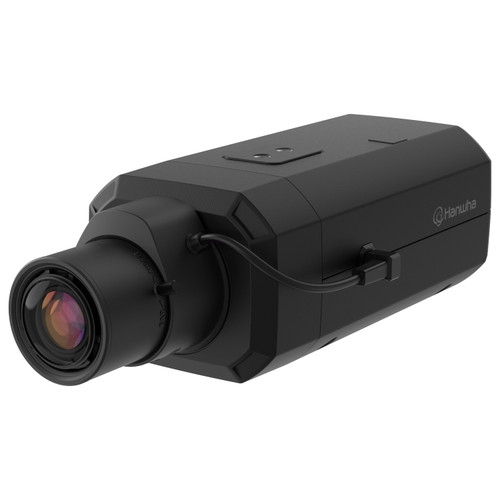
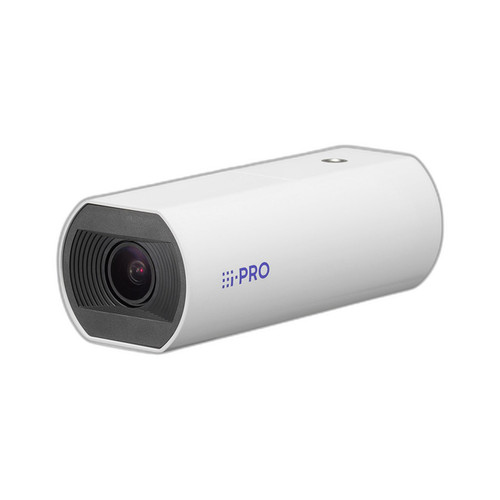
Both the Hanwha XNB-6003 and the i-PRO WV-U11301-F3 are 2MP indoor box cameras sharing a 1/2.8-inch CMOS sensor and PoE power, placing them in the same resolution class and form factor. This comparison addresses the trade-offs a systems integrator or IT buyer faces when selecting between them: Hanwha's AI-native analytics platform with flexible lens mounting versus i-PRO's FIPS 140-3 certified security architecture with a fixed focal length lens. Both support ONVIF and H.265 compression.
In This Guide
How do the imaging specs compare?
The XNB-6003 delivers a specified resolution of 1920×1080 at up to 120 fps (H.265/H.264), while the WV-U11301-F3 is specified at 2MP at 30 fps (25 fps mode also available); i-PRO does not publish a pixel-exact resolution grid in the provided specs. The XNB-6003's extremeWDR is rated at 150 dB, whereas the WV-U11301-F3's Super Dynamic WDR is rated at 120 dB. Both cameras use a 1/2.8-inch progressive CMOS sensor.
In low light, the two cameras invert their advantage depending on color versus monochrome mode. The XNB-6003 is specified at 0.007 lux color / 0.0007 lux B/W. The WV-U11301-F3 is specified at 0.07 lux color / 0.003 lux B/W (at F2.0, 1/30s and 16/30s respectively, AGC 11). On both color and B/W sensitivity the XNB-6003 shows a lower minimum illumination figure per the provided specs. Lens flexibility differs substantially: the XNB-6003 accepts C-mount and CS-mount lenses with DC auto iris, P-iris, manual, and I-CS control, making it integrator-configurable for variable focal lengths, while the WV-U11301-F3 ships with a fixed 3.2mm F2.0 lens with no alternate lens type specified.
What about installation and environment?
Both cameras are rated for indoor use only; neither IP nor IK ratings are provided in the specs for either model. The XNB-6003 operates from -10°C to +55°C (131°F upper limit), while the WV-U11301-F3 operates from -10°C to +50°C (122°F upper limit). Both are powered via PoE IEEE 802.3af; however, the XNB-6003 is specified as PoE Class 3 with a maximum draw of 12.95W and also accepts 12VDC as an alternate input. The WV-U11301-F3 is specified as PoE Class 0, with i-PRO not publishing an explicit wattage figure in the provided specs (13W is noted as an estimate). The XNB-6003 dimensions are 81×67×165mm (880g); the WV-U11301-F3 is smaller at 59×49×142mm with weight not specified. The XNB-6003 supports wall/ceiling mounting via C/CS-mount; the WV-U11301-F3 supports wall and ceiling mounting. The XNB-6003 additionally provides an RS-485 serial interface and 2 configurable alarm I/O ports; the WV-U11301-F3 does not have alarm I/O or RS-485 documented in the provided specs.
Which fits your VMS and analytics better?
Both cameras declare ONVIF compatibility. The XNB-6003 explicitly lists ONVIF Profile S, G, T, and M, plus SUNAPI and Wisenet SDK. The WV-U11301-F3 lists ONVIF Profile S, G, and T in the provided specs; Profile M is not specified. The XNB-6003 supports up to 10 streaming profiles with 3 virtual channels and unicast to 20 simultaneous users; streaming concurrency is not specified for the WV-U11301-F3.
Analytics differ in depth. The XNB-6003 provides AI-engine-based object detection classifying Person, Face, Vehicle (car/bus/truck/motorcycle/bicycle), and License Plate, plus business intelligence functions including people counting, queue management, and heatmap; it also supports virtual line crossing/direction and virtual area loitering detection. The WV-U11301-F3 provides i-VMD intelligent motion detection, scene change detection, and audio detection; vehicle classification and license plate detection are not listed in the provided specs. Both cameras include a built-in microphone and audio recording; the XNB-6003 additionally specifies a line-level audio output and selectable mic/line input with supply voltage. Edge storage on the XNB-6003 supports dual Micro SD/SDHC/SDXC slots up to 512GB each (1TB total); the WV-U11301-F3 supports microSD but slot count and capacity ceiling are not specified. Cybersecurity posture differs: the XNB-6003 carries TPM 2.0 (FIPS 140-2 Level 2) and 802.1X with EAP-TLS/LEAP/PEAP; the WV-U11301-F3 carries a FIPS 140-3 Level 3 certified SecureElement (EdgeLock SE052F by NXP) and is specified as NDAA-compliant; FIPS 140-3 Level 3 represents a higher hardware security certification than the XNB-6003's FIPS 140-2 Level 2 TPM.
Which should you choose: the XNB-6003 or the U11301-F3?
Our take: The XNB-6003 is the stronger choice when the deployment demands AI-driven object classification, high frame rates, or flexible lens selection; the WV-U11301-F3 is the stronger choice when the facility mandates FIPS 140-3 Level 3 hardware-certified cybersecurity or NDAA compliance. On imaging, the XNB-6003 specifies 150 dB WDR versus the WV-U11301-F3's 120 dB, 120 fps versus 30 fps, and lower minimum illumination (0.007 lux color vs. 0.07 lux color). The XNB-6003 also adds dual SD card slots (up to 1TB), RS-485, two alarm I/O ports, and ONVIF Profile M — none of which are documented for the WV-U11301-F3. However, for regulated environments such as government, finance, or critical infrastructure where FIPS 140-3 Level 3 and NDAA compliance are contractual requirements, the WV-U11301-F3's certified SecureElement provides a compliance credential the XNB-6003's FIPS 140-2 Level 2 TPM does not match.
Side-by-Side Comparison
Spec-for-spec, from manufacturer data.
| Specification | Hanwha XNB-6003 | i-PRO U11301-F3 |
|---|---|---|
| Resolution | 1920×1080 (2MP) | 2MP (pixel-exact grid not specified) |
| Image Sensor | 1/2.8" Progressive CMOS | 1/2.8" CMOS |
| Lens / Focal Length | C/CS-mount; DC auto iris, P-iris, Manual, I-CS (user-supplied) | 3.2mm fixed, F2.0 (factory-installed) |
| Min. Illumination (Color) | 0.007 lux | 0.07 lux (F2.0, 1/30s, AGC 11) |
| Min. Illumination (B/W) | 0.0007 lux | 0.003 lux (F2.0, 16/30s, AGC 11) |
| Wide Dynamic Range | 150 dB (extremeWDR) | 120 dB (Super Dynamic, Level 31) |
| Max Frame Rate | 120 fps | 30 fps (25 fps mode available) |
| Video Compression | H.265, H.264 (Main/Baseline/High), MJPEG | H.265, H.264, MJPEG |
| Operating Temperature | -10°C to +55°C | -10°C to +50°C |
| Power Input / PoE Class | PoE IEEE 802.3af Class 3; 12VDC alternate | PoE IEEE 802.3af Class 0; 12VDC not specified |
| Max Power Draw | 12.95W | Not specified in provided specs |
| Edge Storage | Dual Micro SD/SDHC/SDXC, up to 1TB (512GB × 2) | microSD supported; slot count and max capacity not specified |
| Alarm I/O | 2 configurable I/O ports | Not specified in provided specs |
| Serial Interface | RS-485 (multiple protocols) | Not specified in provided specs |
| Audio | Mic in / line in / built-in mic (selectable); line out | Built-in microphone; audio recording supported |
| ONVIF Profiles | Profile S, G, T, M | Profile S, G, T (Profile M not specified) |
| Cybersecurity Certification | TPM 2.0 (FIPS 140-2 Level 2); 802.1X EAP-TLS/LEAP/PEAP | FIPS 140-3 Level 3 SecureElement (EdgeLock SE052F); NDAA-compliant |
| AI / Edge Analytics | Person, Face, Vehicle (type), License Plate; people counting, queue management, heatmap | i-VMD motion detection, scene change detection, audio detection |
| Dimensions (W×H×D) | 81×67×165 mm (3.19×2.64×6.48") | 59×49×142 mm |
| Weight | 880g (1.94 lb) | Not specified in provided specs |
| Warranty | 3 years | Not specified in provided specs |
Frequently Asked Questions
Which should you choose: the XNB-6003 or the U11301-F3?
The XNB-6003 is the stronger choice when the deployment demands AI-driven object classification, high frame rates, or flexible lens selection; the WV-U11301-F3 is the stronger choice when the facility mandates FIPS 140-3 Level 3 hardware-certified cybersecurity or NDAA compliance. On imaging, the XNB-6003 specifies 150 dB WDR versus the WV-U11301-F3's 120 dB, 120 fps versus 30 fps, and lower minimum illumination (0.007 lux color vs. 0.07 lux color). The XNB-6003 also adds dual SD card slots (up to 1TB), RS-485, two alarm I/O ports, and ONVIF Profile M — none of which are documented for the WV-U11301-F3. However, for regulated environments such as government, finance, or critical infrastructure where FIPS 140-3 Level 3 and NDAA compliance are contractual requirements, the WV-U11301-F3's certified SecureElement provides a compliance credential the XNB-6003's FIPS 140-2 Level 2 TPM does not match.
Is the XNB-6003 or WV-U11301-F3 better for low-light performance?
Per the provided specifications, the XNB-6003 is specified at 0.007 lux color and 0.0007 lux B/W, while the WV-U11301-F3 is specified at 0.07 lux color and 0.003 lux B/W. The XNB-6003 shows a lower minimum illumination figure in both color and B/W modes. Note that measurement conditions (shutter speed, AGC setting, aperture) affect lux ratings, and the WV-U11301-F3's conditions are explicitly documented (F2.0, AGC 11) while the XNB-6003's are not fully detailed in the provided specs.
Which camera is better suited for a government or regulated-facility deployment?
If FIPS 140-3 Level 3 hardware certification and NDAA compliance are contractual requirements, the WV-U11301-F3 is the specified choice — it carries a FIPS 140-3 Level 3 certified SecureElement (EdgeLock SE052F by NXP) and is listed as NDAA-compliant in the provided specs. The XNB-6003 carries TPM 2.0 rated to FIPS 140-2 Level 2, which is a lower certification tier. Confirm current compliance status with the manufacturer before specifying for a regulated project.
Can I use my own lens with either of these cameras?
The XNB-6003 accepts C-mount and CS-mount lenses with DC auto iris, P-iris, manual, and I-CS iris control, giving integrators broad lens selection for variable focal lengths and iris types. The WV-U11301-F3 ships with a fixed 3.2mm F2.0 lens; alternative lens compatibility or mount type is not documented in the provided specs. Verify with i-PRO before assuming interchangeable-lens capability on the WV-U11301-F3.
Get a Second Opinion on Your Camera Choice
Share your site layout, coverage goals, and budget. Our team will validate the camera selection, flag anything we would change, and recommend products that match the use case.