
Hanwha XNB-6001 vs Hanwha XNB-6003: Specification Comparison
The Hanwha XNB-6001 and XNB-6003 are both 2MP (1920×1080) wired box cameras designed for professional IP surveillance installations. Both accept interchangeable lenses via C/CS mounts and are powered via PoE Class 3 or 12VDC. The comparison covers imaging capability, installation environment fit, and VMS/analytics integration — the three dimensions most relevant to integrators choosing between these two models at the same resolution tier.
In This Guide
How do the imaging specs compare?
The XNB-6003 carries a specified 1/2.8" progressive CMOS sensor; no equivalent sensor size is listed for the XNB-6001. Low-light performance reflects this gap: the XNB-6003 is rated at 0.007 Lux color / 0.0007 Lux B/W, while no minimum illumination figure is provided for the XNB-6001. WDR is a clear differentiator — the XNB-6001 delivers 120dB WDR, whereas the XNB-6003 offers extremeWDR at 150dB, a 30dB advantage that translates to significantly better handling of high-contrast scenes such as entryways and loading docks.
Frame rate is another material difference. The XNB-6001 is rated at 30fps standard and up to 60fps maximum. The XNB-6003 reaches 120fps maximum, making it suitable for applications requiring smooth capture of fast-moving subjects. The XNB-6001 uses SSNR V for digital noise reduction; the XNB-6003 adds WiseNR II on top of SSNR V, leveraging its onboard AI engine. Digital image stabilization is present on both, but the XNB-6003 specifies a built-in gyro sensor as its basis, while the XNB-6001 does not describe the stabilization mechanism.
What about installation and environment?
Both cameras operate over the same temperature range of -10°C to +55°C and are powered by PoE (IEEE 802.3af, Class 3) or 12VDC. However, the XNB-6001 specifies a maximum PoE draw of 6.5W and 6W on 12VDC, while the XNB-6003 lists a single combined maximum of 12.95W — nearly double — reflecting its AI processing load and Gigabit Ethernet interface. Integrators should verify switch port power budgets accordingly.
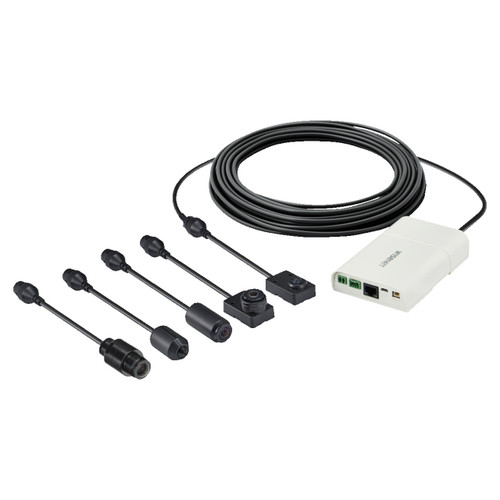
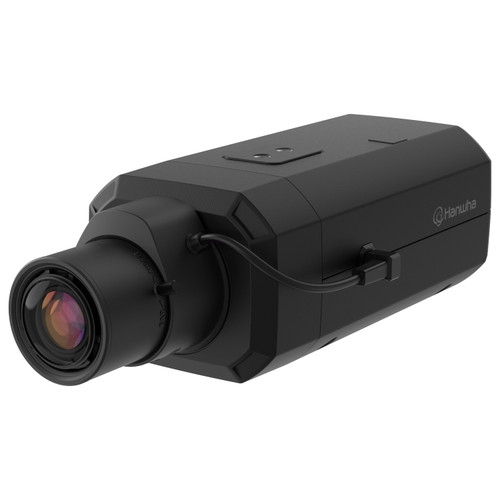
The XNB-6001 carries an IP66 rating, making it suitable for outdoor or wet-area enclosure installations. The XNB-6003 is specified as an indoor camera with no IP rating listed, restricting it to protected interior environments. Physical form factors differ as well: the XNB-6001 is lighter at 245g (0.54 lb) with dimensions of 131.1×28×86mm, while the XNB-6003 is substantially heavier at 880g (1.94 lb) and larger at 81×67×165mm, reflecting its aluminum construction versus the XNB-6001's plastic housing. The XNB-6003 carries UL 62368-1 and CE/FCC EMC certifications; no equivalent safety or EMC certifications are listed for the XNB-6001.
Which fits your VMS and analytics better?
Both cameras support ONVIF Profile S/G/T and SUNAPI, ensuring broad VMS compatibility. The XNB-6003 adds ONVIF Profile M and MQTT protocol support, and its API listing includes SUNAPI and Wisenet platform integration with explicit MQTT subscription as an alarm trigger — capabilities not listed for the XNB-6001. Security posture is stronger on the XNB-6003, which includes TPM 2.0 (FIPS 140-2 Level 2), a pre-installed Hanwha Techwin Root CA device certificate, and EAP-PEAP MSCHAPv2 in addition to EAP-TLS and EAP-LEAP. The XNB-6001 supports EAP-TLS and EAP-LEAP only.
Analytics depth diverges significantly. The XNB-6001 provides rule-based analytics: defocus detection, directional detection, fog detection, face detection, motion detection, digital auto tracking, appear/disappear, enter/exit, loitering, tampering, and virtual line. The XNB-6003 delivers AI-native classified object detection (person, face, vehicle, license plate), vehicle attribute classification (car/bus/truck/motorcycle/bicycle), plus business intelligence functions — people counting, queue management, and heatmap — none of which are present on the XNB-6001. The XNB-6001 includes a single RS-485-free interface and 1 alarm I/O pair; the XNB-6003 provides RS-485 (multiple protocols) and 2 configurable I/O ports. Edge storage doubles on the XNB-6003: two microSD slots supporting up to 1TB (512GB×2) versus the XNB-6001's single slot rated to 256GB. RAM also differs — 2GB / 512MB Flash on the XNB-6003 versus 1024MB / 256MB Flash on the XNB-6001. Both support audio in and out with identical line-level specs.
Which should you choose: the XNB-6001 or the XNB-6003?
Our take: The XNB-6001 is the stronger choice when the deployment is outdoors or in wet/dusty environments, where its IP66 rating is a hard requirement the XNB-6003 cannot meet. For indoor deployments where analytics depth, low-light performance, and cybersecurity posture drive the decision, the XNB-6003 is the more capable platform: it delivers 150dB extremeWDR versus 120dB on the XNB-6001, reaches 120fps versus a 60fps maximum, and adds AI-native person/vehicle/license plate classification plus business intelligence functions (people counting, queue management, heatmap) entirely absent on the XNB-6001. Its dual microSD slots support up to 1TB edge storage versus 256GB on the XNB-6001, and TPM 2.0 (FIPS 140-2 Level 2) satisfies enterprise and government cybersecurity requirements the XNB-6001 does not address. The tradeoff is higher power draw (12.95W vs 6.5W PoE max) and nearly four times the weight. Select the XNB-6001 for covert, weatherized, or budget-constrained indoor/outdoor runs; select the XNB-6003 for indoor AI-driven analytics and high-security environments.
Side-by-Side Comparison
Spec-for-spec, from manufacturer data.
| Specification | Hanwha XNB-6001 | Hanwha XNB-6003 |
|---|---|---|
| Resolution | 1920×1080 | 1920×1080 |
| Image Sensor | — | 1/2.8" progressive CMOS |
| Min. Illumination | — | 0.007 Lux color / 0.0007 Lux B/W |
| Wide Dynamic Range | 120dB WDR | 150dB extremeWDR |
| Max Frame Rate | 60fps | 120fps |
| Day/Night | Auto (Electrical) | Auto (ICR) |
| Digital Noise Reduction | SSNR V | WiseNR II (AI-based) + SSNR V |
| Digital Image Stabilization | Support | Support (built-in gyro sensor) |
| Video Compression | H.265/H.264 (Main/Baseline/High), MJPEG | H.265/H.264 (Main/Baseline/High), MJPEG |
| Ethernet | RJ-45 (10/100BASE-T) | Metal shielded RJ-45 (10/100/1000BASE-T) |
| ONVIF Profiles | S/G/T | S/G/T/M |
| AI / Analytics | Rule-based (motion, loitering, virtual line, face detection, etc.) | AI-native: person/face/vehicle/LP detection; people counting, queue mgmt, heatmap |
| Alarm I/O | 1 input / 1 output | 2 configurable I/O ports |
| Serial Interface | — | RS-485 (multiple protocols) |
| Edge Storage | 1× microSD/SDHC/SDXC, max 256GB | 2× microSD/SDHC/SDXC, max 1TB (512GB×2) |
| RAM / Flash | 1024MB RAM / 256MB Flash | 2GB RAM / 512MB Flash |
| Cybersecurity | HTTPS, Digest auth, IP filtering, 802.1X (EAP-TLS, EAP-LEAP) | TPM 2.0 (FIPS 140-2 L2), device cert, EAP-TLS/LEAP/PEAP MSCHAPv2, MQTT |
| IP Rating | IP66 | — |
| Environment Rating | Indoor/Outdoor (IP66) | Indoor only |
| Operating Temperature | -10°C to +55°C | -10°C to +55°C |
| Input Voltage / PoE Class | PoE IEEE 802.3af Class 3 / 12VDC | PoE IEEE 802.3af Class 3 / 12VDC |
| Power (Max) | PoE: 6.5W / 12VDC: 6W | 12.95W (combined) |
| Housing Material | Plastic | Aluminum |
| Dimensions (W×H×D) | 131.1×28×86mm (5.16×1.1×3.39") | 81×67×165mm (3.19×2.64×6.48") |
| Weight | 245g (0.54 lb) | 880g (1.94 lb) |
| Safety / EMC Certifications | — | UL 62368-1, CAN/CSA C22.2 NO.62368-1, FCC 47 CFR 15B Class A, CE/UKCA, VCCI, RCM |
| Warranty | 3-year | 3-year |
Frequently Asked Questions
Which should you choose: the XNB-6001 or the XNB-6003?
The XNB-6001 is the stronger choice when the deployment is outdoors or in wet/dusty environments, where its IP66 rating is a hard requirement the XNB-6003 cannot meet. For indoor deployments where analytics depth, low-light performance, and cybersecurity posture drive the decision, the XNB-6003 is the more capable platform: it delivers 150dB extremeWDR versus 120dB on the XNB-6001, reaches 120fps versus a 60fps maximum, and adds AI-native person/vehicle/license plate classification plus business intelligence functions (people counting, queue management, heatmap) entirely absent on the XNB-6001. Its dual microSD slots support up to 1TB edge storage versus 256GB on the XNB-6001, and TPM 2.0 (FIPS 140-2 Level 2) satisfies enterprise and government cybersecurity requirements the XNB-6001 does not address. The tradeoff is higher power draw (12.95W vs 6.5W PoE max) and nearly four times the weight. Select the XNB-6001 for covert, weatherized, or budget-constrained indoor/outdoor runs; select the XNB-6003 for indoor AI-driven analytics and high-security environments.
Is the XNB-6001 or XNB-6003 better for low-light performance?
The XNB-6003 is the only model with a published minimum illumination spec — 0.007 Lux color and 0.0007 Lux B/W — so a direct numerical comparison cannot be made. No minimum illumination figure is listed for the XNB-6001. Buyers requiring a verified low-light threshold should specify the XNB-6003; the XNB-6001's low-light floor is not documented in the provided specifications.
Can either camera be installed outdoors?
Only the XNB-6001 carries an IP66 ingress protection rating, making it suitable for outdoor or wet-area installation inside an appropriate housing. The XNB-6003 is specified as an indoor camera and no IP rating is listed for it, so it should not be deployed in outdoor or moisture-exposed locations without an additional rated enclosure.
Which camera is better if my VMS or access control platform requires MQTT or advanced cybersecurity compliance?
The XNB-6003 supports MQTT as both a protocol and an alarm trigger, and includes TPM 2.0 certified to FIPS 140-2 Level 2 with a pre-installed device certificate and EAP-PEAP MSCHAPv2 authentication — none of which are present on the XNB-6001. For environments requiring MQTT-based integrations or formal cybersecurity certifications, the XNB-6003 is the appropriate choice.
Get a Second Opinion on Your Camera Choice
Share your site layout, coverage goals, and budget. Our team will validate the camera selection, flag anything we would change, and recommend products that match the use case.