
Hanwha XNB-6000 vs i-PRO U11301-F3: Specification Comparison
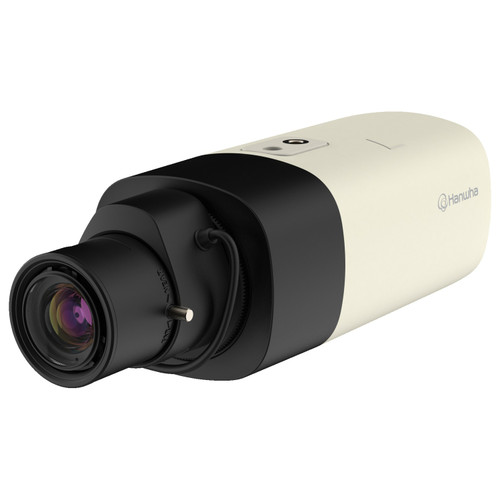
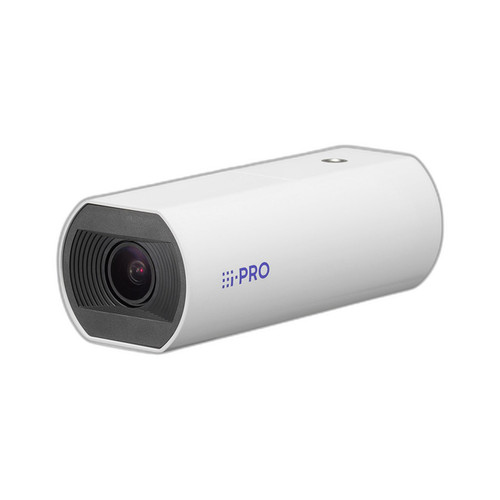
Both the Hanwha XNB-6000 and the i-PRO WV-U11301-F3 are 2MP box cameras built around 1/2.8-inch CMOS sensors, targeting fixed-scene surveillance in commercial or institutional environments. The XNB-6000 is a multi-lens, interchangeable-optic platform rated for indoor/outdoor use, while the U11301-F3 is a fixed-focal-length indoor unit with a government-grade cybersecurity certification. This comparison covers imaging performance, installation requirements, and integration fit to help installers and IT buyers choose between them.
In This Guide
How do the imaging specs compare?
Both cameras share a 1/2.8-inch CMOS sensor at 2MP resolution and a 30 fps base frame rate. The XNB-6000 extends to 60 fps maximum and delivers a 150 dB WDR rating via Hanwha's SSDR/WDR engine, with a minimum illumination of 0.01 lux color and 0.001 lux B/W using auto-ICR day/night switching. The U11301-F3 specifies 120 dB Super Dynamic WDR, with minimum illumination of 0.07 lux color and 0.003 lux B/W (both at F2.0, 16/30s shutter, AGC 11). On paper, the XNB-6000 claims a 30 dB WDR advantage and roughly 7× lower B/W illumination floor.
Lens flexibility differs significantly. The XNB-6000 accepts C-mount and CS-mount lenses and supports DC auto iris, P-iris, manual, and I-CS lens types, with optional varifocal SLA lenses (2.8–9mm). The U11301-F3 ships with a fixed 3.2mm F2.0 lens; no interchangeable-lens option is stated in the provided specifications. The XNB-6000 also includes built-in digital image stabilization via a gyro sensor, lens distortion correction (LDC), and defog support — none of these features are stated for the U11301-F3.
What about installation and environment?
The XNB-6000 carries an IP66 rating and an operating temperature range of -10°C to +55°C, making it suitable for outdoor-exposed installations. It accepts PoE (IEEE 802.3af, Class 3), 12 VDC, or 24 VAC, with a maximum draw of 7.5W. Physical dimensions are 73.1 × 66.6 × 147.8 mm and weight is 420 g. The U11301-F3 is specified as an indoor camera with an operating range of -10°C to +50°C; no IP or IK rating is stated in the provided specifications. It runs on PoE (IEEE 802.3af, Class 0) with an estimated maximum of 13W per the provided specs; its dimensions are 59 × 49 × 142 mm and weight is not stated. The XNB-6000 is the only one of the two with a confirmed weatherproofing rating.
Mounting options also differ. The XNB-6000 uses C/CS-mount optics and supports flip, mirror, and 90°/270° hallway-view rotation. The U11301-F3 supports wall and ceiling mounting; no lens rotation modes are stated in its provided specifications. The XNB-6000 includes one alarm input and one alarm output; no alarm I/O is stated for the U11301-F3. The XNB-6000 also provides an RS-485/422 serial interface for PTZ or external device control; this is not listed for the U11301-F3.
Which fits your VMS and analytics better?
On VMS integration, the XNB-6000 declares ONVIF Profile S, G, and T compliance plus Hanwha's SUNAPI HTTP API and Wisenet open platform. The U11301-F3 also supports ONVIF Profile S, G, and T per its provided specifications. Both cameras support H.265, H.264, and MJPEG compression with HTTPS/SSL and 802.1X authentication. The U11301-F3 adds a FIPS 140-3 Level 3 certified SecureElement (NXP EdgeLock SE052F), signed firmware, and secure boot — features not present in the XNB-6000's provided specifications — making it the stronger fit for federally regulated or NDAA-sensitive deployments.
For edge analytics, the XNB-6000 offers a broader on-camera library: defocus detection, directional detection, fog detection, face detection, digital auto tracking, appear/disappear, enter/exit, loitering, tampering, virtual line, audio detection, and sound classification. The U11301-F3 lists i-VMD intelligent motion detection, scene change detection, and audio detection. Both cameras support audio input and output, with the XNB-6000 offering a selectable mic-in/line-in/built-in mic and line out, and the U11301-F3 including a built-in microphone. Edge storage is supported on both: the XNB-6000 accepts two microSD/SDHC/SDXC slots up to 512 GB combined; microSD support is listed for the U11301-F3 but no capacity ceiling is stated in the provided specifications.
Which should you choose: the XNB-6000 or the U11301-F3?
Our take: The XNB-6000 is the stronger choice when an installation demands outdoor-rated flexibility, a broad analytics suite, or interchangeable optics. Its IP66 rating covers environments where the U11301-F3's unspecified weatherproofing does not apply. Its 150 dB WDR outpaces the U11301-F3's 120 dB Super Dynamic rating, and its 0.001 lux B/W minimum illumination sits below the U11301-F3's 0.003 lux B/W floor — meaningful in very low-light scenes. The XNB-6000 also supports dual microSD slots up to 512 GB versus the U11301-F3's unspecified capacity, and its analytics catalog is substantially broader. Conversely, the U11301-F3 is the justified choice for regulated indoor facilities requiring FIPS 140-3 Level 3 cryptographic hardware, NDAA compliance, signed firmware, and secure boot — capabilities absent from the XNB-6000's stated specifications. Specify the U11301-F3 where cybersecurity certification is a procurement mandate; specify the XNB-6000 everywhere else.
Side-by-Side Comparison
Spec-for-spec, from manufacturer data.
| Specification | Hanwha XNB-6000 | i-PRO U11301-F3 |
|---|---|---|
| Resolution | 2MP | 2MP |
| Image Sensor | 1/2.8" CMOS | 1/2.8" CMOS |
| Lens / Focal Length | C/CS-mount interchangeable (DC auto iris, P-iris, manual, I-CS) | 3.2mm fixed, F2.0 |
| Min Illumination (Color) | 0.01 lux | 0.07 lux |
| Min Illumination (B/W) | 0.001 lux | 0.003 lux |
| Wide Dynamic Range | 150 dB | 120 dB Super Dynamic |
| Max Frame Rate | 60 fps | 30 fps (25 fps mode available) |
| Video Compression | H.265, H.264 (Main/Baseline/High), MJPEG | H.265, H.264, MJPEG |
| IP Rating | IP66 | — (not stated) |
| Operating Temperature | -10°C to +55°C | -10°C to +50°C |
| Power Input / PoE Class | PoE 802.3af Class 3; 12 VDC; 24 VAC | PoE 802.3af Class 0 |
| Max Power Draw | 7.5W | 13W (estimated) |
| Edge Storage | Dual microSD/SDHC/SDXC, max 512 GB | microSD supported; max capacity not stated |
| Audio | Selectable mic-in / line-in / built-in mic; line out | Built-in microphone; audio recording supported |
| Alarm I/O | 1 input / 1 output | — (not stated) |
| Cybersecurity Certification | — | FIPS 140-3 Level 3; NDAA-compliant; signed firmware; secure boot |
| ONVIF Profiles | Profile S, G, T | Profile S, G, T |
| Dimensions (W × H × D) | 73.1 × 66.6 × 147.8 mm | 59 × 49 × 142 mm |
| Weight | 420 g (0.93 lb) | — (not stated) |
| Environment Rating | Indoor / Outdoor | Indoor |
| Warranty | 3-year | — (not stated) |
Frequently Asked Questions
Which should you choose: the XNB-6000 or the U11301-F3?
The XNB-6000 is the stronger choice when an installation demands outdoor-rated flexibility, a broad analytics suite, or interchangeable optics. Its IP66 rating covers environments where the U11301-F3's unspecified weatherproofing does not apply. Its 150 dB WDR outpaces the U11301-F3's 120 dB Super Dynamic rating, and its 0.001 lux B/W minimum illumination sits below the U11301-F3's 0.003 lux B/W floor — meaningful in very low-light scenes. The XNB-6000 also supports dual microSD slots up to 512 GB versus the U11301-F3's unspecified capacity, and its analytics catalog is substantially broader. Conversely, the U11301-F3 is the justified choice for regulated indoor facilities requiring FIPS 140-3 Level 3 cryptographic hardware, NDAA compliance, signed firmware, and secure boot — capabilities absent from the XNB-6000's stated specifications. Specify the U11301-F3 where cybersecurity certification is a procurement mandate; specify the XNB-6000 everywhere else.
Is the XNB-6000 or U11301-F3 better for low-light performance?
Based on the provided specifications, the XNB-6000 has the lower minimum illumination floor: 0.001 lux B/W versus 0.003 lux B/W for the U11301-F3, both using auto day/night ICR. The XNB-6000 also claims a higher WDR rating of 150 dB compared to 120 dB Super Dynamic on the U11301-F3. These figures suggest an imaging advantage for the XNB-6000 in mixed or very low-light scenes, though real-world performance depends on the lens selected and scene conditions.
Can the XNB-6000 be used outdoors and the U11301-F3 cannot?
The XNB-6000 carries a confirmed IP66 rating and is listed as suitable for outdoor environments in its provided specifications. The U11301-F3 is specified as an indoor camera, and no IP or IK rating is stated in its provided specifications. Installers deploying in any outdoor or weather-exposed location should specify the XNB-6000 or verify independent weatherproofing data for the U11301-F3 before use.
Which camera is better suited for government or regulated-facility deployments?
The U11301-F3 is explicitly specified with a FIPS 140-3 Level 3 certified SecureElement (NXP EdgeLock SE052F), NDAA compliance, signed firmware, and secure boot — all features required or strongly preferred in many federal, defense, and regulated institutional procurements. None of these certifications are stated in the XNB-6000's provided specifications. For facilities where these are procurement requirements, the U11301-F3 is the appropriate choice.
Get a Second Opinion on Your Camera Choice
Share your site layout, coverage goals, and budget. Our team will validate the camera selection, flag anything we would change, and recommend products that match the use case.