
Hanwha XNB-6000 vs Hanwha XNB-6003: Specification Comparison
Both the Hanwha XNB-6000 and XNB-6003 are 2MP wired box cameras in the same resolution class, sharing a C/CS-mount form factor, PoE Class 3 power, and Wisenet-platform integration. Buyers cross-shopping them are typically choosing between an established general-purpose outdoor-capable box camera and a newer AI-native indoor model with higher frame rates and expanded analytics. This comparison covers imaging performance, installation environment, and VMS/analytics integration, drawing exclusively from the specifications provided for each model.
In This Guide
How do the imaging specs compare?
Both cameras use a 1/2.8" CMOS sensor at 2MP (1920×1080) and deliver 150dB Wide Dynamic Range — labeled plain WDR on the XNB-6000 and extremeWDR on the XNB-6003. Low-light sensitivity differs measurably: the XNB-6000 specifies 0.01 Lux color / 0.001 Lux B/W, while the XNB-6003 specifies 0.007 Lux color / 0.0007 Lux B/W, giving the XNB-6003 a roughly 30% improvement in minimum illumination in both color and monochrome modes. Both cameras engage Auto ICR for day/night switching.
Frame rate is a sharper differentiator. The XNB-6000 is rated at 30fps standard with a maximum of 60fps. The XNB-6003 is rated at 120fps standard and maximum, which is significant for applications requiring high-motion capture such as cashier lanes or turnstiles. Noise reduction also advances on the XNB-6003: it adds WiseNR II (AI-engine-based) alongside SSNR V, whereas the XNB-6000 carries SSNR V only. Both support LDC, defog, digital image stabilization via built-in gyro, and the same lens mount types (C/CS, DC auto iris, P-iris, Manual, I-CS). The XNB-6003 additionally specifies Fill/Stretch modes for LDC.
What about installation and environment?
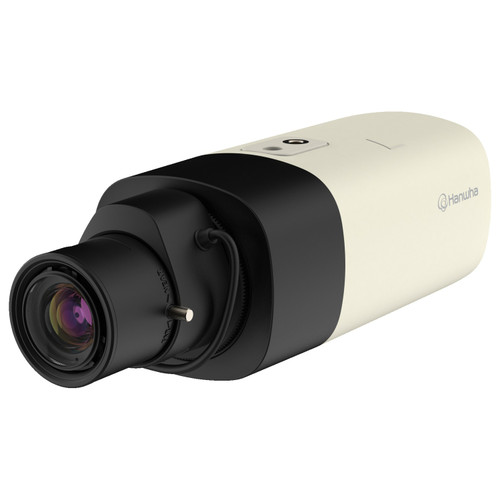
The XNB-6000 carries an IP66 weatherproof rating and is listed for outdoor environments, making it suitable for covered exterior deployments. The XNB-6003 specifies no IP rating in the provided specs and is listed for indoor environments only — installers should not assume outdoor suitability for the XNB-6003 without confirming an IP rating from the manufacturer. Neither model lists an IK impact rating in the provided specifications.
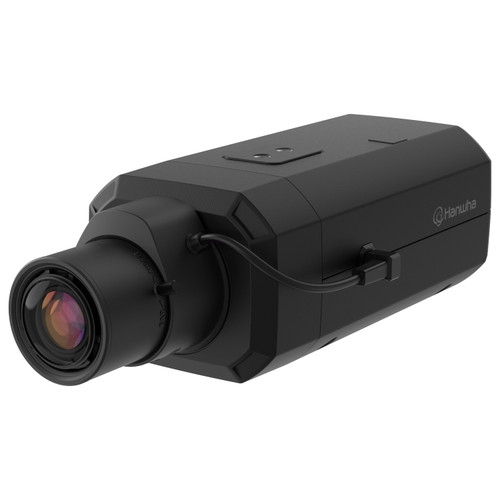
Both cameras are powered by PoE IEEE 802.3af Class 3 and accept 12VDC; the XNB-6000 additionally accepts 24VAC. Maximum power draw differs: the XNB-6000 draws up to 7.5W versus 12.95W for the XNB-6003. Operating temperature range is identical for both: -10°C to +55°C. The XNB-6003 is heavier (880g / 1.94 lb) and larger (81×67×165mm) versus the XNB-6000 (73.1×66.6×147.8mm, 420g / 0.93 lb). The XNB-6000 uses a standard RJ-45 (10/100BASE-T); the XNB-6003 upgrades to a metal-shielded RJ-45 (10/100/1000BASE-T), providing Gigabit Ethernet.
Which fits your VMS and analytics better?
The XNB-6000 supports ONVIF Profile S/G/T, SUNAPI, and Wisenet open platform. The XNB-6003 extends this to ONVIF Profile S/G/T/M, adding the Media2 profile for richer metadata streams — relevant when integrating AI-classified object metadata into a VMS. Analytics depth is substantially greater on the XNB-6003: it delivers AI-engine-based classified object detection (Person, Face, Vehicle, License Plate), vehicle attribute classification (car/bus/truck/motorcycle/bicycle), plus business intelligence features (people counting, queue management, heatmap). The XNB-6000 provides event-based analytics (defocus detection, directional detection, fog detection, face detection, motion detection, digital auto tracking, appear/disappear, enter/exit, loitering, tampering, virtual line, audio detection, sound classification) without AI engine classification.
On-board storage doubles on the XNB-6003: 2-slot microSD up to 1TB (512GB×2) versus 512GB (256GB×2) on the XNB-6000. RAM also doubles — 2GB RAM / 512MB Flash on the XNB-6003 versus 1GB RAM / 256MB Flash on the XNB-6000. Security posture is stronger on the XNB-6003, which adds TPM 2.0 (FIPS 140-2 Level 2), a pre-installed Hanwha Techwin Root CA device certificate, and EAP-PEAP MSCHAPv2 alongside EAP-TLS and EAP-LEAP. The XNB-6003 also adds MQTT support (protocol and alarm events) and WiseStream III. Alarm I/O is 1-in/1-out on the XNB-6000 and 2 configurable I/O ports on the XNB-6003. The RS-485/422 serial interface on the XNB-6000 is listed as RS-485 only on the XNB-6003. Both support audio in (selectable mic/line/built-in) and line out, with the XNB-6003 specifying output level (Max. 1Vrms) and input impedance (2K Ohm). Both carry a 3-year warranty.
Which should you choose: the XNB-6000 or the XNB-6003?
Our take: The XNB-6003 is the stronger choice when the deployment is indoors, demands AI-classified object detection, or requires frame rates above 60fps. Against the XNB-6000, the XNB-6003 delivers 120fps versus 60fps maximum, roughly 30% better minimum illumination (0.007/0.0007 Lux versus 0.01/0.001 Lux), and doubles on-board edge storage to 1TB from 512GB — while adding AI-native person, vehicle, and license plate classification plus business intelligence (people counting, queue management, heatmap) that the XNB-6000 does not provide. However, the XNB-6000 is the correct choice for outdoor or weatherproof-rated installations: it carries an IP66 rating and 24VAC input not present on the XNB-6003, and its lower 7.5W draw (versus 12.95W) may suit PoE switch budgets more easily. Buyers choosing the XNB-6003 should confirm IP rating with Hanwha before any exterior deployment.
Side-by-Side Comparison
Spec-for-spec, from manufacturer data.
| Specification | Hanwha XNB-6000 | Hanwha XNB-6003 |
|---|---|---|
| Resolution | 2MP (1920×1080) | 2MP (1920×1080) |
| Image Sensor | 1/2.8" CMOS | 1/2.8" progressive CMOS |
| Max Frame Rate | 60fps | 120fps |
| Standard Frame Rate | 30fps | 120fps |
| Min. Illumination (Color / B/W) | 0.01 Lux / 0.001 Lux | 0.007 Lux / 0.0007 Lux |
| Wide Dynamic Range | 150dB | extremeWDR 150dB |
| Lens Mount / Type | C/CS; DC auto iris, P-iris, Manual, I-CS | C/CS; DC auto iris, P-iris, Manual, I-CS |
| IP Rating | IP66 | — (not specified) |
| Environment Rating | Outdoor | Indoor |
| Power Input | PoE 802.3af Class 3, 12VDC, 24VAC | PoE 802.3af Class 3, 12VDC |
| Max Power Draw | 7.5W | 12.95W |
| Ethernet | RJ-45 10/100BASE-T | Metal shielded RJ-45 10/100/1000BASE-T |
| Edge Storage (Max) | 2× microSD, max 512GB (256GB×2) | 2× microSD, max 1TB (512GB×2) |
| RAM / Flash | 1GB RAM / 256MB Flash | 2GB RAM / 512MB Flash |
| ONVIF Profiles | S/G/T | S/G/T/M |
| AI / Edge Analytics | Event-based (motion, directional, loitering, virtual line, etc.) | AI-classified: Person, Face, Vehicle, License Plate; People counting, Queue mgmt, Heatmap |
| Security | HTTPS, Digest, IP filtering, 802.1X (EAP-TLS, EAP-LEAP) | TPM 2.0 (FIPS 140-2 L2), HTTPS, Digest, IP filtering, 802.1X (EAP-TLS, EAP-LEAP, EAP-PEAP), Device Certificate |
| Alarm I/O | 1 input / 1 output | 2 configurable I/O ports |
| Serial Interface | RS-485/422 | RS-485 |
| Housing Material | Plastic | Aluminum |
| Dimensions (W×H×D) | 73.1×66.6×147.8mm (2.88"×2.62"×5.82") | 81×67×165mm (3.19"×2.64"×6.48") |
| Weight | 420g (0.93 lb) | 880g (1.94 lb) |
| Operating Temperature | -10°C to +55°C | -10°C to +55°C |
| Warranty | 3 years | 3 years |
Frequently Asked Questions
Which should you choose: the XNB-6000 or the XNB-6003?
The XNB-6003 is the stronger choice when the deployment is indoors, demands AI-classified object detection, or requires frame rates above 60fps. Against the XNB-6000, the XNB-6003 delivers 120fps versus 60fps maximum, roughly 30% better minimum illumination (0.007/0.0007 Lux versus 0.01/0.001 Lux), and doubles on-board edge storage to 1TB from 512GB — while adding AI-native person, vehicle, and license plate classification plus business intelligence (people counting, queue management, heatmap) that the XNB-6000 does not provide. However, the XNB-6000 is the correct choice for outdoor or weatherproof-rated installations: it carries an IP66 rating and 24VAC input not present on the XNB-6003, and its lower 7.5W draw (versus 12.95W) may suit PoE switch budgets more easily. Buyers choosing the XNB-6003 should confirm IP rating with Hanwha before any exterior deployment.
Is the XNB-6000 or XNB-6003 better for low-light performance?
The XNB-6003 has a measurable edge: its specified minimum illumination is 0.007 Lux color / 0.0007 Lux B/W, compared to 0.01 Lux color / 0.001 Lux B/W on the XNB-6000. Both use Auto ICR for day/night switching, but the XNB-6003 also adds WiseNR II AI-based noise reduction on top of SSNR V, which the XNB-6000 carries alone.
Can I install the XNB-6003 outdoors like the XNB-6000?
Based on the specifications provided, no. The XNB-6000 carries an IP66 weatherproof rating and is listed for outdoor environments. The XNB-6003 is listed as an indoor camera and no IP rating appears in the provided specifications. Installers should verify with Hanwha before deploying the XNB-6003 in any outdoor or wet location.
Which camera is better suited for a VMS with AI metadata or business intelligence requirements?
The XNB-6003 is the purpose-built choice. It provides AI-engine-based classification of persons, faces, vehicles (with type attributes), and license plates, plus business intelligence functions including people counting, queue management, and heatmap — none of which are available on the XNB-6000. It also supports ONVIF Profile M (for AI metadata streaming) and MQTT, giving more integration options for modern VMS and IoT platforms.
Get a Second Opinion on Your Camera Choice
Share your site layout, coverage goals, and budget. Our team will validate the camera selection, flag anything we would change, and recommend products that match the use case.