
Hanwha QRN-1630S vs Hanwha XRN-1620B2: Specification Comparison
Both the Hanwha QRN-1630S and XRN-1620B2 are 16-channel NVRs running embedded Linux, supporting SUNAPI and ONVIF protocols, and targeting professional IP surveillance installations. The QRN-1630S is a 1U PoE-integrated unit with dual HDMI outputs, while the XRN-1620B2 is a rackmount-class unit with significantly expanded storage capacity and higher maximum input resolution. Buyers are typically choosing between built-in PoE switching convenience versus raw recording horsepower and storage scalability.
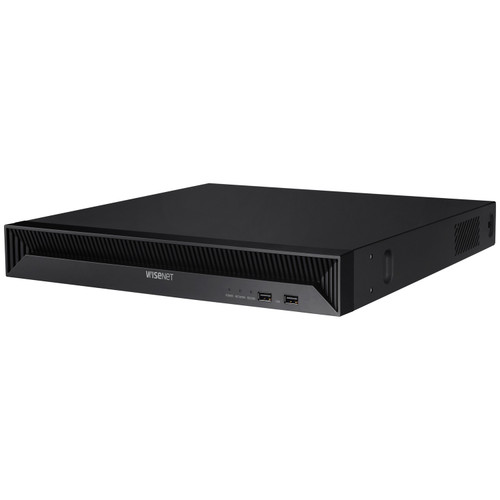
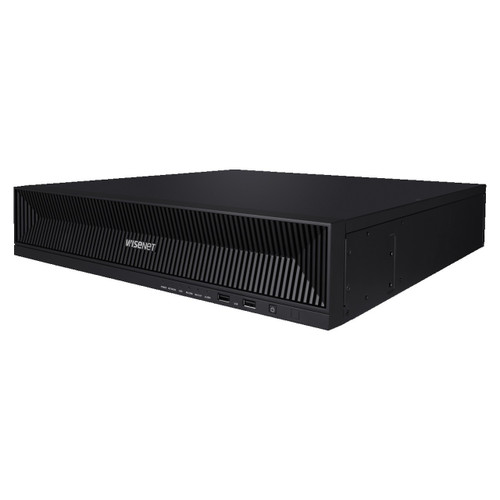
In This Guide
- Which NVR offers more recording capacity and throughput for growing deployments?
- How do built-in PoE, display outputs, and physical form factor compare between these units?
- Which unit provides broader integration, management, and security features?
- Which should you choose: the QRN-1630S or the XRN-1620B2?
- Side-by-Side Specs
- FAQ
Which NVR offers more recording capacity and throughput for growing deployments?
Recording bandwidth differs meaningfully: the XRN-1620B2 supports a maximum aggregate of 140Mbps, versus 128Mbps on the QRN-1630S — a 9.4% advantage that matters when all 16 channels run high-bitrate streams simultaneously.
Maximum input resolution is a sharper divide. The XRN-1620B2 accepts camera inputs up to 32MP, while the QRN-1630S tops out at 8MP. For deployments integrating next-generation multi-megapixel or 12K sensors, only the XRN-1620B2 is specification-compatible.
Storage capacity is the starkest difference. The XRN-1620B2 provides 8 SATA bays supporting up to 80TB (8 × 10TB drives). The QRN-1630S provides only 2 SATA bays supporting up to 20TB. For retention-sensitive applications — retail analytics, casino, or critical infrastructure with 30–90 day requirements — the XRN-1620B2's fourfold storage advantage is decisive.
Simultaneous remote playback also favors the XRN-1620B2: it allows up to 16 channels per remote user (max 64CH across users), versus 8 channels per remote user (max 40CH) on the QRN-1630S.
How do built-in PoE, display outputs, and physical form factor compare between these units?
The QRN-1630S includes 16 integrated PoE+ (802.3at) RJ-45 ports with a 130W PoE budget, plus one 1Gbps LAN/WAN uplink. This eliminates the need for a separate PoE switch in deployments of up to 16 cameras, reducing rack space and infrastructure cost. The XRN-1620B2 has no built-in PoE; its Ethernet interface consists of two 1Gbps RJ-45 LAN/WAN ports only, requiring an external managed PoE switch for camera connectivity.
Display output configurations diverge. The QRN-1630S provides two HDMI ports — HDMI1 at 3840×2160 (30Hz) and HDMI2 at 1920×1080 (60Hz) — enabling simultaneous dual-monitor operation including a 4K primary display and a 1080p secondary. The XRN-1620B2 provides one HDMI port (3840×2160 at 30Hz) and one VGA port (1920×1080 at 60Hz), also enabling simultaneous dual-monitor use, but VGA is an analog interface that may not suit all display environments.
Physical size and weight differ substantially. The QRN-1630S measures 370.0 × 50.7 × 320mm and weighs 2.87kg — a compact 1U-class desktop/rackmount form. The XRN-1620B2 measures 440 × 89.8 × 428.4mm and weighs 5.71kg, reflecting its 8-bay chassis. Maximum power consumption is also lower on the XRN-1620B2 at 130W (spec'd flat), versus up to 200W on the QRN-1630S when two HDDs are installed and all 16 PoE ports are loaded.
Which unit provides broader integration, management, and security features?
Both NVRs share the same core protocol stack: IPv4/IPv6, RTSP, RTP, HTTPS, SNMP, ONVIF Profile-S, SUNAPI (server and client), Hanwha DDNS, and 802.1x port authentication. Security posture is identical across both units per spec: IP address filtering, user access logging, device certificate (Hanwha Techwin Root CA), and signed firmware.
PTZ controller support is broader on the XRN-1620B2, which adds hardware controller compatibility (SPC-2000) alongside GUI and webviewer control. The QRN-1630S lists only GUI and webviewer PTZ control. Similarly, system control on the XRN-1620B2 includes mouse, keyboard, web, and the SPC-2000 controller; the QRN-1630S lists mouse, keyboard, and web only.
The XRN-1620B2 explicitly lists AI Search with Object Attribute compatibility for Wisenet AI cameras. The QRN-1630S spec does not list this capability. Web viewer OS support also differs slightly: the QRN-1630S lists Windows 10 and macOS 11, while the XRN-1620B2 lists Windows 10 and macOS 10.13 — both support Chrome, Edge, and Safari. Front-panel indicators are more comprehensive on the XRN-1620B2 (HDD, Alarm, Power, Record, Backup, Network) versus the QRN-1630S (Power, Record, Network only). USB ports: the XRN-1620B2 provides three (2× USB 2.0 front, 1× USB 3.0 rear); the QRN-1630S provides two (2× USB 2.0 front).
Which should you choose: the QRN-1630S or the XRN-1620B2?
Our take: The XRN-1620B2 is the stronger choice when storage depth, maximum camera resolution, and long-term scalability are the primary requirements. It supports 32MP input versus the QRN-1630S's 8MP ceiling, records at 140Mbps versus 128Mbps, and provides 8 SATA bays for up to 80TB versus 2 bays and 20TB — a fourfold storage advantage critical for high-retention or high-channel-density deployments. It also adds AI Search compatibility, SPC-2000 hardware controller support, and an additional rear USB 3.0 port. Conversely, the QRN-1630S is the stronger choice for cost-contained, space-constrained installations where cameras connect directly to the NVR: its 16 integrated PoE+ ports with 130W budget eliminate a separate switch, and its dual HDMI digital outputs suit monitoring rooms without legacy VGA displays. Installers deploying 16 Wisenet cameras in a single-closet setup benefit from the QRN-1630S's all-in-one convenience, while enterprise and multi-site operators with high-MP cameras and 30-plus-day retention requirements should select the XRN-1620B2.
Side-by-Side Comparison
Spec-for-spec, from manufacturer data.
| Specification | Hanwha QRN-1630S | Hanwha XRN-1620B2 |
|---|---|---|
| Product Type | NVR | NVR |
| Max Camera Inputs | 16CH | 16CH |
| Max Input Resolution | 8MP | 32MP |
| Recording Bandwidth | 128Mbps | 140Mbps |
| Playback Bandwidth | 32Mbps | 32Mbps |
| Compression Codecs | H.265, H.264, MJPEG | H.265, H.264, MJPEG |
| HDD Bays / Max Storage | 2× SATA / 20TB | 8× SATA / 80TB |
| Built-in PoE Ports | 16× PoE+ RJ-45 (130W budget) | — |
| LAN/WAN Uplinks | 1× 1Gbps RJ-45 | 2× 1Gbps RJ-45 |
| Display Outputs | HDMI1 4K@30Hz + HDMI2 1080p@60Hz | HDMI 4K@30Hz + VGA 1080p@60Hz |
| Max Power Consumption | 200W (with 2HDD, PoE ON) | 130W |
| USB Ports | 2× USB 2.0 (front) | 2× USB 2.0 (front) + 1× USB 3.0 (rear) |
| PTZ Controller Support | GUI, Webviewer | GUI, Webviewer, SPC-2000 |
| AI Search | — | Object Attribute (Wisenet AI cameras) |
| Simultaneous Remote Playback | 8CH per user / 40CH max | 16CH per user / 64CH max |
| Dimensions (W×H×D) | 370.0 × 50.7 × 320.0 mm | 440.0 × 89.8 × 428.4 mm |
| Weight | 2.87 kg (6.33 lb) | 5.71 kg (12.59 lb) |
| Operating Temperature | 0°C to +40°C | 0°C to +40°C |
Frequently Asked Questions
Which should you choose: the QRN-1630S or the XRN-1620B2?
The XRN-1620B2 is the stronger choice when storage depth, maximum camera resolution, and long-term scalability are the primary requirements. It supports 32MP input versus the QRN-1630S's 8MP ceiling, records at 140Mbps versus 128Mbps, and provides 8 SATA bays for up to 80TB versus 2 bays and 20TB — a fourfold storage advantage critical for high-retention or high-channel-density deployments. It also adds AI Search compatibility, SPC-2000 hardware controller support, and an additional rear USB 3.0 port. Conversely, the QRN-1630S is the stronger choice for cost-contained, space-constrained installations where cameras connect directly to the NVR: its 16 integrated PoE+ ports with 130W budget eliminate a separate switch, and its dual HDMI digital outputs suit monitoring rooms without legacy VGA displays. Installers deploying 16 Wisenet cameras in a single-closet setup benefit from the QRN-1630S's all-in-one convenience, while enterprise and multi-site operators with high-MP cameras and 30-plus-day retention requirements should select the XRN-1620B2.
Is the QRN-1630S or XRN-1620B2 better for larger deployments with long video retention?
The XRN-1620B2 is better suited for larger or retention-heavy deployments. It supports up to 80TB across 8 SATA bays compared to the QRN-1630S's 20TB across 2 bays, and it accepts camera inputs up to 32MP versus 8MP on the QRN-1630S. Its 140Mbps recording bandwidth also provides additional headroom over the QRN-1630S's 128Mbps ceiling.
Do I still need a separate PoE switch if I buy the XRN-1620B2?
Yes. The XRN-1620B2 has no built-in PoE ports — it provides two 1Gbps LAN/WAN RJ-45 uplinks only, so you will need an external PoE switch to power and connect IP cameras. The QRN-1630S includes 16 integrated PoE+ (802.3at) ports with a 130W budget, eliminating the need for a separate switch in most 16-camera installations.
Can both NVRs output to two monitors simultaneously?
Yes, both support dual-monitor output, but the interface types differ. The QRN-1630S provides two HDMI ports (4K@30Hz primary, 1080p@60Hz secondary). The XRN-1620B2 provides one HDMI port (4K@30Hz) and one VGA port (1080p@60Hz). If your monitoring station uses only digital displays, the QRN-1630S's all-HDMI configuration may be preferable; if a legacy VGA monitor is in use, the XRN-1620B2's VGA output is directly compatible.
Get a Second Opinion on Your Camera Choice
Share your site layout, coverage goals, and budget. Our team will validate the camera selection, flag anything we would change, and recommend products that match the use case.