
Hanwha QNO-8080R vs i-PRO X15501-Z1L: Specification Comparison
Both the Hanwha QNO-8080R and i-PRO WV-X15501-Z1L are 5MP outdoor IP bullet cameras aimed at perimeter and general surveillance applications. Buyers evaluating either model are typically weighing varifocal flexibility against optical zoom reach, PoE class requirements, analytics depth, and ecosystem fit. This comparison draws exclusively on the manufacturer-provided specifications for each unit to help integrators and IT buyers make an informed selection without relying on marketing claims.
In This Guide
How do the imaging specs compare?
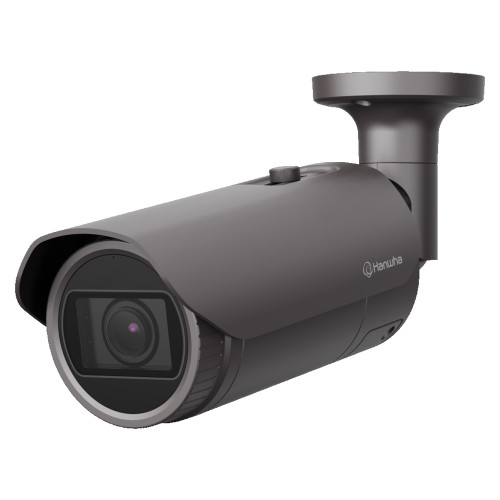
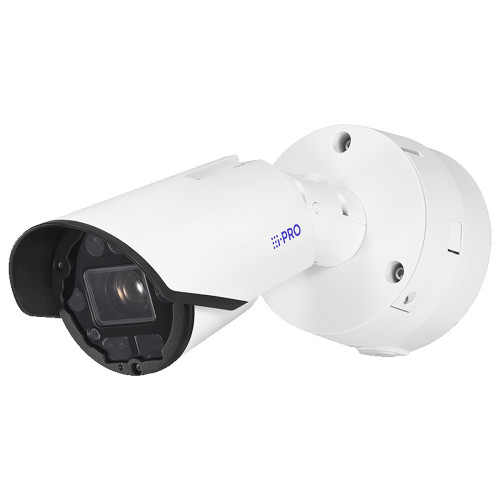
The QNO-8080R uses a 1/2.8" CMOS sensor delivering 2592×1944 (5MP) at 30fps, with a motorized varifocal lens spanning 3.2–10mm (3.1× zoom ratio) and a maximum aperture of F1.6 at the wide end. Its horizontal field of view runs from 101° (wide) down to approximately 31° (tele). Minimum illumination is rated at 0.15 Lux in color mode and 0 Lux with the 850nm IR LEDs active, which provide a stated IR range of 30m (98.4ft). WDR is specified at 120dB. The i-PRO WV-X15501-Z1L is also a 5MP outdoor bullet, but its datasheet entry lists a fixed 4.7mm focal length alongside a separately listed 10× optical zoom—these two values are not fully reconciled in the provided specs, so buyers should confirm the actual optical configuration with i-PRO before purchase. IR is described as OptimizedIR at 850nm; specific IR range distance and minimum illumination figures are not present in the provided specification set.
On WDR, the QNO-8080R gives a hard number—120dB—while the i-PRO spec sheet uses the label 'Forensic WDR' without a dB rating in the supplied data. The QNO-8080R's DC auto iris, ICR-based day/night switching, and SSNR digital noise reduction are fully documented. The i-PRO lists image stabilization and OptimizedIR as features, and its broader operating temperature range (−40°C to +60°C versus the QNO-8080R's −30°C to +55°C) may indicate a more ruggedized optical assembly, though underlying sensor size is not specified in the provided i-PRO data.
What about installation and environment?
Both cameras carry IP66 weatherproofing and IK10 vandal resistance ratings, making both suitable for exposed outdoor mounting. The QNO-8080R is powered by PoE IEEE 802.3af (Class 3), drawing a maximum of 9.5W and a typical 7.3W—compatible with standard PoE switches without budget PoE or mid-span injectors. The i-PRO WV-X15501-Z1L specifies PoE++ (802.3bt, Class 4), meaning it requires a PoE++ capable switch or injector; installers must budget for compatible infrastructure. The QNO-8080R operating temperature range is −30°C to +55°C; the i-PRO is rated −40°C to +60°C, offering a wider thermal envelope on both ends.
The QNO-8080R's physical dimensions are ø91×322.9mm at 1,190g (2.62 lb), constructed from aluminum in a dark grey housing. Pan/tilt/rotate adjustment ranges are documented at 0°–360° / 0°–100° / 0°–360°. The i-PRO lists wall and bracket mount types; its dimensions are noted as variable depending on sunshade position, and weight is not present in the provided spec data. The QNO-8080R also lists an optional back-box accessory (SBO-126B). The i-PRO spec notes NEMA 4X compliance in the marketing tagline, though this does not appear explicitly in its structured spec fields.
Which fits your VMS and analytics better?
The QNO-8080R supports ONVIF Profile S/G/T, Hanwha's SUNAPI (HTTP API), and the Wisenet open platform. On-board analytics include motion detection, tampering, defocus detection, virtual area (intrusion/enter/exit), and virtual line (crossing/direction). It provides one alarm input and one alarm output, with edge storage up to 128GB via microSD/SDXC. Audio is not listed in the provided QNO-8080R specs. The i-PRO WV-X15501-Z1L supports ONVIF Profile S/T/G and is explicitly listed as compatible with Milestone XProtect and Axis Camera Station in its spec data—a detail absent from the QNO-8080R's provided specs. i-PRO's analytics cover intrusion detection, line crossing, and object classification, and the unit lists audio support with a built-in microphone, expanding its use in applications requiring audio capture. Both cameras support microSD edge storage; the i-PRO's maximum SD capacity is not specified in the provided data.
Security hardening documentation is more comprehensive in the QNO-8080R spec set: it lists 802.1X authentication (EAP-TLS, EAP-LEAP, EAP-PEAP MSCHAPv2), SRTP, WSS, SD card partition encryption, device certificate (Hanwha Private Root CA), digest authentication, and brute-force attack prevention. The i-PRO specifies signed firmware and secure boot as security features. Both list HTTPS encryption. The i-PRO's operating system is listed as Android in the provided spec data; implications for VMS client or edge app deployment should be confirmed with the manufacturer.
Which should you choose: the QNO-8080R or the X15501-Z1L?
Our take: The QNO-8080R is the stronger choice when the installer needs a fully documented imaging chain, known PoE Class 3 power budget, and a richer on-paper security posture at a standard PoE infrastructure cost. Its 120dB WDR rating, 0.15 Lux / 0 Lux IR sensitivity, and 30m IR range are concretely specified, while the i-PRO's equivalent figures are absent from the provided data. The QNO-8080R's PoE Class 3 (max 9.5W) is compatible with any standard 802.3af switch, whereas the i-PRO's PoE++ Class 4 requirement adds infrastructure cost or complexity. Conversely, the i-PRO WV-X15501-Z1L is the preferable pick when audio capture is required (built-in mic, documented audio input), when the site demands a wider operating temperature range (−40°C to +60°C vs. −30°C to +55°C), or when the VMS environment is Milestone XProtect or Axis Camera Station, for which i-PRO lists explicit compatibility. Buyers should obtain the full i-PRO datasheet to resolve the focal length ambiguity before finalizing either selection.
Side-by-Side Comparison
Spec-for-spec, from manufacturer data.
| Specification | Hanwha QNO-8080R | i-PRO X15501-Z1L |
|---|---|---|
| Resolution | 2592×1944 (5MP) | 5MP |
| Image Sensor | 1/2.8" CMOS | Not specified in provided data |
| Lens / Focal Length | 3.2–10mm motorized varifocal (3.1× zoom) | 4.7mm fixed / 10× optical zoom (see note) |
| Max Aperture | F1.6 (wide) / F2.9 (tele) | Not specified in provided data |
| Horizontal Field of View | 101° (wide) / ~31° (tele) | Not specified in provided data |
| Min. Illumination | 0.15 Lux color / 0 Lux IR | Not specified in provided data |
| IR Illumination / Range | 850nm / 30m (98.4ft) | 850nm OptimizedIR / range not specified |
| WDR | 120dB | Forensic WDR (dB rating not specified) |
| Max Frame Rate | 30fps @ 5MP | Not specified in provided data |
| Video Compression | H.265 / H.264 / MJPEG | H.265 (H.264 / MJPEG listed in secondary field) |
| IP Rating | IP66 | IP66 |
| IK / Impact Rating | IK10 | IK10 |
| Operating Temperature | −30°C to +55°C | −40°C to +60°C |
| Power Input / PoE Class | PoE 802.3af / Class 3 / max 9.5W | PoE++ 802.3bt / Class 4 |
| Edge Storage | microSD/SDXC up to 128GB | microSD (max capacity not specified) |
| Audio | Not listed in provided data | Audio input + built-in microphone |
| Alarm I/O | 1 input / 1 output | Not specified in provided data |
| ONVIF | Profile S / G / T | Profile S / T / G |
| VMS Compatibility (documented) | SUNAPI / Wisenet open platform | Milestone XProtect / Axis Camera Station |
| Analytics | Motion, tampering, defocus, virtual area/line | Intrusion detection, line crossing, object classification |
| Secure Boot / Signed Firmware | Firmware encryption listed; secure boot not listed | Signed firmware and secure boot listed |
| Dimensions | ø91×322.9mm / 1,190g (2.62 lb) | Variable (sunshade position) / weight not specified |
| Warranty | 3 years | Not specified in provided data |
Frequently Asked Questions
Which should you choose: the QNO-8080R or the X15501-Z1L?
The QNO-8080R is the stronger choice when the installer needs a fully documented imaging chain, known PoE Class 3 power budget, and a richer on-paper security posture at a standard PoE infrastructure cost. Its 120dB WDR rating, 0.15 Lux / 0 Lux IR sensitivity, and 30m IR range are concretely specified, while the i-PRO's equivalent figures are absent from the provided data. The QNO-8080R's PoE Class 3 (max 9.5W) is compatible with any standard 802.3af switch, whereas the i-PRO's PoE++ Class 4 requirement adds infrastructure cost or complexity. Conversely, the i-PRO WV-X15501-Z1L is the preferable pick when audio capture is required (built-in mic, documented audio input), when the site demands a wider operating temperature range (−40°C to +60°C vs. −30°C to +55°C), or when the VMS environment is Milestone XProtect or Axis Camera Station, for which i-PRO lists explicit compatibility. Buyers should obtain the full i-PRO datasheet to resolve the focal length ambiguity before finalizing either selection.
Is the QNO-8080R or WV-X15501-Z1L better for low-light performance?
Based on the provided specifications, the QNO-8080R's low-light figures are fully documented: 0.15 Lux in color mode and 0 Lux with IR active, with an 850nm IR range of 30m. The i-PRO WV-X15501-Z1L lists OptimizedIR at 850nm and Day/Night operation but does not provide minimum illumination values or a specific IR distance in the supplied spec data. Buyers requiring verified low-light numbers should request the complete i-PRO datasheet before comparing.
Do I need a special switch to power either camera?
The QNO-8080R runs on standard PoE (IEEE 802.3af, Class 3) with a maximum draw of 9.5W—compatible with any 802.3af switch port. The i-PRO WV-X15501-Z1L requires PoE++ (802.3bt, Class 4), which delivers higher wattage and requires a PoE++ capable switch or injector. If your existing switch infrastructure is 802.3af only, the QNO-8080R requires no upgrades, while the i-PRO would require either a new switch or a mid-span PoE++ injector.
Which camera supports audio recording?
The i-PRO WV-X15501-Z1L lists audio support with both an audio input and a built-in microphone in its provided specifications. The Hanwha QNO-8080R does not list any audio input or output capability in the specification set provided. If on-camera audio capture is a project requirement, the i-PRO is the only documented option of the two.
Get a Second Opinion on Your Camera Choice
Share your site layout, coverage goals, and budget. Our team will validate the camera selection, flag anything we would change, and recommend products that match the use case.