
Hanwha QNO-8080R vs i-PRO U15501-V3L: Specification Comparison
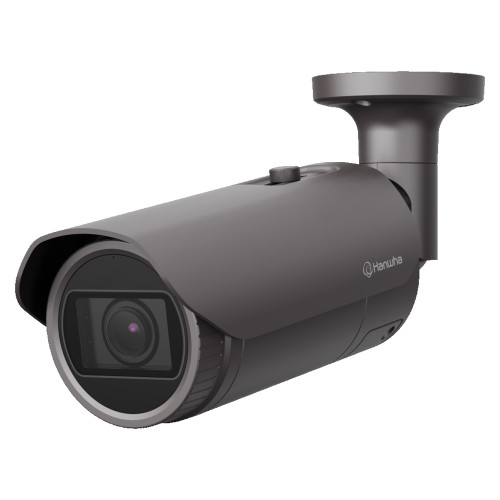
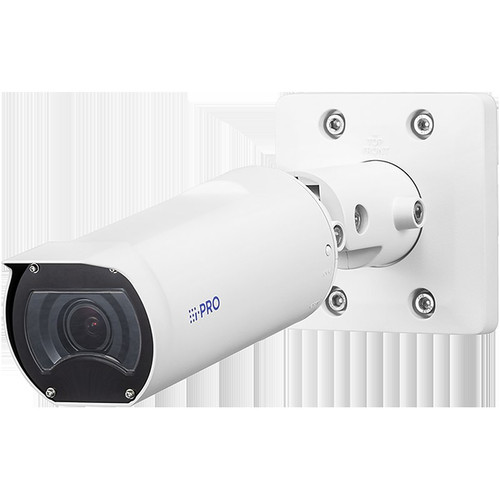
Both the Hanwha QNO-8080R and the i-PRO WV-U15501-V3L are 5MP outdoor IR bullet cameras powered by 802.3af PoE, sharing a 1/2.8" CMOS sensor, IP66/IK10 housing, and ONVIF Profile S/G/T compliance. This comparison examines how they differ across imaging performance, installation requirements, and VMS/analytics integration — the three decisions that determine which unit belongs on a perimeter, parking structure, or loading-dock deployment.
In This Guide
How do the imaging specs compare?
Both cameras share a 1/2.8" CMOS sensor resolving 5MP and deliver 30 fps. Minimum illumination diverges: the QNO-8080R is rated at 0.15 lux color / 0 lux IR, while the WV-U15501-V3L is specified at 0.07 lux color (F1.6, 1/30 s, AGC 11) / 0 lux IR — giving the i-PRO a roughly 2× advantage in color low-light sensitivity per the published specs. WDR is equivalent on paper: both claim 120 dB, with Hanwha branding it SSDR/WiseStream II and i-PRO calling it Super Dynamic (0–31 levels).
On optics, the QNO-8080R ships a motorized varifocal 3.2–10 mm lens (3.1× zoom, F1.6 wide / F2.9 tele), providing a horizontal field of view of 101° wide to approximately 31° tele with Simple Focus remote adjustment. The WV-U15501-V3L is listed with 3.2× optical zoom; however, the available specs do not state the exact focal-length range or aperture values. IR reach also differs: the QNO-8080R is rated to 30 m (98 ft), whereas the WV-U15501-V3L specifies 28 m (92 ft) — a marginal 2 m difference. DORI detection distances for the Hanwha are fully specified (Wide detect 43.3 m / Tele 185.7 m); equivalent DORI figures are not provided in the i-PRO spec set supplied.
What about installation and environment?
Both cameras carry IP66 (dust-tight, jet-water resistant) and IK10 (20-joule impact) ratings, making them suitable for exposed outdoor and perimeter mounting. Both are PoE-only (IEEE 802.3af, Class 3 for the QNO-8080R at max 9.50 W / typical 7.30 W; the WV-U15501-V3L is listed as 802.3af without a Class designation or wattage figure in the supplied specs). The QNO-8080R includes a CVBS composite output (720×480/576) useful during installation alignment; this feature is not listed for the WV-U15501-V3L.
Operating temperature ranges differ by 5 °C at the high end: the QNO-8080R is rated −30 °C to +55 °C, while the WV-U15501-V3L is rated −30 °C to +50 °C — a meaningful delta in sun-baked or enclosed enclosure deployments. The QNO-8080R is constructed from aluminum and weighs 1,190 g (2.62 lb) at ø91 × 322.9 mm; the WV-U15501-V3L is specified at 112.5 mm (W) × 112.5 mm (H) × 298.5 mm (D) with no weight listed in the supplied specs. The Hanwha unit calls out a compatible back-box (SBO-126B); no equivalent accessory is referenced in the i-PRO specs provided.
Which fits your VMS and analytics better?
Both cameras conform to ONVIF Profile S, G, and T, ensuring broad VMS compatibility. The QNO-8080R additionally exposes Hanwha's SUNAPI (HTTP API) and the Wisenet open platform, which broadens third-party integration options beyond ONVIF. The WV-U15501-V3L does not list a proprietary HTTP API in the supplied specs. On-board analytics are more extensive on the QNO-8080R: motion detection with polygonal zones (4 areas), tampering, defocus detection, and virtual line/area events (intrusion, enter/exit, crossing, direction). The WV-U15501-V3L lists VMD (Video Motion Detection) and Scene Change Detection only — no line-crossing or zone-entry analytics are cited in the supplied specs.
Edge storage is available on the QNO-8080R via a micro SD/SDHC/SDXC slot supporting up to 128 GB, with event-triggered SD or NAS recording and SD card partition encryption. No on-board storage slot or capacity is listed for the WV-U15501-V3L in the provided specs. Audio is available on the WV-U15501-V3L (audio input listed); the QNO-8080R does not list audio input or output in the supplied specifications. A significant differentiator on the cybersecurity side: the WV-U15501-V3L is listed as FIPS 140-3 Level 3 Certified via an EdgeLock® SE052F secure element and NDAA compliant — credentials not cited for the QNO-8080R, which instead lists firmware encryption, 802.1X (EAP-TLS/LEAP/PEAP), HTTPS/SRTP, and a Hanwha Private Root CA device certificate.
Which should you choose: the QNO-8080R or the U15501-V3L?
Our take: The QNO-8080R is the stronger choice when edge analytics depth, on-board storage, and higher operating temperature tolerance are the primary requirements. It provides a richer analytics suite (virtual line/area, defocus, tampering), a confirmed 128 GB microSD slot with encrypted partitioning, and a +55 °C upper operating limit vs. +50 °C for the i-PRO. Conversely, the WV-U15501-V3L has a spec advantage in color low-light sensitivity (0.07 lux vs. 0.15 lux) and carries FIPS 140-3 Level 3 certification and NDAA compliance — critical qualifications for federal, DoD, or regulated-sector installations where Hanwha's certifications may not satisfy procurement requirements. Audio input is documented only on the i-PRO. Buyers on standard commercial PoE infrastructure with Wisenet VMS will lean toward the QNO-8080R; those in government or compliance-driven environments should prioritize the WV-U15501-V3L.
Side-by-Side Comparison
Spec-for-spec, from manufacturer data.
| Specification | Hanwha QNO-8080R | i-PRO U15501-V3L |
|---|---|---|
| Resolution | 2592×1944 (5MP) | 5MP |
| Image Sensor | 1/2.8" CMOS | 1/2.8" |
| Lens / Focal Length | 3.2–10 mm motorized varifocal (3.1×) | 3.2× optical zoom (focal-length range not specified) |
| Max Aperture | F1.6 (Wide) / F2.9 (Tele) | F1.6 (listed for min-illumination condition; full range not specified) |
| Min Illumination | 0.15 lux color / 0 lux IR | 0.07 lux color (F1.6, 1/30 s, AGC 11) / 0 lux IR |
| IR Range | 30 m (98 ft) | 28 m (92 ft) |
| WDR | 120 dB (SSDR / WiseStream II) | 120 dB (Super Dynamic, 0–31 levels) |
| Max Frame Rate | 30 fps @ 5MP | 30 fps |
| Video Compression | H.265 / H.264 (Main/High) / MJPEG | H.265 / H.264 / MJPEG |
| IP Rating | IP66 | IP66 |
| IK / Impact Rating | IK10 | IK10 |
| Operating Temperature | −30 °C to +55 °C | −30 °C to +50 °C |
| Power Input / PoE | 802.3af, Class 3 (max 9.50 W / typ 7.30 W) | 802.3af (class and wattage not specified) |
| Edge Storage | Micro SD/SDHC/SDXC up to 128 GB | — |
| Audio | — | Audio input |
| Analytics | VMD (polygonal), tampering, defocus, virtual line/area (intrusion, enter/exit, crossing, direction) | VMD; Scene Change Detection |
| ONVIF | Profile S / G / T | Profile G / S / T |
| Cybersecurity / Compliance | Firmware encryption; 802.1X; HTTPS/SRTP; Hanwha Private Root CA | FIPS 140-3 Level 3 (EdgeLock® SE052F); NDAA Compliant |
| Dimensions | ø91 × 322.9 mm | 112.5 mm (W) × 112.5 mm (H) × 298.5 mm (D) |
| Weight | 1,190 g (2.62 lb) | — |
| Warranty | 3-year | — |
Frequently Asked Questions
Which should you choose: the QNO-8080R or the U15501-V3L?
The QNO-8080R is the stronger choice when edge analytics depth, on-board storage, and higher operating temperature tolerance are the primary requirements. It provides a richer analytics suite (virtual line/area, defocus, tampering), a confirmed 128 GB microSD slot with encrypted partitioning, and a +55 °C upper operating limit vs. +50 °C for the i-PRO. Conversely, the WV-U15501-V3L has a spec advantage in color low-light sensitivity (0.07 lux vs. 0.15 lux) and carries FIPS 140-3 Level 3 certification and NDAA compliance — critical qualifications for federal, DoD, or regulated-sector installations where Hanwha's certifications may not satisfy procurement requirements. Audio input is documented only on the i-PRO. Buyers on standard commercial PoE infrastructure with Wisenet VMS will lean toward the QNO-8080R; those in government or compliance-driven environments should prioritize the WV-U15501-V3L.
Is the QNO-8080R or WV-U15501-V3L better for low-light color imaging?
Per the supplied specs, the WV-U15501-V3L is rated at 0.07 lux color (F1.6, 1/30 s, AGC 11), compared to 0.15 lux color for the QNO-8080R — making the i-PRO roughly twice as sensitive in color mode. Both cameras reach 0 lux in IR monochrome mode.
Does either camera support on-board video storage without a NAS?
Yes — the QNO-8080R includes a micro SD/SDHC/SDXC slot (up to 128 GB) with event-triggered local recording and SD card partition encryption. On-board storage is not listed in the WV-U15501-V3L specifications provided.
Which camera is appropriate for a NDAA-compliant or federal government installation?
The WV-U15501-V3L is listed as NDAA compliant and carries FIPS 140-3 Level 3 certification via its EdgeLock® SE052F secure element — specifications that directly address federal procurement requirements. Neither NDAA compliance nor FIPS certification is listed for the QNO-8080R in the provided specs.
Get a Second Opinion on Your Camera Choice
Share your site layout, coverage goals, and budget. Our team will validate the camera selection, flag anything we would change, and recommend products that match the use case.