
Hanwha QNO-7082R vs Pelco SRXE4-2X33-EBT-IR1: Specification Comparison
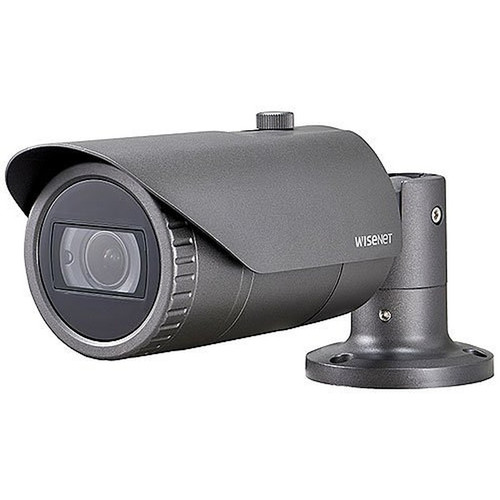
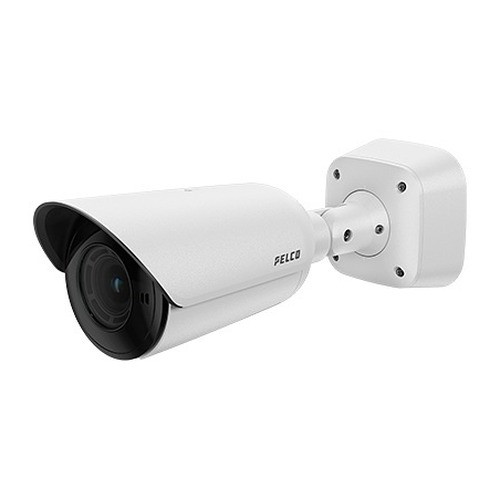
This comparison evaluates two 4MP outdoor bullet cameras aimed at commercial and industrial surveillance deployments: the Hanwha QNO-7082R and the Pelco SRXE4-2X33-EBT-IR1 (Sarix Enhanced 4 Series). Both cameras share the same resolution class, wired PoE connectivity, IR night vision, and a fixed bullet form factor intended for outdoor installation. The comparison examines imaging capability, environmental and installation characteristics, and integration with VMS platforms and edge analytics to help integrators and IT buyers determine which unit better fits their specific project requirements.
In This Guide
How do the imaging specs compare?
Both cameras deliver 4MP resolution, but they diverge significantly on frame rate and low-light performance. The Pelco SRXE4-2X33-EBT-IR1 captures up to 60 fps at 2560x1440, double the QNO-7082R's 30 fps ceiling, which matters in high-motion environments such as vehicle lanes or turnstiles. The Pelco also specifies a 1/1.8-inch progressive scan CMOS sensor, a minimum illumination of 0.003 lux in color mode and 0 lux with IR active, and an integrated IR module rated to approximately 70 m at 850 nm. The Hanwha QNO-7082R does not specify sensor size or minimum illumination figures in the provided data, and its IR range is not stated in the available specifications.
On dynamic range, Pelco rates the SRXE4 at 130 dB via its SureVision WDR engine. The Hanwha QNO-7082R lists WDR as a feature but does not specify a dB value in the provided specifications, making a direct numerical comparison impossible. For lens coverage, the Pelco uses a 4.4–9.3 mm motorized varifocal with a horizontal FOV of 32–109 degrees and an aperture of F1.4. The Hanwha uses a 3.2–10 mm motorized varifocal with a DC auto-iris lens; aperture is not stated in the provided specs. Both cameras support H.265, H.264, and Motion JPEG compression, keeping bandwidth and storage options equivalent on that dimension.
What about installation and environment?
The Pelco SRXE4-2X33-EBT-IR1 carries a substantially broader ingress protection profile: IP66, IP67, IP68 (2 m for 2 hours), IPX9K, and NEMA 4X, making it suitable for high-pressure wash-down environments such as food processing, car washes, or exposed coastal sites. Its impact rating is listed as IK11 on the dedicated Impact Rating field (note: the Vandal Rating field in the raw data also shows IK09, reflecting a conflict in the source data; IK11 is used here as the primary specification). The Hanwha QNO-7082R is rated IP66 and IK10, which covers standard outdoor dust and rain exposure plus a meaningful level of vandal resistance, but it does not meet the higher submersion or wash-down standards of the Pelco.
Power requirements differ as well. The QNO-7082R operates on PoE Class 3 (IEEE 802.3af) or 12 VDC, meaning it is compatible with standard 802.3af switches without an upgrade. The Pelco SRXE4 requires PoE+ (802.3at), which demands a PoE+ capable switch or injector — a potential infrastructure cost for retrofits. On operating temperature, the Pelco is rated from -50°C to +65°C, versus -40°C to +55°C for the Hanwha, giving the Pelco a meaningful edge in extreme cold or heat. The Pelco also supports wall, pole, corner, and rack mounting per its specifications; the Hanwha's mounting options are not enumerated in the provided data. The Hanwha weighs 1.98 lbs; Pelco weight is not specified in the provided data.
Which fits your VMS and analytics better?
Both cameras declare ONVIF compliance, with the Hanwha QNO-7082R supporting ONVIF Profile S, G, and T alongside Hanwha's SUNAPI HTTP API. The Pelco SRXE4-2X33-EBT-IR1 supports ONVIF Profile S, T, G, and M, with Profile M adding metadata streaming for analytics. Both cameras include microSD card slots for on-board storage, enabling edge recording or buffering independent of the NVR. The Hanwha has 512 MB RAM and 256 MB Flash; the Pelco has 4 GB RAM and 4 GB Flash, indicating substantially more headroom for on-camera processing and firmware.
On analytics, the Pelco SRXE4 ships with Smart Analytics including person and vehicle detection, direction violation, loitering, beam crossing, crowd detection, audio analytics, and tamper alert. The Hanwha QNO-7082R provides defocus detection and directional detection. Both cameras include audio capability: the Hanwha lists an audio input, and the Pelco supports a microphone. For cybersecurity-sensitive deployments — federal, critical infrastructure, or DoD-adjacent sites — the Pelco holds FIPS 140-3 Level 3, TPM, Secure Boot, 802.1X, NDAA Section 889 compliance, and TAA compliance. The Hanwha lists HTTPS encryption and ONVIF but does not specify equivalent cybersecurity certifications in the provided data.
Which should you choose: the QNO-7082R or the SRXE4-2X33-EBT-IR1?
Our take: The SRXE4-2X33-EBT-IR1 is the stronger choice when the deployment demands maximum image fidelity in motion, hardened environmental protection, or verified government-compliance credentials. Concretely: Pelco delivers 60 fps versus Hanwha's 30 fps — a 2x advantage in motion capture; its ingress protection extends to IP68 submersion and IPX9K wash-down while the Hanwha reaches IP66 only; and it carries FIPS 140-3 Level 3 and NDAA Section 889 compliance that the Hanwha's provided specifications do not address. The QNO-7082R remains a sound, cost-effective option for standard commercial outdoor coverage where 802.3af infrastructure is already in place, IK10 vandal resistance is sufficient, and advanced cybersecurity certification is not a contract requirement. Integrators building on Hanwha's VMS ecosystem will also benefit from native SUNAPI support on the QNO-7082R.
Side-by-Side Comparison
Spec-for-spec, from manufacturer data.
| Specification | Hanwha QNO-7082R | Pelco SRXE4-2X33-EBT-IR1 |
|---|---|---|
| Resolution | 4MP | 4MP |
| Max Frame Rate | 30 fps | 60 fps |
| Sensor Size | — | 1/1.8 inch progressive scan CMOS |
| Min Illumination | — | 0.003 lux color / 0 lux IR |
| WDR | WDR (dB not specified) | 130 dB SureVision |
| Lens | 3.2–10 mm motorized varifocal | 4.4–9.3 mm motorized varifocal |
| Aperture | — | F1.4 |
| IR Range | — | ~70 m (850 nm) |
| IP Rating | IP66 | IP66 / IP67 / IP68 / IPX9K / NEMA 4X |
| Impact Rating | IK10 | IK11 |
| Power | PoE Class 3 (802.3af) / 12 VDC | PoE+ (802.3at) |
| Operating Temp | -40°C to +55°C | -50°C to +65°C |
| ONVIF Profiles | S, G, T | S, T, G, M |
| Edge Analytics | Defocus detection, Directional detection | Person/Vehicle, Loitering, Direction Violation, Beam Crossing, Crowd Detection, Audio Analytics, Tamper |
| Cybersecurity | HTTPS | FIPS 140-3 Level 3, TPM, Secure Boot, 802.1X, NDAA 889, TAA |
| Warranty | 3 years | 5 years |
Frequently Asked Questions
Which should you choose: the QNO-7082R or the SRXE4-2X33-EBT-IR1?
The SRXE4-2X33-EBT-IR1 is the stronger choice when the deployment demands maximum image fidelity in motion, hardened environmental protection, or verified government-compliance credentials. Concretely: Pelco delivers 60 fps versus Hanwha's 30 fps — a 2x advantage in motion capture; its ingress protection extends to IP68 submersion and IPX9K wash-down while the Hanwha reaches IP66 only; and it carries FIPS 140-3 Level 3 and NDAA Section 889 compliance that the Hanwha's provided specifications do not address. The QNO-7082R remains a sound, cost-effective option for standard commercial outdoor coverage where 802.3af infrastructure is already in place, IK10 vandal resistance is sufficient, and advanced cybersecurity certification is not a contract requirement. Integrators building on Hanwha's VMS ecosystem will also benefit from native SUNAPI support on the QNO-7082R.
Can the Hanwha QNO-7082R work with my existing 802.3af PoE switch?
Yes. The QNO-7082R is rated for PoE Class 3 under IEEE 802.3af, so it draws within the 15.4 W budget of a standard 802.3af port. The Pelco SRXE4-2X33-EBT-IR1 requires PoE+ (802.3at), which delivers up to 30 W — you would need a PoE+ capable switch or injector to power the Pelco unit.
Is either camera compliant with NDAA Section 889 for federal or government projects?
The Pelco SRXE4-2X33-EBT-IR1 explicitly lists NDAA Section 889 compliance and TAA compliance in its specifications. The Hanwha QNO-7082R's provided specifications do not reference NDAA or TAA compliance, so you would need to verify directly with the manufacturer before specifying it on a federally funded project.
Which camera is better suited for a site that requires regular high-pressure cleaning, such as a food processing facility or parking garage wash-down area?
The Pelco SRXE4-2X33-EBT-IR1 is the appropriate choice for wash-down environments. It carries IP67, IP68 (2 m for 2 hours), and IPX9K ratings alongside NEMA 4X, all of which address high-pressure and immersion scenarios. The Hanwha QNO-7082R is rated IP66, which protects against powerful water jets but does not cover submersion or high-pressure steam cleaning.
Get a Second Opinion on Your Camera Choice
Share your site layout, coverage goals, and budget. Our team will validate the camera selection, flag anything we would change, and recommend products that match the use case.