
Hanwha QNO-6022R1 vs Hanwha XNO-6020R: Specification Comparison
Both the Hanwha QNO-6022R1 and XNO-6020R are 2MP outdoor fixed bullet IP cameras sharing the same 1/2.8" CMOS sensor, 4mm fixed lens, PoE Class 3 power, IK10 vandal resistance, and ONVIF Profile S/G/T compliance. They occupy the same resolution class and form factor, making them genuine cross-shop candidates. The comparison focuses on where they diverge: frame rate ceiling, WDR capability, low-light performance, audio, storage capacity, analytics depth, and ingress protection rating.
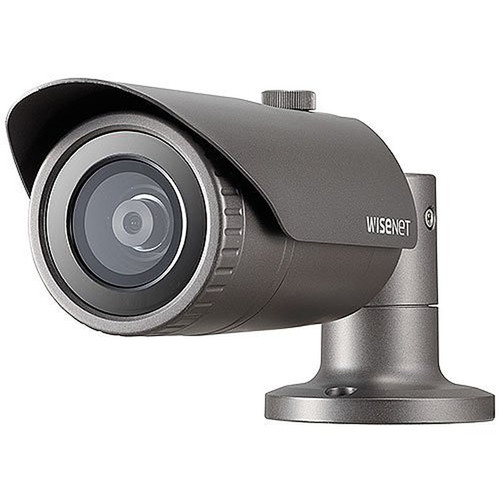
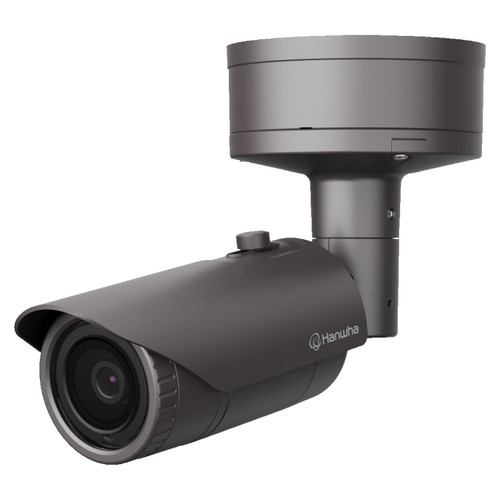
In This Guide
How do the imaging specs compare?
Both cameras use a 1/2.8" CMOS sensor at 2MP (1920×1080) with a 4mm fixed focal length and F-stop apertures that differ meaningfully: the QNO-6022R1 specifies F1.6 while the XNO-6020R specifies F1.4, giving the XNO-6020R a slightly wider aperture that admits more light in passive conditions. Minimum illumination reflects this: the QNO-6022R1 is rated at 0.03 lux color / 0 lux IR (850nm), whereas the XNO-6020R is rated at 0.015 lux color / 0 lux IR — half the color-light threshold. IR range also differs: the QNO-6022R1 illuminates to 25m (82ft), while the XNO-6020R extends to 30m (98ft).
WDR performance separates the two clearly: the QNO-6022R1 is rated at 120dB WDR with BLC, WDR, and SSDR backlight compensation modes, while the XNO-6020R is rated at 150dB with BLC, HLC, WDR, DWDR, and SSDR — a 30dB step up plus the addition of HLC (highlight compensation) and defog support. On frame rate, the QNO-6022R1 is capped at 30fps at 2MP; the XNO-6020R supports up to 60fps at 2MP, which is relevant for capturing fast-moving subjects. The XNO-6020R also adds Digital Image Stabilization, which is not listed for the QNO-6022R1.
What about installation and environment?
Both cameras are rated IK10 for impact resistance and operate from −30°C to +55°C with less than 90% RH. However, their ingress protection ratings diverge: the QNO-6022R1 carries IP66, while the XNO-6020R is certified IP67/IP66/NEMA 4X — adding temporary submersion protection and NEMA 4X (corrosive wash-down) suitability. Storage temperature also differs: QNO-6022R1 is rated to −30°C storage minimum, while the XNO-6020R goes to −50°C, relevant for units stored in unheated environments.
Power input is identical on paper — PoE IEEE 802.3af Class 3 or 12VDC — but maximum draw differs: the QNO-6022R1 is rated 7.00W max, while the XNO-6020R draws up to 9.7W on PoE or 8.8W on 12VDC, a consideration for switch port budgeting. Physically, the QNO-6022R1 is smaller and lighter at ø70×246mm / 700g (1.54 lb) versus the XNO-6020R at ø70×296mm / 1220g (2.69 lb). Both support wall and ceiling mounting in a bullet form factor. The QNO-6022R1 also specifies conduit hole and gangbox compatibility (Single, Double, 4" Octagon) and optional backboxes (SBO-100B1, SBO-147B); equivalent mounting accessories for the XNO-6020R are not listed in the provided specs.
Which fits your VMS and analytics better?
Both cameras support ONVIF Profile S/G/T, SUNAPI (HTTP API), and Wisenet open platform, making them compatible with the same VMS ecosystems. Streaming capacity differs substantially: the QNO-6022R1 supports unicast for up to 6 simultaneous users and up to 3 stream profiles, while the XNO-6020R supports unicast for up to 20 users and up to 10 stream profiles — relevant for larger deployments or multi-client monitoring environments. WiseStream II smart codec is present on both.
Analytics depth is wider on the XNO-6020R: it adds fog detection, face detection, digital auto tracking, Appear/Disappear, Loitering, Audio detection, and Sound classification on top of the analytics the QNO-6022R1 offers (Defocus, Directional, Motion, Enter/Exit, Tampering, Virtual line). The XNO-6020R also includes Business Intelligence functions — People Counting, Queue Management, and Heatmap — none of which are listed for the QNO-6022R1. Audio hardware is present only on the XNO-6020R (selectable mic/line in at 2.5VDC / 2KΩ; line out at 1Vrms max; G.711/G.726 compression), while the QNO-6022R1 has no audio input or output listed. Edge storage also differs: the QNO-6022R1 has one microSD slot up to 128GB, while the XNO-6020R has two slots supporting up to 512GB total. RAM differs as well: 512MB on the QNO-6022R1 versus 1024MB on the XNO-6020R.
Which should you choose: the QNO-6022R1 or the XNO-6020R?
Our take: The XNO-6020R is the stronger choice when image quality, analytics depth, audio, and multi-client streaming capacity are the primary drivers. It delivers 150dB WDR versus 120dB on the QNO-6022R1, cuts minimum color illumination in half (0.015 lux vs. 0.03 lux), and extends IR range from 25m to 30m — all meaningful in high-contrast or low-light outdoor scenes. It supports 60fps versus 30fps and carries two microSD slots (up to 512GB) versus one (up to 128GB), plus adds audio I/O, face detection, loitering, people counting, and up to 20 unicast streams. The QNO-6022R1 is the appropriate selection when budget, switch port power budget (7W vs. 9.7W), physical size (700g vs. 1220g), or conduit/gangbox mounting flexibility are constraining factors — and where IP66 protection is sufficient for the deployment environment rather than IP67/NEMA 4X.
Side-by-Side Comparison
Spec-for-spec, from manufacturer data.
| Specification | Hanwha QNO-6022R1 | Hanwha XNO-6020R |
|---|---|---|
| Resolution | 2MP (1920×1080) | 2MP |
| Image Sensor | 1/2.8" CMOS | 1/2.8" 2MP CMOS |
| Lens / Focal Length | 4.0mm fixed focal | 4mm fixed focal |
| Max. Aperture | F1.6 | F1.4 |
| Max. Frame Rate | 30fps @ 2MP | 60fps @ 2MP |
| Min. Illumination (Color / IR) | 0.03 lux / 0 lux (IR on) | 0.015 lux / 0 lux (IR on) |
| IR Range | 25m (82ft) | 30m (98ft) |
| Wide Dynamic Range | 120dB | 150dB |
| IP Rating | IP66 | IP67 / IP66 / NEMA 4X |
| IK / Impact Rating | IK10 | IK10 |
| Operating Temperature | −30°C to +55°C | −30°C to +55°C |
| Power Input / PoE Class | PoE 802.3af Class 3 / 12VDC; max 7.00W | PoE 802.3af Class 3 / 12VDC; max 9.7W (PoE) / 8.8W (12VDC) |
| Edge Storage | 1× microSD/SDHC/SDXC up to 128GB | 2× microSD/SDHC/SDXC up to 512GB |
| RAM | 512MB RAM / 256MB Flash | 1024MB RAM / 256MB Flash |
| Audio | — | In: mic/line selectable; Out: line out; G.711/G.726 |
| Concurrent Unicast Streams / Profiles | 6 users / 3 profiles | 20 users / 10 profiles |
| Dimensions / Weight | ø70×246mm / 700g (1.54 lb) | ø70×296mm / 1220g (2.69 lb) |
| Warranty | 3 years | 3 years |
Frequently Asked Questions
Which should you choose: the QNO-6022R1 or the XNO-6020R?
The XNO-6020R is the stronger choice when image quality, analytics depth, audio, and multi-client streaming capacity are the primary drivers. It delivers 150dB WDR versus 120dB on the QNO-6022R1, cuts minimum color illumination in half (0.015 lux vs. 0.03 lux), and extends IR range from 25m to 30m — all meaningful in high-contrast or low-light outdoor scenes. It supports 60fps versus 30fps and carries two microSD slots (up to 512GB) versus one (up to 128GB), plus adds audio I/O, face detection, loitering, people counting, and up to 20 unicast streams. The QNO-6022R1 is the appropriate selection when budget, switch port power budget (7W vs. 9.7W), physical size (700g vs. 1220g), or conduit/gangbox mounting flexibility are constraining factors — and where IP66 protection is sufficient for the deployment environment rather than IP67/NEMA 4X.
Is the QNO-6022R1 or XNO-6020R better for low-light performance?
The XNO-6020R has the edge in low light: its minimum color illumination is 0.015 lux versus 0.03 lux on the QNO-6022R1, its aperture is F1.4 versus F1.6, and its IR illumination range extends to 30m versus 25m. Both cameras reach 0 lux in black-and-white IR mode.
Does either camera support two-way audio?
Only the XNO-6020R includes audio hardware. It has a selectable mic/line input (2.5VDC, 2KΩ impedance) and a line output (max 1Vrms), with G.711 and G.726 audio compression. The QNO-6022R1 has no audio input or output listed in its specifications.
Which camera is better suited for harsh outdoor environments like coastal or wash-down areas?
The XNO-6020R carries IP67, IP66, and NEMA 4X certifications, meaning it is rated for temporary submersion and corrosive wash-down conditions in addition to dust and jet-water ingress. The QNO-6022R1 is rated IP66 only, which covers dust and directed water jets but not submersion or NEMA 4X wash-down scenarios.
Get a Second Opinion on Your Camera Choice
Share your site layout, coverage goals, and budget. Our team will validate the camera selection, flag anything we would change, and recommend products that match the use case.