
Hanwha L6082R vs i-PRO X15300-V3L: Specification Comparison
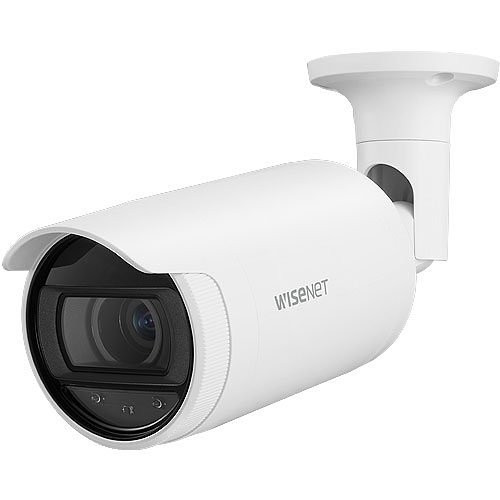
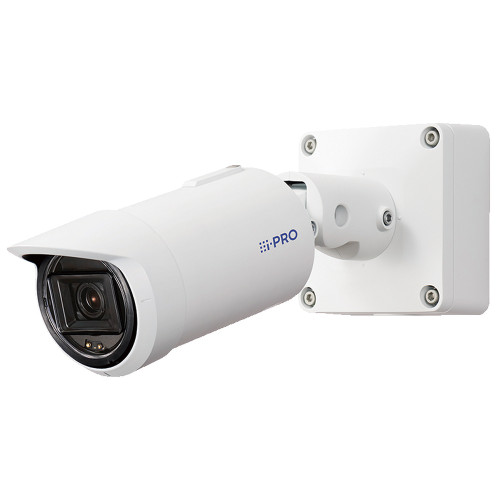
Both the Hanwha ANO-L6082R and the i-PRO WV-X15300-V3L are wired, outdoor-rated, 2MP (1920×1080) fixed bullet IP cameras powered over Ethernet, with motorized varifocal lenses in roughly the same 3.1× optical zoom range. Buyers evaluating mid-range outdoor bullet cameras in the 2MP fixed class will reasonably cross-shop these two models. The comparison covers imaging performance, installation and environmental durability, and integration with VMS platforms and edge analytics.
In This Guide
How do the imaging specs compare?
Both cameras use an approximately 1/2.8-inch CMOS sensor at 1920×1080, and both offer 3.1× motorized optical zoom. The Hanwha ANO-L6082R covers a focal length of 3.3–10.3 mm (F1.6 wide, F3.3 tele) with a 106° horizontal field of view at wide end, while the i-PRO WV-X15300-V3L spans 2.9–9 mm (F1.3 wide, F2.5 tele) and delivers 117° horizontal at wide. The i-PRO's wider maximum aperture (F1.3 vs F1.6) gives it a measurable low-light edge. Minimum color illumination on the Hanwha is 0.03 lux; the i-PRO specifies 0.007 lux in color mode and 0.005 lux in B&W — roughly four to six times more sensitive. The i-PRO also adds a digital extra-zoom up to 9.3× (at 640×360 resolution) and a built-in gyro-based image stabilizer, neither of which is specified for the Hanwha.
IR range is markedly different: the Hanwha reaches 30 m (98 ft), while the i-PRO reaches 70 m (230 ft) — more than double. On dynamic range, the Hanwha specifies 120 dB WDR; the i-PRO specifies up to 144 dB in Super Dynamic mode (level 31). The Hanwha supports 30 fps at full resolution; the i-PRO supports 60 fps. DORI detect distances at wide angle are 29.4 m (Hanwha) vs 23.5 m (i-PRO), with the Hanwha slightly ahead at wide-end detect; at tele, the i-PRO reaches 114.8 m vs the Hanwha's 140.4 m. Both cameras provide Day/Night with ICR.
What about installation and environment?
The Hanwha ANO-L6082R carries an IP66 rating. The i-PRO WV-X15300-V3L is rated IP66/IP67 (IEC 60529), Type 4X (UL50E), and NEMA 4X, and additionally achieves IK10 impact resistance (IEC 62262) and a wind resistance rating of up to 40 m/s (~89 mph). No IK rating is specified for the Hanwha. Operating temperature for the Hanwha is −30°C to +55°C; the i-PRO specifies an ambient operating range of −40°C to +55°C (with power-on minimum of −30°C), making it suitable in colder climates where the Hanwha may not power on.
The Hanwha draws a maximum of 7.0 W and is powered by PoE (IEEE 802.3af, Class 3). The i-PRO requires PoE+ (DC 12 V or PoE+, 14 W), meaning a PoE+ (802.3at) switch port or midspan injector is mandatory at the i-PRO installation point — a wiring and infrastructure consideration that does not apply to the Hanwha. The Hanwha weighs 390 g (0.86 lb) and measures ø78 × 262 mm; the i-PRO weighs approximately 2.5 kg (5.6 lb) and measures 133 × 133 × 383 mm, reflecting its aluminum die-cast and stainless-steel construction versus the Hanwha's plastic housing. The i-PRO specifies ceiling and wall mounting adjustment ranges explicitly; the Hanwha specifies pan 0°–360°, tilt 0°–100°, rotate 0°–360°.
Which fits your VMS and analytics better?
Both cameras support ONVIF Profile S, G, and T. The i-PRO additionally supports ONVIF Profile M. The Hanwha also exposes SUNAPI (HTTP API). The i-PRO supports up to 14 simultaneous users versus the Hanwha's 6 unicast users. Protocol coverage is broadly similar (IPv4/IPv6, RTSP, SNMP v1/v2/v3, 802.1X, SRTP, HTTPS); the i-PRO additionally lists SFTP, MQTT, and LLDP, which are not specified for the Hanwha. Edge analytics on the Hanwha include motion detection, tampering, virtual area (intrusion/enter/exit), and virtual line (crossing/direction). The i-PRO specifies an AI video detection suite, AI sound classification (gunshot, yell, vehicle horn, glass break), scene change detection, audio detection, and facial recognition — a significantly broader set of on-camera analytics.
Audio hardware is absent on the Hanwha (no audio input or output specified). The i-PRO provides a 3.5 mm stereo audio input, 3.5 mm audio output, G.726/G.711/AAC-LC compression, and half/full-duplex transmission modes, plus 3× alarm inputs and 1× alarm output. On-board storage differs substantially: the Hanwha supports microSD/SDHC up to 32 GB; the i-PRO supports microSD/SDHC/SDXC up to 512 GB. Security posture on the i-PRO adds FIPS 140-2 Level 3, secure boot, and signed firmware — none of those three are specified for the Hanwha. The Hanwha includes firmware encryption and SD card partition encryption. The i-PRO carries a 5-year warranty; the Hanwha carries a 3-year warranty.
Which should you choose: the L6082R or the X15300-V3L?
Our take: The i-PRO WV-X15300-V3L is the stronger choice when IR range, low-light sensitivity, and AI analytics are priorities; the Hanwha ANO-L6082R is the more cost-accessible option for standard outdoor coverage on a standard PoE infrastructure. Concretely: the i-PRO's IR reaches 70 m versus the Hanwha's 30 m; its minimum color illumination is 0.007 lux versus the Hanwha's 0.03 lux; and its dynamic range tops out at 144 dB versus 120 dB. The i-PRO also adds IK10 impact resistance, a −40°C cold-start rating, AI sound classification, 512 GB edge storage, and FIPS 140-2 Level 3 security — none specified on the Hanwha. However, the i-PRO requires PoE+ (14 W) and is substantially heavier (2.5 kg vs 390 g). Choose the Hanwha where standard PoE switches are already deployed and budget is constrained; specify the i-PRO where long-range night vision, hardened durability, and on-camera AI are operationally required.
Side-by-Side Comparison
Spec-for-spec, from manufacturer data.
| Specification | Hanwha L6082R | i-PRO X15300-V3L |
|---|---|---|
| Resolution | 2 MP (1920×1080) | 2 MP (1920×1080) |
| Image Sensor | 1/2.8" CMOS | Approx. 1/2.8" CMOS |
| Lens / Focal Length | 3.3–10.3 mm (3.1× motorized varifocal) | 2.9–9 mm (3.1× motorized; up to 9.3× digital extra zoom) |
| Maximum Aperture | F1.6 (wide) / F3.3 (tele) | F1.3 (wide) / F2.5 (tele) |
| Min. Illumination (Color) | 0.03 lux | 0.007 lux @ 30IRE |
| Min. Illumination (B&W / IR) | 0 lux (IR on) | 0.005 lux (B&W) / 0 lux (with IR) |
| IR Range | 30 m (98 ft) | 70 m (230 ft) |
| Wide Dynamic Range | 120 dB | Up to 144 dB (Super Dynamic, level 31) |
| Max. Frame Rate | 30 fps | 60 fps |
| Video Compression | H.265, H.264, MJPEG | H.265, H.264, MJPEG |
| IP Rating | IP66 | IP66 / IP67 / NEMA 4X / Type 4X |
| IK / Impact Rating | — | IK10 (IEC 62262) |
| Operating Temperature | −30°C to +55°C | −40°C to +55°C (power-on min −30°C) |
| Power Input / PoE Class | PoE 802.3af, Class 3 (max 7.0 W) | PoE+ 802.3at or DC 12 V (14 W) |
| Edge Storage | microSD/SDHC up to 32 GB | microSD/SDHC/SDXC up to 512 GB |
| Audio | — | 3.5 mm in/out; G.726/G.711/AAC-LC; half/full duplex |
| ONVIF Profiles | S / G / T | S / G / T / M |
| AI / Edge Analytics | Motion, tamper, virtual area/line | AI video detection, AI sound classification, facial recognition, VMD, SCD, audio detection |
| Weight | 390 g (0.86 lb) | Approx. 2.5 kg (5.6 lb) |
| Dimensions | ø78 × 262 mm | 133 × 133 × 383 mm |
| Housing Material | Plastic | Aluminum die cast, stainless steel, PC resin |
| Warranty | 3 years | 5 years |
Frequently Asked Questions
Which should you choose: the L6082R or the X15300-V3L?
The i-PRO WV-X15300-V3L is the stronger choice when IR range, low-light sensitivity, and AI analytics are priorities; the Hanwha ANO-L6082R is the more cost-accessible option for standard outdoor coverage on a standard PoE infrastructure. Concretely: the i-PRO's IR reaches 70 m versus the Hanwha's 30 m; its minimum color illumination is 0.007 lux versus the Hanwha's 0.03 lux; and its dynamic range tops out at 144 dB versus 120 dB. The i-PRO also adds IK10 impact resistance, a −40°C cold-start rating, AI sound classification, 512 GB edge storage, and FIPS 140-2 Level 3 security — none specified on the Hanwha. However, the i-PRO requires PoE+ (14 W) and is substantially heavier (2.5 kg vs 390 g). Choose the Hanwha where standard PoE switches are already deployed and budget is constrained; specify the i-PRO where long-range night vision, hardened durability, and on-camera AI are operationally required.
Is the ANO-L6082R or WV-X15300-V3L better for low-light surveillance?
Based on the provided specifications, the i-PRO WV-X15300-V3L has a measurable low-light advantage: its minimum color illumination is 0.007 lux versus 0.03 lux for the Hanwha, its B&W sensitivity is 0.005 lux, its maximum aperture is F1.3 (wider than the Hanwha's F1.6), and its IR illumination reaches 70 m compared to the Hanwha's 30 m. If low-light performance is the deciding factor, the i-PRO's specs are stronger across all three measures.
Can I power both cameras from my existing 802.3af PoE switch?
Only the Hanwha ANO-L6082R is compatible with a standard 802.3af PoE switch — it draws a maximum of 7.0 W (Class 3). The i-PRO WV-X15300-V3L requires PoE+ (802.3at) or a DC 12 V supply at 14 W. Running the i-PRO from a standard 802.3af port is not supported per the i-PRO specification, so a PoE+ switch port, injector, or DC power run would be required at each i-PRO installation point.
Does either camera include built-in audio for two-way communication or audio detection?
Audio hardware is not specified for the Hanwha ANO-L6082R — no audio input or output is listed in its spec sheet. The i-PRO WV-X15300-V3L includes a 3.5 mm stereo audio input, a 3.5 mm audio output (600 Ω impedance), and supports G.726, G.711, and AAC-LC compression with half-duplex and full-duplex modes. It also provides AI sound classification for gunshot, yell, vehicle horn, and glass break events. If audio is a requirement, only the i-PRO supports it based on the published specifications.
Get a Second Opinion on Your Camera Choice
Share your site layout, coverage goals, and budget. Our team will validate the camera selection, flag anything we would change, and recommend products that match the use case.