
Hanwha HRX-435 vs Hanwha XRN-420S: Specification Comparison
The Hanwha HRX-435 and XRN-420S are both 4-channel, 1U Hanwha recorders running embedded Linux with H.265/H.264/MJPEG compression, 8MP maximum resolution, and SUNAPI/ONVIF protocol support—products a buyer would genuinely cross-shop for a small-site or branch-office deployment. The core distinction is recorder architecture: the HRX-435 is a pentabrid DVR that accepts analog coaxial cameras (AHD, HDTVI, HDCVI, CVBS) plus up to 6 IP channels, while the XRN-420S is a pure IP NVR with built-in PoE+ switch, targeting all-IP camera infrastructures.
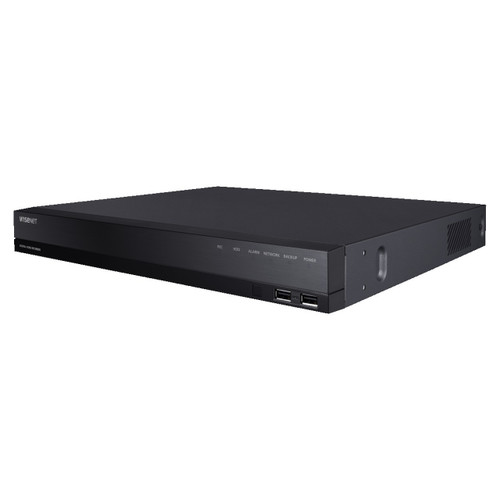
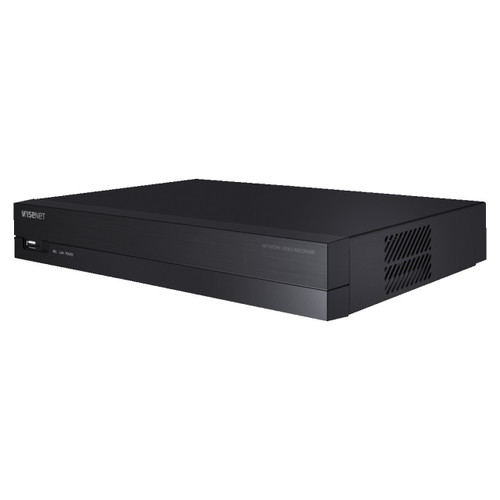
In This Guide
- How do channel capacity, camera compatibility, and recording bandwidth compare?
- What are the differences in camera interface, PoE power delivery, and storage?
- How do the two units compare on redundancy, AI capability, and VMS/software integration?
- Which should you choose: the HRX-435 or the XRN-420S?
- Side-by-Side Specs
- FAQ
How do channel capacity, camera compatibility, and recording bandwidth compare?
The HRX-435 supports 4 analog coaxial inputs (BNC, up to 8MP) and expands to a maximum of 6 IP channels simultaneously, giving a hybrid total that can accommodate legacy analog cameras alongside IP units. Its recording bandwidth is capped at 30 Mbps. The XRN-420S is a pure IP NVR limited to 4 network camera channels with no analog input path whatsoever, but its recording bandwidth is rated at 50 Mbps—67% higher than the HRX-435. Transmission bandwidth on the XRN-420S reaches 64 Mbps versus 32 Mbps on the HRX-435.
For playback, both units deliver a maximum of 32 Mbps. The HRX-435 supports 6-channel simultaneous local/CMS/mobile playback and 1-channel web playback. The XRN-420S supports up to 16 channels simultaneously (4 local, 4 per remote user), a significantly higher concurrent playback ceiling despite the smaller 4-camera record capacity. The HRX-435 records analog streams at up to 30 fps per channel (NTSC); the XRN-420S decodes 8MP at 30 fps and 1080p at up to 120 fps.
What are the differences in camera interface, PoE power delivery, and storage?
The HRX-435 provides 4 BNC analog inputs, a single RJ-45 10/100 Ethernet port (no built-in PoE), 4 alarm inputs, 2 relay outputs (one NO/NC/COM, one NO/COM), coaxial control via CVBS/AHD/CVI/TVI, and RS-485/422 for PTZ. IP cameras must connect through an external switch. The XRN-420S eliminates analog BNC entirely and instead provides 4 PoE+ (802.3at) RJ-45 LAN ports at 10/100 plus a separate 1 Gbps WAN RJ-45, with a 50 W PoE budget enabling direct camera power without an external injector or switch.
Storage differs in a meaningful way: the HRX-435 has two SATA bays supporting up to 12 TB total (two 6 TB HDDs). The XRN-420S has a single SATA bay capped at 6 TB. Both units share the same per-HDD 6 TB maximum and the same 0°C–40°C operating range. The HRX-435 draws a maximum of 40 W (with four 6 TB HDDs); the XRN-420S draws up to 67 W with one HDD and PoE active. Physically, the HRX-435 is larger (370 × 44 × 320 mm, ~2.3 kg) versus the XRN-420S (300 × 47.1 × 208.4 mm, 1.06 kg).
How do the two units compare on redundancy, AI capability, and VMS/software integration?
Both recorders support ARB (Automatic Recovery Backup), SUNAPI, ONVIF Profile-S, P2P QR-code setup, iOS/Android mobile viewing, SSM, Smart Viewer, and Wisenet Mobile. The XRN-420S adds N+1 failover redundancy, which the HRX-435 does not list. The XRN-420S also lists compatibility with Wisenet AI cameras for object-attribute AI search; no equivalent AI search capability is specified for the HRX-435.
The XRN-420S viewer software list includes WAVE VMS, which the HRX-435 does not list—a relevant difference for sites standardizing on Hanwha's WAVE platform. The XRN-420S specifies web viewer OS/browser compatibility (Windows 10, macOS 10.13, Chrome, Edge, Safari); the HRX-435 does not publish equivalent web viewer OS/browser specs. The HRX-435 lists fisheye dewarping via Web and CMS; the XRN-420S limits fisheye dewarping to CMS only. PTZ preset storage is specified at 300 on the XRN-420S; this figure is not published for the HRX-435. Security feature parity is close: both implement 802.1x, IP filtering, encryption, and Hanwha Techwin Root CA certificates; the XRN-420S additionally lists signed firmware verification.
Which should you choose: the HRX-435 or the XRN-420S?
Our take: The HRX-435 is the stronger choice when the installation includes existing analog coaxial cameras or requires maximum on-site storage capacity, while the XRN-420S is the stronger choice for all-IP deployments that demand built-in PoE power delivery, higher recording bandwidth, and tighter platform integration. Three concrete spec deltas define the trade-off: (1) storage—HRX-435 dual SATA supports up to 12 TB versus XRN-420S single SATA capped at 6 TB; (2) recording bandwidth—XRN-420S records at 50 Mbps versus HRX-435 at 30 Mbps, meaningful for high-bitrate 8MP IP streams; (3) PoE—XRN-420S delivers 50 W across four 802.3at ports natively, eliminating external switch cost, while HRX-435 has no PoE. Sites migrating from analog or running hybrid analog/IP should specify the HRX-435; greenfield all-IP sites on the Hanwha/WAVE ecosystem with four or fewer cameras should specify the XRN-420S.
Side-by-Side Comparison
Spec-for-spec, from manufacturer data.
| Specification | Hanwha HRX-435 | Hanwha XRN-420S |
|---|---|---|
| Recorder Type | Pentabrid DVR (analog + IP) | Pure IP NVR |
| Analog Camera Inputs | 4CH BNC (AHD/HDTVI/HDCVI/CVBS) | — |
| Max IP Camera Channels | 6CH | 4CH |
| Built-in PoE Ports | — | 4× PoE+ (802.3at), 50 W budget |
| Ethernet (non-PoE) | 1× RJ-45 10/100 | 1× RJ-45 1Gbps (WAN) |
| Recording Bandwidth | Max 30 Mbps | Max 50 Mbps |
| Transmission Bandwidth | Max 32 Mbps | Max 64 Mbps |
| Playback Bandwidth | Max 32 Mbps | Max 32 Mbps |
| HDD Slots / Max Storage | 2× SATA / 12 TB | 1× SATA / 6 TB |
| HDMI Output Resolution | 4K (4K HDMI spec listed) | 3840×2160 @ 30 Hz |
| VGA Output Resolution | Up to 1080p | 1920×1080 @ 30 Hz |
| Max Power Consumption | 40 W (4× HDD) | 67 W (1 HDD, PoE on) |
| Dimensions (W×H×D) | 370 × 44 × 320 mm | 300 × 47.1 × 208.4 mm |
| Weight | ~2.3 kg (w/ 1× 4TB HDD) | 1.06 kg |
| Failover / Redundancy | ARB only | N+1 Failover + ARB |
| WAVE VMS Support | — | Yes (listed in viewer software) |
Frequently Asked Questions
Which should you choose: the HRX-435 or the XRN-420S?
The HRX-435 is the stronger choice when the installation includes existing analog coaxial cameras or requires maximum on-site storage capacity, while the XRN-420S is the stronger choice for all-IP deployments that demand built-in PoE power delivery, higher recording bandwidth, and tighter platform integration. Three concrete spec deltas define the trade-off: (1) storage—HRX-435 dual SATA supports up to 12 TB versus XRN-420S single SATA capped at 6 TB; (2) recording bandwidth—XRN-420S records at 50 Mbps versus HRX-435 at 30 Mbps, meaningful for high-bitrate 8MP IP streams; (3) PoE—XRN-420S delivers 50 W across four 802.3at ports natively, eliminating external switch cost, while HRX-435 has no PoE. Sites migrating from analog or running hybrid analog/IP should specify the HRX-435; greenfield all-IP sites on the Hanwha/WAVE ecosystem with four or fewer cameras should specify the XRN-420S.
Can the HRX-435 or XRN-420S connect to existing analog coaxial cameras?
Only the HRX-435 can. It accepts AHD, HDTVI, HDCVI, and CVBS analog signals on four BNC inputs at resolutions up to 8MP. The XRN-420S has no analog inputs and only accepts IP network cameras; it cannot be used as a drop-in replacement on a coaxial camera infrastructure.
Which unit is better if I need to power IP cameras directly from the recorder?
The XRN-420S is the correct choice. It includes four built-in PoE+ (802.3at) ports with a 50 W total PoE budget, allowing direct camera power without an external PoE switch or injector. The HRX-435 has a single 10/100 Ethernet port with no PoE capability; IP cameras connected to it require external power sourcing.
Is the HRX-435 or XRN-420S better suited for a site that may expand to a larger Hanwha VMS?
The XRN-420S lists WAVE VMS in its supported viewer software, which the HRX-435 does not specify. The XRN-420S also lists N+1 failover redundancy and Wisenet AI camera compatibility for object-attribute search—features aligned with larger managed deployments. If WAVE platform integration is a requirement, the XRN-420S is the indicated model based on published specs; the HRX-435 does not list WAVE support.
Get a Second Opinion on Your Camera Choice
Share your site layout, coverage goals, and budget. Our team will validate the camera selection, flag anything we would change, and recommend products that match the use case.