
Hanwha HRX-435 vs Hanwha ARN-410S: Specification Comparison
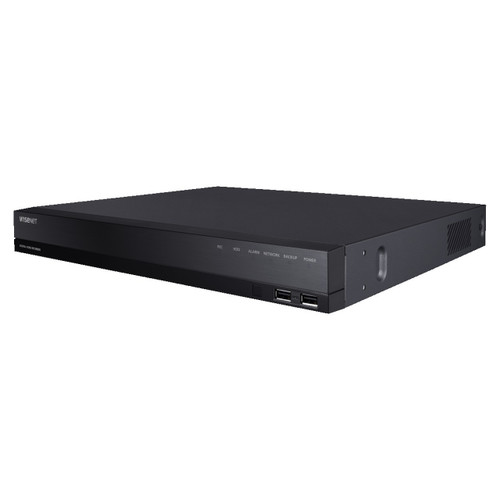
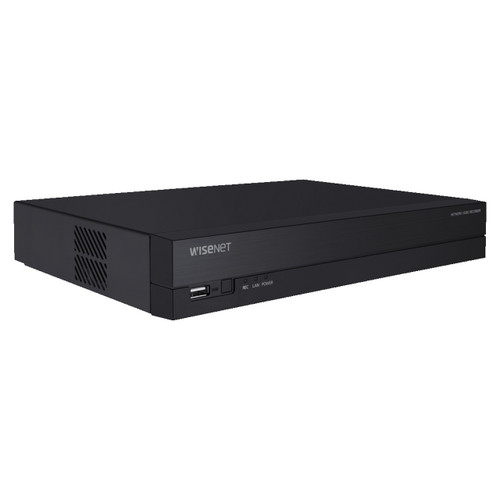
Both the Hanwha HRX-435 and ARN-410S are 4-channel, 8MP-capable recorders running embedded Linux with SUNAPI/ONVIF support, targeted at small-site surveillance deployments. The HRX-435 is a pentabrid DVR accepting analog coaxial signals (AHD, HDTVI, HDCVI, CVBS) plus up to 6 IP cameras, while the ARN-410S is a pure NVR with 4 integrated PoE ports exclusively for IP cameras. A buyer choosing between them is deciding between a hybrid analog-plus-IP architecture and a clean, all-IP PoE-native platform.
In This Guide
- What camera types and how many channels can each recorder actually support?
- How do recording bandwidth, storage capacity, and power delivery compare?
- Which recorder integrates more broadly into VMS platforms and remote management ecosystems?
- Which should you choose: the HRX-435 or the ARN-410S?
- Side-by-Side Specs
- FAQ
What camera types and how many channels can each recorder actually support?
The HRX-435 is a pentabrid recorder: it accepts 4 analog channels (BNC, 75-ohm, 1Vp-p) supporting AHD, HDTVI, HDCVI, and CVBS signals up to 8MP, and simultaneously adds up to 6 IP network channels via its Ethernet port. This yields a maximum of 6 concurrent channels (4 analog + 2 additional IP, or fewer analog + more IP up to the 6-channel IP ceiling). The ARN-410S is a pure IP NVR limited to a maximum of 4 network camera channels—no analog coaxial input is supported whatsoever.
On analog recording throughput, the HRX-435 spec lists 30 fps maximum per analog channel (NTSC) at resolutions from 8MP down to 960H, with sub-stream output at 640x368 for 720p-and-higher signals. The ARN-410S has no analog capability; all four of its channels are IP-only and record at up to 30 fps per channel at up to 8MP (3840x2160). Neither recorder can be field-converted to the other's input type—this is an architectural decision.
The HRX-435 also supports coaxial control (Pelco-C/AHD/CVI/TVI) and RS-485/422 for PTZ over coax, features entirely absent from the ARN-410S spec sheet. The ARN-410S's four PoE ports (10/100 RJ-45 each, 35W total PoE budget) eliminate the need for a separate PoE switch when powering up to four IP cameras, a convenience the HRX-435—which carries only a single 10/100 RJ-45 and no PoE output—does not offer.
How do recording bandwidth, storage capacity, and power delivery compare?
Recording bandwidth favors the ARN-410S: its spec lists a maximum recording bandwidth of 40 Mbps versus 30 Mbps for the HRX-435. Playback bandwidth is identical on both at 32 Mbps maximum. These figures are directly spec-stated; no independent lab verification is cited in the provided data.
On storage, the HRX-435 includes two SATA bays supporting up to 12TB total (6TB per drive, per the 'Max. 6TB' supported HDD spec). The ARN-410S has a single SATA bay with a maximum supported HDD of 6TB. If on-device storage longevity or redundancy is a concern, the HRX-435's dual-bay configuration is the clear advantage—though neither model specifies RAID capability in the provided specs.
Power architecture differs significantly. The ARN-410S inputs 54VDC / 1.20A via a DC adaptor and draws up to 52W with one HDD and PoE active; its 35W PoE budget is shared across all four LAN ports. The HRX-435 is specified at DC12V input with a maximum draw of 40W (measured with four 6TB HDDs installed) and delivers no PoE output. The ARN-410S's higher total wattage reflects the PoE pass-through load; neither unit requires a mains AC feed—both use external adaptor/supply inputs per the specs provided.
Which recorder integrates more broadly into VMS platforms and remote management ecosystems?
Both units support SUNAPI (Wisenet) and ONVIF Profile-S, share the same remote user limits (Search: 3, Live Unicast: 10, Multicast: 20), and support P2P QR-code setup, iOS and Android mobile apps, 2-way audio, and Hanwha DDNS. Core compatibility with Hanwha's own ecosystem is equivalent between the two.
The ARN-410S lists WAVE as a supported viewer software—Hanwha's enterprise VMS platform—alongside SSM, Webviewer, and Wisenet Viewer. The HRX-435's viewer list includes SSM, Webviewer, Smart Viewer, and Wisenet Mobile but does not list WAVE in the provided spec data. The ARN-410S also explicitly lists supported operating systems (Windows 10, macOS 10.13) and browsers (Chrome, Edge, Safari) and adds N+1 failover support; neither of these is listed in the HRX-435 spec sheet.
The HRX-435 adds hardware system controller compatibility (SPC-7000/6000/2000) and PTZ control via RS-485/422 (Samsung-T/Pelco-D/Pelco-P protocols), which the ARN-410S spec does not mention. The HRX-435 also provides VGA output in addition to HDMI (up to 1080p VGA), while the ARN-410S outputs HDMI only (3840x2160 at 30Hz). For PTZ-heavy or dual-monitor analog installations, the HRX-435's serial PTZ control and VGA out are functional differentiators not replicated on the ARN-410S.
Which should you choose: the HRX-435 or the ARN-410S?
Our take: The HRX-435 is the stronger choice when an existing analog camera infrastructure—AHD, HDTVI, HDCVI, or CVBS—must be preserved or extended alongside IP cameras, or when dual-monitor output and hardware PTZ controllers are required. Key spec deltas: the HRX-435 supports up to 12TB across two SATA bays versus the ARN-410S's single-bay 6TB ceiling; the HRX-435 adds VGA output and RS-485/422 serial PTZ control absent from the ARN-410S; and the HRX-435 accepts 4 analog channels that the pure-IP ARN-410S cannot. Conversely, the ARN-410S is the stronger choice for a greenfield all-IP deployment: its four integrated PoE ports (35W budget) eliminate an external switch, its recording bandwidth ceiling is 40 Mbps versus 30 Mbps, and it lists WAVE VMS and N+1 failover support not confirmed in the HRX-435 spec data. Choose the HRX-435 for hybrid or analog-migration sites; choose the ARN-410S for compact, all-IP, PoE-native builds.
Side-by-Side Comparison
Spec-for-spec, from manufacturer data.
| Specification | Hanwha HRX-435 | Hanwha ARN-410S |
|---|---|---|
| Recorder Type | Pentabrid DVR (analog + IP) | Pure IP NVR |
| Max Analog Channels | 4 (BNC, AHD/HDTVI/HDCVI/CVBS) | — |
| Max IP Channels | 6 | 4 |
| Max Total Channels | 6 (4 analog + up to 2 additional IP) | 4 |
| Max Analog Resolution | 8MP | — |
| Max IP Resolution | 8MP | 8MP (3840x2160) |
| Built-in PoE Ports | — | 4 x 10/100 RJ-45 (35W total budget) |
| Recording Bandwidth | Max. 30 Mbps | Max. 40 Mbps |
| Playback Bandwidth | Max. 32 Mbps | Max. 32 Mbps |
| HDD Slots / Max Storage | 2 x SATA / 12TB total | 1 x SATA / 6TB |
| Video Compression | H.265, H.264, MJPEG | H.265 (WiseStream II), H.264 |
| Local Display Outputs | 1x HDMI (4K), 1x VGA (1080p) | 1x HDMI (3840x2160 @ 30Hz) |
| Failover / ARB | ARB Support | N+1 Failover, ARB Support |
| Coaxial / Serial PTZ Control | RS-485/422 (Samsung-T/Pelco-D/Pelco-P), Coaxial (Pelco-C/AHD/CVI/TVI) | — |
| Max Power Draw | 40W (with 4x 6TB HDD) | 52W (1 HDD, PoE on) |
| Input Voltage | DC 12V | 54VDC / 1.20A |
| Viewer Software | SSM, Webviewer, Smart Viewer, Wisenet Mobile | WAVE, SSM, Webviewer, Wisenet Viewer, mobile app |
| Dimensions (WxHxD) | 370 x 44 x 320 mm | 300 x 47 x 208.7 mm |
| Weight | Approx. 2.3 kg (with 1x 4TB HDD) | 1.03 kg |
| Certifications | UL, CE, FCC, KC | — |
| Warranty | — | 3-year |
Frequently Asked Questions
Which should you choose: the HRX-435 or the ARN-410S?
The HRX-435 is the stronger choice when an existing analog camera infrastructure—AHD, HDTVI, HDCVI, or CVBS—must be preserved or extended alongside IP cameras, or when dual-monitor output and hardware PTZ controllers are required. Key spec deltas: the HRX-435 supports up to 12TB across two SATA bays versus the ARN-410S's single-bay 6TB ceiling; the HRX-435 adds VGA output and RS-485/422 serial PTZ control absent from the ARN-410S; and the HRX-435 accepts 4 analog channels that the pure-IP ARN-410S cannot. Conversely, the ARN-410S is the stronger choice for a greenfield all-IP deployment: its four integrated PoE ports (35W budget) eliminate an external switch, its recording bandwidth ceiling is 40 Mbps versus 30 Mbps, and it lists WAVE VMS and N+1 failover support not confirmed in the HRX-435 spec data. Choose the HRX-435 for hybrid or analog-migration sites; choose the ARN-410S for compact, all-IP, PoE-native builds.
Can the HRX-435 or ARN-410S power IP cameras directly without a separate PoE switch?
Only the ARN-410S includes built-in PoE: it has four 10/100 PoE LAN ports with a shared 35W PoE budget, sufficient to power up to four low-to-mid wattage IP cameras without any additional switch. The HRX-435 has a single 10/100 Ethernet port with no PoE output; IP cameras connected to it require a separate PoE switch or injector.
Is the HRX-435 or ARN-410S better for larger or longer-retention deployments?
The HRX-435 supports more on-device storage: two SATA bays with a combined maximum of 12TB (6TB per drive per spec). The ARN-410S is limited to a single SATA bay with a maximum of 6TB. For extended retention on the same recorder, the HRX-435's dual-bay configuration provides up to twice the local storage capacity. Neither model's RAID capability is documented in the provided specs.
Does either recorder work with Hanwha's WAVE enterprise VMS platform?
The ARN-410S explicitly lists WAVE as supported viewer software in the provided spec data. The HRX-435 spec sheet lists SSM, Webviewer, Smart Viewer, and Wisenet Mobile but does not mention WAVE. Buyers requiring WAVE VMS integration should verify HRX-435 compatibility directly with Hanwha, as the spec provided does not confirm it.
Get a Second Opinion on Your Camera Choice
Share your site layout, coverage goals, and budget. Our team will validate the camera selection, flag anything we would change, and recommend products that match the use case.