
Hanwha HRX-434 vs Speco Technologies D4WVN10TB: Specification Comparison
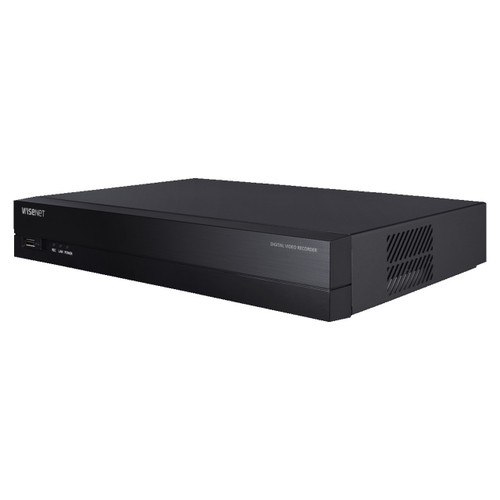
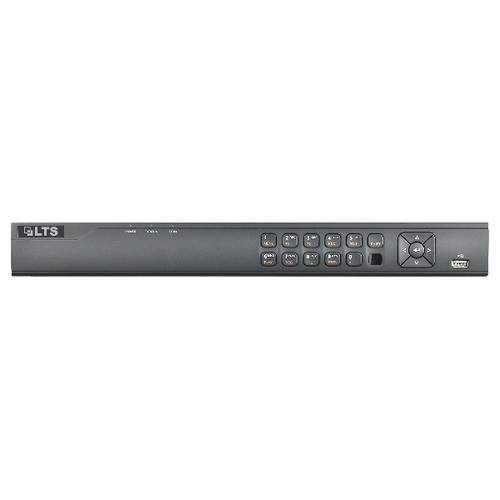
Both the Hanwha HRX-434 and the Speco Technologies D4WVN10TB are 4-channel analog DVR recorders targeting small-site surveillance deployments. The HRX-434 is a pentabrid desktop/rack unit supporting five analog formats plus up to six additional IP channels, while the D4WVN10TB is a dedicated 4K TVI wall-mount DVR with 10TB onboard storage and TAA/NDAA compliance. This comparison evaluates their channel capacity and recording capability, physical installation profile and operating environment, and integration and management ecosystems — the three axes that most affect a purchasing decision in this product class.
In This Guide
- Which DVR offers greater channel flexibility and recording capability?
- How do these units differ in physical installation profile, storage, and operating environment?
- Which unit integrates better into existing VMS, remote-access, and security ecosystems?
- Which should you choose: the HRX-434 or the D4WVN10TB?
- Side-by-Side Specs
- FAQ
Which DVR offers greater channel flexibility and recording capability?
The HRX-434 is a pentabrid design that simultaneously accepts AHD, HDTVI, HDCVI, and CVBS signals on its four BNC inputs without any hardware reconfiguration — auto-detection is specified. Beyond those four analog channels, it adds up to six IP camera inputs (SUNAPI/ONVIF), bringing the total addressable source count to ten channels on a single unit. Maximum analog recording resolution is 8MP at 8fps, rising to 30fps at 2MP, with a recording bandwidth ceiling of 30Mbps and playback bandwidth of 32Mbps across six simultaneous channels. Video compression spans H.265, H.264, and MJPEG.
The D4WVN10TB is specified as a 4-channel 4K TVI recorder. No additional IP channel expansion count is stated in the available specifications. Compression is listed as H.265 and H.264. Per-channel frame rate, recording bandwidth, and playback bandwidth figures are not provided in the supplied spec set. Storage is a standout: 10TB is factory-installed, versus the HRX-434's single SATA slot capped at 6TB. Both units list ONVIF compatibility.
For integrators who need multi-format analog flexibility or IP camera headroom on a single box, the HRX-434's ten-source capacity and documented 8MP/30fps recording parameters give it a measurable edge. The D4WVN10TB's 10TB storage advantage is meaningful for retention-heavy deployments, but the absence of published frame rate and bandwidth specs makes direct recording-performance comparison impossible on supplied data alone.
How do these units differ in physical installation profile, storage, and operating environment?
The HRX-434 is a rack-mount metal chassis measuring 300 × 47 × 208.7mm (11.85" × 1.85" × 8.22"), weighing approximately 1.5kg (3.30 lb) without a full-capacity HDD. It draws a maximum of 22W from a 12VDC input and is rated for 0°C to +40°C operation at 20–85% RH. Certifications include UL, CE, FCC, and KC. Display outputs are one HDMI and one VGA, both capable of 4K or 1080p. A spot BNC output is also provided. The single SATA bay accepts up to a 6TB drive.
The D4WVN10TB is a wall-mount form-factor unit measuring 17.5 × 15.5 × 4.8 inches and weighing 8.0 lbs (approximately 3.6kg). The larger physical footprint accommodates 10TB of onboard storage. Input voltage, power consumption, and operating temperature range are not specified in the supplied data. The unit carries TAA and NDAA compliance certifications — a distinct procurement credential the HRX-434 does not list. Display output type and count are not stated in the available specs.
Installation context drives the choice here. The HRX-434's 1U rack profile suits IT-closet or rack-panel deployments; its sub-22W draw and documented temperature range ease integration planning. The D4WVN10TB's wall-mount design fits locations without rack infrastructure, and its 10TB factory storage avoids a separate HDD procurement step. However, the absence of power, temperature, and display-output specs for the D4WVN10TB leaves integrators unable to fully qualify it for a given site without consulting the datasheet directly.
Which unit integrates better into existing VMS, remote-access, and security ecosystems?
The HRX-434 publishes an extensive integration profile. Network protocols documented include TCP/IP, UDP/IP, RTP (UDP/TCP), RTSP, NTP, HTTP, DHCP, PPPoE, SMTP, ICMP, IGMP, ARP, DNS, DDNS, uPnP, HTTPS, SNMP, ONVIF Profile-S, and Hanwha's SUNAPI. Remote access supports up to 10 simultaneous Live Unicast users and 20 Multicast users, plus three concurrent Search sessions. Client software spans a web viewer, Smart Viewer desktop CMS, Wisenet Mobile (iOS/Android), and SDK/CGI for custom integration. PTZ control is available via GUI, web viewer, SSM, SmartViewer, Wisenet Mobile, and RS-485 serial (Pelco-D/P, Samsung-T). Security features include IP address filtering, user access logging, 802.1x authentication, and end-to-end encryption covering ID/PW, recording, transmission, and backup. Coaxial control covers CVBS (Pelco-C), AHD, CVI, and TVI. Redundancy via ARB is supported.
The D4WVN10TB lists ONVIF and H.265/H.264 compression. The spec set does not include network protocol lists, remote user counts, VMS client software names, PTZ control protocols, security/encryption features, or mobile application support. The Analytics field is listed but no detail on what analytics functions are included is provided. Two-way audio with a built-in microphone is specified, which the HRX-434 supports via a line-level RCA input/output pair rather than a built-in mic.
For deployments requiring documented VMS interoperability, protocol breadth, remote concurrency limits for firewall planning, or coaxial PTZ control, the HRX-434 provides the specification transparency to validate compatibility before installation. The D4WVN10TB's integration capabilities may be equivalent in practice, but the supplied specs do not substantiate them. NDAA/TAA compliance on the D4WVN10TB is a non-negotiable filter for US federal and government-adjacent projects — a qualification the HRX-434 spec set does not address.
Which should you choose: the HRX-434 or the D4WVN10TB?
Our take: The HRX-434 is the stronger choice when integration depth, multi-format analog flexibility, and documented remote-access capacity are the primary evaluation criteria. It supports ten total sources (4 analog + 6 IP) versus the D4WVN10TB's four TVI-only channels, publishes recording bandwidth at 30Mbps with 8MP capability, and documents 20 simultaneous Multicast viewers plus a full ONVIF Profile-S and SUNAPI protocol stack — none of which are confirmed in the D4WVN10TB's available specs. The D4WVN10TB holds two concrete advantages: 10TB onboard storage outpaces the HRX-434's 6TB SATA maximum by 67%, and TAA/NDAA compliance is explicitly certified, making it the required choice for US federal, DoD, or NDAA-restricted government procurement. Choose the HRX-434 for mixed-format analog or IP-hybrid sites, Wisenet ecosystem deployments, or IT-managed rack environments. Choose the D4WVN10TB for government-regulated sites needing compliant hardware or installations where a wall-mount enclosure with high onboard storage is operationally preferred.
Side-by-Side Comparison
Spec-for-spec, from manufacturer data.
| Specification | Hanwha HRX-434 | Speco Technologies D4WVN10TB |
|---|---|---|
| Device Type | Pentabrid DVR (Analog + IP Hybrid) | 4K TVI Wall-Mount DVR |
| Analog Input Channels | 4CH (BNC, 1Vp-p 75Ω) | 4CH TVI |
| Analog Signal Formats | AHD, HDTVI, HDCVI, CVBS | TVI (other formats not specified) |
| Max IP Camera Inputs | 6CH (SUNAPI / ONVIF) | — |
| Total Max Sources | 10 (4 analog + 6 IP) | — |
| Max Recording Resolution | 8MP | 4K (TVI) |
| Max Analog Record Rate | 8MP @ 8fps; 2MP @ 30fps | — |
| Video Compression | H.265, H.264, MJPEG | H.265, H.264 |
| Recording Bandwidth | 30Mbps max | — |
| Playback Bandwidth | 32Mbps (6CH simultaneous) | — |
| Onboard Storage (Max) | 6TB (1× SATA slot) | 10TB |
| Display Outputs | 1× HDMI, 1× VGA, 1× BNC Spot | — |
| Audio | 1× Line In, 1× Line Out (RCA) | Two-way; built-in mic |
| ONVIF | Yes (Profile-S) | Yes |
| Remote Concurrent Users | Live Unicast 10, Multicast 20, Search 3 | — |
| Mobile App | iOS, Android (Wisenet Mobile) | — |
| PTZ Control | RS-485 (Pelco-D/P, Samsung-T); Coaxial (Pelco-C, AHD, CVI, TVI) | — |
| Security / Encryption | IP filtering, 802.1x, ID/PW + recording + transmission encryption | — |
| Form Factor / Mount | Desktop / Rack (1U) | Wall-Mount |
| Dimensions | 300 × 47 × 208.7mm (11.85" × 1.85" × 8.22") | 17.5 × 15.5 × 4.8 in |
| Weight | ~1.5kg (3.30 lb) | 8.0 lbs (3.6kg) |
| Power Input | 12VDC | — |
| Max Power Draw | 22W | — |
| Operating Temperature | 0°C to +40°C | — |
| Certifications | UL, CE, FCC, KC | TAA, NDAA |
| Warranty | — | 3 years |
Frequently Asked Questions
Which should you choose: the HRX-434 or the D4WVN10TB?
The HRX-434 is the stronger choice when integration depth, multi-format analog flexibility, and documented remote-access capacity are the primary evaluation criteria. It supports ten total sources (4 analog + 6 IP) versus the D4WVN10TB's four TVI-only channels, publishes recording bandwidth at 30Mbps with 8MP capability, and documents 20 simultaneous Multicast viewers plus a full ONVIF Profile-S and SUNAPI protocol stack — none of which are confirmed in the D4WVN10TB's available specs. The D4WVN10TB holds two concrete advantages: 10TB onboard storage outpaces the HRX-434's 6TB SATA maximum by 67%, and TAA/NDAA compliance is explicitly certified, making it the required choice for US federal, DoD, or NDAA-restricted government procurement. Choose the HRX-434 for mixed-format analog or IP-hybrid sites, Wisenet ecosystem deployments, or IT-managed rack environments. Choose the D4WVN10TB for government-regulated sites needing compliant hardware or installations where a wall-mount enclosure with high onboard storage is operationally preferred.
Can the HRX-434 or D4WVN10TB work with cameras from different manufacturers?
The HRX-434 explicitly supports ONVIF Profile-S for IP cameras and accepts AHD, HDTVI, HDCVI, and CVBS analog signals, giving it broad multi-vendor analog and IP compatibility. It also supports Hanwha SUNAPI natively. The D4WVN10TB lists ONVIF compatibility and is specified for 4K TVI cameras; compatibility with other analog formats (AHD, CVI, CVBS) is not stated in the supplied specifications, so installers should verify against the Speco datasheet before assuming multi-format support.
Is the HRX-434 or D4WVN10TB better for a government or federal procurement environment?
The D4WVN10TB is the correct choice for government and federal procurement: it is explicitly listed as TAA and NDAA compliant, which are mandatory requirements for many US government and DoD projects. The HRX-434's spec set does not include TAA or NDAA compliance statements, so it cannot be assumed compliant for those procurement vehicles without independent verification.
Which DVR gives more storage headroom for long-retention deployments?
The D4WVN10TB ships with 10TB of onboard storage. The HRX-434 has a single SATA bay with a maximum supported capacity of 6TB — no expansion slots are specified. For sites requiring extended retention at full resolution without network-attached storage supplements, the D4WVN10TB's 10TB provides approximately 67% more local storage than the HRX-434's ceiling.
Get a Second Opinion on Your Camera Choice
Share your site layout, coverage goals, and budget. Our team will validate the camera selection, flag anything we would change, and recommend products that match the use case.