
Hanwha HRX-434 vs QNAP VS-2204-PRO: Specification Comparison
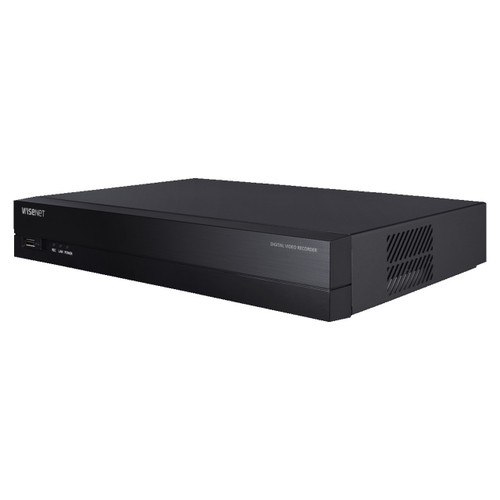
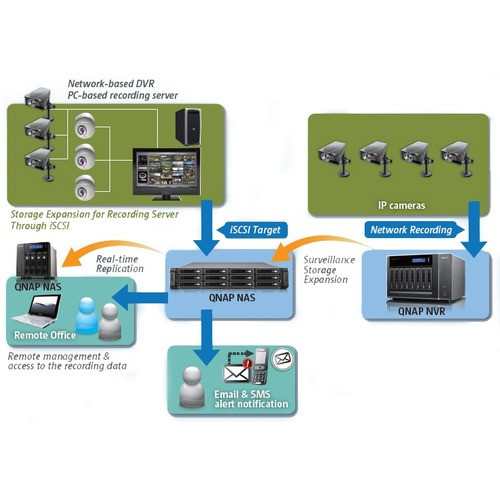
This comparison evaluates two four-channel network video recorders aimed at small-to-medium installation projects: the Hanwha HRX-434, a Pentabrid DVR/NVR hybrid supporting analog coax and IP cameras, and the QNAP VS-2204-PRO+, a dedicated IP-only NVR built on an Intel Atom platform. Both support up to four simultaneous recording channels and target installers weighing analog-legacy compatibility against a pure-IP tower NVR architecture. Key decision axes are channel flexibility and analog hybrid support, storage and physical form factor, and network integration with codec and remote management capabilities.
In This Guide
- How do channel capacity, analog hybrid support, and recording resolution compare?
- How do storage architecture, power consumption, and physical form factor differ?
- How do network integration, codec support, and remote management capabilities compare?
- Which should you choose: the HRX-434 or the VS-2204-PRO?
- Side-by-Side Specs
- FAQ
How do channel capacity, analog hybrid support, and recording resolution compare?
The HRX-434 provides 4 analog BNC inputs accepting AHD, HDTVI, HDCVI, and CVBS signals, plus up to 6 additional IP camera channels (expandable beyond the 4 analog), for a maximum hybrid total of 6 channels simultaneously. Analog record rates are resolution-dependent: 8MP at 8fps, 5MP at 12fps, 4MP at 15fps, and 2MP at 30fps. IP cameras up to 8MP are supported via SUNAPI (Wisenet) and ONVIF protocols. The maximum recording bandwidth is 30Mbps.
The VS-2204-PRO+ supports up to 4 IP camera channels only with no analog coax input capability whatsoever. Recording performance is specified as up to 30fps at D1 (720x480) or VGA (640x480) resolution. Megapixel recording is listed as up to 8MP, but no per-resolution frame-rate breakdown is provided in the available specs. There is no hybrid or analog-coax support. Buyers retaining any CVBS, AHD, TVI, or CVI analog cameras cannot use the VS-2204-PRO+ without replacing all endpoints.
How do storage architecture, power consumption, and physical form factor differ?
The HRX-434 uses a single internal SATA slot supporting up to one 6TB HDD. It is rack-mountable (300 x 47 x 208.7mm, 1U profile) and draws a maximum of 22W including the HDD. Input power is DC 12V via a DC jack, meaning an external power adapter is required. Weight is approximately 1.5kg with a 4TB drive installed.
The VS-2204-PRO+ provides two hot-swappable, lockable 3.5-inch SATA II / 2.5-inch SATA / SSD bays. Maximum individual drive capacity is not specified in the available data, but dual-bay architecture permits RAID or redundant storage configurations. The unit is a tower form factor (150H x 102W x 216D mm) and accepts 100-240V AC directly, eliminating the need for an external adapter. Power consumption is 25W with a 60W supply. Net weight is 1.74kg. Acoustic noise is rated at 34.2dB.
How do network integration, codec support, and remote management capabilities compare?
The HRX-434 supports H.265, H.264, and MJPEG compression. It provides a single 10/100 Mbps Ethernet port (RJ-45), which limits available network throughput relative to its 30Mbps recording and 32Mbps playback bandwidth ceilings. Remote access is via Webviewer, SmartViewer, Wisenet Mobile (iOS/Android), and SDK/CGI. Maximum simultaneous remote users are 10 live unicast and 3 search sessions. Security features include IP address filtering, 802.1x authentication, end-to-end encryption (ID/PW, recording, transmission, backup), and device certificates from Hanwha Techwin Root CA. DDNS is provided via Wisenet DDNS. P2P setup via QR code is supported.
The VS-2204-PRO+ provides two Gigabit (1000 Mbps) Ethernet ports, offering substantially higher network throughput and the possibility of network teaming or redundancy. Supported codecs are H.264, MPEG-4, M-JPEG, and MxPEG; H.265 is not listed in the available specifications. Remote monitoring display supports up to 42-channel layouts and multi-server monitoring up to 128 channels, indicating a client designed for larger VMS deployments. Specific remote user limits, mobile app support, DDNS, and encryption/security feature details are not provided in the available specifications.
Which should you choose: the HRX-434 or the VS-2204-PRO?
Our take: The HRX-434 is the stronger choice when the installation includes any existing analog coax cameras or requires cybersecurity-hardened remote access, while the VS-2204-PRO+ is preferable when dual-bay hot-swap storage redundancy and dual-Gigabit networking are the primary priorities. Key spec deltas: the HRX-434 supports H.265 compression and a hybrid analog+IP channel mix up to 6 channels, whereas the VS-2204-PRO+ is IP-only with 4 channels and no H.265 listed; the VS-2204-PRO+ provides two hot-swappable drive bays versus the HRX-434's single fixed SATA slot; and the VS-2204-PRO+ delivers dual 1Gbps LAN versus the HRX-434's single 10/100Mbps port. Integrators managing analog-legacy infrastructure or Wisenet IP ecosystems should select the HRX-434; those building a pure-IP system requiring storage redundancy and higher LAN bandwidth in a tower chassis should evaluate the VS-2204-PRO+.
Side-by-Side Comparison
Spec-for-spec, from manufacturer data.
| Specification | Hanwha HRX-434 | QNAP VS-2204-PRO |
|---|---|---|
| Device Class | Pentabrid DVR/NVR Hybrid | IP NVR |
| Max Total Channels | 6 (4 analog + up to 6 IP, hybrid) | 4 (IP only) |
| Analog Camera Input | 4CH BNC (AHD/TVI/CVI/CVBS) | None |
| Max IP Camera Resolution | 8MP | 8MP |
| Max Record Frame Rate (Analog 2MP) | 30fps | — |
| Max Record Frame Rate (IP) | Not separately specified per channel | 30fps at D1/VGA |
| Video Compression | H.265 / H.264 / MJPEG | H.264 / MPEG-4 / M-JPEG / MxPEG |
| HDD Bays | 1 x SATA (max 6TB) | 2 x Hot-swap SATA/SSD |
| Hot-Swap Drives | No | Yes |
| LAN Ports | 1 x 10/100 Mbps | 2 x 1Gbps |
| Video Output | 1x HDMI + 1x VGA (up to 4K) | 1x VGA (1920x1080) |
| Power Input | DC 12V (external adapter) | 100-240V AC direct |
| Max Power Consumption | 22W (with HDD) | 25W |
| Form Factor | 1U Rack | Tower |
| Operating Temperature | 0°C to +40°C | 0°C to +40°C |
| Mobile App | iOS and Android (Wisenet Mobile) | Not specified in available specs |
Frequently Asked Questions
Which should you choose: the HRX-434 or the VS-2204-PRO?
The HRX-434 is the stronger choice when the installation includes any existing analog coax cameras or requires cybersecurity-hardened remote access, while the VS-2204-PRO+ is preferable when dual-bay hot-swap storage redundancy and dual-Gigabit networking are the primary priorities. Key spec deltas: the HRX-434 supports H.265 compression and a hybrid analog+IP channel mix up to 6 channels, whereas the VS-2204-PRO+ is IP-only with 4 channels and no H.265 listed; the VS-2204-PRO+ provides two hot-swappable drive bays versus the HRX-434's single fixed SATA slot; and the VS-2204-PRO+ delivers dual 1Gbps LAN versus the HRX-434's single 10/100Mbps port. Integrators managing analog-legacy infrastructure or Wisenet IP ecosystems should select the HRX-434; those building a pure-IP system requiring storage redundancy and higher LAN bandwidth in a tower chassis should evaluate the VS-2204-PRO+.
Can the HRX-434 record from my existing analog CCTV cameras?
Yes. The HRX-434 accepts AHD, HDTVI, HDCVI, and CVBS signals on its four BNC inputs, so legacy analog cameras connect directly without any additional transcoders or adapters.
Does the VS-2204-PRO+ support H.265 to reduce storage consumption?
H.265 is not listed in the VS-2204-PRO+ specifications provided. Its documented codecs are H.264, MPEG-4, M-JPEG, and MxPEG. Verify with QNAP directly if H.265 support is required before purchasing.
Which unit offers more storage expansion?
The VS-2204-PRO+ has two hot-swappable SATA bays, allowing dual-drive configurations including redundant setups. The HRX-434 has one internal SATA slot with a maximum of 6TB. If storage growth or drive redundancy is a requirement, the VS-2204-PRO+ architecture is more flexible.
Get a Second Opinion on Your Camera Choice
Share your site layout, coverage goals, and budget. Our team will validate the camera selection, flag anything we would change, and recommend products that match the use case.