
Hanwha C8083RV vs Hanwha XNV-8083R: Specification Comparison
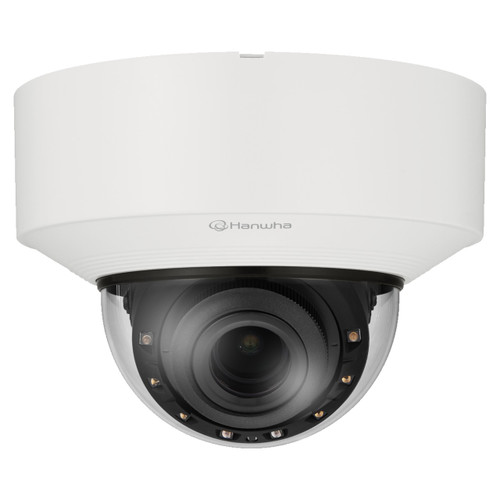
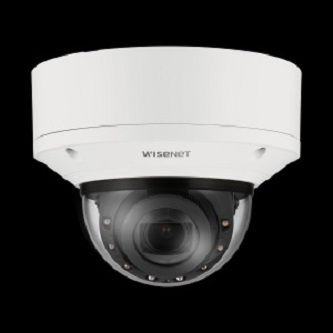
Both the Hanwha XND-C8083RV and XNV-8083R are 6MP fixed vandal dome cameras sharing the same 1/1.8" progressive CMOS sensor, 3328×1872 resolution, and 4.4–9.3mm motorized varifocal lens. They occupy the same resolution class and form factor, making them direct cross-shop candidates. The comparison centers on where they diverge: the C8083RV is rated for indoor/semi-outdoor use with lighter power and environmental specs, while the XNV-8083R is a hardened outdoor unit with stronger ingress protection, higher vandal resistance, greater PoE budget, and longer IR throw.
In This Guide
How do the imaging specs compare?
Both cameras deliver identical core imaging performance: 3328×1872 at 30fps, 1/1.8" progressive CMOS, H.265/H.264 Main/High plus MJPEG compression, extremeWDR at 120dB, minimum illumination of 0.04 Lux color / 0 Lux IR, and the same 4.4–9.3mm (2.1x) motorized varifocal P-iris lens with F1.3 (wide) to F2.15 (tele) aperture. Angular field of view is identical at H:112.1°, V:58.0°. DORI performance tables are also identical across both units, with detection at up to 151.3m (tele) and identification at 15.1m (tele).
The one meaningful imaging divergence is IR throw: the XNV-8083R specifies WiseIR at 50m (164ft), versus the XND-C8083RV at 40m (131ft)—a 25% extension that matters in larger outdoor spaces. Both support WiseNR II (AI-based), SSNR V, digital image stabilization via built-in gyro, defog, and identical tilt range at the wide end. The XNV-8083R adds a CVBS analog video output (720×480/576) for installation alignment in addition to the Micro USB port that both units share; the C8083RV spec lists only the Micro USB video out.
What about installation and environment?
Environmental protection is the sharpest dividing line. The XNV-8083R is rated IP66/IP67/IP6K9K and NEMA 4X, making it suitable for direct rain, jet wash, and high-pressure cleaning environments. Its vandal rating is IK10+ (the highest standard tier). The XND-C8083RV is rated IP52 (protected against dust ingress and dripping water) with IK08 impact resistance—appropriate for indoor and sheltered semi-outdoor use, but not for exposed outdoor deployment. Operating temperature range also differs significantly: the XNV-8083R operates from -50°C to +55°C, whereas the C8083RV is rated -10°C to +50°C, a narrower cold-end tolerance of 40°C.
Power requirements diverge accordingly. The XNV-8083R requires PoE+ (IEEE 802.3at, Class 4) with a maximum draw of 22.5W, meaning switches and injectors must support 802.3at. The XND-C8083RV operates on standard PoE (IEEE 802.3af, Class 3) at a maximum of 12.95W, compatible with a broader range of existing PoE infrastructure. Both also support 12VDC as an alternative. The XNV-8083R is larger and heavier (Ø180×125mm, 1,900g) versus the C8083RV (Ø160×118mm, 1,350g). Tilt range differs slightly: XNV-8083R tilts to -45°~85°; C8083RV to -45°~75°.
Which fits your VMS and analytics better?
Both cameras share ONVIF Profile S/G/T, SUNAPI (HTTP API), and Wisenet open platform support, ensuring compatibility with the same VMS ecosystem. AI analytics are identical in scope: object detection covering person, face, vehicle subtypes (car, bus, truck, motorcycle, bicycle), and license plate; IVA events including virtual line/area, enter/exit, loitering, direction, appear/disappear, and intrusion; business intelligence functions of people counting, queue management, and heatmap; plus defocus detect. Audio input (selectable mic/line in, 2.5VDC, 2KΩ) and line out (max 1Vrms) specs are identical. Protocol stacks are identical.
Edge storage is a meaningful difference: the XNV-8083R provides two Micro SD/SDHC/SDXC slots supporting up to 1TB total (512GB × 2), whereas the XND-C8083RV has a single slot capped at 512GB. For long-retention edge recording or redundant card configurations, the XNV-8083R has the advantage. On security hardening, the XNV-8083R spec lists TPM 2.0 (FIPS 140-2 Level 2); the C8083RV spec does not list TPM—it references HTPM instead, which is not an independently verified FIPS certification. Ethernet differs: the XNV-8083R supports 10/100/1000BASE-T (Gigabit), while the C8083RV is limited to 10/100BASE-T (Fast Ethernet only).
Which should you choose: the C8083RV or the XNV-8083R?
Our take: The XNV-8083R is the stronger choice when the deployment is outdoors or in any environment requiring rated weather and impact resistance. Its IP66/IP67/IP6K9K and NEMA 4X rating versus the C8083RV's IP52, combined with IK10+ versus IK08 vandal resistance, make it the only specification-compliant option for exposed exterior installations or high-abuse locations. It also extends IR range by 10m (50m vs. 40m), doubles edge storage capacity (two 512GB slots vs. one), adds Gigabit Ethernet versus Fast Ethernet, and carries a TPM 2.0 (FIPS 140-2 Level 2) security module not listed on the C8083RV. The trade-off is meaningful: it demands PoE+ (802.3at, Class 4, max 22.5W) rather than standard PoE (802.3af, Class 3, max 12.95W), requiring compatible switching infrastructure. For controlled indoor environments where existing 802.3af infrastructure is in place and IP52/IK08 suffices, the C8083RV delivers identical imaging performance at lower power draw.
Side-by-Side Comparison
Spec-for-spec, from manufacturer data.
| Specification | Hanwha C8083RV | Hanwha XNV-8083R |
|---|---|---|
| Resolution | 3328×1872 (6MP) | 3328×1872 (6MP) |
| Image Sensor | 1/1.8" progressive CMOS | 1/1.8" progressive CMOS |
| Max Frame Rate | 30fps | 30fps |
| Lens / Focal Length | 4.4–9.3mm (2.1x) motorized varifocal | 4.4–9.3mm (2.1x) motorized varifocal |
| Min. Illumination | 0.04 Lux color / 0 Lux IR | 0.04 Lux color / 0 Lux IR |
| IR Range | WiseIR 40m (131ft) | WiseIR 50m (164ft) |
| Wide Dynamic Range | extremeWDR 120dB | extremeWDR 120dB |
| Video Compression | H.265 / H.264 Main/High, MJPEG | H.265 / H.264 Main/High, MJPEG |
| IP Rating | IP52 | IP66 / IP67 / IP6K9K / NEMA 4X |
| IK / Impact Rating | IK08 | IK10+ |
| Operating Temperature | -10°C to +50°C | -50°C to +55°C |
| Power Input / PoE Class | PoE 802.3af Class 3 / 12VDC, max 12.95W | PoE+ 802.3at Class 4 / 12VDC, max 22.5W |
| Ethernet | 10/100BASE-T (Fast Ethernet) | 10/100/1000BASE-T (Gigabit) |
| Edge Storage | 1× Micro SD/SDHC/SDXC, max 512GB | 2× Micro SD/SDHC/SDXC, max 1TB (512GB×2) |
| Hardware Security Module | HTPM (per spec; no FIPS listing in provided data) | TPM 2.0 (FIPS 140-2 Level 2) |
| Pan / Tilt / Rotate | 0–360° / -45° to 75° / 0–355° | 0–360° / -45° to 85° / 0–355° |
| Dimensions | Ø160×118mm (Ø6.30×4.65") | Ø180×125mm (7.09×4.92") |
| Weight | 1,350g (2.98 lb) | 1,900g (4.19 lb) |
| Environment Rating (per spec) | Indoor | Outdoor |
| Warranty | 3 years | 3 years |
Frequently Asked Questions
Which should you choose: the C8083RV or the XNV-8083R?
The XNV-8083R is the stronger choice when the deployment is outdoors or in any environment requiring rated weather and impact resistance. Its IP66/IP67/IP6K9K and NEMA 4X rating versus the C8083RV's IP52, combined with IK10+ versus IK08 vandal resistance, make it the only specification-compliant option for exposed exterior installations or high-abuse locations. It also extends IR range by 10m (50m vs. 40m), doubles edge storage capacity (two 512GB slots vs. one), adds Gigabit Ethernet versus Fast Ethernet, and carries a TPM 2.0 (FIPS 140-2 Level 2) security module not listed on the C8083RV. The trade-off is meaningful: it demands PoE+ (802.3at, Class 4, max 22.5W) rather than standard PoE (802.3af, Class 3, max 12.95W), requiring compatible switching infrastructure. For controlled indoor environments where existing 802.3af infrastructure is in place and IP52/IK08 suffices, the C8083RV delivers identical imaging performance at lower power draw.
Is the XND-C8083RV or XNV-8083R better for low-light performance?
Both cameras specify identical minimum illumination: 0.04 Lux color and 0 Lux in IR mode. The XNV-8083R has a longer IR throw at 50m versus 40m on the C8083RV, so for larger dark spaces the XNV-8083R reaches farther. For close-range indoor low-light use, both perform equivalently per spec.
Can I use the XND-C8083RV outdoors?
The XND-C8083RV is rated IP52 (protection against dust ingress and dripping water) and IK08. It is not rated for rain exposure, jet wash, or freezing temperatures below -10°C. The XNV-8083R (IP66/IP67/IP6K9K, NEMA 4X, IK10+, -50°C operating) is the specified outdoor model between these two.
Do both cameras require PoE+ switches?
No. The XND-C8083RV draws a maximum of 12.95W and runs on standard PoE (IEEE 802.3af, Class 3), compatible with most existing PoE switches. The XNV-8083R requires PoE+ (IEEE 802.3at, Class 4) with a maximum draw of 22.5W, so it requires 802.3at-capable switches or injectors.
Get a Second Opinion on Your Camera Choice
Share your site layout, coverage goals, and budget. Our team will validate the camera selection, flag anything we would change, and recommend products that match the use case.