
Hanwha C3050T vs Pelco SXRE4-VF14-EBT-1: Specification Comparison
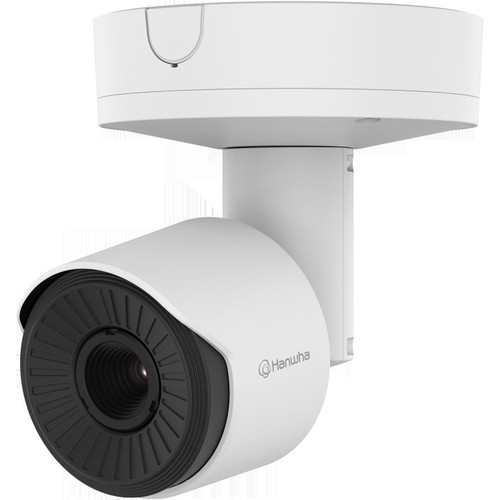
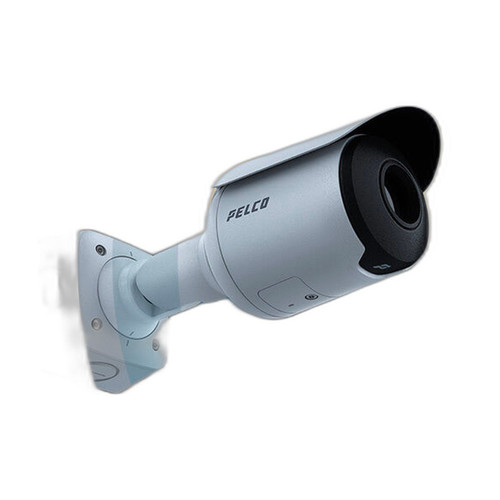
Both the Hanwha TNO-C3050T and the Pelco SXRE4-VF14-EBT-1 are VGA-resolution uncooled thermal bullet cameras designed for outdoor perimeter security and heat-based intrusion detection. Each draws power over 802.3af PoE, carries an IP66/IP67 weatherproof rating, and delivers H.265/H.264 compression with ONVIF support. This comparison evaluates how their sensor technology, environmental ratings, detection range, analytics capabilities, and integration profiles differ so installers and IT buyers can match the right camera to their deployment requirements.
In This Guide
How do the imaging specs compare?
Both cameras deliver VGA thermal resolution (640×480). The TNO-C3050T specifies QVGA as a selectable mode in addition to VGA, giving operators a lower-bandwidth fallback; the SXRE4-VF14-EBT-1 spec does not list a QVGA mode. The TNO-C3050T identifies its sensor as an uncooled microbolometer and its SoC as the Wisenet 5 chipset; the SXRE4-VF14-EBT-1 spec does not disclose sensor manufacturer or chipset. The Pelco is explicitly described as radiometric, meaning it outputs calibrated temperature data per pixel for anomaly detection — the TNO-C3050T spec lists fire detection and object detection but does not use the term radiometric, so calibrated temperature measurement capability cannot be confirmed from the provided spec.
On detection range, the SXRE4-VF14-EBT-1 explicitly states object detection up to 300 m (980 ft) as a rated figure; the TNO-C3050T spec describes 'long-range object detection' but provides no numeric range figure. Video compression on the Pelco adds Opus and G.711 PCM audio tracks alongside H.265/H.264, indicating an integrated audio pipeline; the Hanwha spec lists H.265/H.264/WiseStream II but does not mention audio compression codecs, leaving audio capability unconfirmed from the provided data.
What about installation and environment?
Both cameras share IP66/IP67 ingress protection. The Pelco SXRE4-VF14-EBT-1 adds an IK10 impact resistance rating — a meaningful advantage in exposed or vandal-risk locations such as parking structures or perimeter fencing — while the TNO-C3050T spec does not list an IK rating. Power input is 802.3af PoE on both, with the Pelco spec noting approximately 13 W draw; the Hanwha spec adds a 12 V DC local-power option, providing a wiring-flexibility advantage in locations without PoE infrastructure.
Operating temperature range differs materially: the TNO-C3050T is rated from -40 °C to +55 °C (-40 °F to +131 °F), covering arctic and desert extremes. The SXRE4-VF14-EBT-1 is rated -10 °C to +70 °C (14 °F to 158 °F), tolerating higher heat but not sub-freezing conditions below -10 °C. Mount types: the Pelco spec lists pole and corner mounts; the Hanwha spec describes a bullet form factor suitable for pole and wall mount but does not enumerate specific mount accessory types. Physical dimensions are provided only for the Pelco (312 mm × 126 mm × 104 mm including junction box); Hanwha dimensions are not specified in the provided data.
Which fits your VMS and analytics better?
ONVIF coverage differs by profile depth. The TNO-C3050T supports ONVIF Profile S, G, and T, with native integration into Hanwha's Wisenet WAVE and SSM VMS platforms. The SXRE4-VF14-EBT-1 supports ONVIF Profile S, T, and M; the addition of Profile M (metadata streaming) enables richer analytics event forwarding to compatible VMS platforms. The Pelco spec also lists Pelco Smart Analytics and radiometric anomaly detection as named analytics features; the Hanwha spec lists Edge Video Analytics generically without itemizing specific analytic functions beyond object detection and fire detection.
The Pelco SXRE4-VF14-EBT-1 specifies audio codecs (Opus and G.711 PCM at 8 kHz), confirming built-in audio I/O. The TNO-C3050T spec does not list audio. Cybersecurity posture: the Pelco spec cites FIPS-compliant encryption; the Hanwha spec does not mention an encryption standard. Certifications listed for the Pelco include UL, cUL, CE, UKCA, RoHS, RCM, BIS, and NOM; the Hanwha spec lists NDAA compliance but no other certifications in the provided data. On-board edge storage is not specified for either model in the provided specs.
Which should you choose: the C3050T or the SXRE4-VF14-EBT-1?
Our take: The SXRE4-VF14-EBT-1 is the stronger choice when radiometric temperature measurement, vandal resistance, and broad certification coverage are primary requirements. Its IK10 impact rating provides protection the TNO-C3050T spec does not confirm; its explicitly rated 300 m detection range gives installers a concrete planning figure absent from the Hanwha spec; and FIPS-compliant encryption plus UL/CE/UKCA/RCM/BIS/NOM certifications address compliance-driven procurement that Hanwha's provided spec does not address. Conversely, the TNO-C3050T holds a decisive advantage in cold-climate deployments: its -40 °C lower operating limit versus the Pelco's -10 °C makes it the only specified choice for northern or high-altitude sites with severe winters. The 12 V DC power option also simplifies installation where PoE switches are unavailable. Buyers on Wisenet WAVE or SSM will benefit from the TNO-C3050T's native VMS integration, while Pelco Smart Analytics and Profile M metadata streaming favor open-platform or Pelco-ecosystem sites.
Side-by-Side Comparison
Spec-for-spec, from manufacturer data.
| Specification | Hanwha C3050T | Pelco SXRE4-VF14-EBT-1 |
|---|---|---|
| Camera Type | Thermal Bullet | Radiometric Thermal Bullet |
| Resolution | VGA / QVGA (selectable) | VGA (640×480) |
| Sensor Technology | Uncooled Microbolometer | Radiometric (uncooled; type not specified in spec) |
| Radiometric Temp. Measurement | Not confirmed in provided spec | Yes — per-pixel radiometric anomaly detection |
| Chipset / SoC | Wisenet 5 SoC | Not specified in provided spec |
| Video Compression | H.265 / H.264 / WiseStream II | H.265 / H.264 / Opus / G.711 PCM |
| Object Detection Range | Long-range (no numeric figure in spec) | 300 m (980 ft) |
| IP Rating | IP66 / IP67 | IP66 / IP67 |
| IK / Impact Rating | Not specified in provided spec | IK10 |
| Operating Temperature | -40 °C to +55 °C (-40 °F to +131 °F) | -10 °C to +70 °C (14 °F to 158 °F) |
| Power Input | PoE 802.3af / 12 V DC | PoE 802.3af (~13 W) |
| Audio | Not specified in provided spec | Opus / G.711 PCM (8 kHz) |
| ONVIF Profiles | Profile S, G, T | Profile S, T, M |
| Native VMS | Wisenet WAVE / SSM | Not specified (third-party NVR/VMS via ONVIF) |
| Edge Storage | Not specified in provided spec | Not specified in provided spec |
| Cybersecurity | Not specified in provided spec | FIPS-compliant encryption |
| NDAA Compliance | Yes | Not specified in provided spec |
| Certifications | NDAA (only cert listed in spec) | UL, cUL, CE, UKCA, RoHS, RCM, BIS, NOM |
| Dimensions | Not specified in provided spec | 312 mm × 126 mm × 104 mm (incl. junction box) |
Frequently Asked Questions
Which should you choose: the C3050T or the SXRE4-VF14-EBT-1?
The SXRE4-VF14-EBT-1 is the stronger choice when radiometric temperature measurement, vandal resistance, and broad certification coverage are primary requirements. Its IK10 impact rating provides protection the TNO-C3050T spec does not confirm; its explicitly rated 300 m detection range gives installers a concrete planning figure absent from the Hanwha spec; and FIPS-compliant encryption plus UL/CE/UKCA/RCM/BIS/NOM certifications address compliance-driven procurement that Hanwha's provided spec does not address. Conversely, the TNO-C3050T holds a decisive advantage in cold-climate deployments: its -40 °C lower operating limit versus the Pelco's -10 °C makes it the only specified choice for northern or high-altitude sites with severe winters. The 12 V DC power option also simplifies installation where PoE switches are unavailable. Buyers on Wisenet WAVE or SSM will benefit from the TNO-C3050T's native VMS integration, while Pelco Smart Analytics and Profile M metadata streaming favor open-platform or Pelco-ecosystem sites.
Is the TNO-C3050T or the SXRE4-VF14-EBT-1 better for extreme cold environments?
Based on the provided specifications, the TNO-C3050T is the clear choice for severe cold: it is rated to -40 °C (-40 °F), while the SXRE4-VF14-EBT-1 is only rated down to -10 °C (14 °F). Any site that experiences temperatures below -10 °C rules out the Pelco unit per its stated spec.
Does either camera provide calibrated temperature measurement, not just motion detection?
The SXRE4-VF14-EBT-1 spec explicitly describes it as a radiometric camera with radiometric anomaly detection, meaning it outputs calibrated per-pixel temperature data. The TNO-C3050T spec lists fire detection and long-range object detection but does not use the term radiometric and does not confirm calibrated temperature output in the provided data.
Which camera integrates better with third-party VMS platforms?
Both support ONVIF, but with different profiles. The SXRE4-VF14-EBT-1 covers Profiles S, T, and M — Profile M enables metadata/analytics event streaming to compatible VMS systems. The TNO-C3050T covers Profiles S, G, and T, and adds native support for Hanwha Wisenet WAVE and SSM. If your VMS leverages ONVIF Profile M for analytics metadata, the Pelco has an edge; if you run Wisenet WAVE or SSM, the Hanwha integrates natively.
Get a Second Opinion on Your Camera Choice
Share your site layout, coverage goals, and budget. Our team will validate the camera selection, flag anything we would change, and recommend products that match the use case.