
Hanwha ARN-810S vs Vivotek ND9323P: Specification Comparison
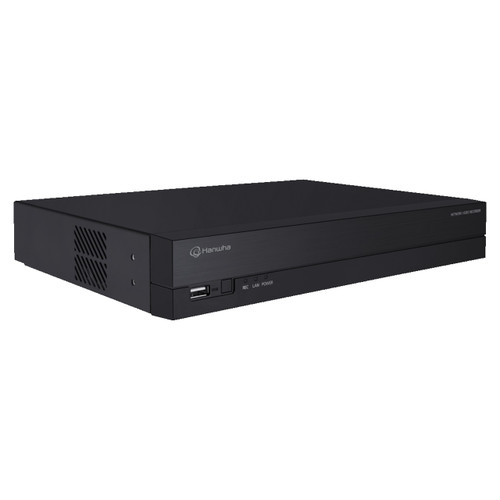
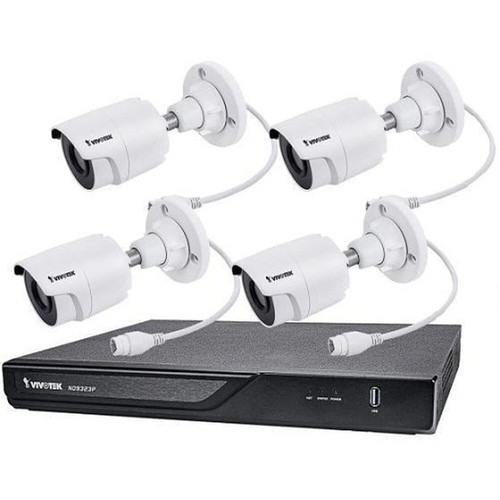
Both the Hanwha ARN-810S and the Vivotek ND9323P are 8-channel network video recorders targeted at small-to-medium commercial surveillance installations. The ARN-810S is a standalone NVR unit, while the ND9323P is sold as a kit bundled with four 2MP IR turret cameras and a 2TB HDD. This comparison evaluates the two across recording throughput and storage architecture, PoE power delivery and connectivity, and software ecosystem and integration — the three dimensions that most directly affect deployment cost, scalability, and long-term manageability for an installer or IT buyer.
In This Guide
- Which NVR offers greater recording throughput and more flexible storage architecture?
- How do the two units compare on PoE power budget, port count, and physical connectivity?
- Which platform provides broader software integration, cybersecurity features, and remote management options?
- Which should you choose: the ARN-810S or the ND9323P?
- Side-by-Side Specs
- FAQ
Which NVR offers greater recording throughput and more flexible storage architecture?
The Vivotek ND9323P specifies a recording throughput of 64 Mbps and a network input/output total of 88 Mbps. It supports two internal 3.5-inch SATA HDD bays with RAID 0 and RAID 1 options, USB 3.0 external storage, and FTP schedule backup. The bundled SKU (ND9323P-2TB-4IB69) ships with a 2TB HDD pre-installed. Decoding capability reaches 4K (3840×2160) at 30fps on a single channel, scaling to 1080p at 120fps across four channels and 720p at 240fps across eight channels. Hardware-based graphics decoding is specified.
The Hanwha ARN-810S specifies a throughput of 60 Mbps. Its local storage is limited to microSD; no internal HDD bay count, maximum HDD capacity, or RAID support is listed in the provided specifications. Video output resolution ceiling and hardware decoding details are not specified for the ARN-810S in the available data.
For deployments requiring on-board redundant mass storage, higher throughput, and 4K decode, the ND9323P's dual-bay RAID-capable architecture and 64 Mbps recording throughput represent a concrete advantage over the ARN-810S's 60 Mbps figure and microSD-only local storage as specified.
How do the two units compare on PoE power budget, port count, and physical connectivity?
The Hanwha ARN-810S specifies eight PoE ports with a total PoE power budget of 65W, supporting WiseStream II alongside H.264 and H.265 compression. Video outputs include HDMI and USB. The compression suite includes WiseStream II, which Hanwha positions for bandwidth efficiency on its own camera line. Two-way audio is specified.
The Vivotek ND9323P provides PoE+ (802.3af specified in one field; PoE+ noted in the Power Type field — note this minor internal inconsistency in the provided spec data) with a maximum system power draw of 175W. It includes one HDMI and one VGA video output, reaching up to 3840×2160 display resolution. Audio connectivity is a 3.5mm jack for both in and out. Four dry-contact alarm inputs and one alarm output are specified. The ND9323P's total wattage of 175W encompasses both the NVR and PoE delivery to connected cameras.
The ARN-810S's 65W total PoE budget across eight ports averages roughly 8W per port — adequate for standard IP cameras but tight for PoE+ devices. The ND9323P's higher system wattage (175W) provides headroom for PoE+ powered cameras. The ND9323P also adds VGA output and hardware alarm I/O (4 in / 1 out) not listed for the ARN-810S.
Which platform provides broader software integration, cybersecurity features, and remote management options?
The Vivotek ND9323P runs embedded Linux with hardware and software watchdog support. It is compatible with Vivotek's Shepherd and VAST 2 VMS platforms, the iViewer mobile app (Android and iOS), and VIVOCloud for remote access. ONVIF Profile S is specified. Cybersecurity management, Trend Micro IoT Security integration, VCA counting, VCA event search, crowd control solution, fisheye dewarp (local and web), and PTZ patrol/preset/PiP operation are all listed. Supported protocols include IPv4, IPv6, TCP/IP, HTTPS, UPnP, RTSP/RTP/RTCP, SMTP, FTP, DHCP, NTP, DNS, DDNS, and IP Filter. Multi-language UI is specified.
The Hanwha ARN-810S is compatible with Wisenet Viewer, a mobile app, and ONVIF-compatible VMS platforms. ONVIF support is confirmed. Edge-configurable intelligent video analytics are listed. Two-way audio is specified. Specific protocol lists, cybersecurity certifications, VCA feature depth, and operating system details are not provided in the available ARN-810S specifications.
The ND9323P discloses a substantially more detailed software and security feature set in the provided specifications, including named third-party cybersecurity integration, a broader protocol stack, alarm I/O event actions (email, FTP, PTZ, buzzer), and multiple safety certifications (CE, FCC, UL, CB, BSMI, BIS, VCCI, C-Tick). The ARN-810S's integration depth cannot be fully assessed from the available spec data.
Which should you choose: the ARN-810S or the ND9323P?
Our take: The ND9323P is the stronger choice when an installer needs a ready-to-deploy kit with on-board RAID-capable HDD storage, 4K hardware decoding, hardware alarm I/O, and a documented cybersecurity and VMS software stack — the bundled 2TB HDD and four 2MP IR turret cameras also reduce procurement steps. Three concrete spec deltas support this: the ND9323P's recording throughput is 64 Mbps versus the ARN-810S's 60 Mbps; the ND9323P supports dual internal 3.5-inch HDD bays with RAID 0/1 while the ARN-810S specifies only microSD local storage; and the ND9323P lists 4K decode at 30fps with hardware acceleration while equivalent decoding specs are absent for the ARN-810S. The ARN-810S warrants consideration in Wisenet-ecosystem deployments where WiseStream II bandwidth savings are valued and microSD or network storage suffices, but its storage and decode capabilities cannot be fully compared given the available specification data.
Side-by-Side Comparison
Spec-for-spec, from manufacturer data.
| Specification | Hanwha ARN-810S | Vivotek ND9323P |
|---|---|---|
| Product Type | NVR (standalone) | NVR + 4x camera kit |
| Channels | 8 | 8 |
| Recording Throughput | 60 Mbps | 64 Mbps |
| Video Compression | H.265, H.264, WiseStream II | H.265, H.264, MJPEG |
| Max Frame Rate | 30fps | 30fps |
| PoE Ports / Budget | 8 ports / 65W total | PoE+ supported / 175W system max |
| Internal HDD Bays | — | 2x 3.5-inch SATA |
| RAID Support | — | RAID 0, 1 |
| Local Storage | microSD | 2TB HDD (bundled) + USB 3.0 external |
| Max Decode Resolution | — | 3840x2160 (4K) |
| Video Outputs | HDMI, USB | HDMI x1, VGA x1 |
| Alarm I/O | — | 4 in / 1 out |
| Audio | Two-way | 3.5mm in/out x1 each |
| ONVIF | Yes | Profile S |
| Warranty | 3 years | 2 years |
| Safety Certifications | — | CE, FCC, UL, CB, VCCI, C-Tick, BSMI, BIS |
Frequently Asked Questions
Which should you choose: the ARN-810S or the ND9323P?
The ND9323P is the stronger choice when an installer needs a ready-to-deploy kit with on-board RAID-capable HDD storage, 4K hardware decoding, hardware alarm I/O, and a documented cybersecurity and VMS software stack — the bundled 2TB HDD and four 2MP IR turret cameras also reduce procurement steps. Three concrete spec deltas support this: the ND9323P's recording throughput is 64 Mbps versus the ARN-810S's 60 Mbps; the ND9323P supports dual internal 3.5-inch HDD bays with RAID 0/1 while the ARN-810S specifies only microSD local storage; and the ND9323P lists 4K decode at 30fps with hardware acceleration while equivalent decoding specs are absent for the ARN-810S. The ARN-810S warrants consideration in Wisenet-ecosystem deployments where WiseStream II bandwidth savings are valued and microSD or network storage suffices, but its storage and decode capabilities cannot be fully compared given the available specification data.
Does either NVR come with cameras included?
Yes — the Vivotek ND9323P SKU (ND9323P-2TB-4IB69) is bundled with four 2MP IR turret cameras and a 2TB HDD pre-installed. The Hanwha ARN-810S is specified as a standalone NVR unit; no cameras are listed in its package contents.
Which unit supports RAID for drive redundancy?
The Vivotek ND9323P specifies RAID 0 and RAID 1 across its two internal 3.5-inch HDD bays. RAID support is not listed in the provided Hanwha ARN-810S specifications; its local storage is described as microSD only.
Are both NVRs compatible with third-party cameras via ONVIF?
Both units specify ONVIF support. The Vivotek ND9323P references ONVIF Profile S specifically. The Hanwha ARN-810S lists ONVIF compatibility and also notes compatibility with ONVIF-capable VMS platforms. Neither unit's spec data restricts use to proprietary cameras only.
Get a Second Opinion on Your Camera Choice
Share your site layout, coverage goals, and budget. Our team will validate the camera selection, flag anything we would change, and recommend products that match the use case.